Check out this FREE Trial Lesson on Math for age 5-6!

Short and Long Vowel Sort

Favorites
With answer key
Interactive
  • 5-6
  • Basic Addition Skills
  • Math
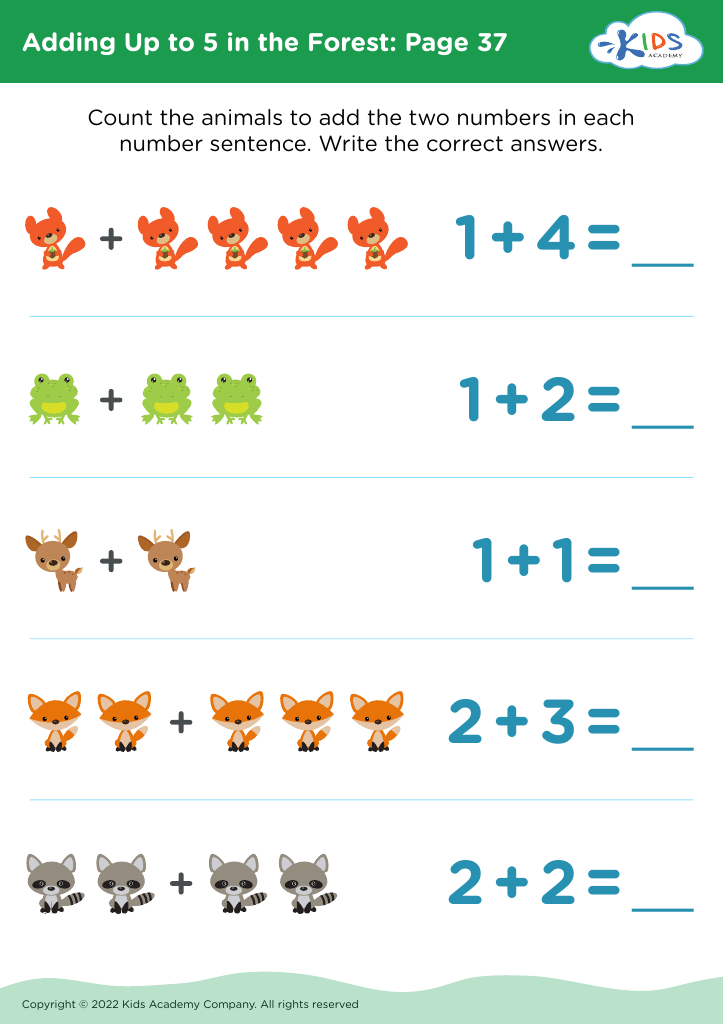
Adding Up to 5 in the Forest: Page 37
Worksheet
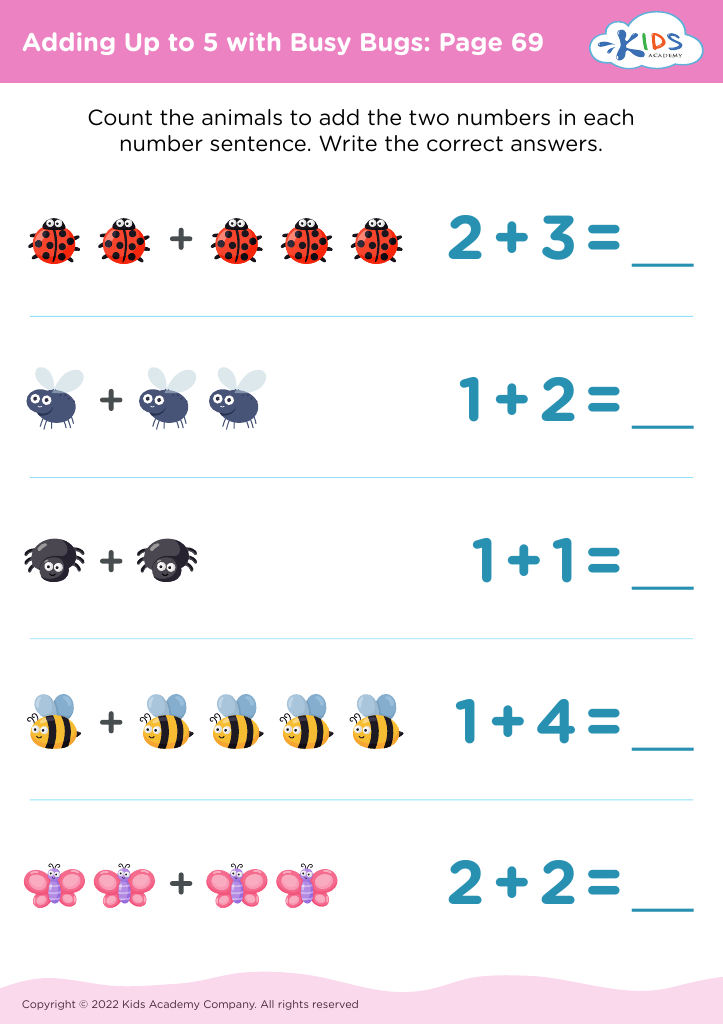
Adding Up to 5 with Busy Bugs: Page 69
Worksheet
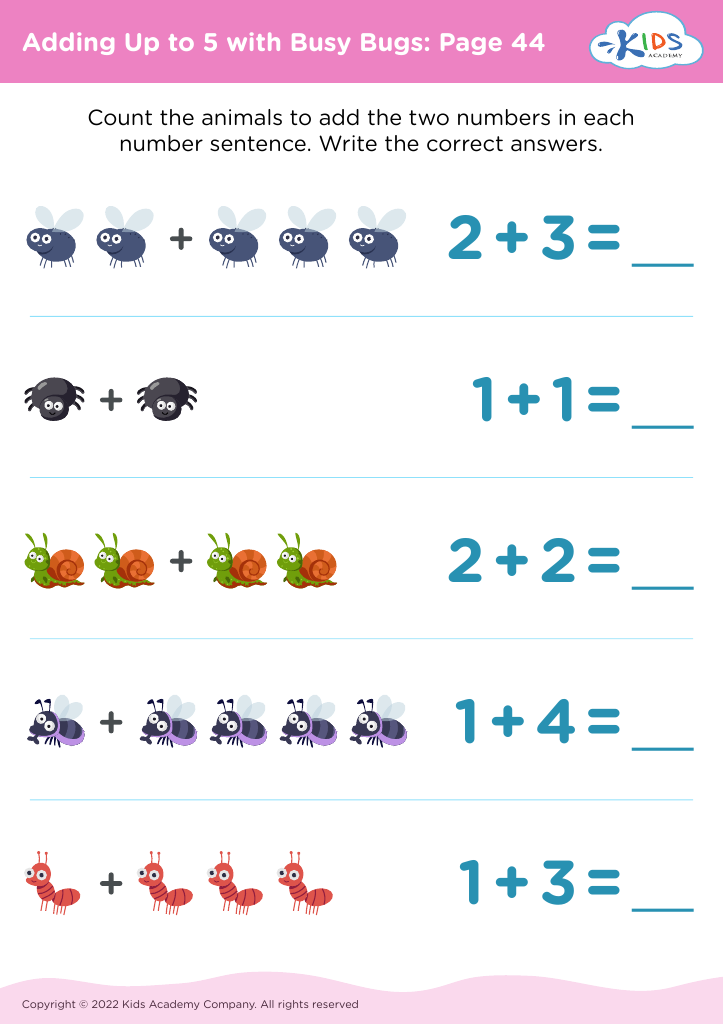
Adding Up to 5 with Busy Bugs: Page 44
Worksheet
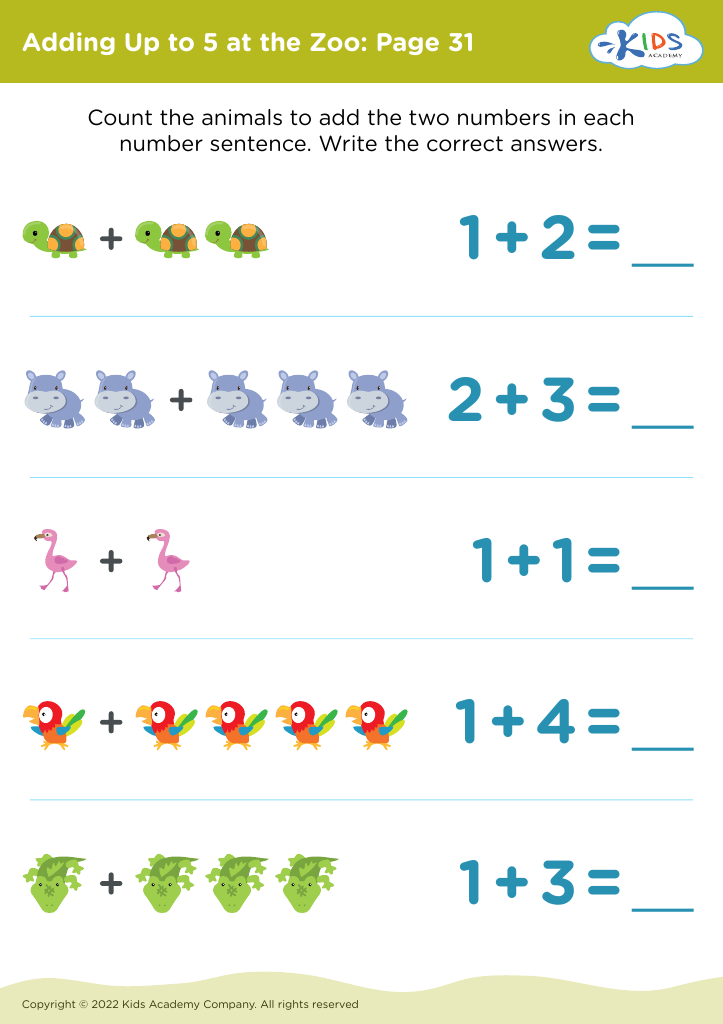
Adding Up to 5 at the Zoo: Page 31
Worksheet
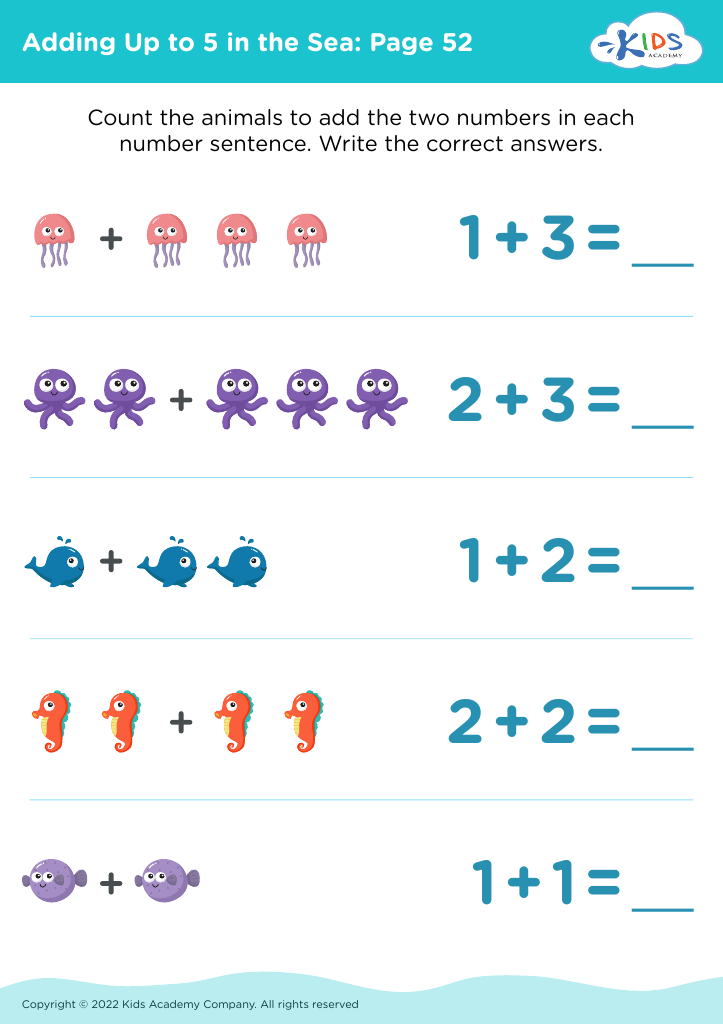
Adding Up to 5 in the Sea: Page 52
Worksheet
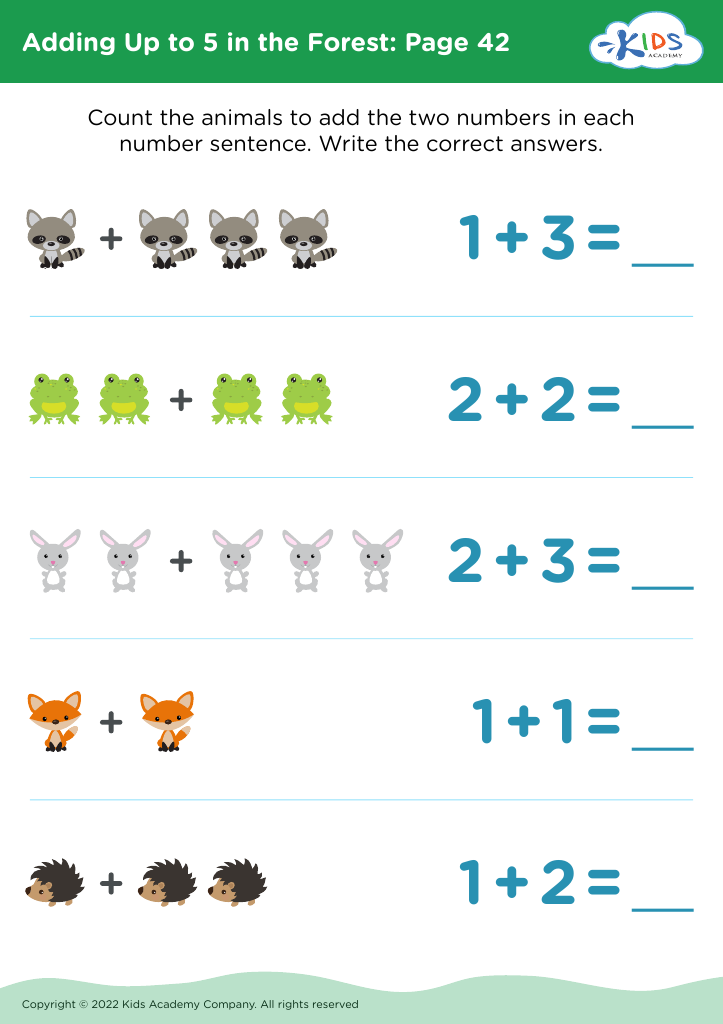
Adding Up to 5 in the Forest: Page 42
Worksheet
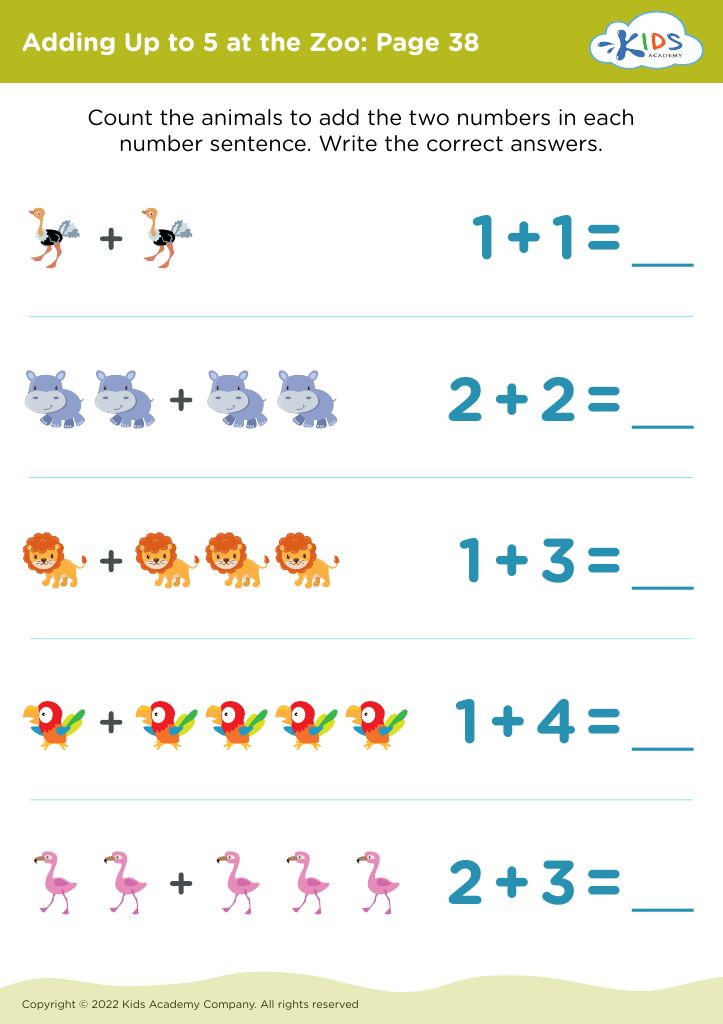
Adding Up to 5 at the Zoo: Page 38
Worksheet
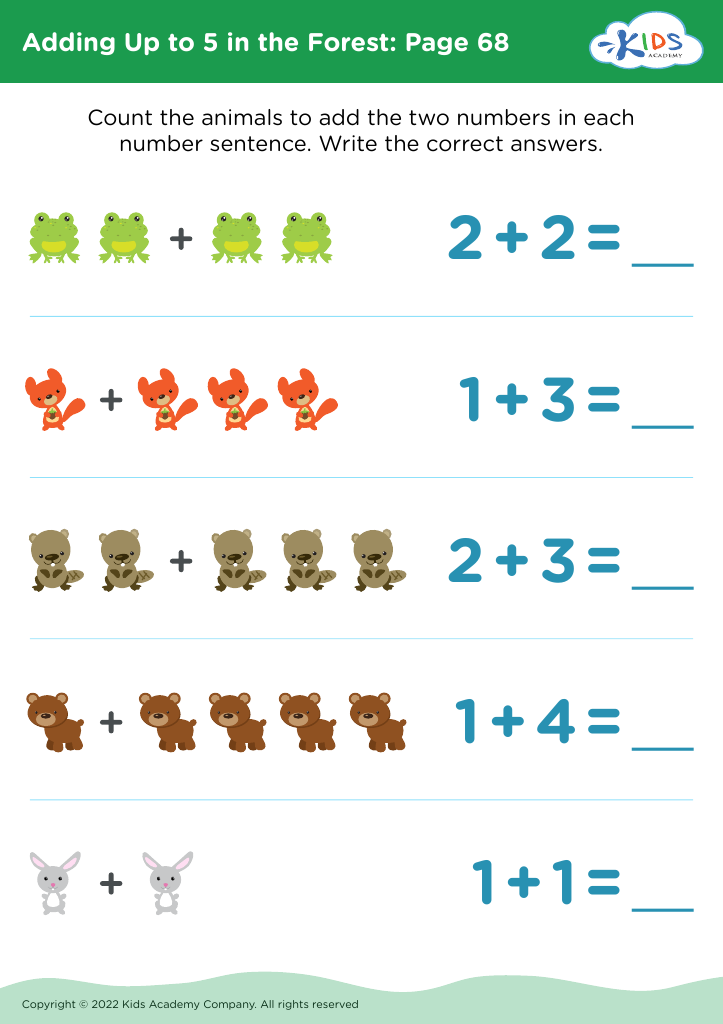
Adding Up to 5 in the Forest: Page 68
Worksheet
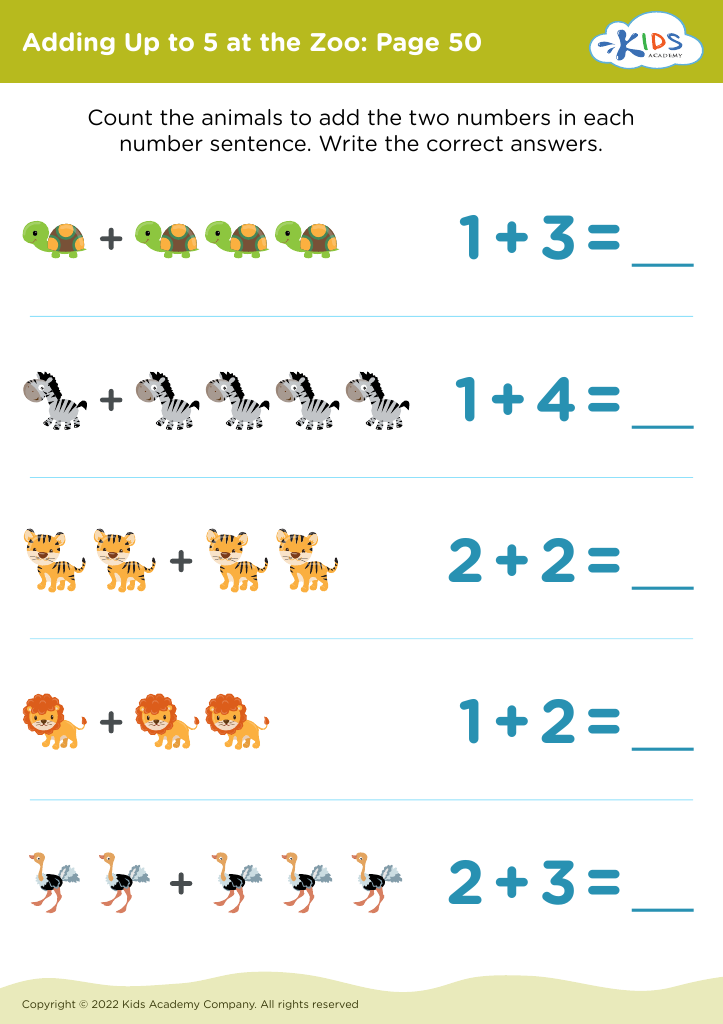
Adding Up to 5 at the Zoo: Page 50
Worksheet
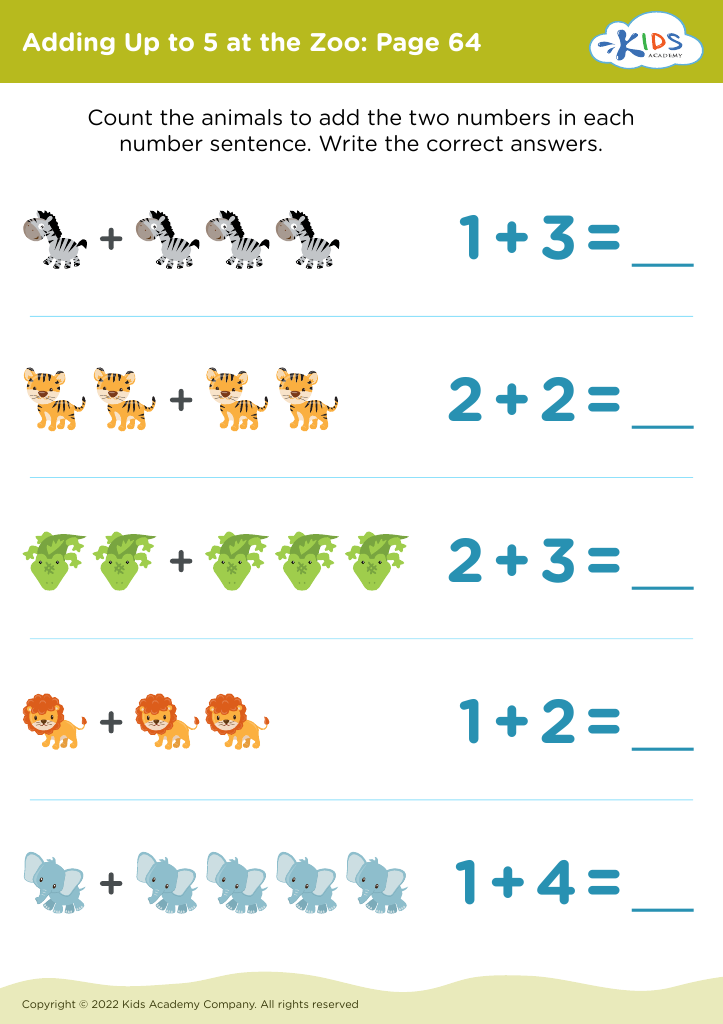
Adding Up to 5 at the Zoo: Page 64
Worksheet
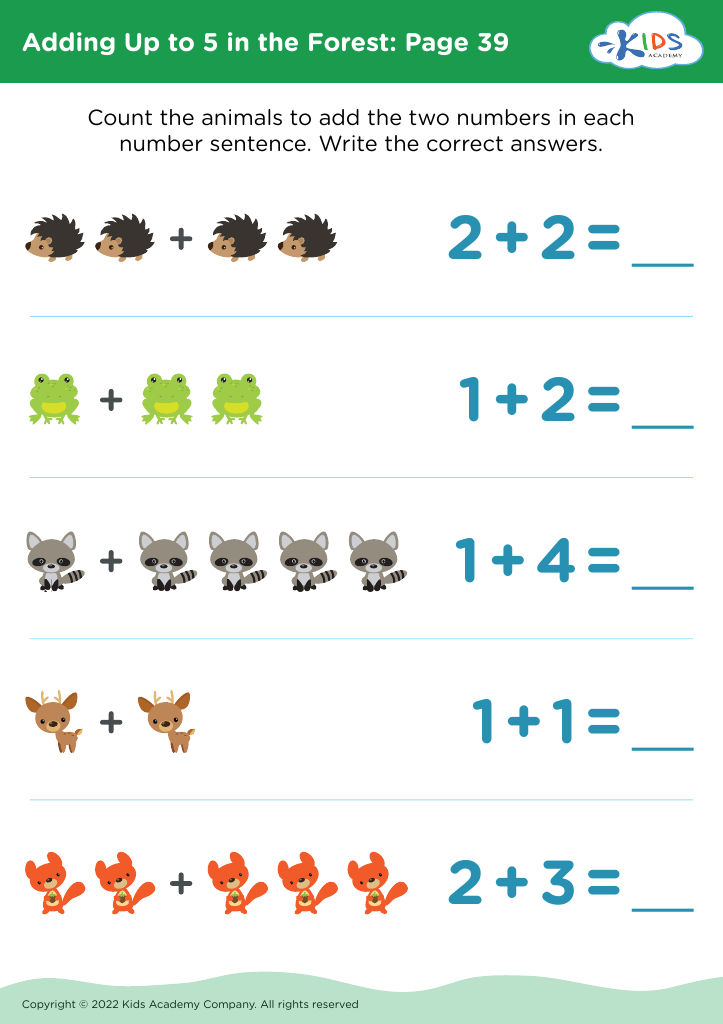
Adding Up to 5 in the Forest: Page 39
Worksheet
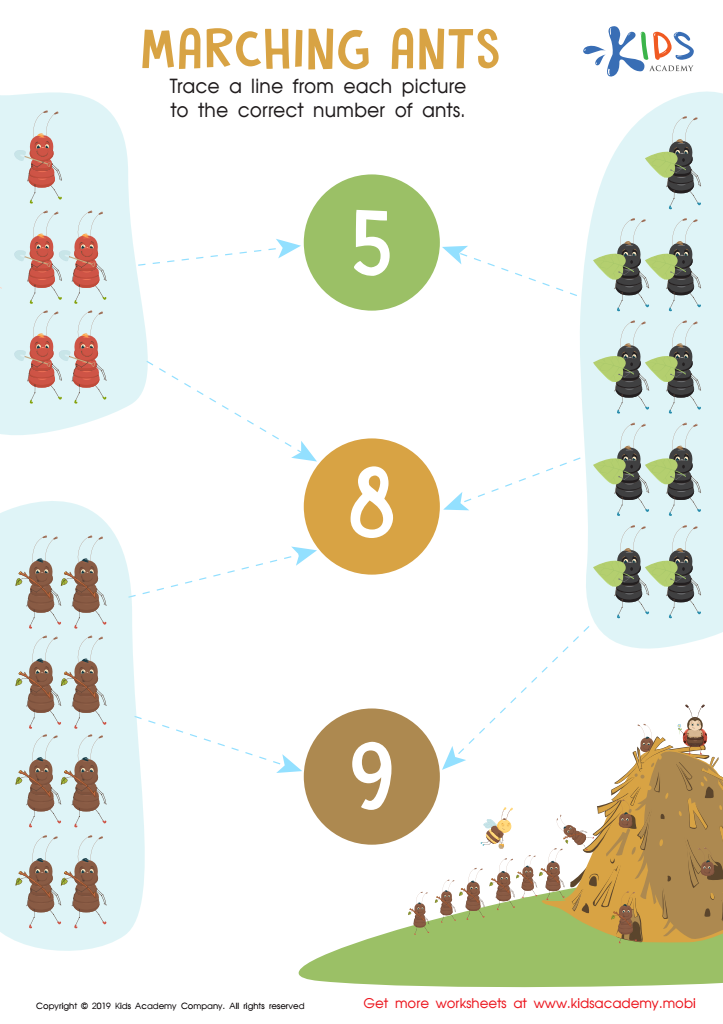
Marching Ants Worksheet

Marching Ants Worksheet

Assess and help your kids practice counting with this worksheet. Ask them to identify the four groups of ants in the picture. Guide them as they count each group and trace the lines to the corresponding number.
Marching Ants Worksheet
Worksheet
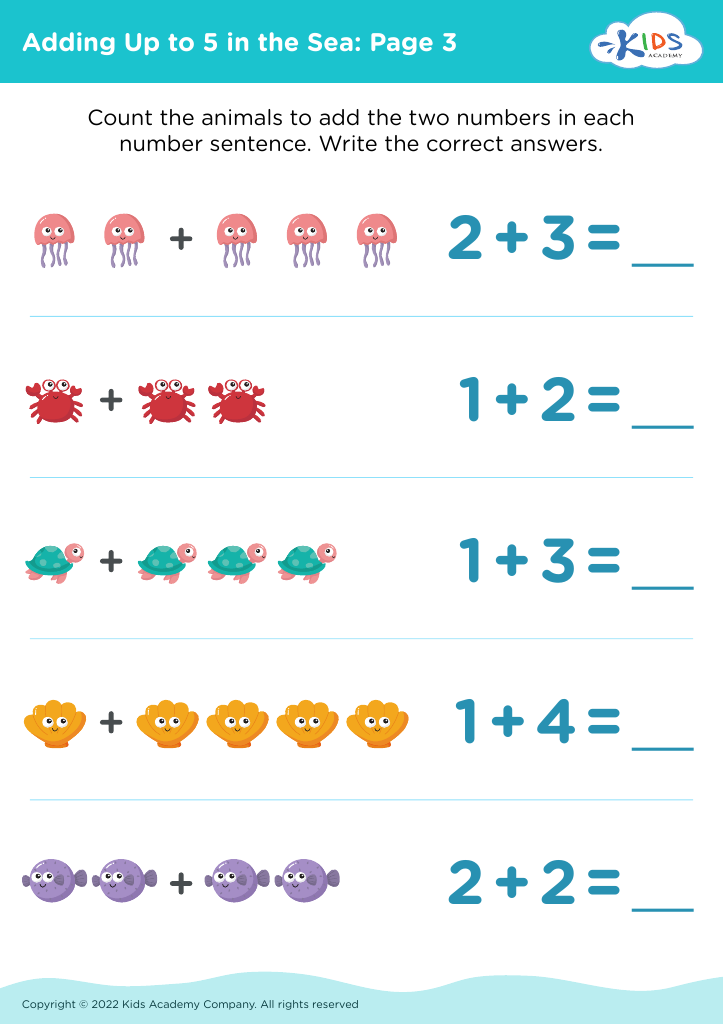
Adding Up to 5 in the Sea: Page 3

Adding Up to 5 in the Sea: Page 3

Adding Up to 5 in the Sea: Page 3
Worksheet
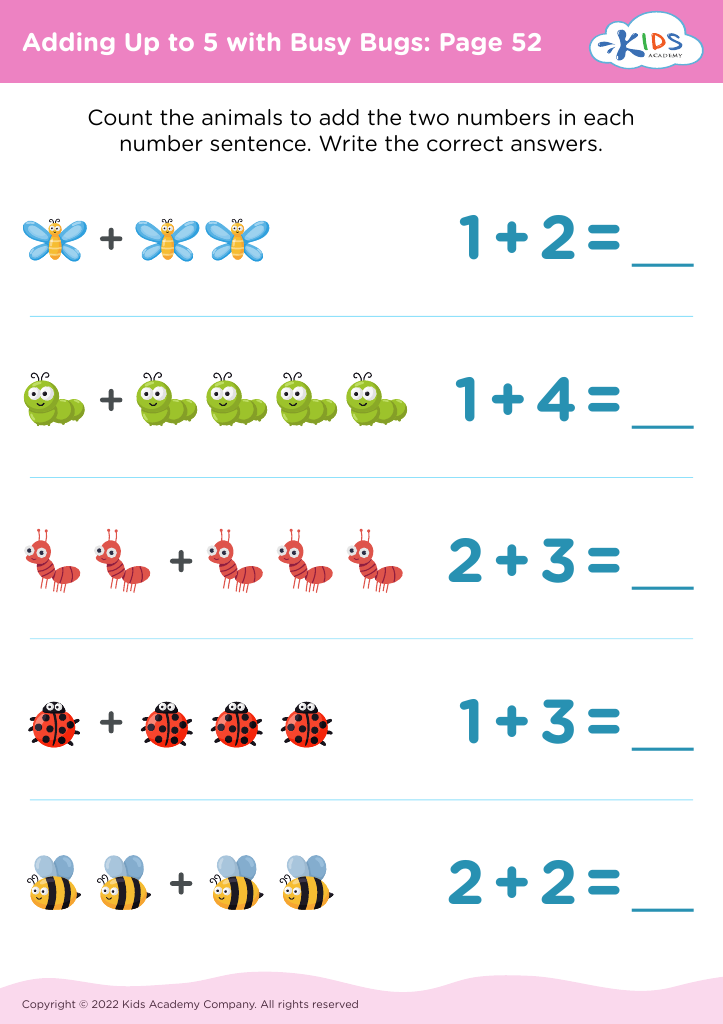
Adding Up to 5 with Busy Bugs: Page 52
Worksheet
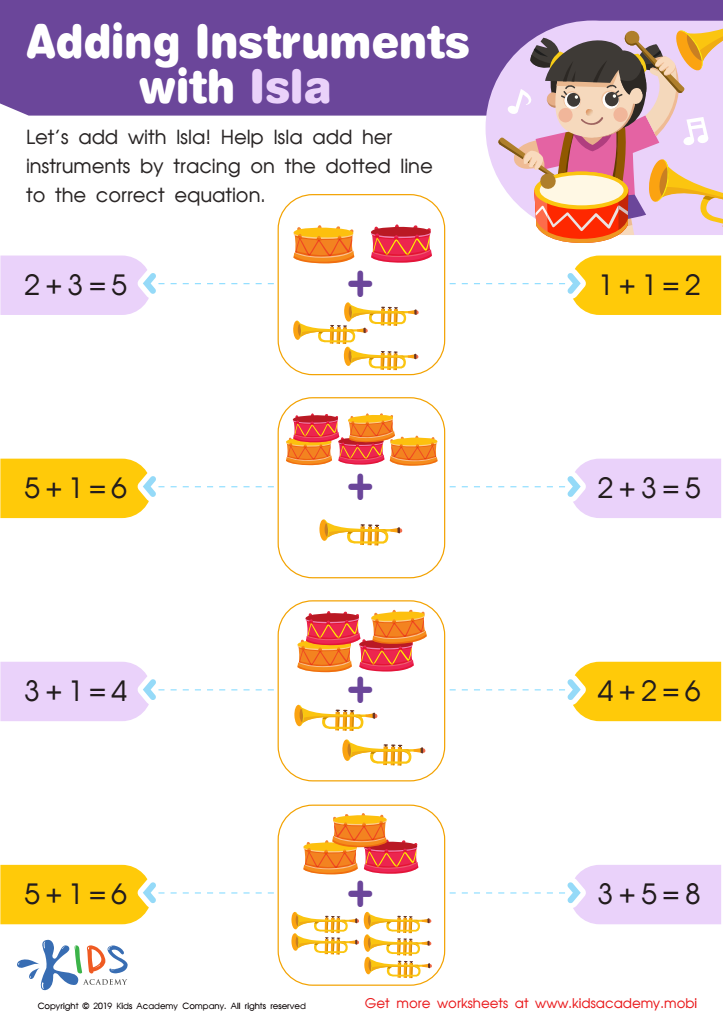
Adding Instruments with Isla Worksheet
Adding Instruments with Isla Worksheet
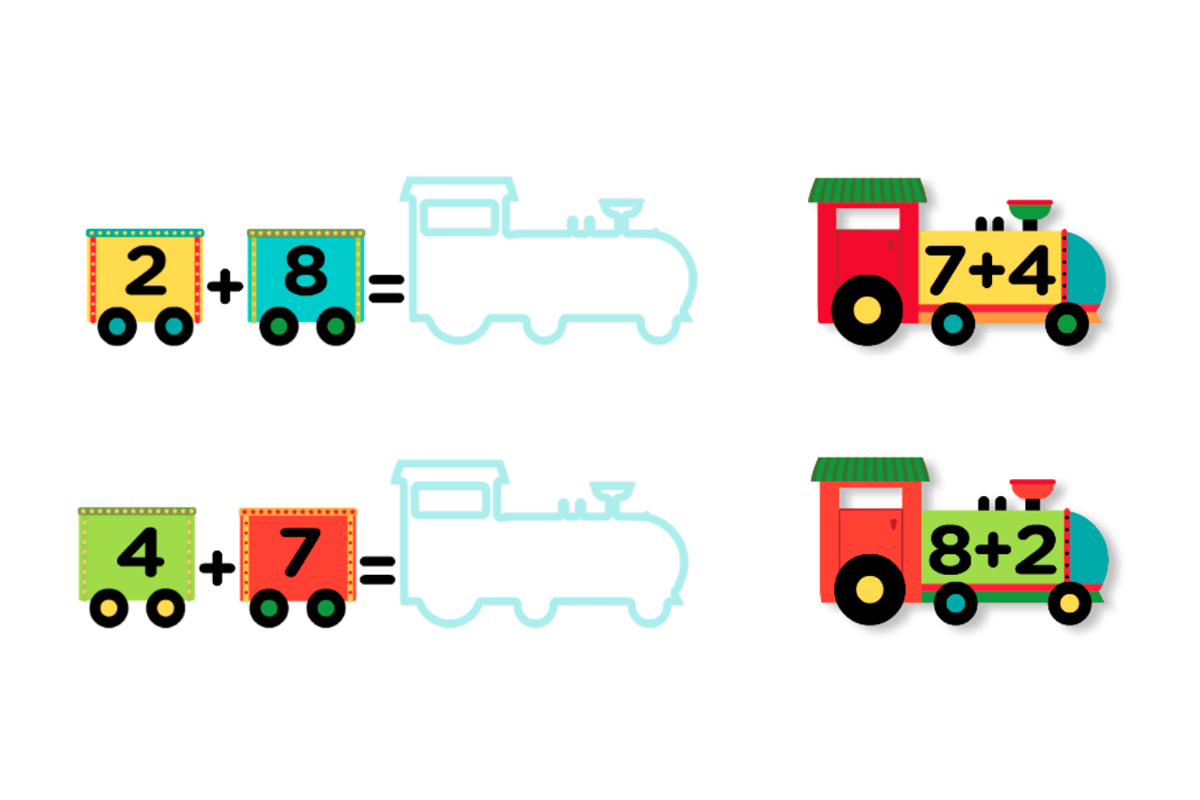
Your kids can have fun helping Isla add her musical instruments. With colorful pics and one-to-one representation, they can pick the correct addition sentence. They can connect each pic with traceable lines and get to the right sum up to 10.
Adding Instruments with Isla Worksheet
Worksheet
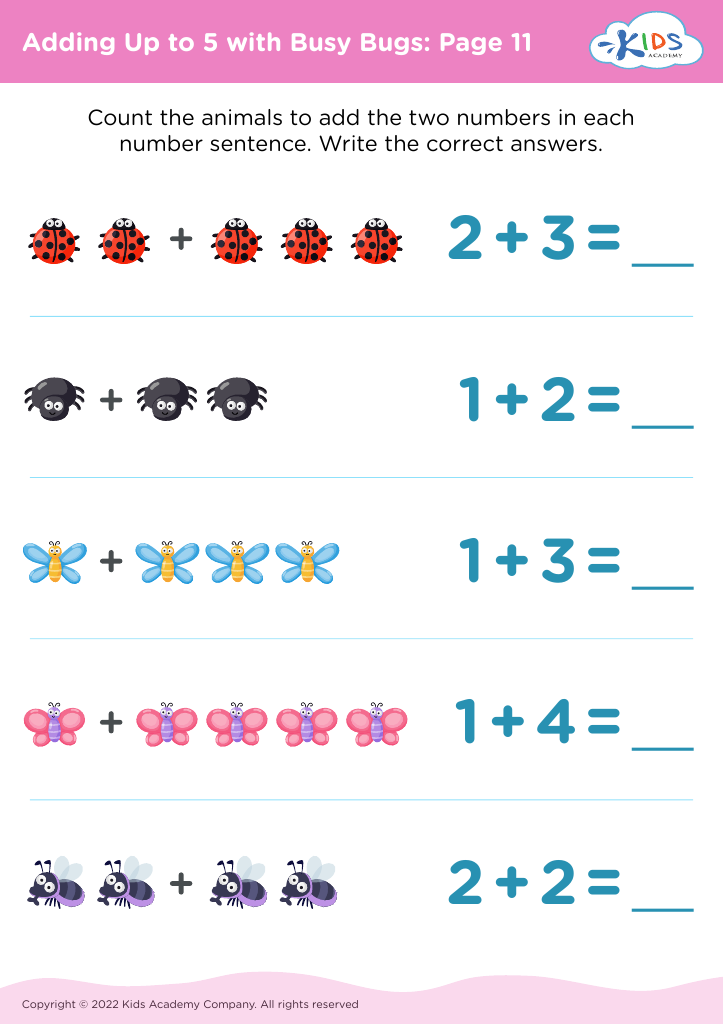
Adding Up to 5 with Busy Bugs: Page 11
Worksheet
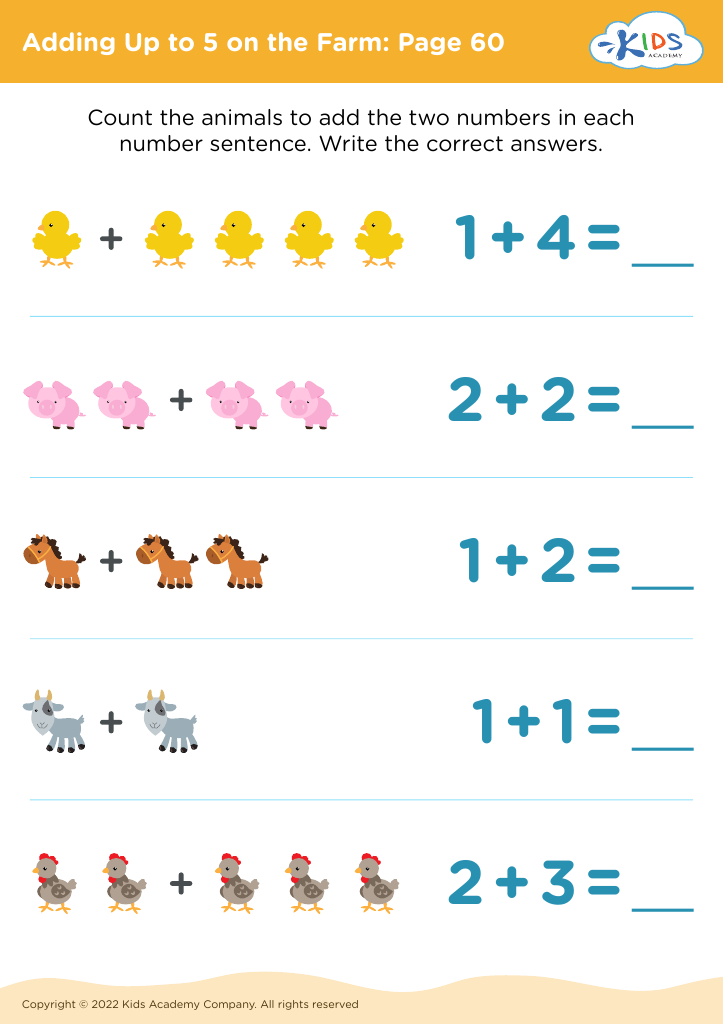
Adding Up to 5 on the Farm: Page 60
Worksheet
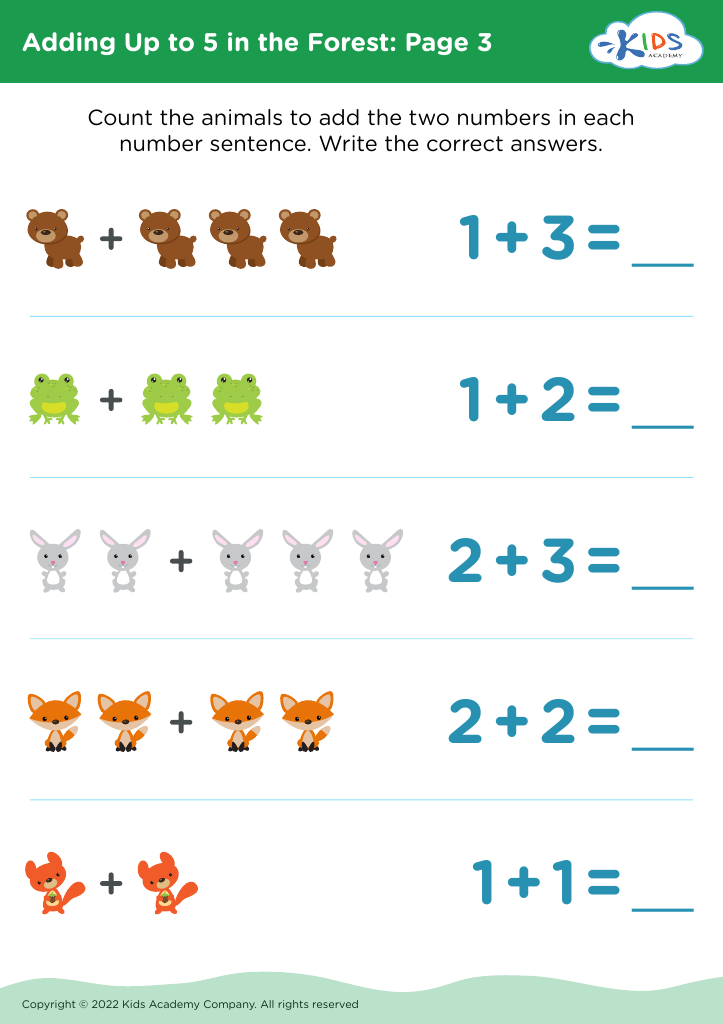
Adding Up to 5 in the Forest: Page 3
Worksheet
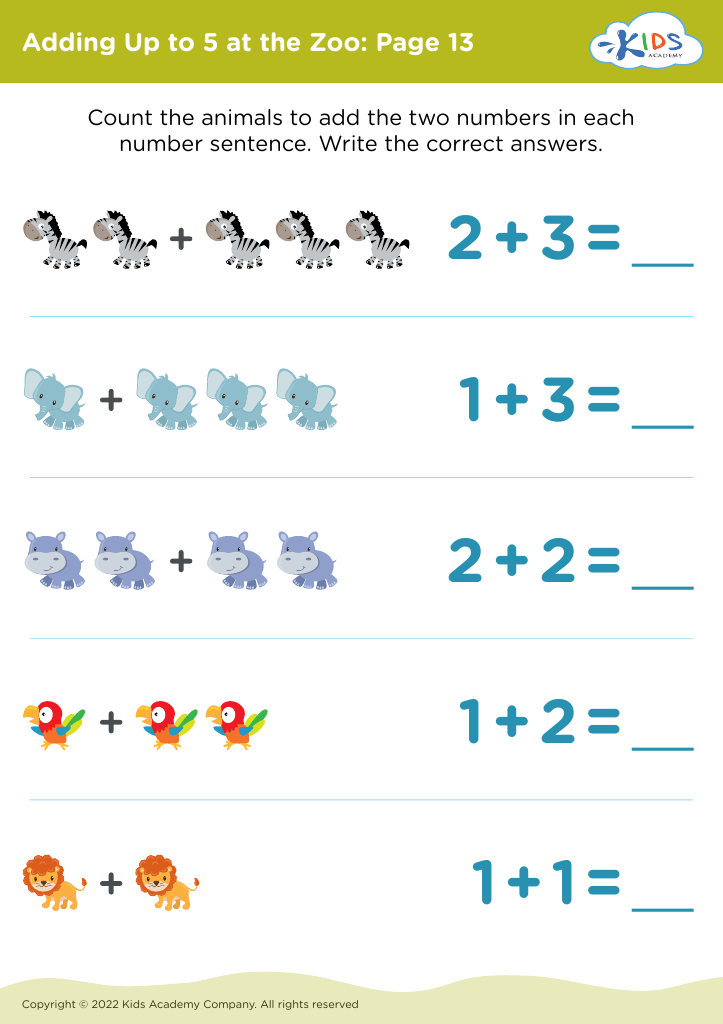
Adding Up to 5 at the Zoo: Page 13
Worksheet
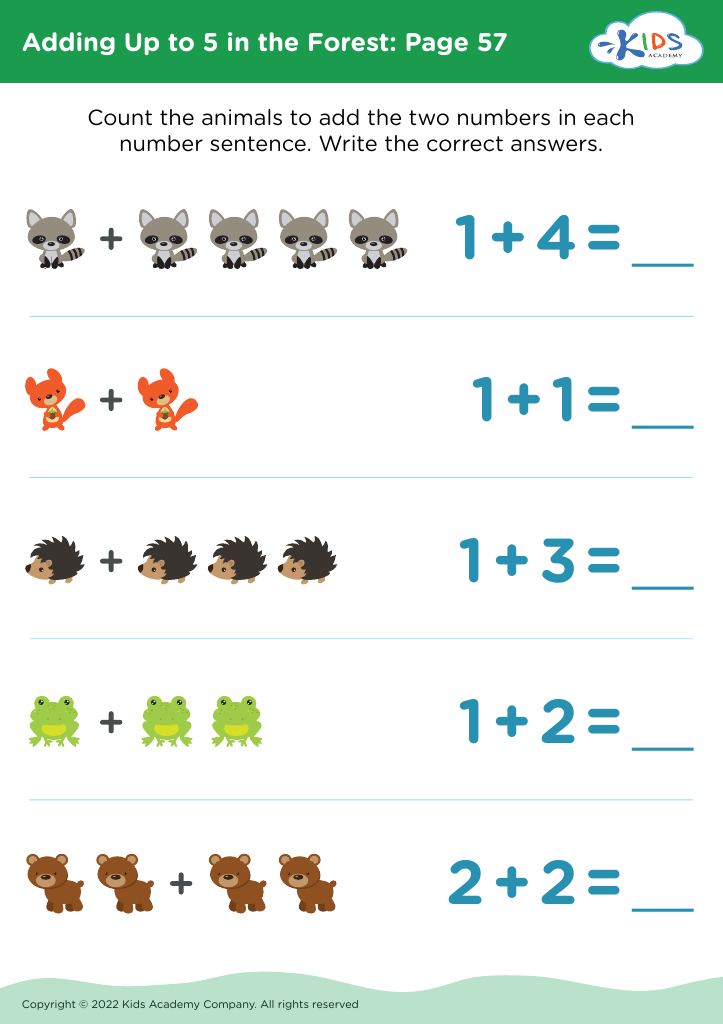
Adding Up to 5 in the Forest: Page 57
Worksheet
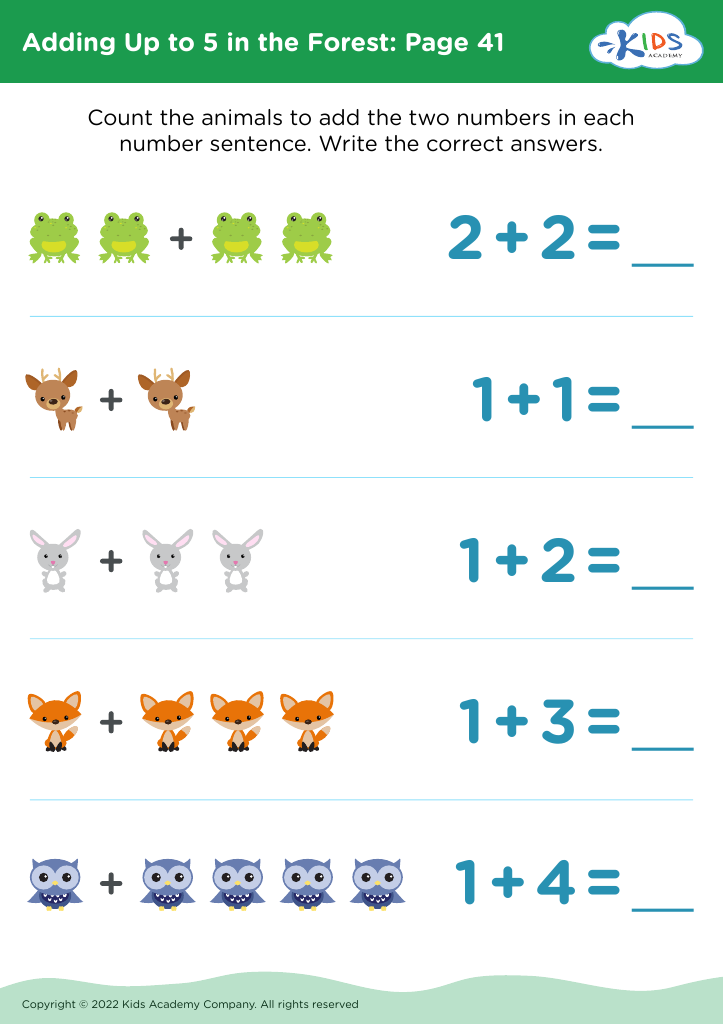
Adding Up to 5 in the Forest: Page 41
Worksheet
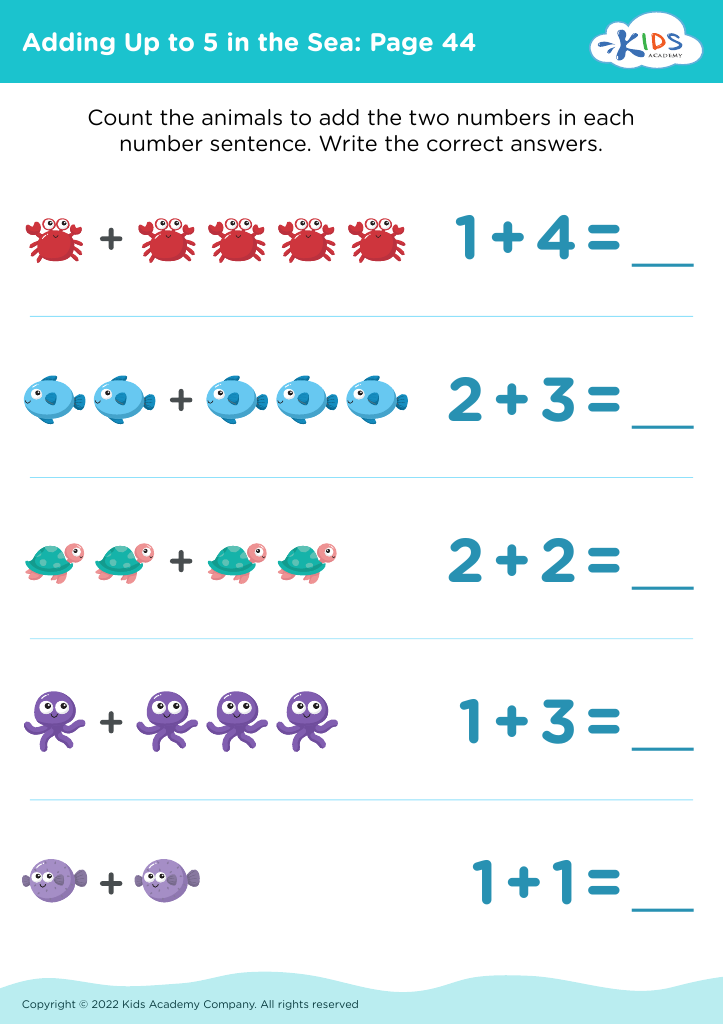
Adding Up to 5 in the Sea: Page 44
Worksheet


... 10 11

Parents and teachers play a critical role in nurturing basic addition skills in children aged 5-6 because foundational math skills are essential for future academic success and everyday life. At this developmental stage, children are naturally curious and capable of absorbing new concepts quickly. By introducing basic addition, adults can leverage this developmental window to establish a strong mathematical foundation.

Counting and simple addition help children understand numerical relationships and the concept of quantity, promoting cognitive development. Early math skills are predictive of later academic achievement, not only in mathematics but also in literacy. Proficiency in addition fosters problem-solving abilities, logical thinking, and the ability to follow multi-step processes, all of which are critical skills in various aspects of life.

Moreover, mastering basic addition boosts children’s confidence and encourages a positive attitude toward learning. Engaging with math concepts early on reduces anxiety and builds familiarity with number operations, making future, more complex topics easier to grasp. Interactive and enjoyable learning experiences, like games and hands-on activities, also promote a love for learning.

In essence, emphasizing basic addition skills at ages 5-6 sets the stage for academic success and essential life skills, equipping children to handle both classroom challenges and everyday tasks with confidence and competence.