Comparative skills Math Worksheets for Ages 5-6
3 filtered results
-
From - To
Unlock your child's potential with our engaging Comparative Skills Math Worksheets designed for kids ages 5-6! These vibrant worksheets provide an interactive way to help young learners master essential comparison concepts, such as bigger vs. smaller and more vs. less. Each activity is thoughtfully crafted to promote critical thinking and enhance understanding of size, quantity, and relationships between objects through fun exercises and illustrations. Ideal for classroom use or home learning, these worksheets make math practice enjoyable and effective. Help your child build a strong foundation in comparative skills while fostering a love for mathematics today!
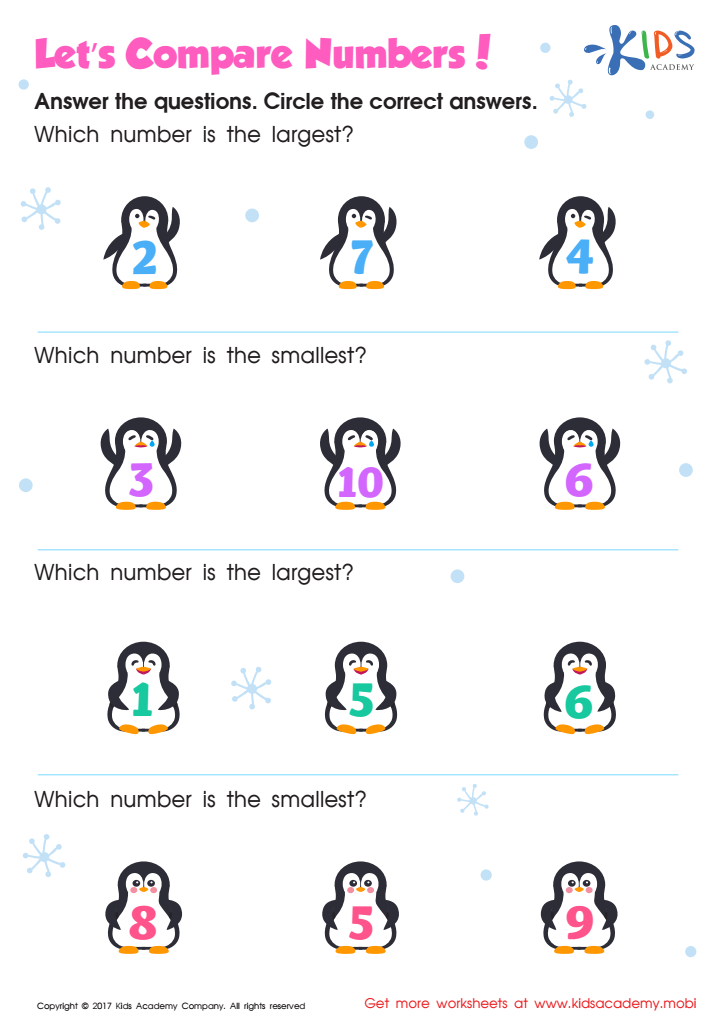
Comparing Numbers 1–10 Worksheet Kindergarten
 Assign to My Students
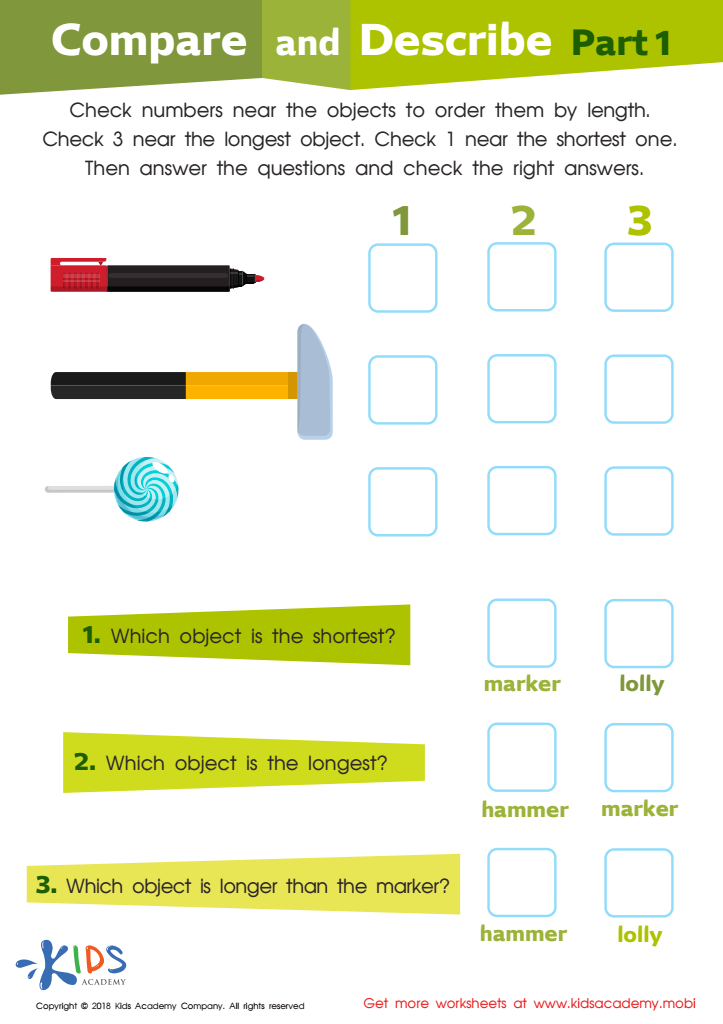
Compare and Describe: Part 1 Worksheet
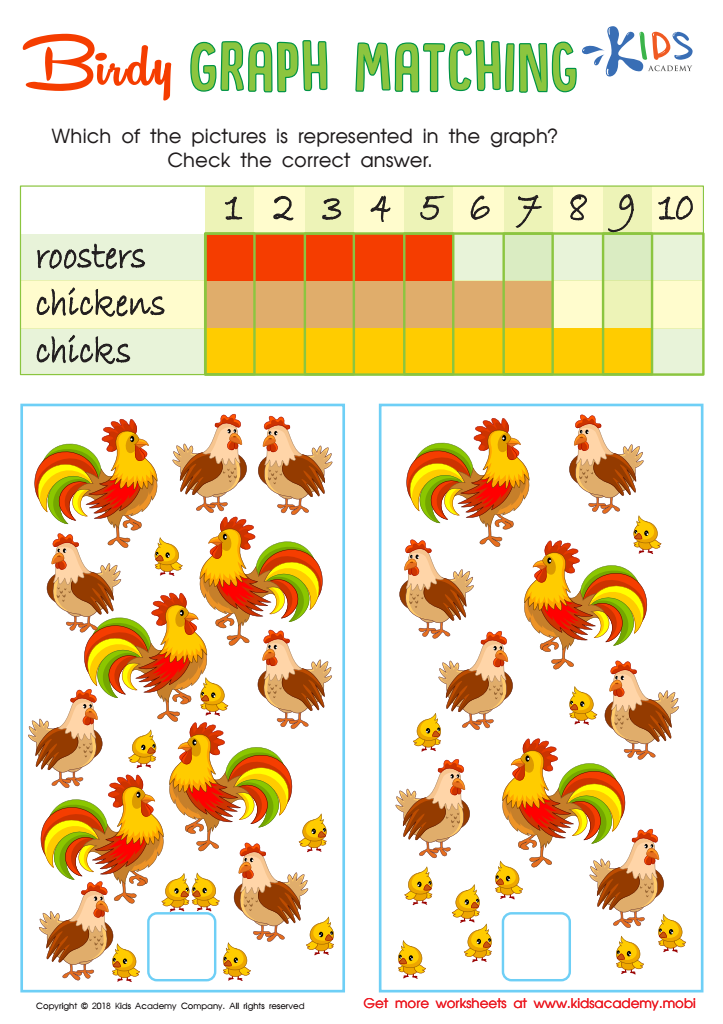
Birdy Graph Matching Worksheet







Comparative skills in math are essential for children aged 5-6 as they lay the groundwork for critical thinking and problem-solving abilities. At this age, children are naturally curious and ready to explore their environment; developing comparative skills harnesses this curiosity and helps them understand relationships between numbers, objects, and concepts.
These skills enable children to discern differences and similarities, which fosters analytical thinking. For instance, when children learn to compare quantities, sizes, or lengths, they strengthen their ability to make connections and interpretations. Such skills are not only foundational for early math concepts but also promote cognitive development, allowing children to make sense of complex ideas in the future.
Additionally, comparative skills encourage effective communication. As children explain their reasoning behind comparisons, they develop language skills and enhance their ability to articulate thoughts clearly. For parents and teachers, nurturing these abilities ensures that children build confidence in their mathematical understanding and fosters a love for learning.
In sum, prioritizing comparative skills in math during the early years is pivotal. It supports holistic development—academically, socially, and emotionally—ensuring a strong foundation for lifelong learning and critical engagement with the world around them.








