Fine motor skills (drawing) Math Worksheets for Ages 5-6
4 filtered results
-
From - To
Our Fine Motor Skills Math Worksheets for ages 5-6 combine the joy of creative drawing with the fundamentals of early math learning. Specially designed to enhance young learners' dexterity and pencil control, these engaging activities help build handwriting readiness, shape recognition, number formation, and basic counting skills. Each worksheet encourages children to trace, draw, and color within fun, age-appropriate math exercises. Perfect for classrooms and homeschooling, these resources are crafted to support children in developing both their motor skills and foundational math principles in a fun, interactive way. Visit our website to discover our range of printable worksheets.
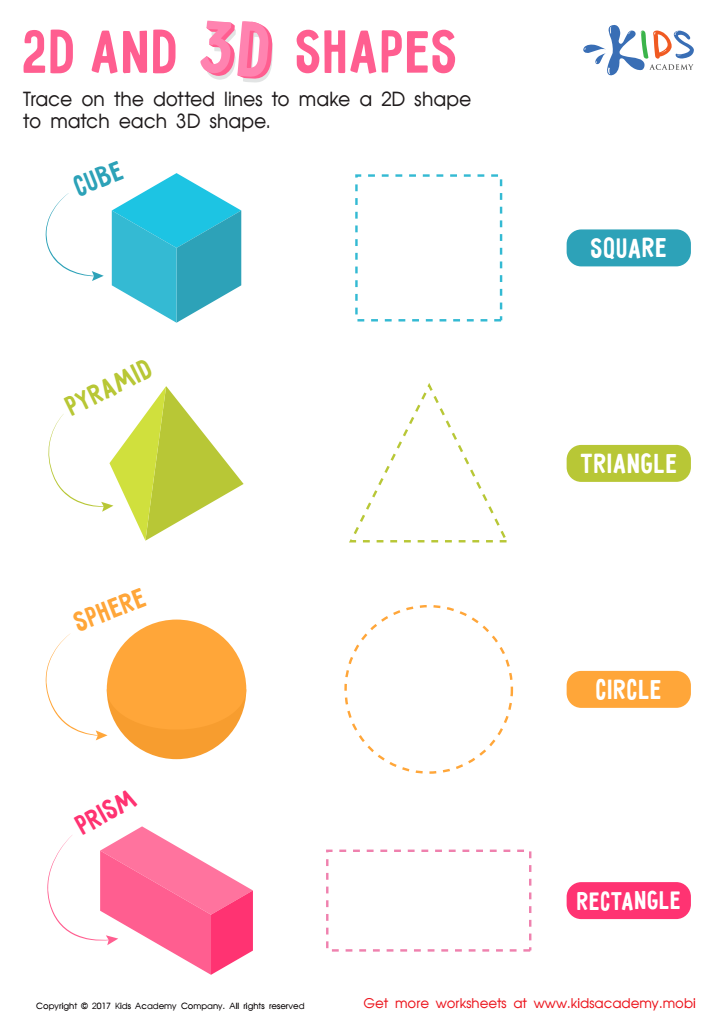
2D and 3D Shapes Worksheet
 Assign to My Students
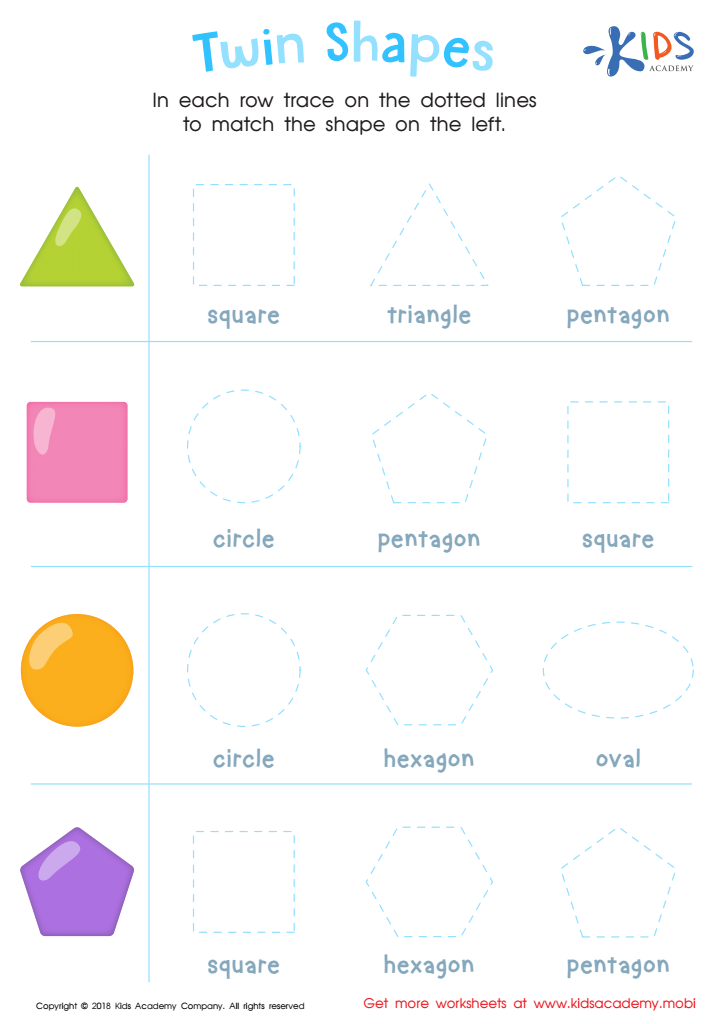
Twin Shapes Dot-to-Dot Worksheet
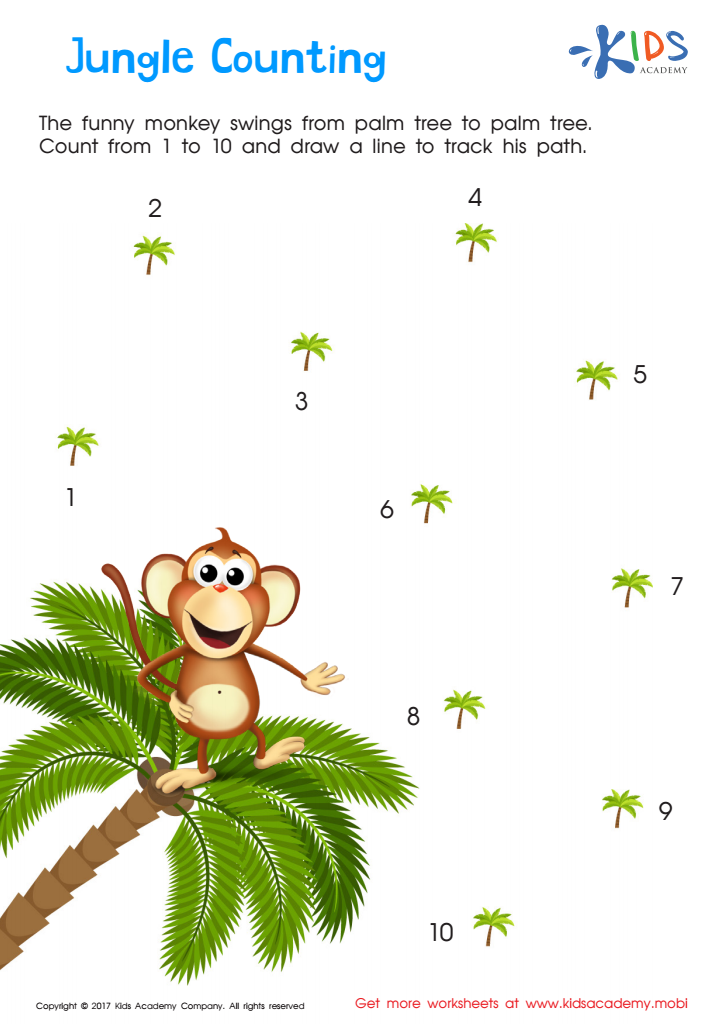
Jungle Counting Connect Dots Worksheet
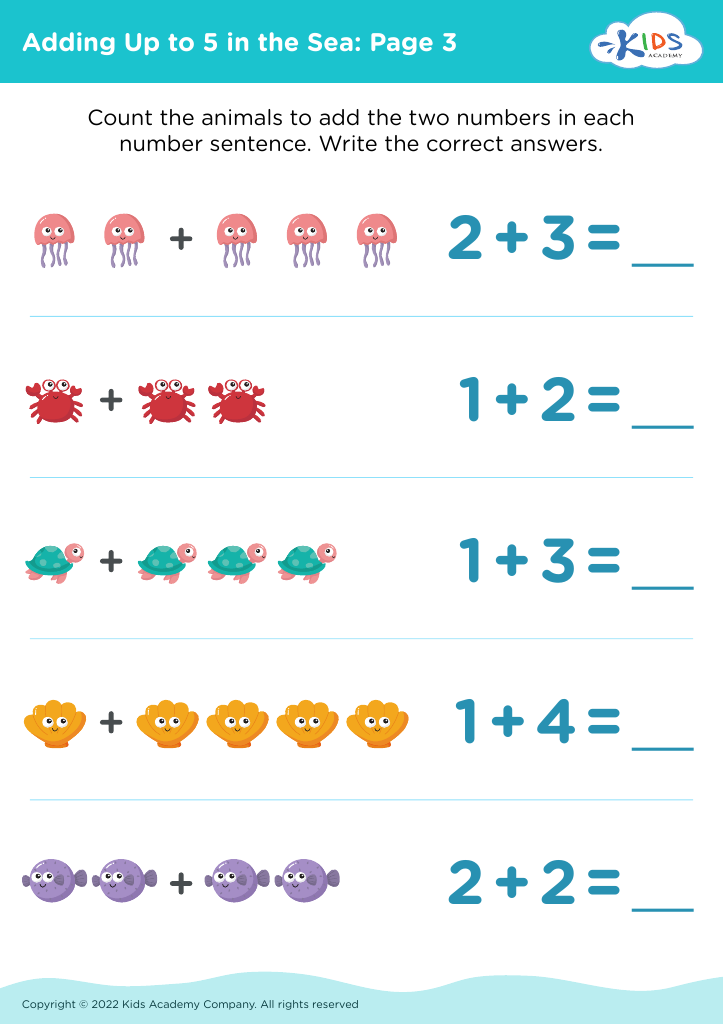




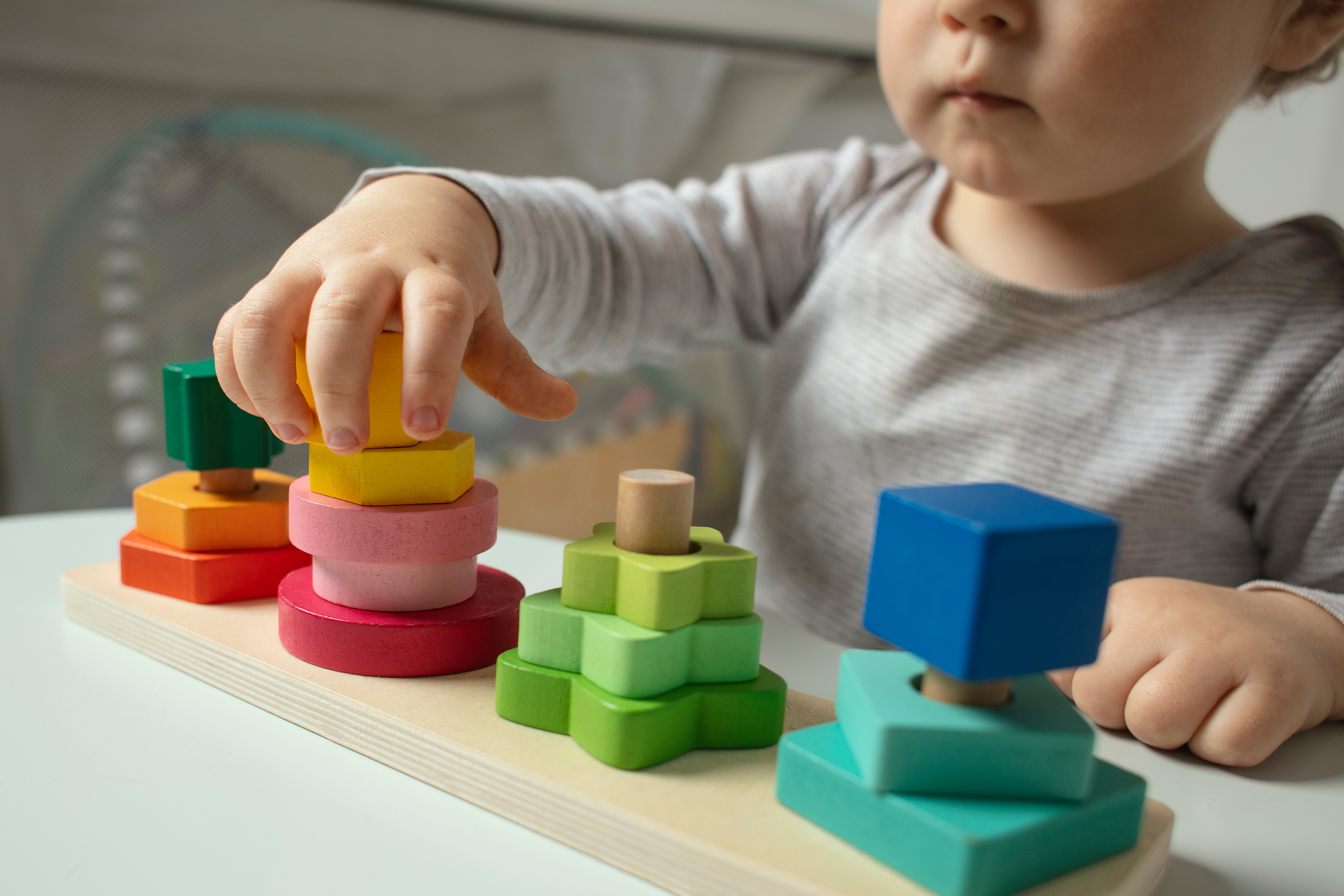

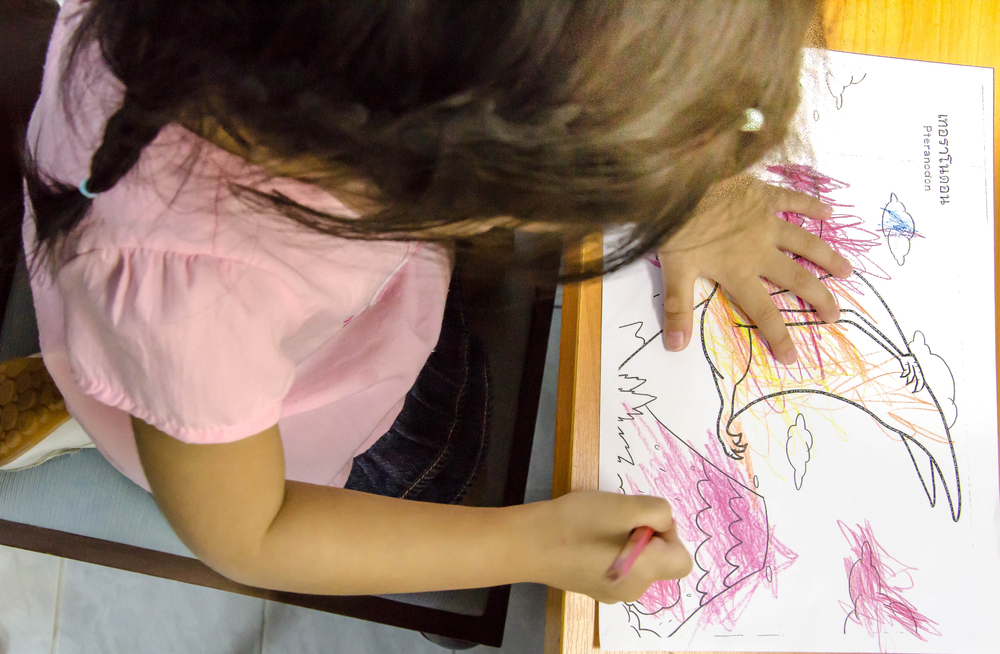

Parents and teachers should deeply care about fine motor skills, including drawing and early math education, for children aged 5-6 because these skills form crucial foundations for overall development and future academic success. Fine motor skills involve the coordination of small muscles, especially in the hands and fingers, which are essential for performing everyday tasks such as writing, buttoning clothes, and using utensils. Engaging in drawing helps children develop these muscles, enabling more precise and controlled movements.
At this early age, math learning is equally important. Early mathematical skills, such as counting, recognizing shapes, and understanding basic addition and subtraction, lay the groundwork for more complex mathematical thinking in later years. Integrating drawing with math activities—for example, drawing shapes, creating patterns, or illustrating simple math problems—makes learning engaging and fun, thereby enhancing comprehension and retention.
Furthermore, developing fine motor and math skills simultaneously encourages a child’s problem-solving abilities, cognitive development, and self-confidence. These practices help bridge the gap between hands-on learning and conceptual understanding. Investing time in nurturing these skills ensures that children are well-prepared for the more demanding academic tasks ahead, setting them on a path to lifelong learning and success. Therefore, the emphasis on fine motor skills and early math mastery during the formative years cannot be overstated.








