
Graph interpretation Math Worksheets for Ages 5-6
3 filtered results
Difficulty Level
Grade
Age
-
From - To
Subject
Activity
Standards
Unlock your child's analytical skills with our "Graph Interpretation Math Worksheets for Ages 5-6." These fun and engaging printable worksheets are designed to help young learners understand how to read and interpret simple graphs. Each activity introduces essential concepts such as counting, comparing, and categorizing data, providing a solid foundation in early math skills. Perfect for classroom use or homeschooling, our graph interpretation worksheets are expertly crafted to support first steps in math proficiency. With colorful visuals and interactive tasks, your child will enjoy learning while building confidence in their ability to analyze information. Download now and watch their skills grow!
Favorites
With answer key
Interactive
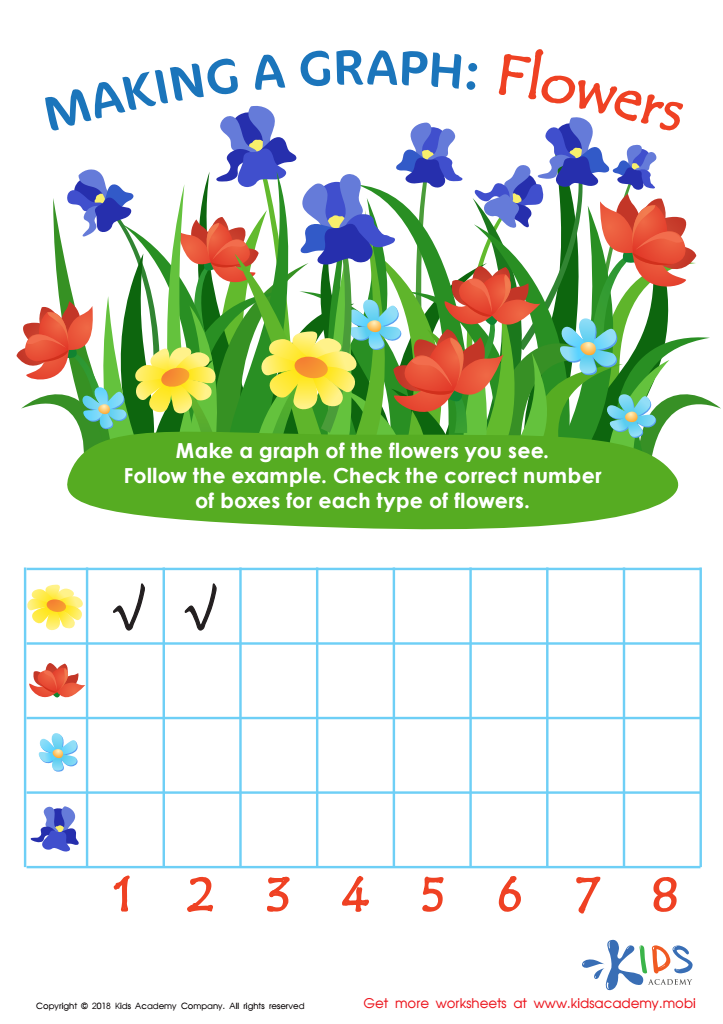
Making a Graph: Flowers Worksheet
Kids will love this engaging PDF graph. They'll count flowers and use checkmarks to represent the number on the graph, tangibly seeing the differences in an organized way they contributed to. All while developing their number representation and concrete number sense skills without even realizing it!
 Assign to My Students
Making a Graph: Flowers Worksheet
Worksheet
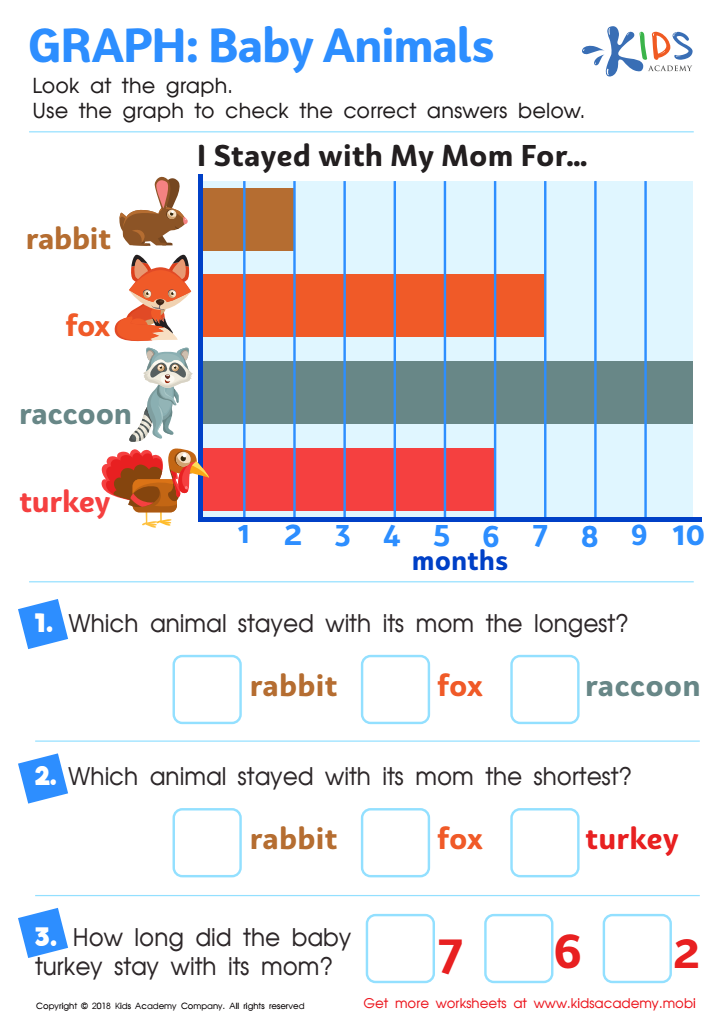
Graph: Baby Animals Worksheet
Graphs are essential for learning in math, science and ELA. This worksheet featuring baby animals is a fun way to practice reading graphs. Look at the graph and answer the questions below it. Check the boxes for the right answers based on the data.
Graph: Baby Animals Worksheet
Worksheet
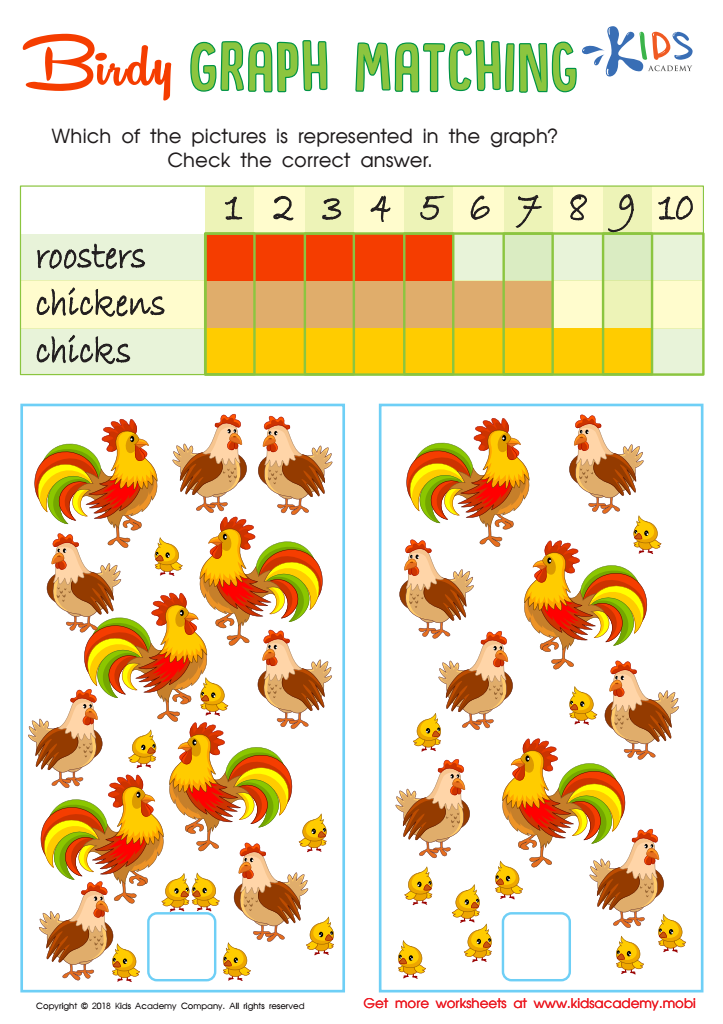
Birdy Graph Matching Worksheet
Treat your little one to a fun worksheet to practice visual discrimination, counting, graphing and tallying! They will sort the birds, count and assign values and use graph reading to answer the questions. They'll be so busy enjoying the counting that they won't even realize they are honing their skills!
Birdy Graph Matching Worksheet
Worksheet
Join Kids Academy for Free
Who is primarily going to use this learning content?



.jpg)



.jpg)
Introducing graph interpretation to children aged 5-6 is highly beneficial for their early cognitive development and provides a solid foundation for future learning. At this age, children's brains are rapidly growing, soaking up new concepts and abilities. Graphing helps them develop critical thinking, pattern recognition, and data interpretation skills.
For parents and teachers, encouraging graph comprehension opens doors to several core mathematical concepts, including counting, comparison, sorting, and basic operations like addition and subtraction. Children learn to visualize relationships between numbers, objects, or events by interacting with simple bar graphs, pictographs, or line plots. These visual tools make abstract ideas more concrete, making it easier for young minds to grasp.
Moreover, graph interpretation skills are foundational for subjects beyond math. Science, social studies, and even literacy often require students to understand and create graphs. Early exposure builds confidence and reduces math anxiety, making these subjects more approachable in later years.
Lastly, incorporating graph activities can enhance engagement and make learning interactive and fun. The use of colors, shapes, and familiar objects in graphs captures their attention, promoting a positive attitude towards math and learning in general. For these reasons, parents and teachers should prioritize graph interpretation as part of a well-rounded early education.








