Recognizing shapes Math Worksheets for Ages 5-6
4 filtered results
-
From - To
Discover engaging "Recognizing Shapes" math worksheets tailored for ages 5-6 on Kids Academy's website. Perfect for young learners, these printable worksheets help kids identify and differentiate between various shapes. With vibrant illustrations and fun activities, these sheets are designed to make learning an enjoyable experience, enhancing essential geometry skills. Our expertly crafted resources assist in developing a strong mathematical foundation, vital for future learning. Bring the joy of discovering shapes into your home or classroom, and watch your child’s confidence and abilities grow with Kids Academy’s educational worksheets. Suitable for preschool and kindergarten children.
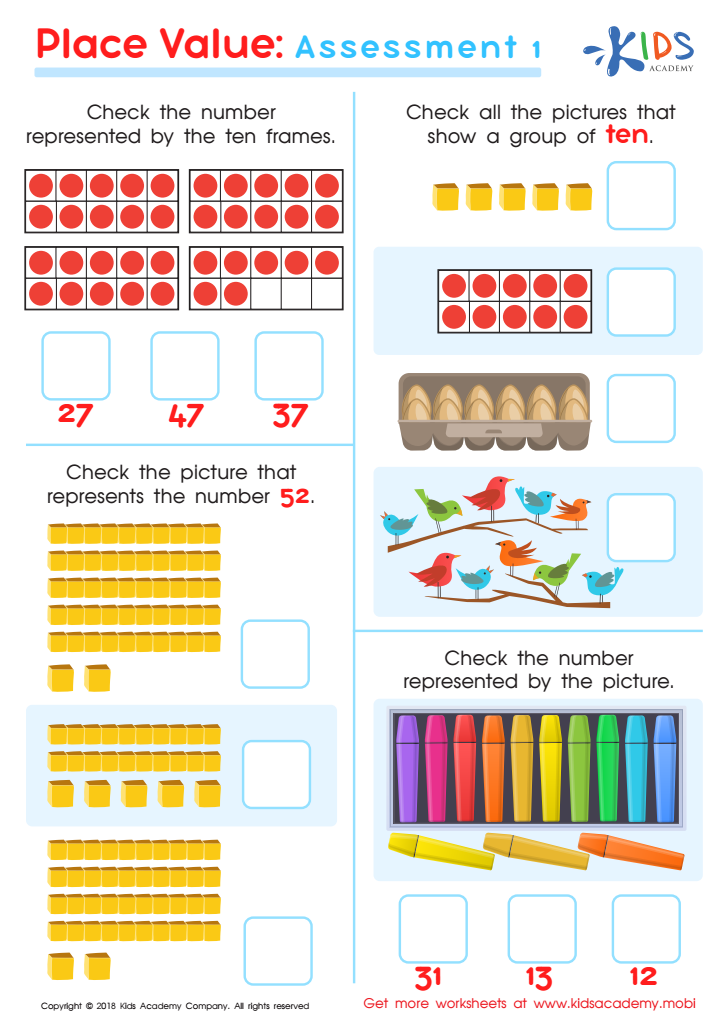
Place Value: Assessment 1 Worksheet
 Assign to My Students
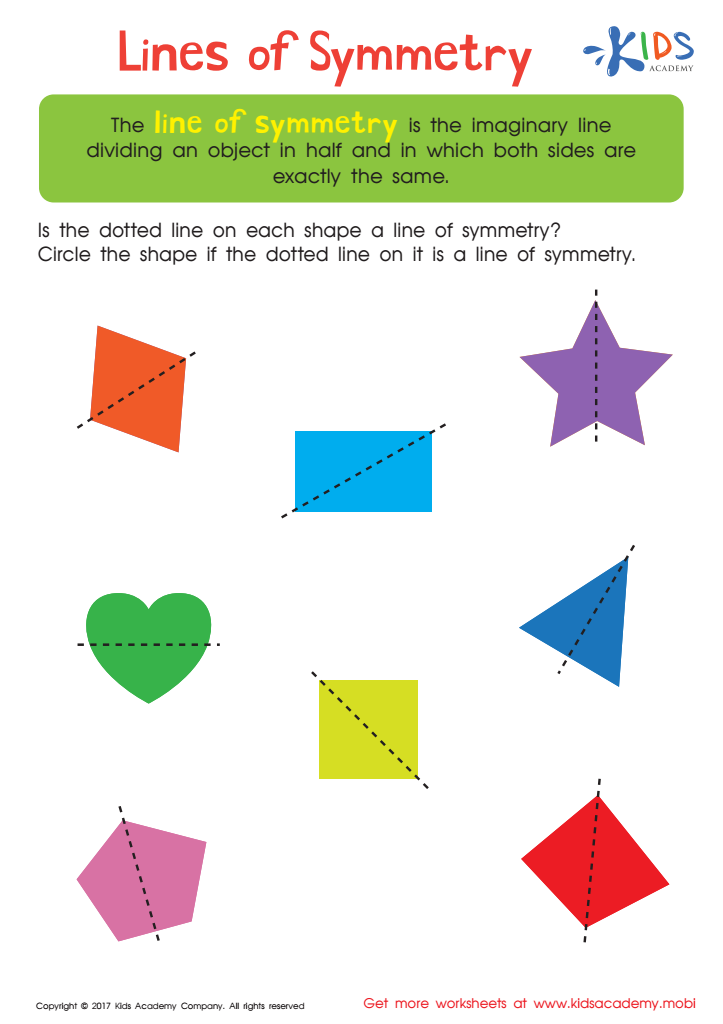
Lines of Symmetry Printable
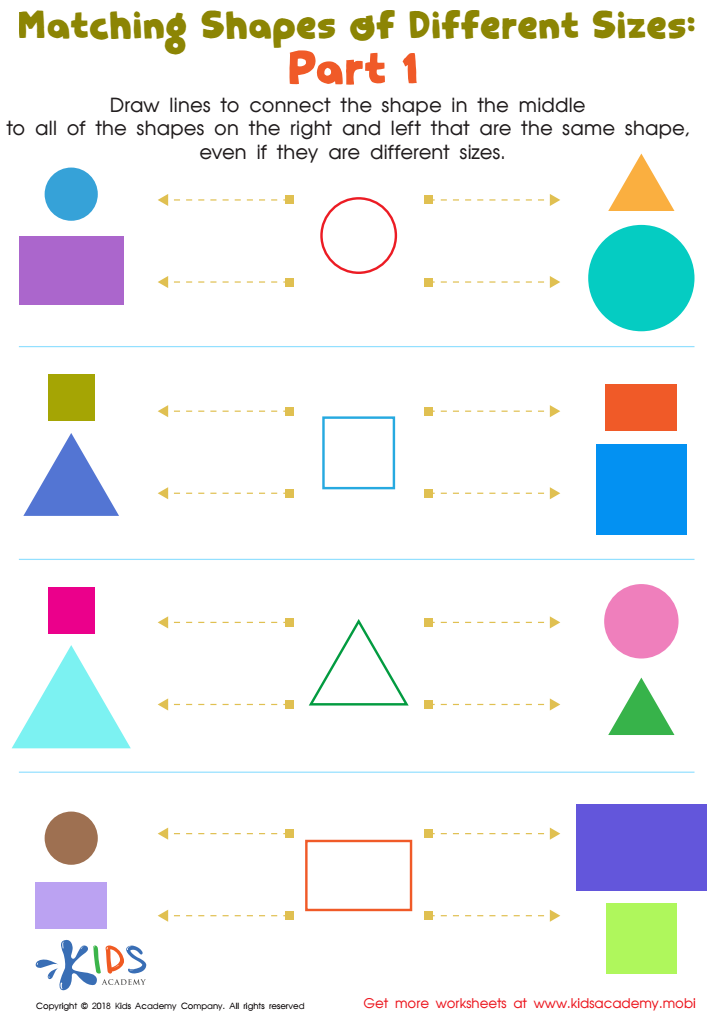
Geometry: part 1 Worksheet
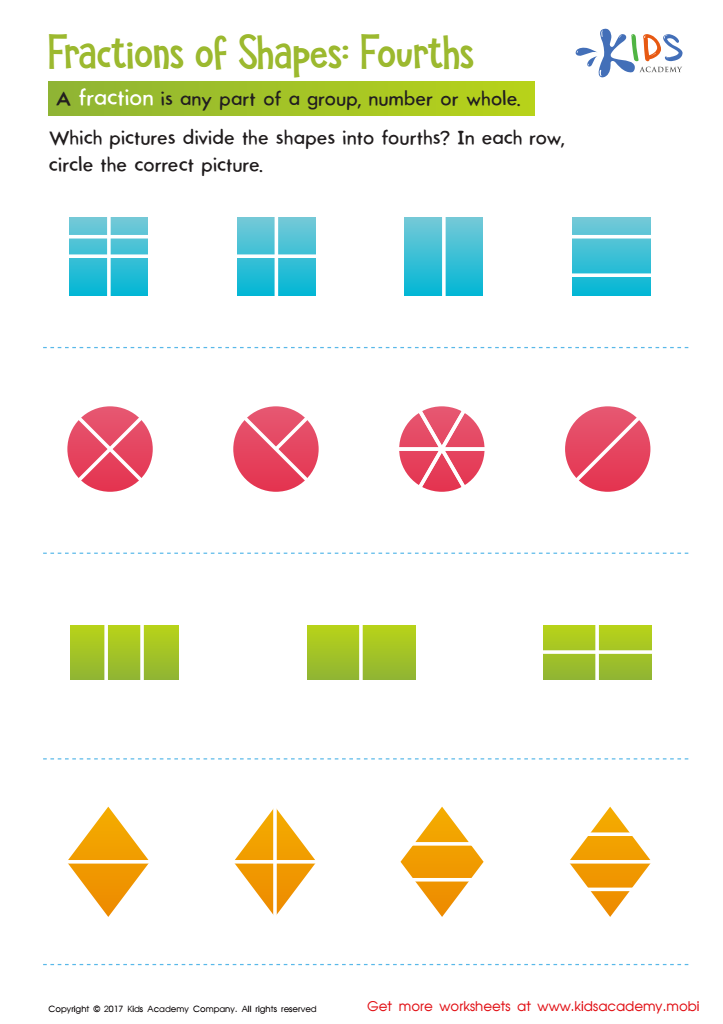
Fractions of Shapes Worksheet








Recognizing shapes holds significant importance for children aged 5-6 as it lays a strong foundational skill set for future mathematical learning and everyday life. At this crucial developmental stage, the brain is especially receptive to spatial awareness and geometric concepts, which are vital for problem-solving and critical thinking.
Parents and teachers should care about teaching shapes because it extends beyond mere academic success. Understanding shapes, such as squares, circles, and triangles, helps children perceive and organize their world. For instance, a child's ability to recognize and interpret various shapes in their environment aids in reading comprehension, as letters and numbers have specific shapes.
Moreover, recognizing shapes enhances fine motor skills. Children learn to differentiate shapes and create them through drawing or constructing, promoting hand-eye coordination and precision. These activities build foundational geometry understanding, a stepping stone to more advanced math topics like measurement, symmetry, and spatial relations.
Beyond academics, shape recognition also impacts everyday problem-solving abilities and creativity. Children use these skills in daily activities like sorting toys, following patterns, or even playing with building blocks. Thus, incorporating shape recognition in early learning fosters well-rounded cognitive development, setting children on a path to both academic achievement and practical life skills.








