Visual-motor skills Math Worksheets for Ages 5-6
4 filtered results
-
From - To
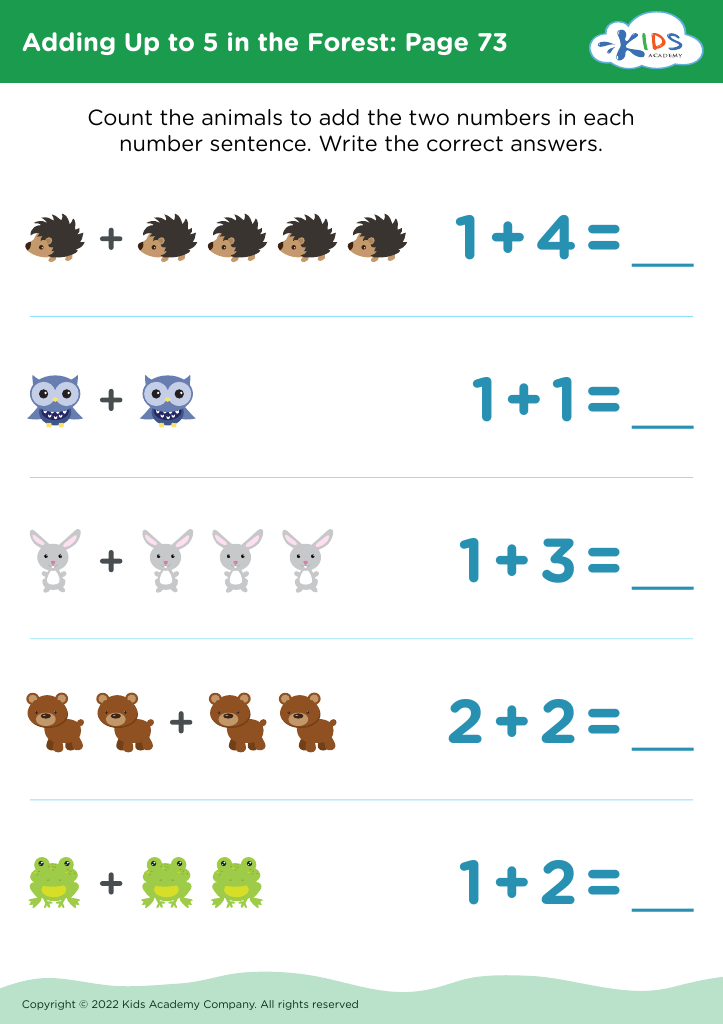
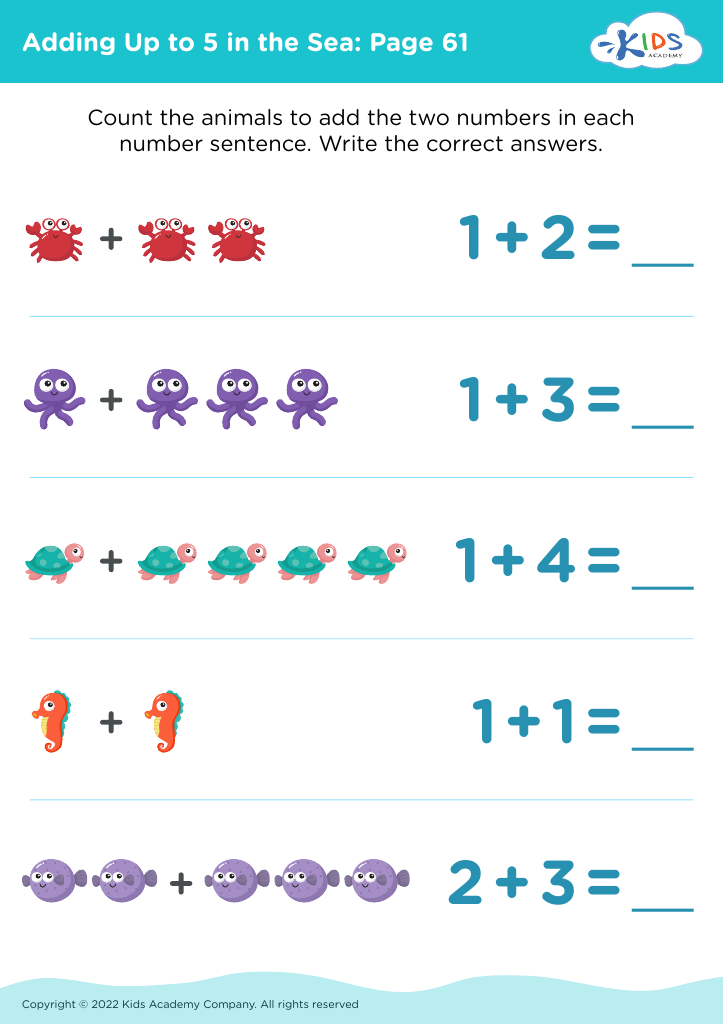
Enhance your child's learning experience with our Visual-Motor Skills Math Worksheets designed specifically for ages 5-6. These engaging worksheets help young learners refine their hand-eye coordination and fine motor skills while tackling essential math concepts. Children will enjoy tracing, coloring, and completing interactive activities that foster creative thinking and critical problem-solving skills. Perfect for homeschooling or supplementary practice, our worksheets cater to various learning styles and keep kids motivated. Equip them with the foundational skills necessary for future academic success in a fun and enjoyable way! Explore our collection today to boost your child's confidence in math and beyond.
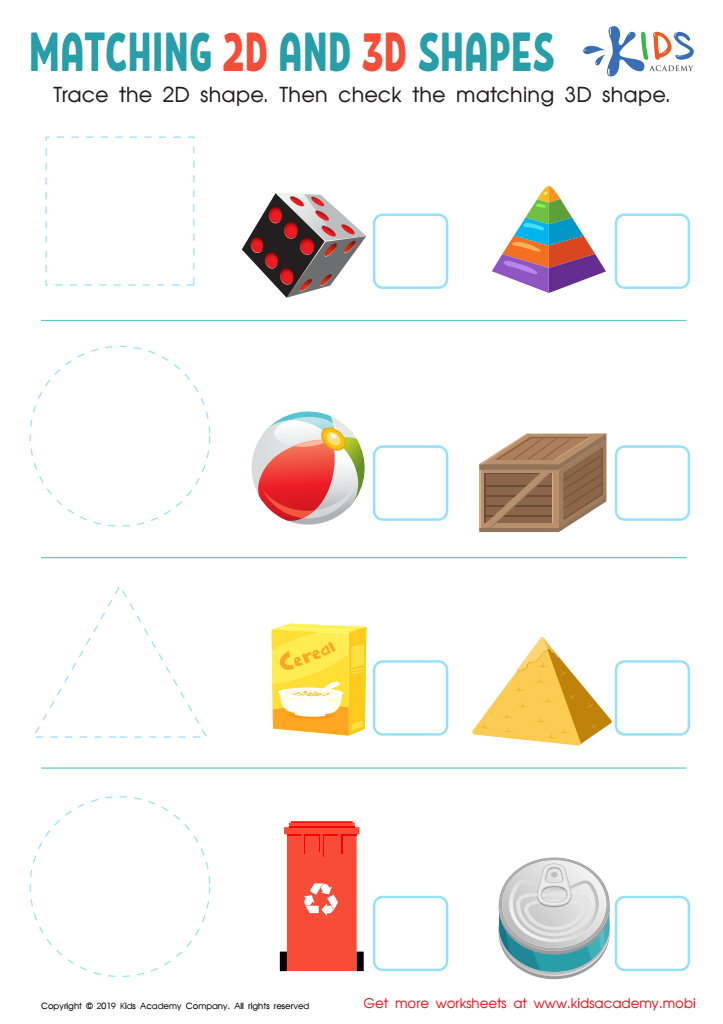
Matching 2D and 3D Shapes Worksheet
 Assign to My Students
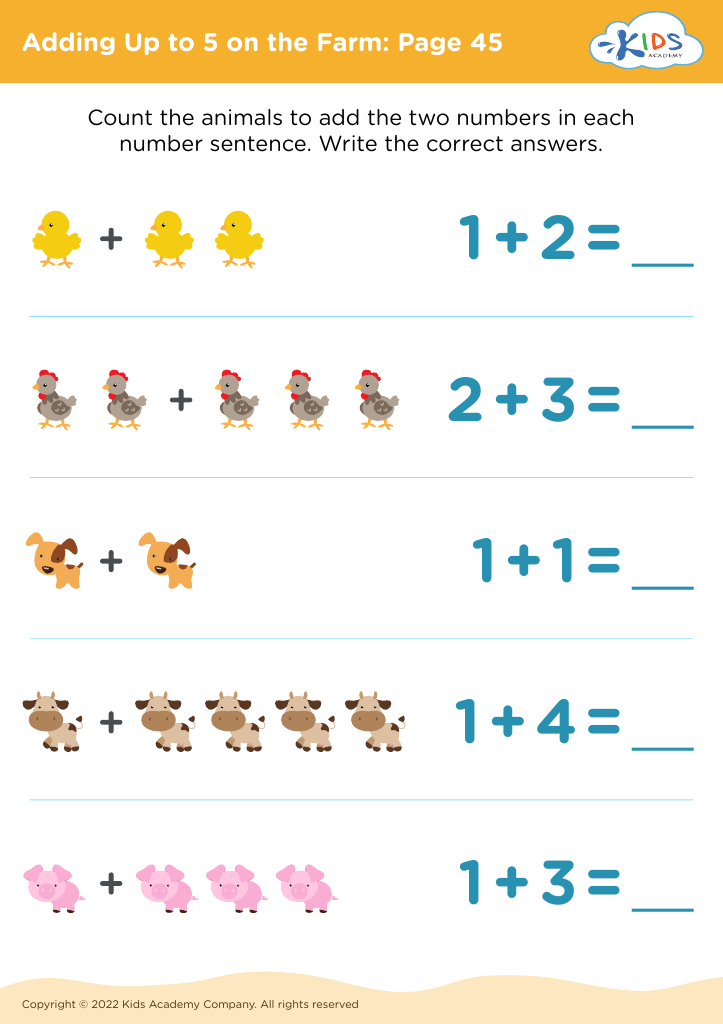








Visual-motor skills, which refer to the ability to coordinate visual perception with physical movement, play a critical role in developing foundational math skills in children ages 5-6. Parents and teachers should care about these skills because they directly impact a child’s ability to understand and engage with mathematical concepts. For instance, activities such as counting objects, recognizing shapes, and lining up numbers require integration of visual input and motor actions.
At this age, children's brains are rapidly developing, and strong visual-motor skills can enhance their ability to manipulate numbers and shapes, fostering a deeper understanding of mathematical relationships. When children struggle with visual-motor coordination, they may face challenges in writing numbers correctly, organizing math materials, or even participating in math games, leading to frustration and decreased confidence.
Moreover, strong visual-motor skills set a solid foundation for future learning in mathematics and other subjects, as cursive writing, geometry, and spatial awareness all rely on this coordination. By supporting the development of these skills, parents and teachers nurture a child's overall cognitive development and encourage a positive attitude towards learning math, promoting lifelong success in academics and beyond. Therefore, it is essential to prioritize training in visual-motor skills in early childhood education.








