Animal knowledge Reading Worksheets for Ages 5-6
4 filtered results
-
From - To
Discover the joy of reading with our engaging Animal Knowledge Reading Worksheets designed specifically for children ages 5-6! These worksheets combine fun and education, introducing young learners to various animals while enhancing their reading skills. Each activity is tailored to spark curiosity and promote literacy through interactive exercises. Kids will enjoy identifying animals, completing sentences, and exploring captivating facts about wildlife. Perfect for classrooms or at-home learning, our resources help develop comprehension and vocabulary, igniting a love for reading. Join us in fostering young minds with interesting wildlife knowledge and stimulating literacy experiences that create confident readers!
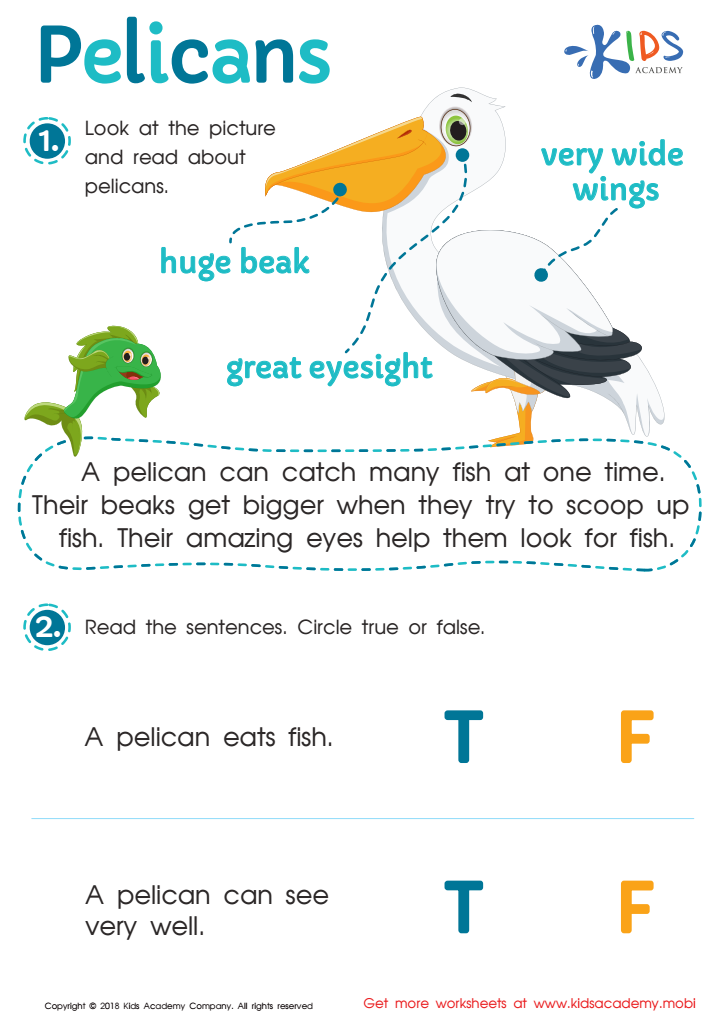
Pelicans Worksheet
 Assign to My Students
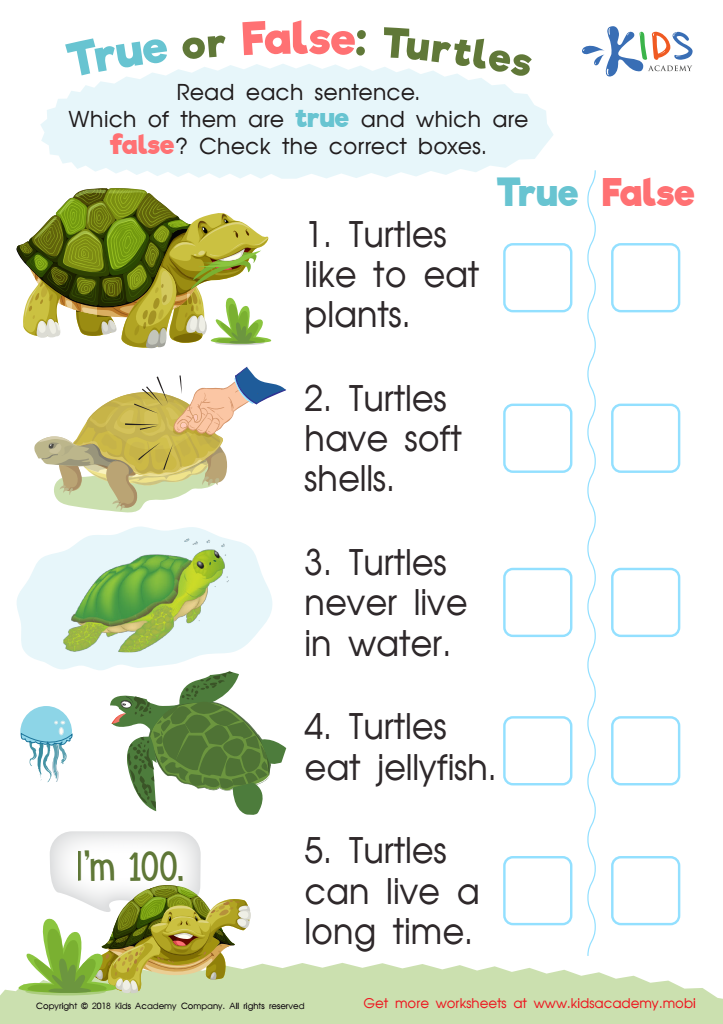
True or False: Turtles Worksheet
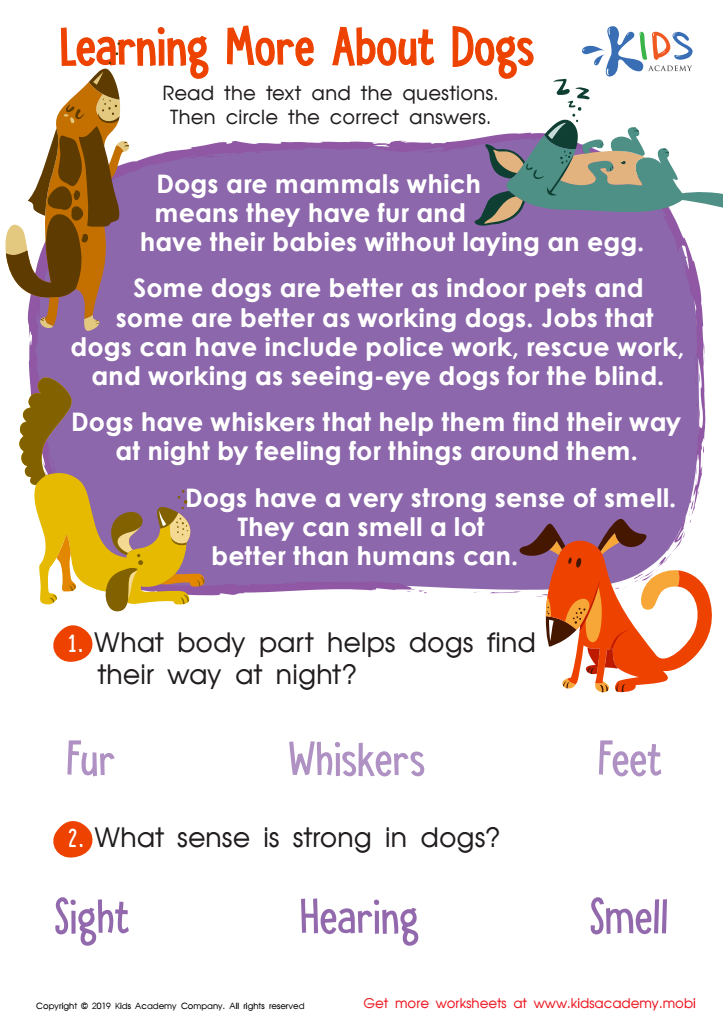
Learning More About Dogs Worksheet
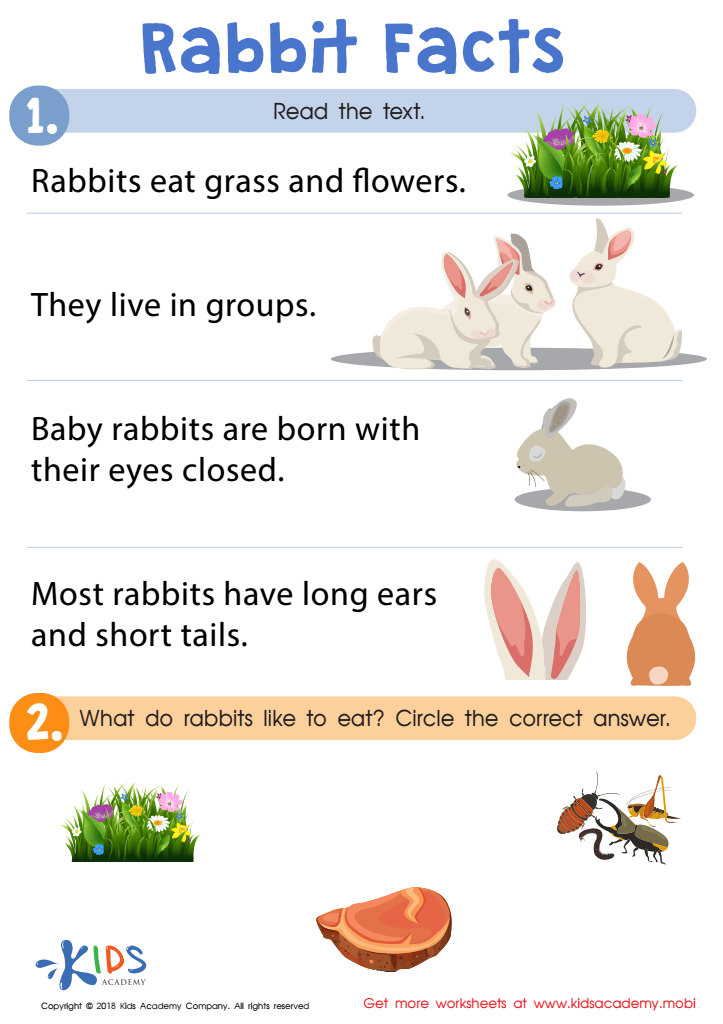
Rabbit Facts Worksheet






Animal knowledge reading for ages 5-6 is crucial for several reasons. First, it instills a sense of wonder and curiosity about the natural world. At this age, children are naturally inquisitive, and introducing them to diverse animals helps satisfy their curiosity while encouraging exploration and learning. Understanding different species can also foster empathy, as children learn about habitats and behaviors, recognizing that all living beings have a role in our ecosystem.
Moreover, animal-themed reading can enhance literacy skills. Engaging stories and illustrations capture children's attention, making the process of learning to read enjoyable. These texts often incorporate simple vocabulary and rhythms that are beneficial for early language development, improving phonemic awareness and comprehension skills essential for their ongoing education.
Additionally, knowledge about animals encourages critical thinking. As children discuss and compare various species, they develop analytical skills and learn to make connections between different concepts.
Lastly, promoting awareness about animals can lead to discussions about conservation and responsibility for the planet. It encourages young learners to be stewards of their environment, which is vital for fostering a sense of community and a sustainable future. Thus, parents and teachers play an essential role in guiding this foundational learning experience.








