Basic Addition Skills Reading Worksheets for Ages 5-6
5 filtered results
-
From - To
Enhance your child's early math skills with our Basic Addition Skills Reading Worksheets designed for ages 5-6! These engaging, printable worksheets provide a fun, interactive way for young learners to grasp essential addition concepts. Featuring colorful illustrations and relatable scenarios, each activity encourages children to practice addition through counting objects, solving simple equations, and completing thought-provoking exercises. Perfect for home or classroom use, our worksheets enhance critical thinking and boost confidence in applying basic math skills. Encourage your child's growth in math while making learning enjoyable! Explore our resources today and watch your little ones develop a solid foundation in mathematics.
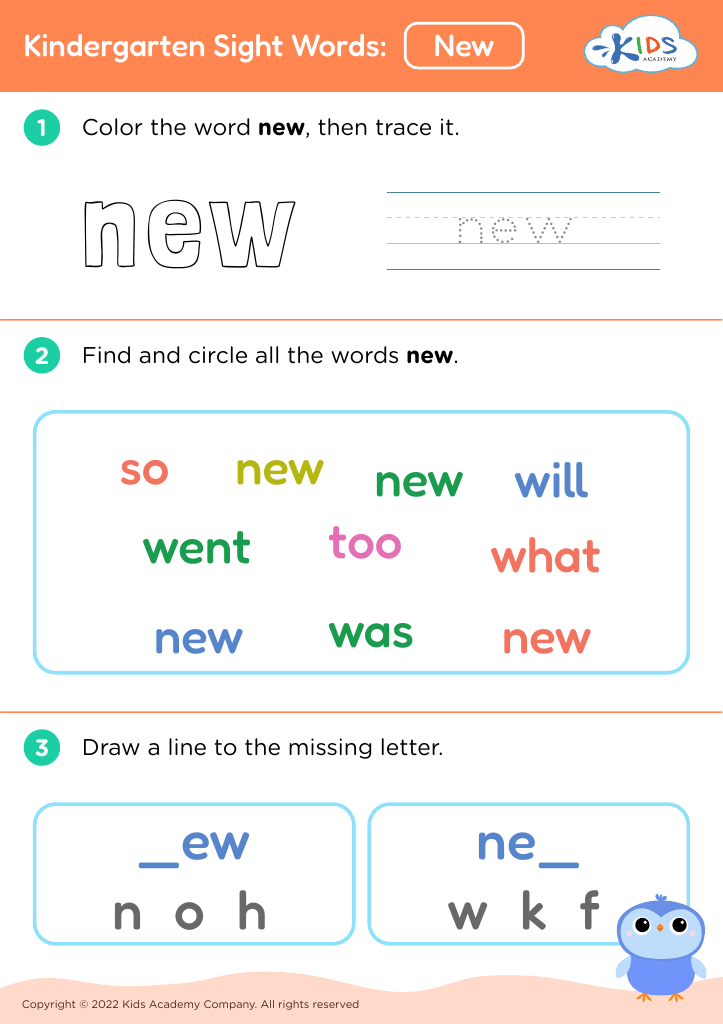







Parents and teachers should prioritize basic addition skills for children aged 5-6 because these foundational abilities play a crucial role in early math development and overall academic success. Mastering basic addition assists children in understanding fundamental concepts like number sense, grouping, and problem-solving, which lays the groundwork for more complex mathematical operations as they progress in school.
At this age, children are developing critical cognitive and social skills. Incorporating addition into their daily routine not only enhances their ability to compute numbers but also boosts their confidence and enthusiasm towards learning. Engaging in activities like counting objects, playing number games, or using visuals helps solidify these concepts in a fun manner.
Moreover, early math skills are closely linked to later academic achievements. Research suggests that children who grasp basic math concepts early are more likely to succeed in school overall. Just as literacy skills are essential for reading comprehension, basic addition forms a bridge to mathematics comprehension. Therefore, nurturing these skills can directly influence a child’s self-esteem and pave the way for a positive attitude towards mathematics, fostering a lifelong love for learning in parent-child or teacher-student interactions. Ultimately, valuing these early skills fosters a strong academic foundation for future successes.








