
Critical thinking skills Reading Worksheets for Ages 5-6
4 filtered results
Difficulty Level
Grade
Age
-
From - To
Subject
Activity
Standards
Enhance your child's reading comprehension with our engaging Critical Thinking Skills Reading Worksheets designed for ages 5-6. These expertly crafted worksheets promote essential critical thinking abilities while making learning fun and interactive. Each activity encourages kids to analyze texts, ask questions, and draw conclusions, helping them to better understand and interpret what they read. With a variety of colorful and age-appropriate exercises, children will develop their reasoning skills alongside their literacy. Perfect for home or classroom use, these worksheets support young learners on their journey to becoming confident and skilled readers. Start fostering critical thinking today!
Favorites
With answer key
Interactive
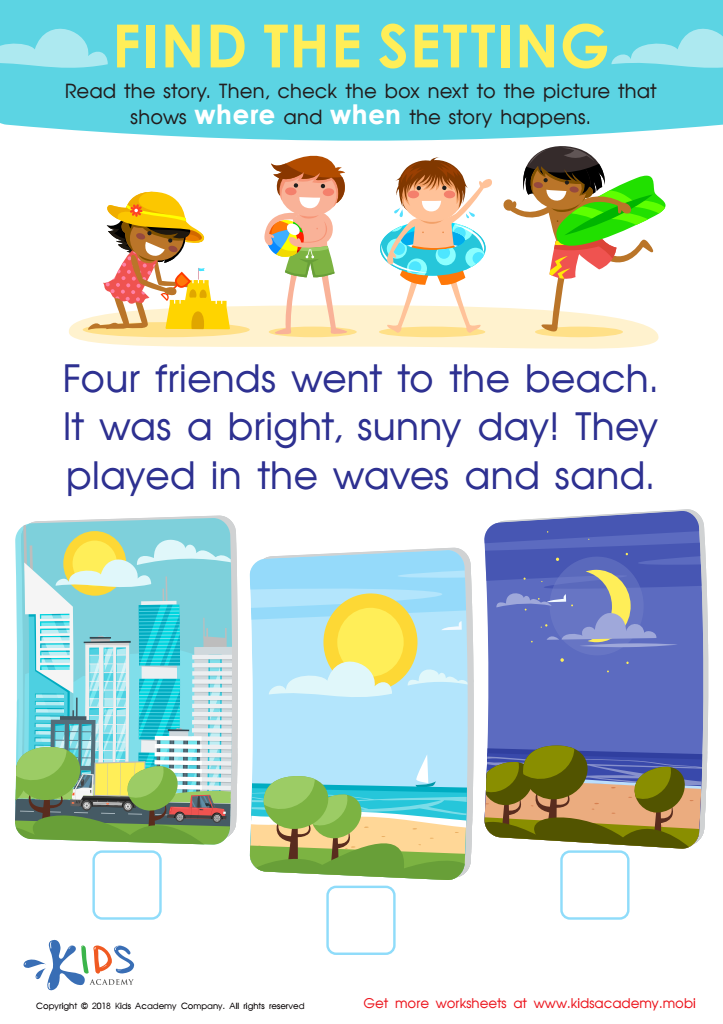
Find the Setting Worksheet
Writing a good story requires decisions about theme, plot, characters, and setting. Setting is the place and time where events occur. Read the story in this fun worksheet with your children and ensure they are paying attention. Guide them to check the box next to the picture that shows the story's setting. 80 words.
 Assign to My Students
Find the Setting Worksheet
Worksheet
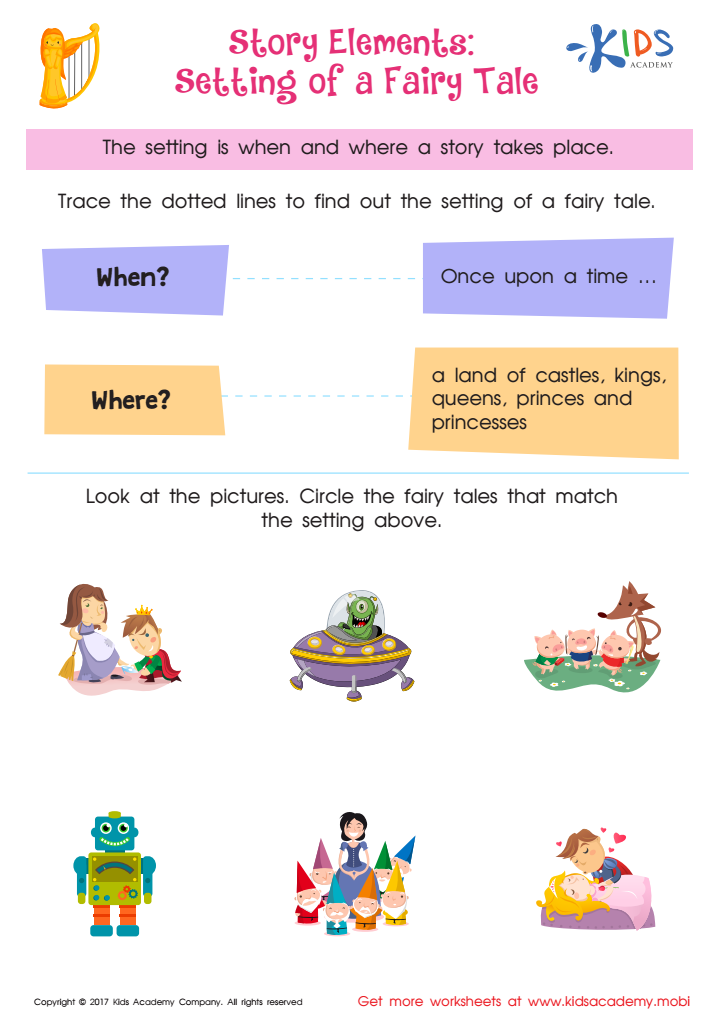
Story Elements: Setting of a Fairy Tale Printable
Help your child learn to analyze stories starting with setting. Use Story Elements worksheet to break down setting into two parts. This will help your child recognize setting quickly and understand its importance in the plot.
Story Elements: Setting of a Fairy Tale Printable
Worksheet
Join Kids Academy for Free
Who is primarily going to use this learning content?








Critical thinking skills, particularly in reading for ages 5-6, are essential for young learners, and parents or teachers should prioritize their development. At this age, children begin to form their understanding of the world through stories and text, making it an ideal time to cultivate analytical skills. Critical thinking enhances comprehension, allowing children to not only grasp what they read but also to interpret and evaluate stories, characters, and messages.
By fostering critical thinking, parents and teachers encourage curiosity and creativity in children. This empowers them to ask questions, make connections to their own experiences, and predict outcomes, all of which enrich their reading experience. Such skills are foundational for lifelong learning, enabling children to become independent thinkers capable of solving problems and making informed decisions as they progress in school and beyond.
Moreover, in today’s information-rich society, the ability to discern truth from misinformation is critical. By engaging children in discussions about their readings and encouraging them to express their thoughts and ideas, parents and teachers help shape discerning readers who can tackle complex subjects with confidence. Ultimately, promoting critical thinking through reading lays the groundwork for success in all areas of learning and personal development.








