Pattern recognition Reading Worksheets for Ages 5-6
4 filtered results
-
From - To
Discover our engaging Pattern Recognition Reading Worksheets designed specifically for children aged 5-6. These worksheets help young learners develop essential reading and cognitive skills through fun and interactive activities centered around identifying patterns in letters, words, and sentences. By recognizing patterns, children enhance their comprehension and critical thinking abilities, setting a strong foundation for future learning. Our printable resources are perfect for classroom use or at-home instruction, catering to varied learning styles. Spark your child's interest in reading while boosting their confidence with these carefully crafted worksheets that promote early literacy skills through play and exploration. Start their learning journey today!
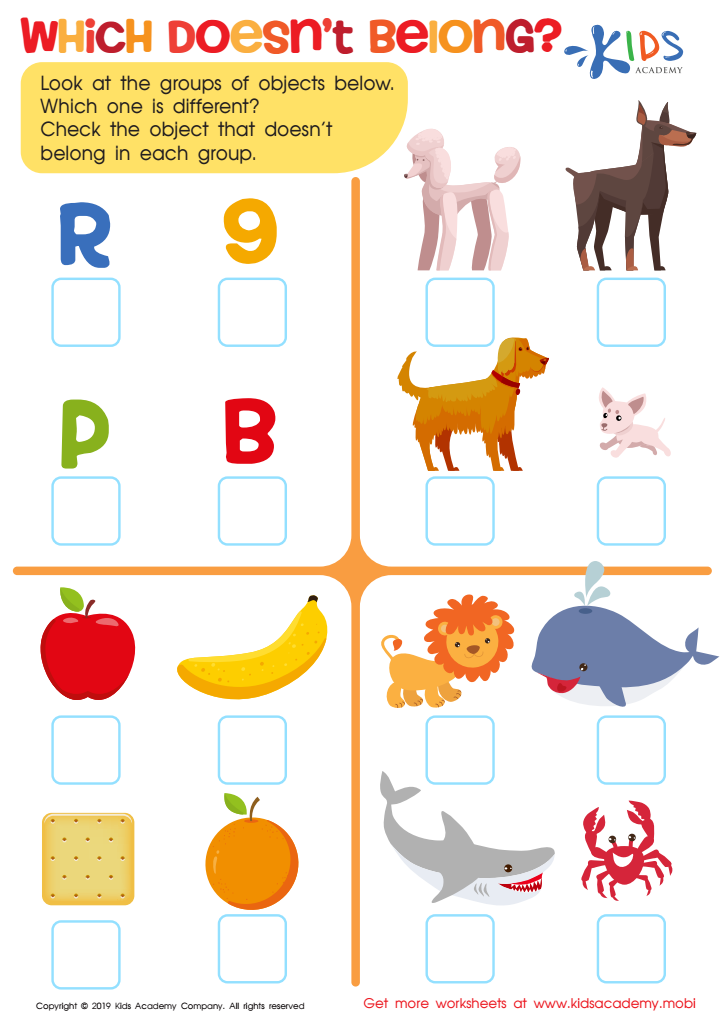
Which Doesn't Belong? Worksheet
 Assign to My Students
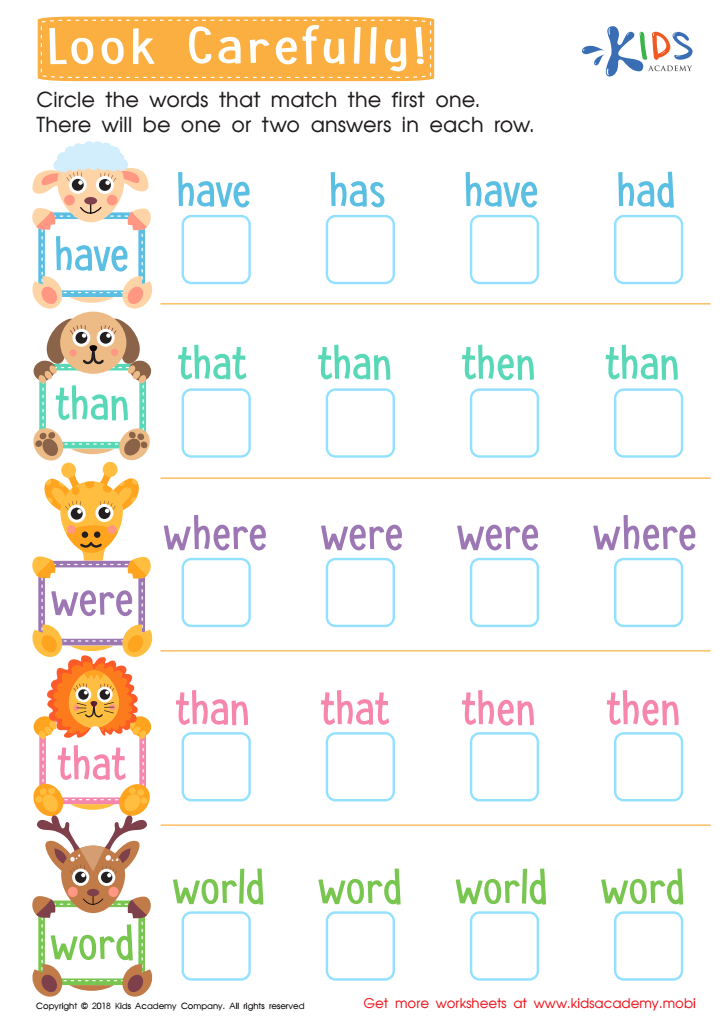
Look Carefully Worksheet
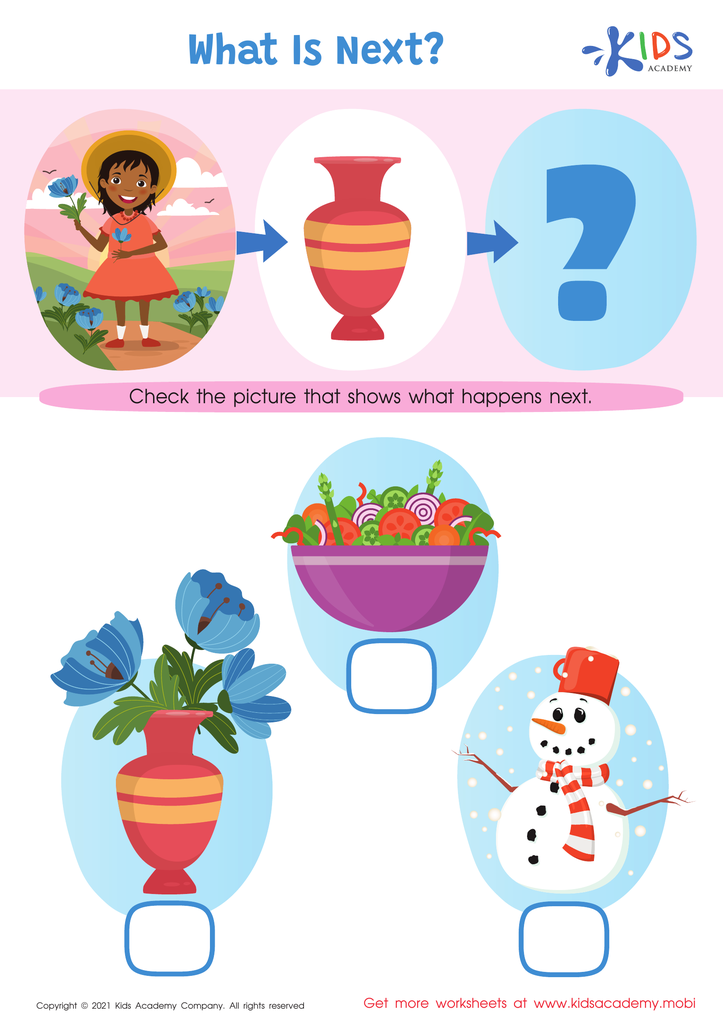
What is Next? Worksheet
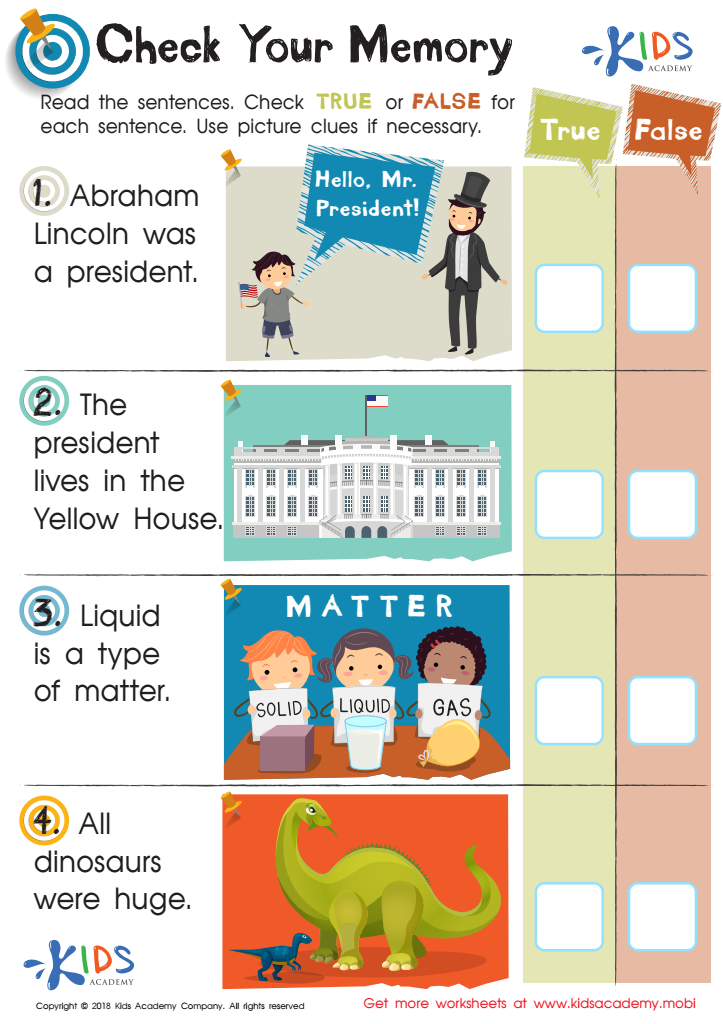
Check Memory Worksheet







Pattern recognition is a foundational skill in early literacy, essential for children aged 5-6. At this age, children are developing not only their vocabulary but also their ability to decode and understand language structures. By recognizing patterns in words, phrases, and storylines, young readers establish a strong groundwork for more complex reading skills.
Parents and teachers should prioritize pattern recognition because it enhances critical thinking and cognitive skills. Children who can identify patterns are better equipped to predict outcomes, make connections, and solve problems independently. This skill also fosters a love for reading as they find joy and confidence in recognizing familiar rhymes, repetitions, and sequencing in stories.
Moreover, pattern recognition improves retention and recall, aiding memory development during the crucial early years. It supports phonemic awareness, enabling kids to tackle phonics and spelling with greater ease. As they articulate patterns in language, children build comprehension and fluency, making reading a more engaging activity.
Ultimately, fostering pattern recognition in young learners not only benefits their reading journey but also contributes to their overall academic success and lifelong learning skills. Thus, both parents and teachers play vital roles in nurturing these critical early competencies.








