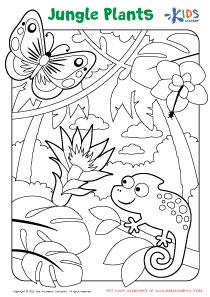
Vocabulary expansion Animals Worksheets for Ages 5-6
5 filtered results
-
From - To
Explore our engaging Vocabulary Expansion Worksheets for Animals, specifically designed for children aged 5-6! These creative and interactive worksheets help young learners enhance their vocabulary while discovering fascinating facts about various animals. Each activity promotes language development through fun exercises, including matching, filling in blanks, and word searches. Perfect for both classroom and home learning, our worksheets encourage children to connect words with images, fostering better retention and understanding. Support your child's educational journey by introducing them to the amazing world of animals through joyful and informative vocabulary-building activities. Start their adventure in learning today with our printable resources!
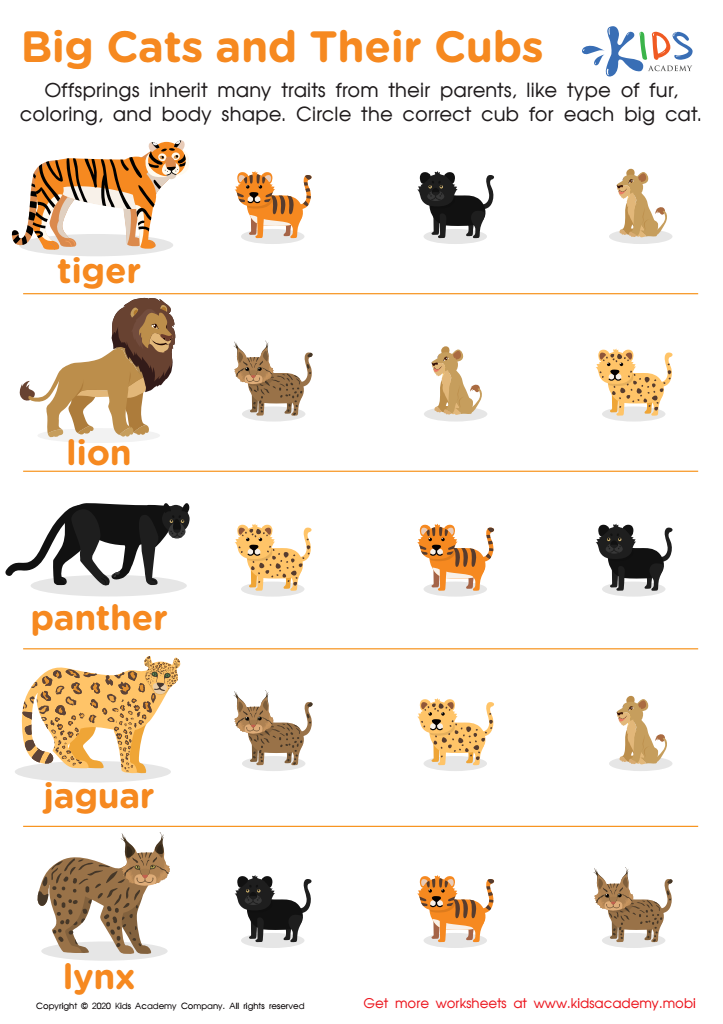
Big Cats and Their Cubs Worksheet
 Assign to My Students
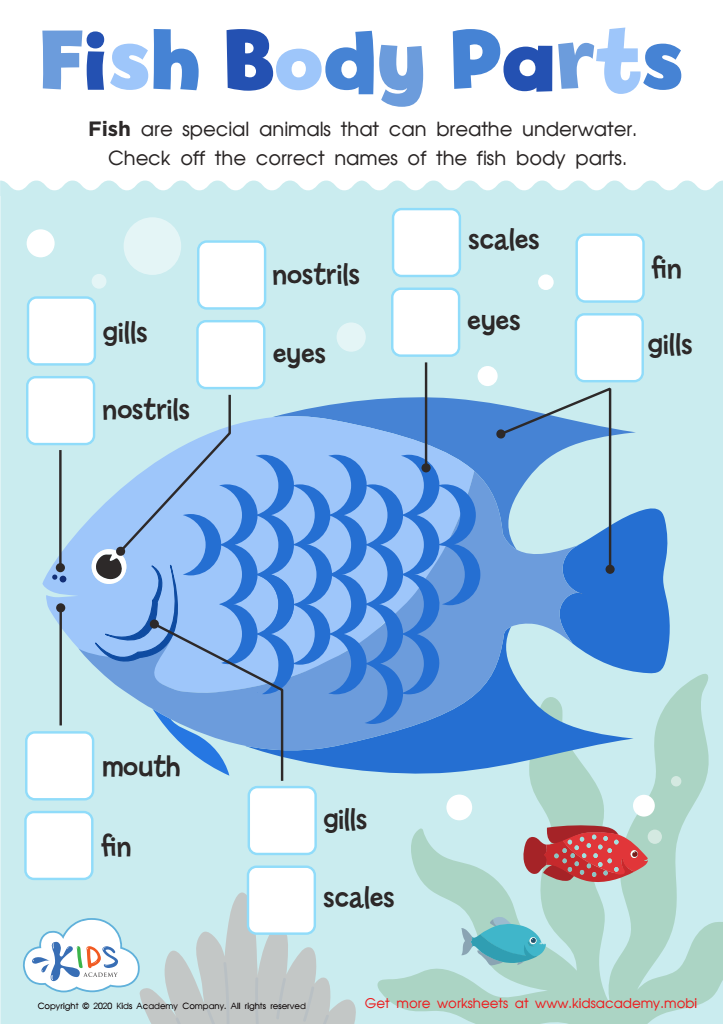
Fish Body Parts Worksheet
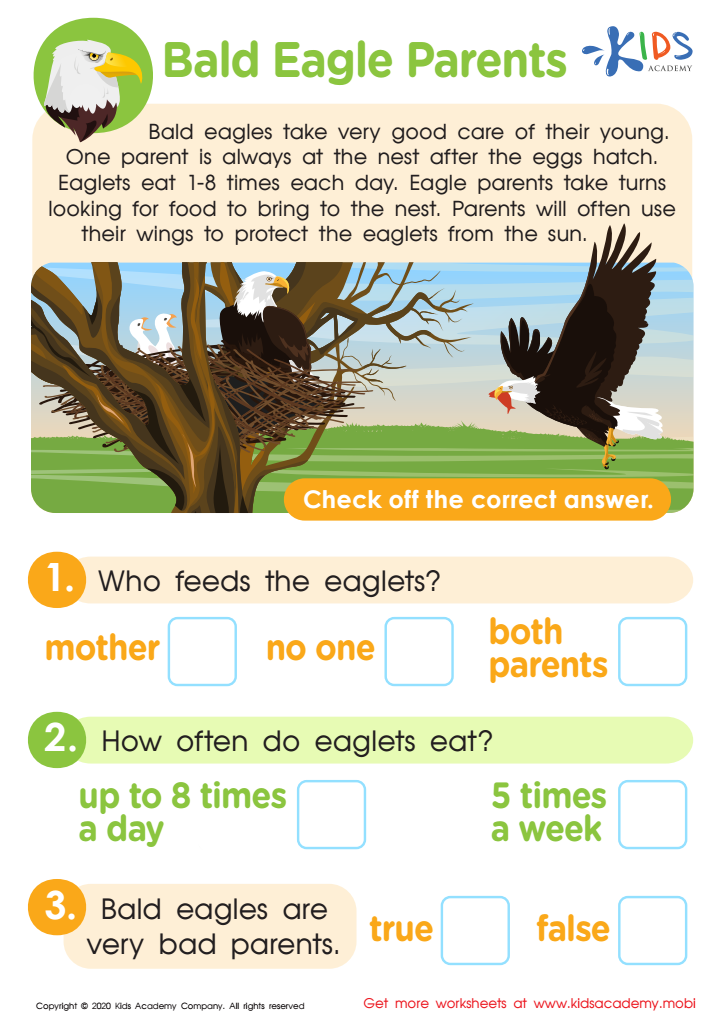
Bald Eagle Parents Worksheet
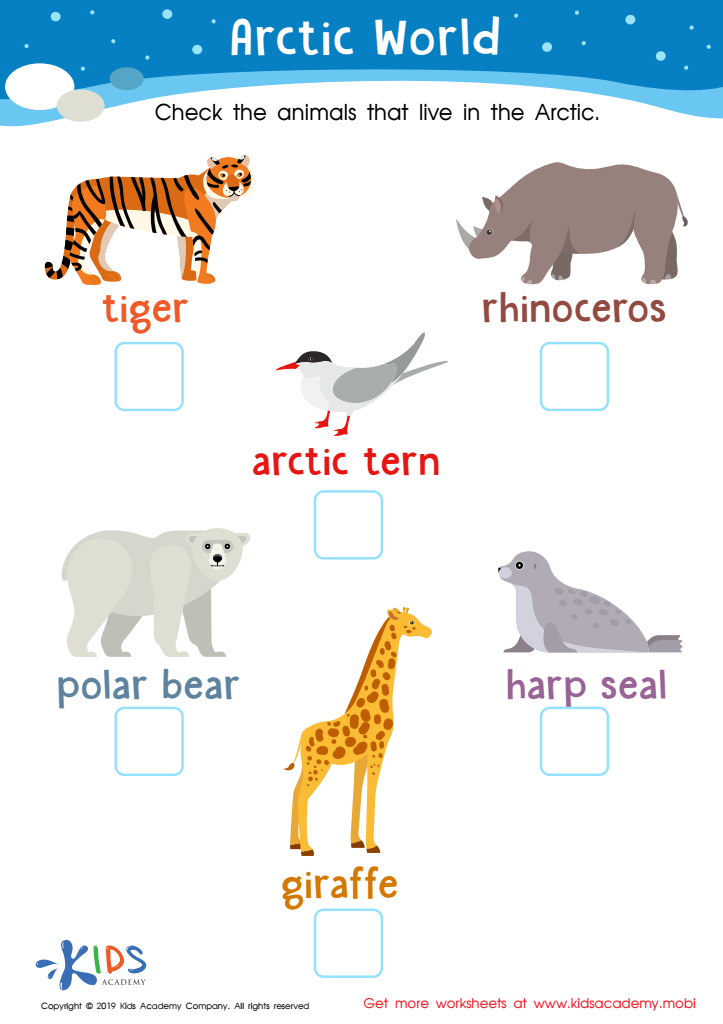
Arctic World Worksheet
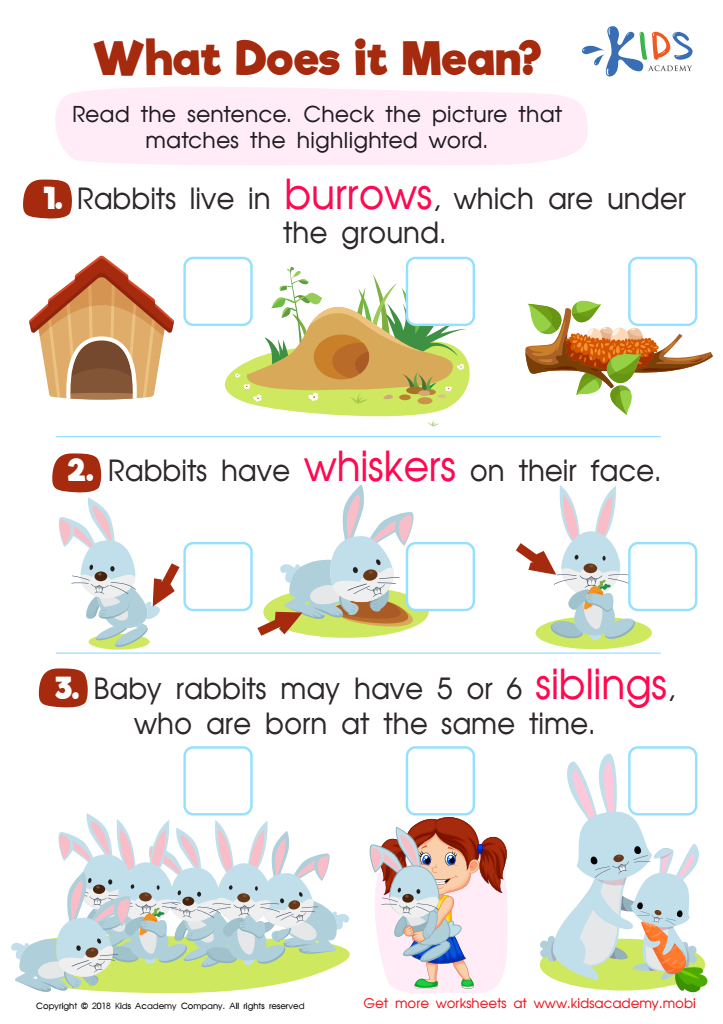
What Does It Mean? Worksheet





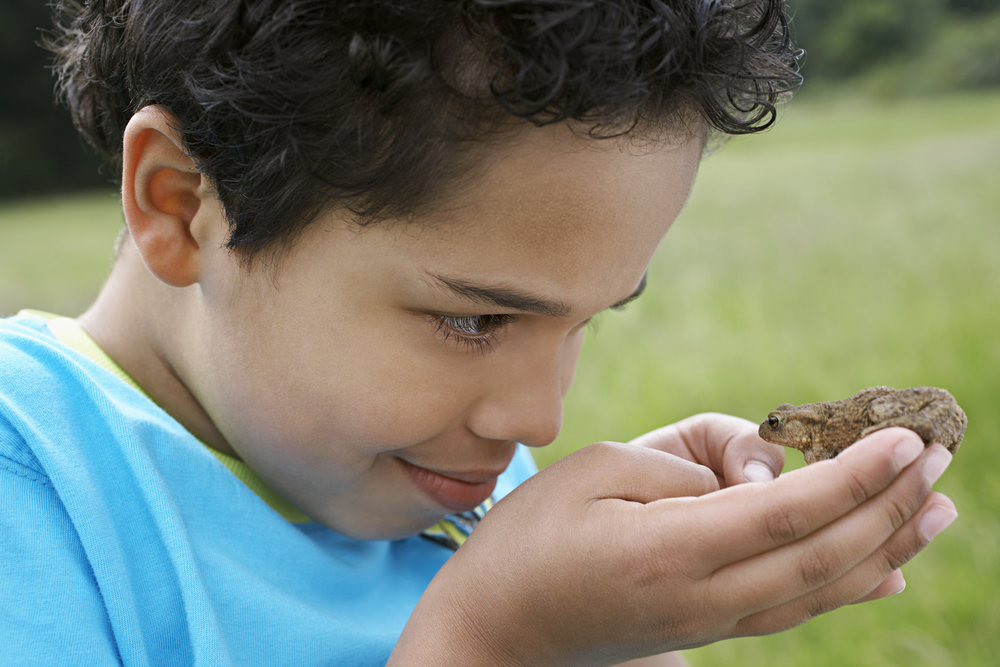


Expanding vocabulary about animals for children aged 5-6 is crucial for several reasons. At this developmental stage, children are naturally curious about the world around them, and animals often capture their attention. Introducing them to a diverse range of animal-related vocabulary enhances their language skills, fostering communication, comprehension, and expression.
When parents and teachers engage children with vivid animal terminology, they provide rich linguistic experiences that encourage cognitive development. Knowing the names and characteristics of various animals helps enhance children's ability to categorize and differentiate between them, promoting critical thinking. Additionally, connecting vocabulary with sensory experiences—like the sounds animals make or their habitats—makes learning memorable and more impactful.
Furthermore, expanding vocabulary boosts reading proficiency. As children encounter books and stories featuring animals, familiarity with relevant vocabulary reduces comprehension barriers, making storytelling enjoyable and engaging. This also nurtures a love for reading, laying the groundwork for academic success in later years.
Lastly, discussions about animals can foster empathy and curiosity about living creatures and the environment, cultivating both emotional intelligence and awareness. Thus, vocabulary expansion in animal knowledge fundamentally supports holistic development in young learners.