Enhancing observational skills Science Worksheets for Ages 5-6
3 filtered results
-
From - To
Unleash your child's curiosity with our "Enhancing Observational Skills Science Worksheets" designed for ages 5-6. At Kids Academy, our engaging printables help young learners sharpen their ability to notice details, fostering critical thinking and a love for science. Through fun activities that incorporate sorting, comparison, and pattern recognition, each worksheet encourages exploration of the world around them. Perfect for home or classroom use, these resources boost foundational skills essential for future scientific inquiry. Develop your child's observational prowess and ignite their passion for discovery with our expertly crafted worksheets. Visit Kids Academy to start the adventure today!
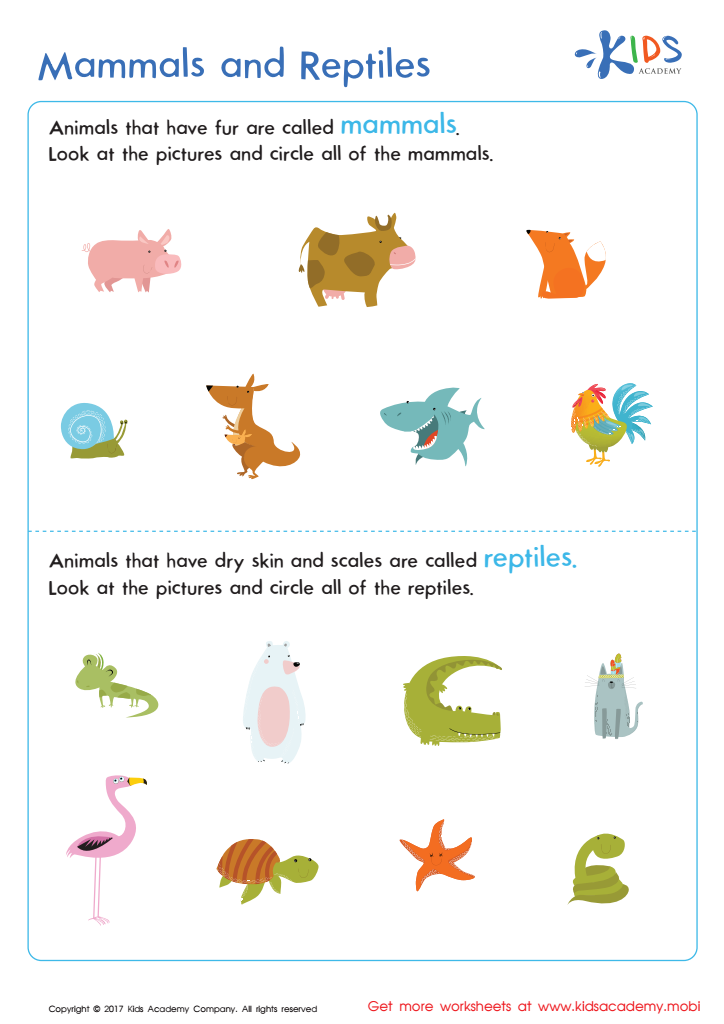
Mammals and Reptiles Worksheet
 Assign to My Students
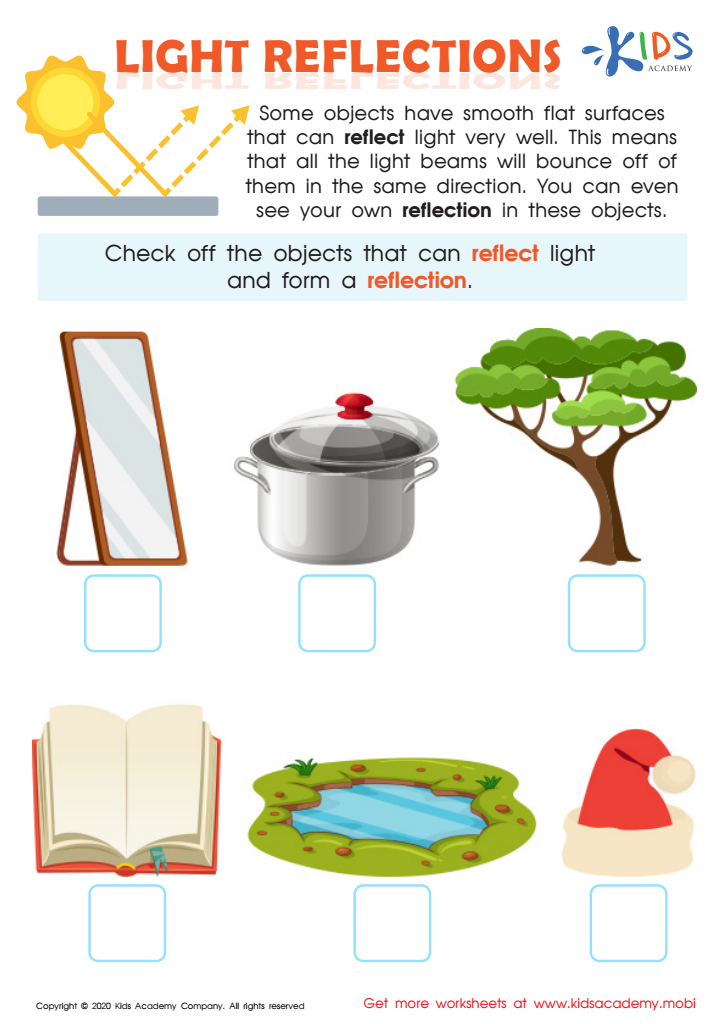
Light Reflections Worksheet
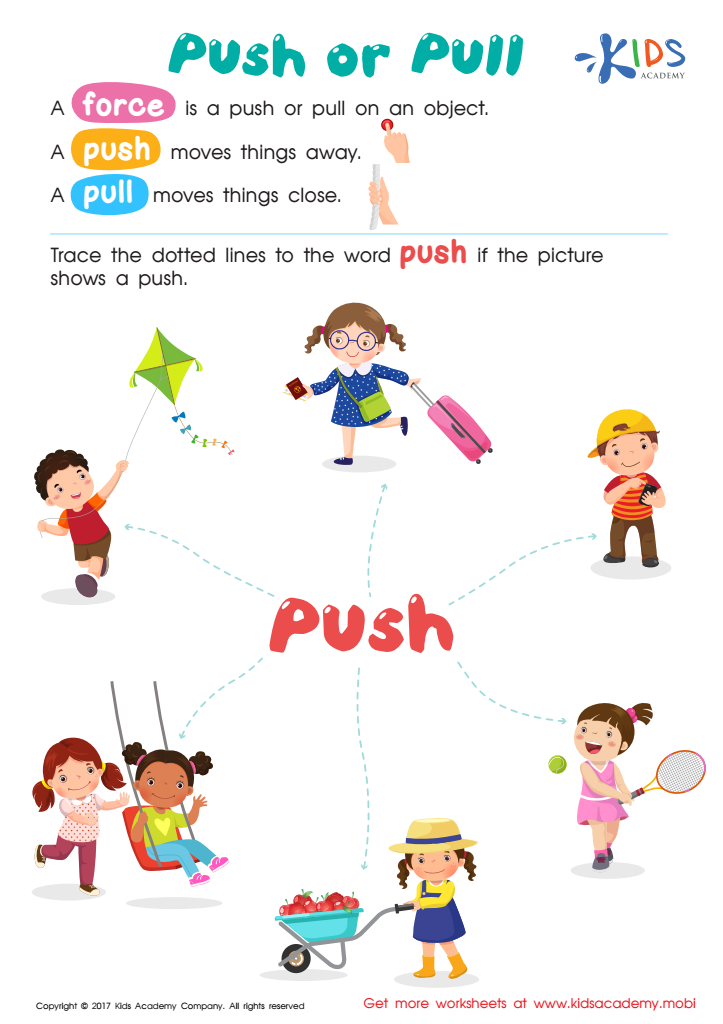
Push or Pull Worksheet








Enhancing observational skills in science for ages 5-6 is fundamental as it establishes critical foundational abilities that support lifelong learning. At this developmental stage, children are naturally curious, and their observational skills are acutely keen. Nurturing these abilities helps them explore and make sense of the world around them. When children observe, they notice details, perceive patterns, and distinguish differences. These are key elements in scientific inquiry, fostering a curiosity-driven approach to learning.
By enhancing these skills, parents and teachers can help children improve their cognitive functions like memory, attention to detail, and analytical thinking. It's more than just about science; strong observational skills are also applicable in math, language arts, and social interactions. Children learn to ask questions, make predictions, and draw conclusions, forming a structured approach to problem-solving.
Moreover, reinforcing these skills at an early age boosts a child's confidence and enthusiasm for learning. Observation leads to discovery, which instills a sense of achievement. Through hands-on activities, interactive games, and nature walks, children develop a deeper appreciation of their environment and improve their sensory awareness. Engaging them in this manner paves the way for advanced scientific thinking and a lifelong passion for exploration and learning.







