Recognizing Patterns Science Worksheets for Ages 5-6
3 filtered results
-
From - To
Discover our engaging "Recognizing Patterns Science Worksheets" designed specifically for ages 5-6! These interactive worksheets introduce young learners to the concept of patterns through fun and colorful activities. Kids will explore various types of patterns, such as shapes, colors, and sequences, enhancing their observational skills and critical thinking. Each worksheet is crafted to seamlessly blend learning with play, ensuring that children remain excited and motivated. Perfect for teachers and homeschooling parents, our worksheets support early science education and encourage a love for learning. Download and print these worksheets today to inspire your child's scientific curiosity and cognitive development!
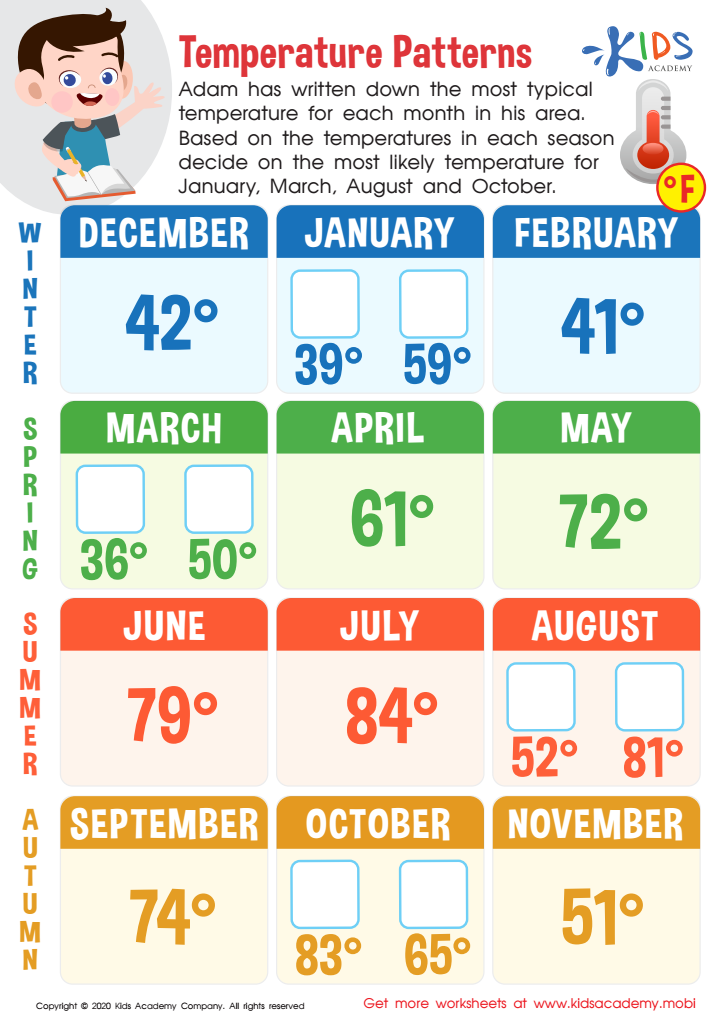
Temperature Patterns Worksheet
 Assign to My Students
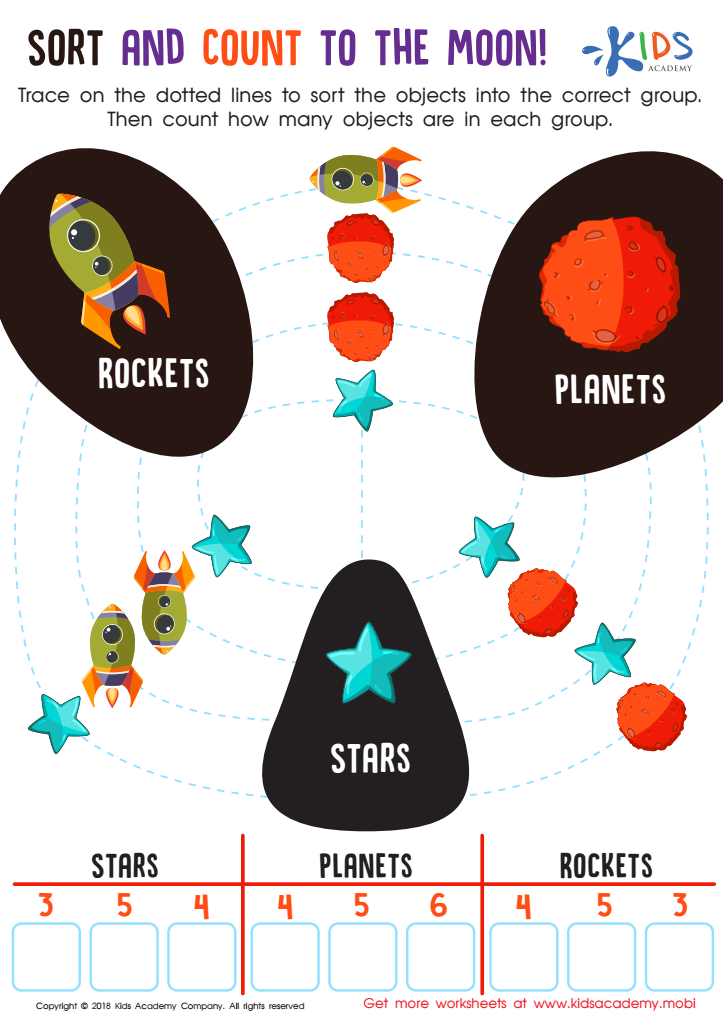
Sort and Count to the Moon Worksheet
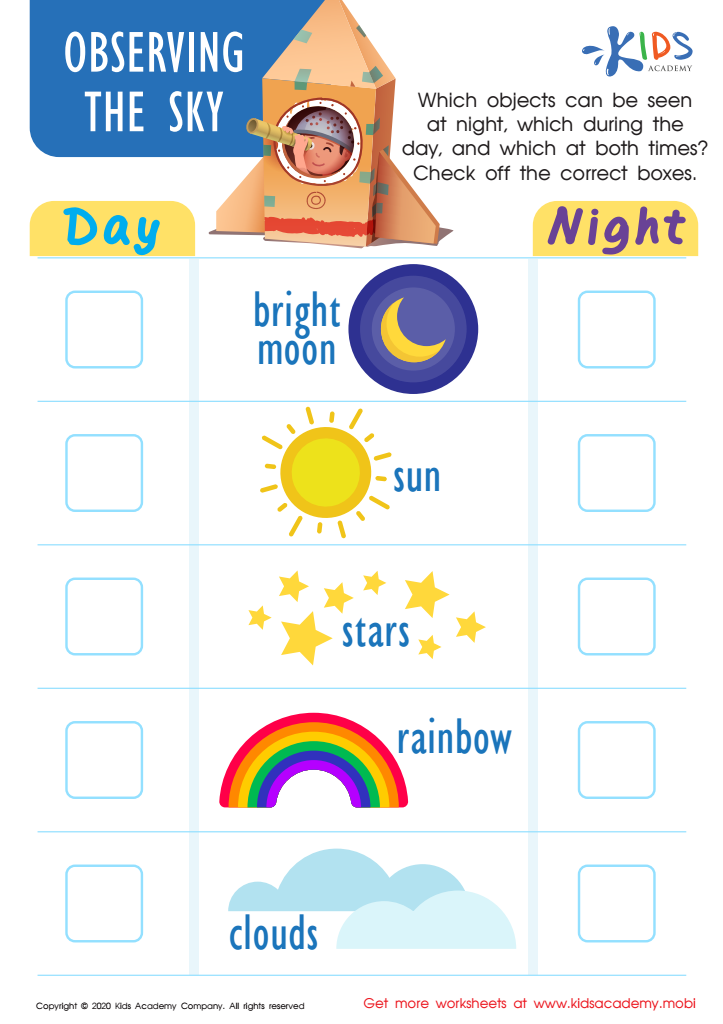
Observing the Sky Worksheet







.jpg)
Recognizing patterns in science is a fundamental skill for young learners, as it lays the groundwork for critical thinking and problem-solving. For children aged 5-6, engaging with patterns helps them make connections between various concepts, enhancing their understanding of the world around them. When parents and teachers encourage this exploration, they foster curiosity and an inquisitive mindset, which are essential for scientific inquiry.
Patterns can be observed in nature, daily activities, and even in mathematical concepts. By identifying these patterns, children learn to predict outcomes and make informed guesses, improving their cognitive abilities. For instance, recognizing the seasonal changes inspires discussions about environmental science, promoting awareness about ecosystems and the rhythm of nature.
Moreover, teaching pattern recognition nurtures a child's ability to classify, analyze, and synthesize information. This skill set not only enhances their scientific knowledge but also supports literacy and numeracy development. Understanding patterns contributes to mathematical thinking, as children learn to identify sequences and relationships between numbers.
Ultimately, prioritizing pattern recognition in early science education empowers children to develop foundational skills that will benefit their future learning, creativity, and academic success. Therefore, parents and teachers should actively engage young learners in recognizing and exploring patterns in a fun and meaningful way.







