Understanding life cycles Science Worksheets for Ages 5-6
4 filtered results
-
From - To
Help young learners uncover the magic of life with our "Understanding Life Cycles Science Worksheets for Ages 5-6." These engaging resources take kids on a captivating journey through the stages of growth in plants and animals. Tailored for preschool and kindergarten students, each worksheet combines vibrant visuals with simple explanations and activities, fostering curiosity and a deeper understanding of nature. From the life cycle of a butterfly to the stages of plant growth, these worksheets are designed to align with early learning standards, making science fun and accessible. Ideal for classroom use or at-home learning!
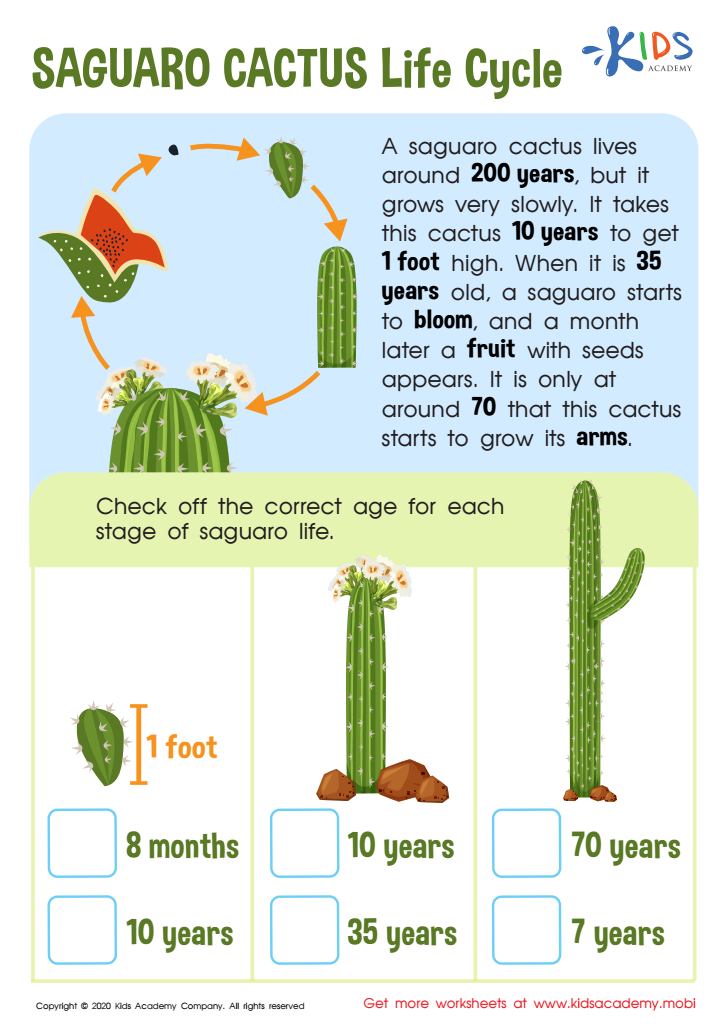
Saguaro Cactus Life Cycle Worksheet
 Assign to My Students
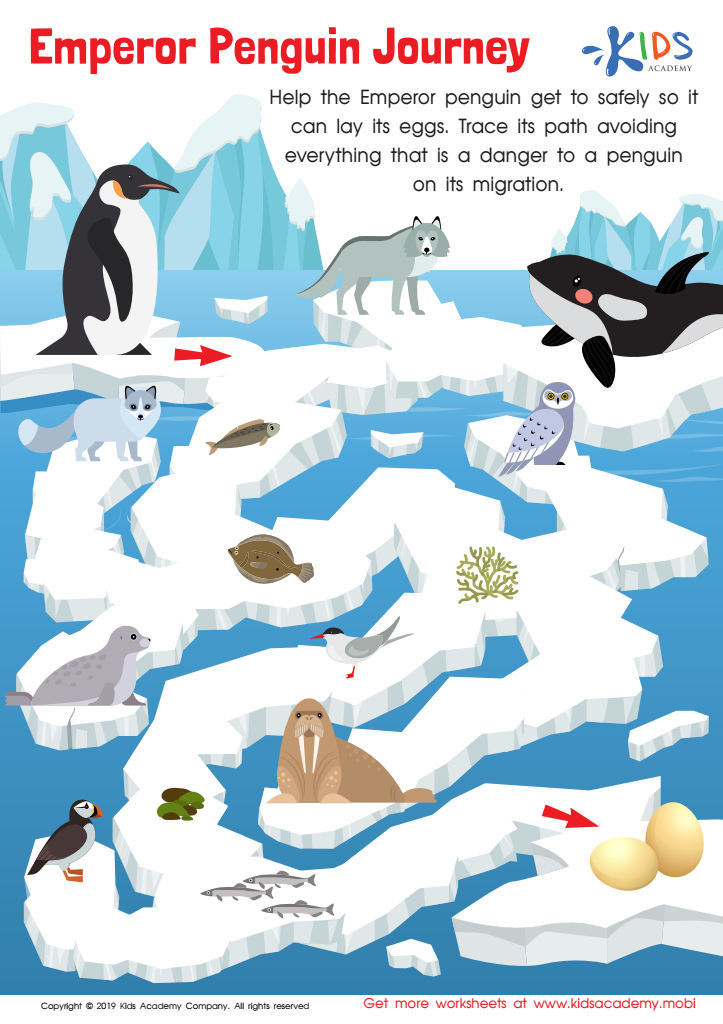
Emperor Penguin Journey Worksheet
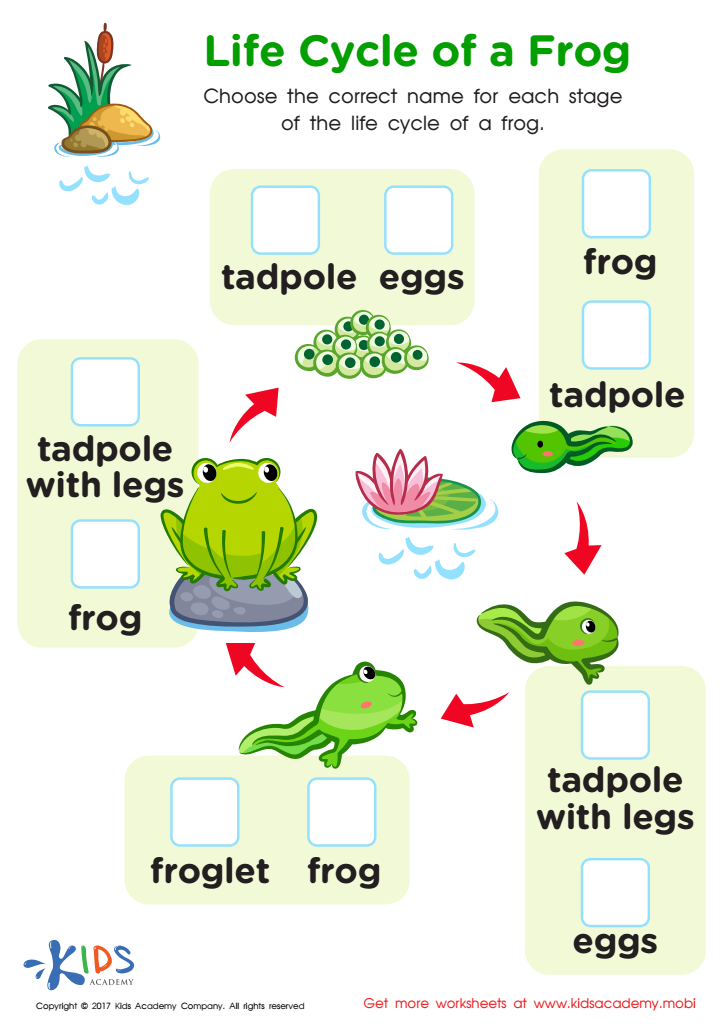
Life Cycle Frog Printable
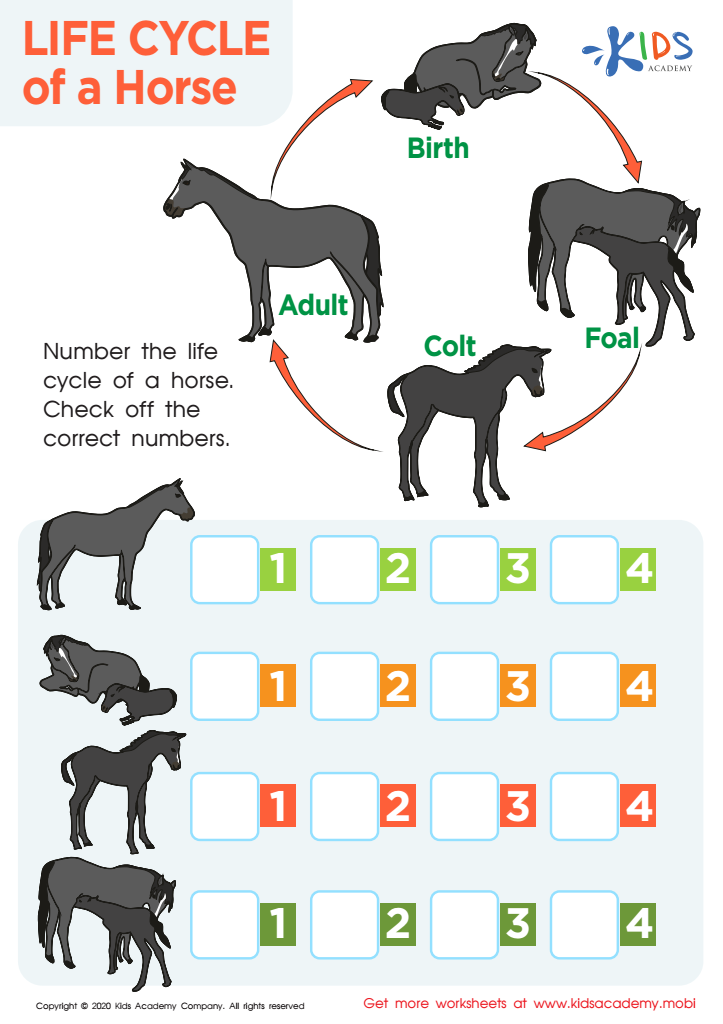
Life Cycle of a Horse Worksheet





.jpg)


Understanding life cycles science for ages 5-6 is crucial for several reasons. At this stage, children are naturally curious about the world around them, and learning about life cycles fosters a sense of wonder and appreciation for living things. This foundational knowledge helps them understand vital biological processes, such as how plants grow from seeds and how animals develop from babies to adults.
For parents and teachers, introducing life cycles aligns with developmental education principles, nurturing observational and inquiry skills. Young children learn to ask questions, make predictions, and observe changes, which are fundamental skills in scientific thinking. Additionally, discussing life cycles can also teach important concepts such as growth, change, and continuity, which are applicable beyond biology.
Furthermore, understanding life cycles can inspire empathy and respect for nature and living organisms. When children learn about the intricate processes that sustain life, they are more likely to develop a sense of responsibility towards the environment. This can translate into lifelong attitudes of conservation and stewardship.
Incorporating life cycles into early education also supports cross-curricular learning, enriching subjects like language arts through related stories and vocabulary, and math through counting and sequencing activities. Overall, emphasizing life cycles science sets a strong educational foundation, ignites curiosity, and fosters a holistic worldview in children.







