
Vocabulary development Science Worksheets for Ages 5-6
10 filtered results
Difficulty Level
Grade
Age
-
From - To
Subject
Activity
Standards
Boost your child's science vocabulary with our engaging Vocabulary Development Science Worksheets for ages 5-6, crafted to make learning fun and effective. These printable worksheets enhance young learners' understanding of essential science concepts through interactive exercises and colorful imagery. Each activity is designed to build foundational vocabulary in topics such as plants, animals, weather, and the human body. Parents and educators will find these resources invaluable in nurturing curiosity, reinforcing classroom learning, and promoting a lifelong love for science. Explore our collection to support your child’s educational journey and watch their vocabulary skills flourish.
Favorites
With answer key
Interactive
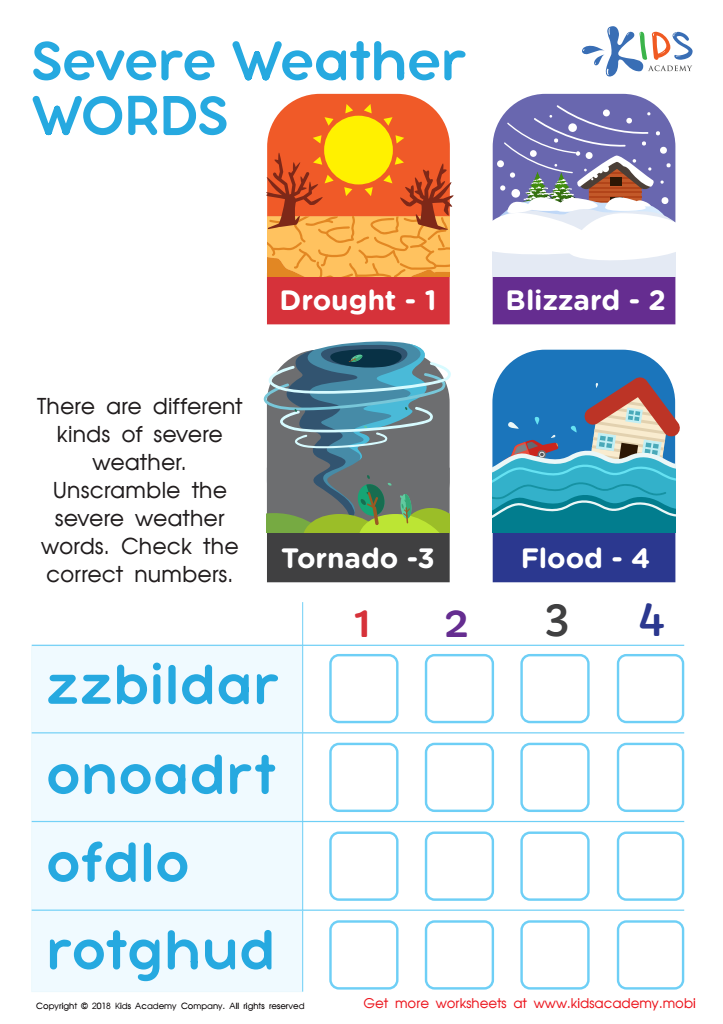
Severe Weather Words Worksheet
Help your child learn about severe weather with this PDF worksheet! Review each image's term and discuss, then have kids unscramble the words. Match the picture number to the term by selecting the correct box. Let your kids work through it and become weather-savvy!
Severe Weather Words Worksheet
Worksheet
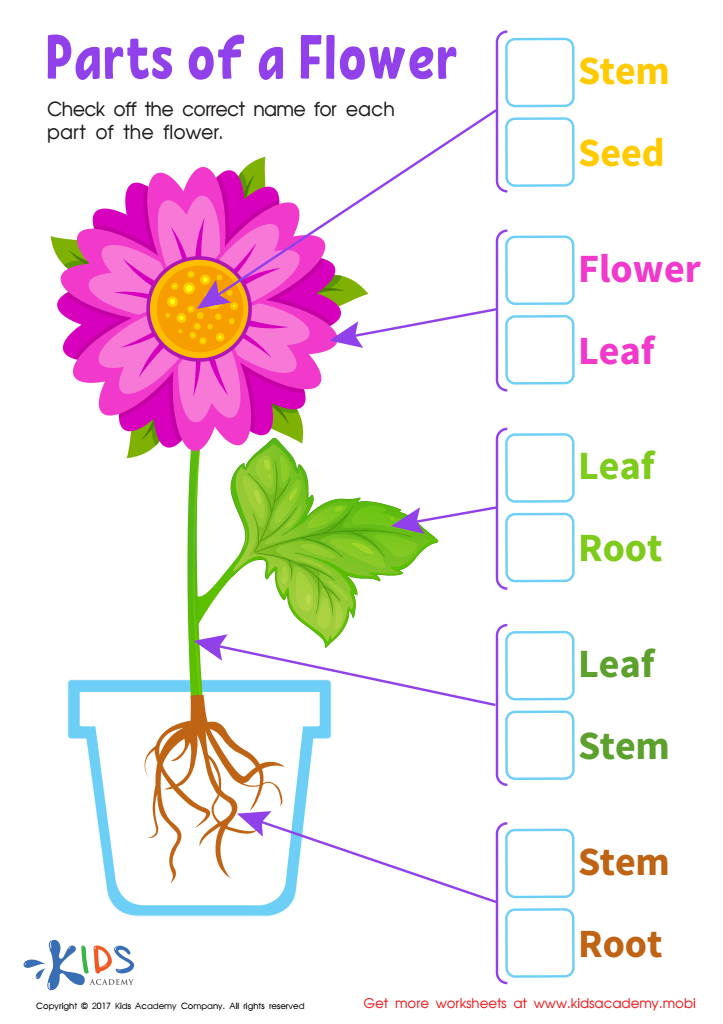
Parts Flower Printable
Introduce your child to life science with this vivid parts of a flower worksheet! They'll learn basic flower structures while building biology vocabulary and discovering plants are living creatures too! Perfect for budding little scientists!
Parts Flower Printable
Worksheet
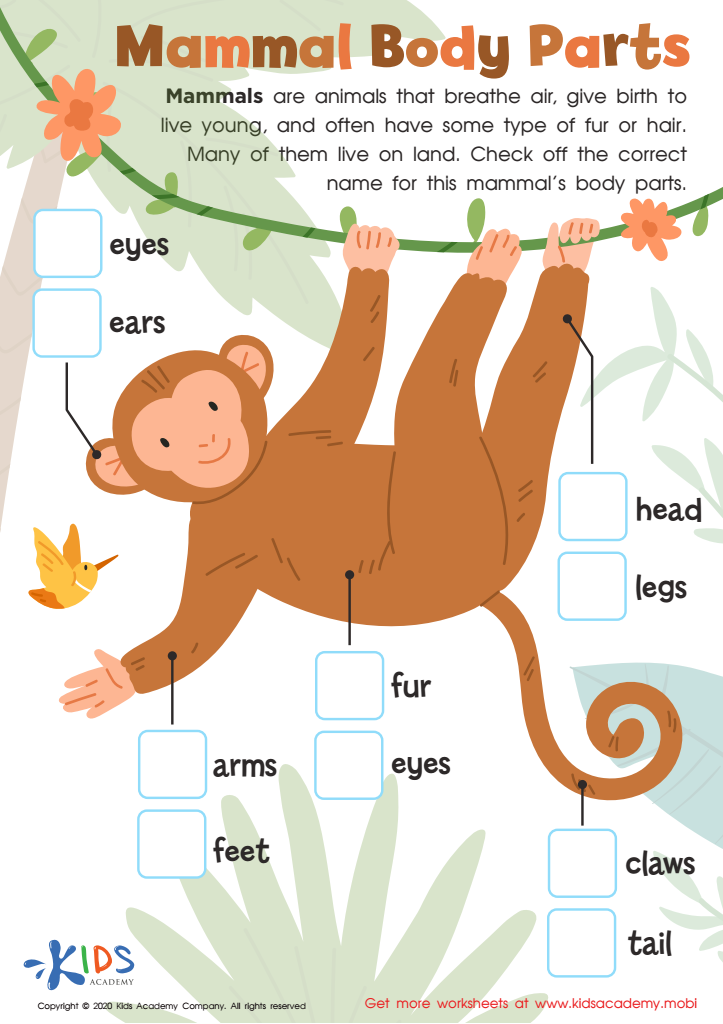
Mammal Body Parts Worksheet
Help your little scientist identify a mammal's body parts with this cute and colorful worksheet. It includes fur, arms, legs, tails, and more! Read the passage to learn what makes an animal a mammal, then have them check off the boxes to identify parts of the monkey. It's a fun way to learn about animals in the animal kingdom!
Mammal Body Parts Worksheet
Worksheet
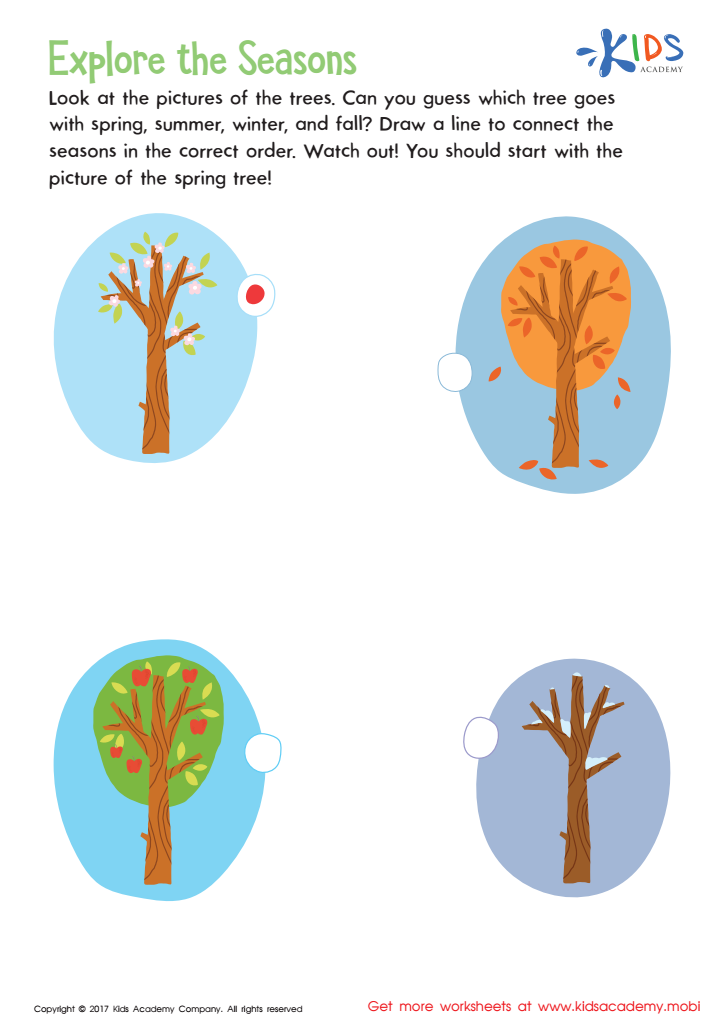
Explore the Seasons Worksheet
Introduce kids to the abstract concept of time with the explore the seasons printable. It helps build logical reasoning and problem-solving skills while teaching how trees change with the weather. Plus, it lets kids make real-life connections to what they're learning. So have them recall the seasons that have passed this year and prepare to be amazed!
Explore the Seasons Worksheet
Worksheet
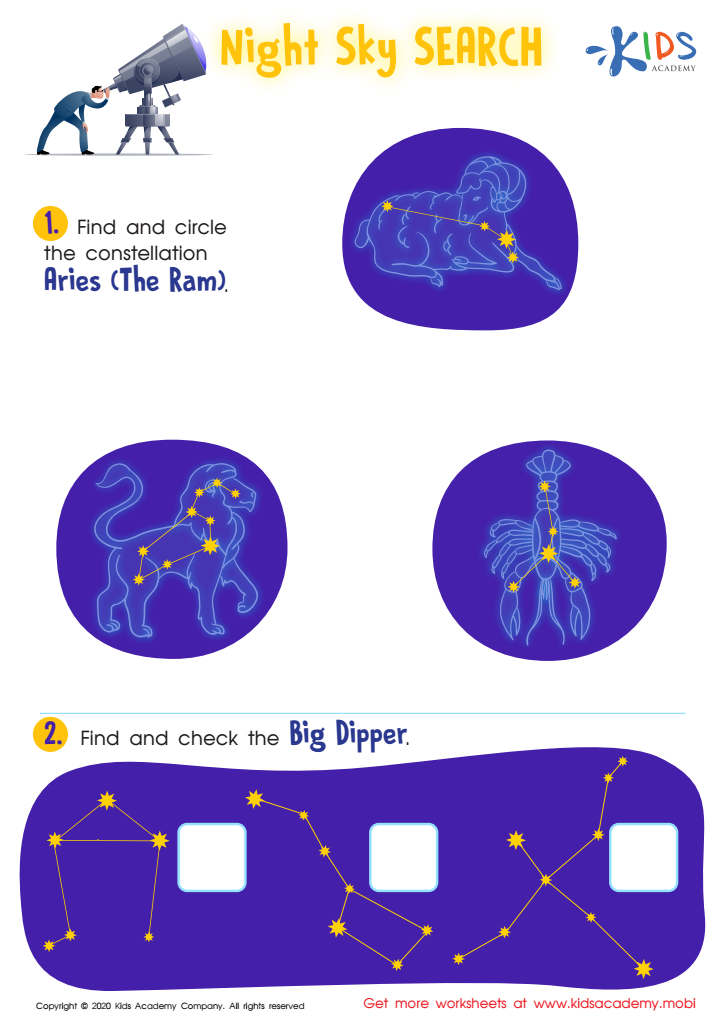
Night Sky Search Worksheet
Gaze up into the night sky and spot the stars! Your little astronomer can learn about Aries and Big Dipper constellations with this science worksheet. Simply find the ram for Aries and check the box for Big Dipper. Then, when the weather is right, go outside and look for them in the night sky!
Night Sky Search Worksheet
Worksheet
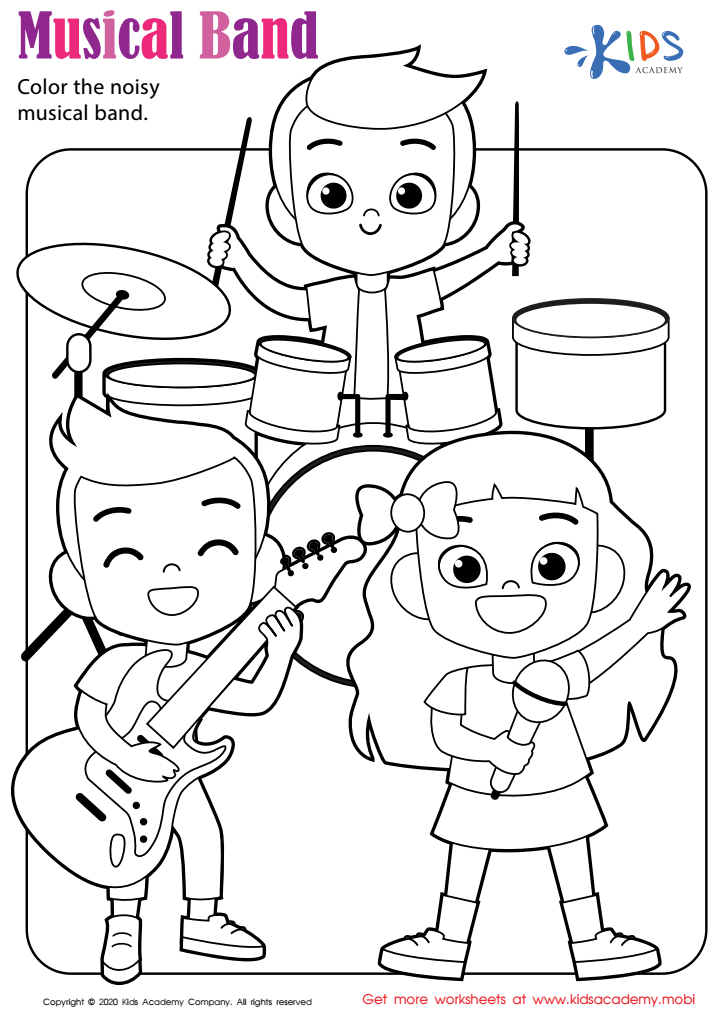
Musical Band Worksheet
Introduce music to your kids with this free printable coloring worksheet! Ask them to name the instruments and their sounds, then let them get creative with the colors. A band is formed when several people play instruments together - help your child learn this concept and get inspired to join a band one day!
Download (PDF)
 Assign to My Students
Assign to My Students
Musical Band Worksheet
Worksheet
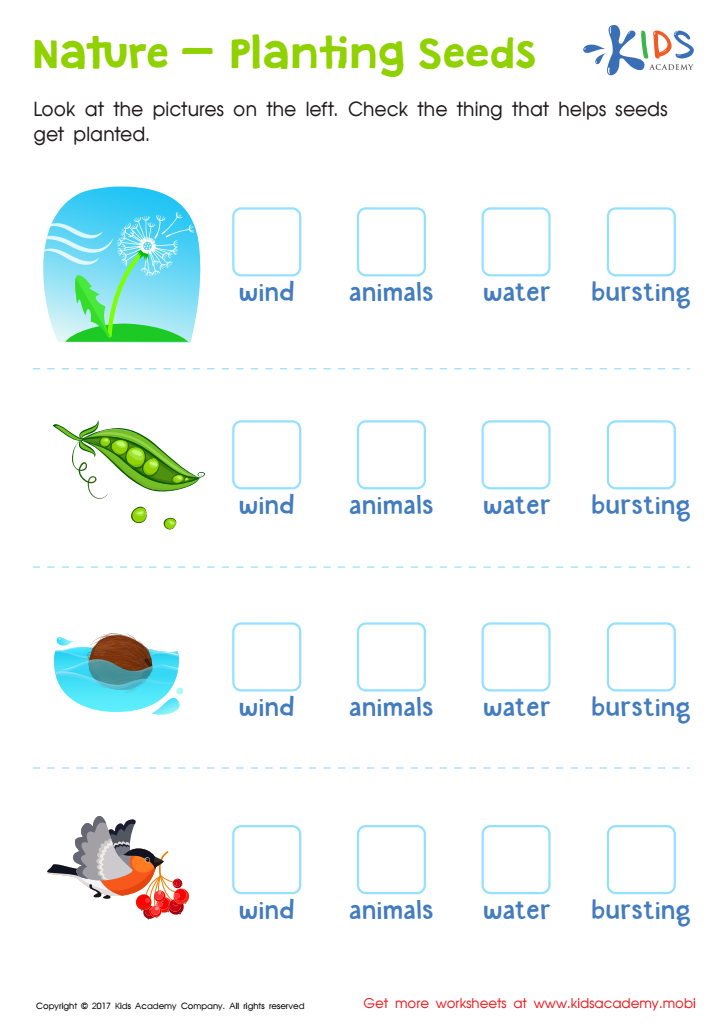
Nature Planting Seeds Worksheet
Help your child explore the fascinating cycle of plants and seeds with this worksheet. They'll learn how plants grow and how seeds travel to the ground. Challenge them to identify the right way each seed gets planted!
Nature Planting Seeds Worksheet
Worksheet
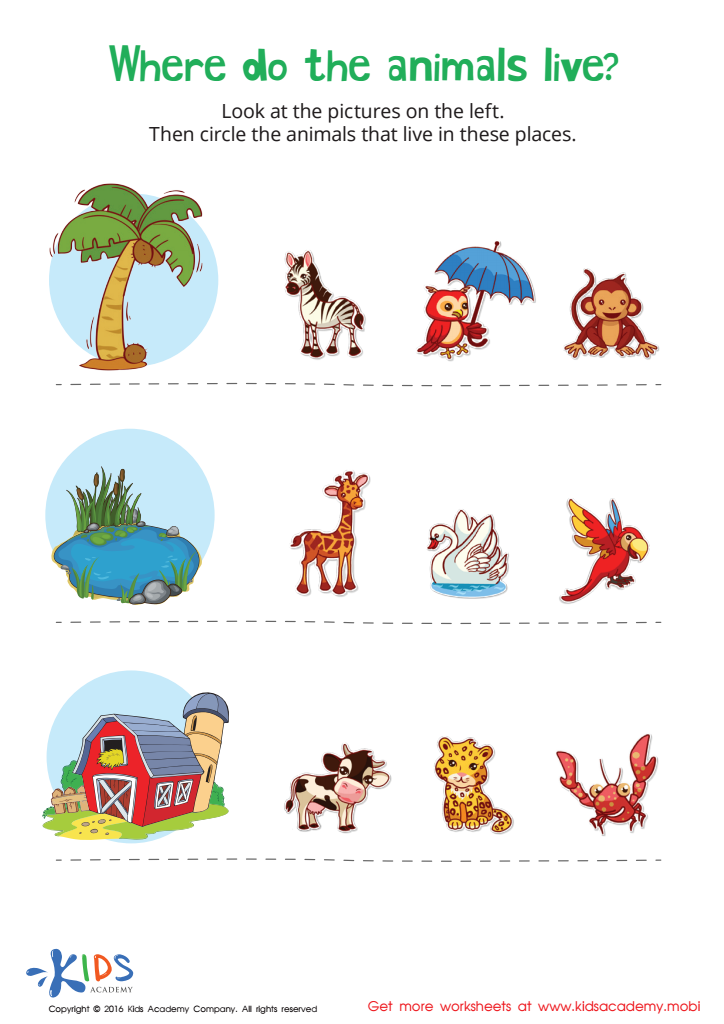
Where Animals Live Worksheet
Teaching early reading and math skills is important, but don't forget about science. With the Where Animals Live PDF worksheet, kids can identify their favorite animals and the environments they live in. Ask them what type of environment the animals like and introduce them to geography. It's great for logical reasoning and classification skills. Your kid will practice with their favorite animals and love the trip to the zoo afterwards!
Where Animals Live Worksheet
Worksheet
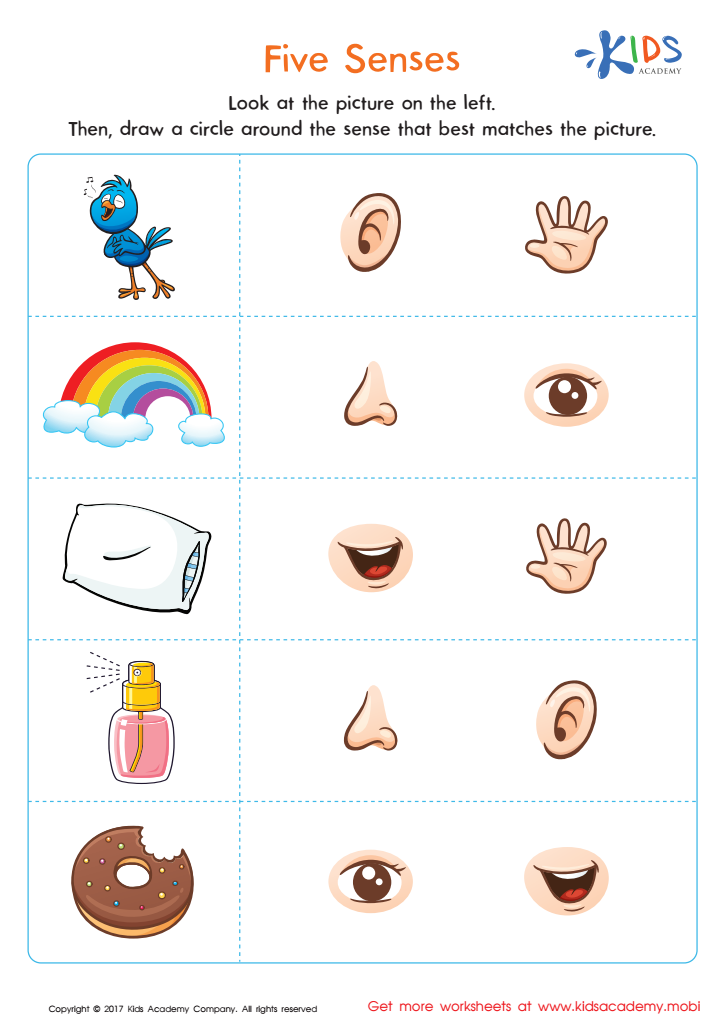
Five Senses Printable
For an easy way to jumpstart your child's critical thinking and introduce the five senses, print our free worksheets! These are great for reviewing each sense and practicing critical thinking skills. Work with your child and discuss each image. After completing the worksheet, find objects around the house so they can quiz themselves!
Five Senses Printable
Worksheet
Join Kids Academy for Free
Who is primarily going to use this learning content?








Vocabulary development in young children, particularly ages 5-6, lays the critical foundation for their future academic success, particularly in subjects like science. At this stage, children are highly receptive to new information, and expanding their vocabulary equips them with the tools to question, explore, and understand the world around them. Science, with its rich and specific terminology, can transform their natural curiosity into structured learning.
Firstly, a strong vocabulary enables children to better comprehend instructions, explanations, and stories, all of which are vital in a science classroom. For example, understanding words like “observe,” “experiment,” or “measure” allows children to grasp the concepts behind scientific methods. Secondly, vocabulary proficiency aids in communication, enabling kids to both express their awe about a butterfly’s transformation or inquire about the rain’s origin without frustration.
By prioritizing vocabulary development, parents and teachers are fostering critical thinking skills that are essential in scientific inquiry. This not only makes learning science more accessible but also more enjoyable. Children can participate in meaningful conversations, enhance their confidence, and build a lifelong interest in learning. Thus, vocabulary development is far more than just word acquisition; it's cultivating a child’s ability to explore, understand, and question their world scientifically.







