Understanding communities Community Worksheets for Ages 5-6
3 filtered results
-
From - To
Discover our engaging "Understanding Communities" worksheets designed for young learners aged 5-6. These interactive resources help children explore the concept of community and its various components. Through fun activities, your child will learn about different roles, responsibilities, and the importance of cooperation within their community. Our worksheets encourage critical thinking and discussion, fostering both curiosity and social awareness. Filled with colorful illustrations and age-appropriate content, these worksheets are perfect for home or classroom use. Start building a solid foundation for your child's understanding of community, promoting empathy and connection from an early age. Explore our worksheets today!
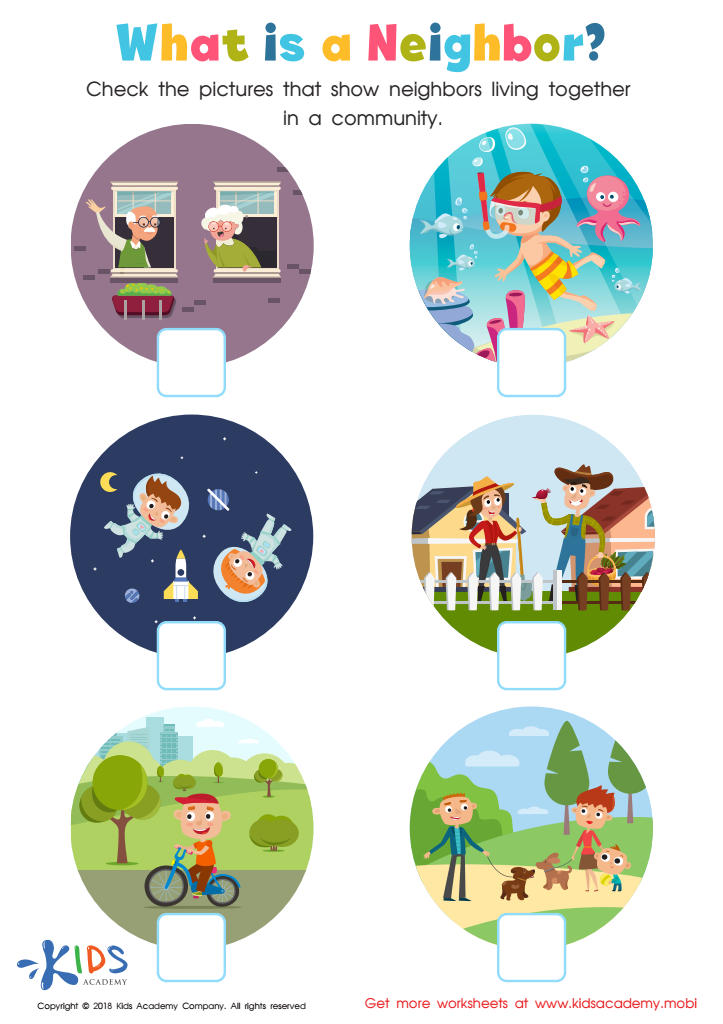
What is a neighbor Worksheet
 Assign to My Students
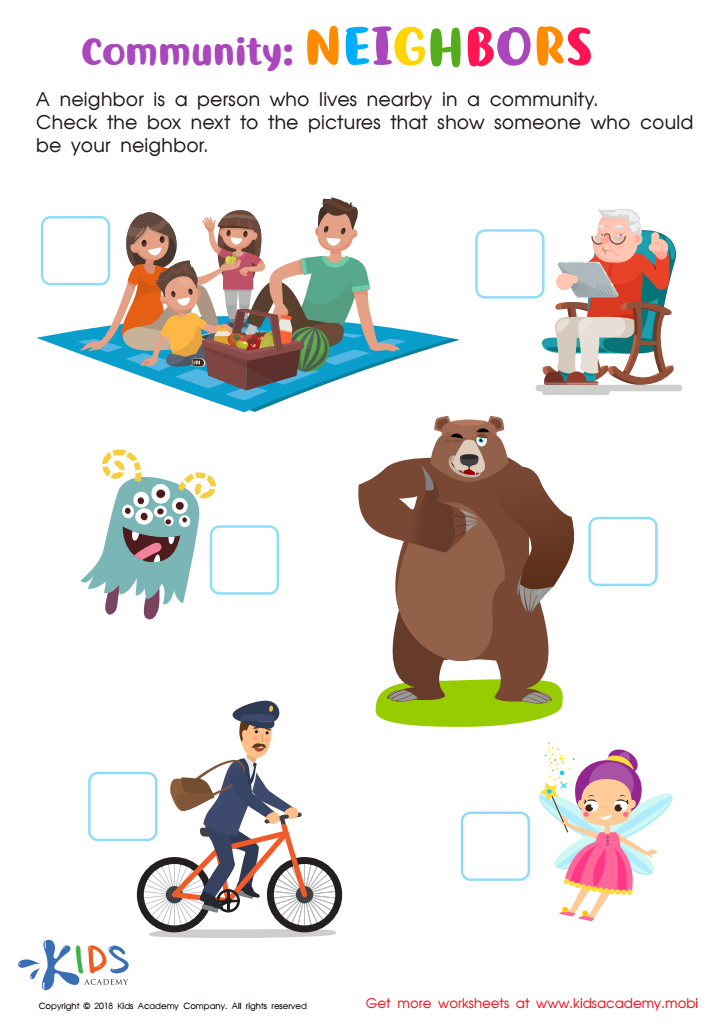
Community: Neighbors Worksheet
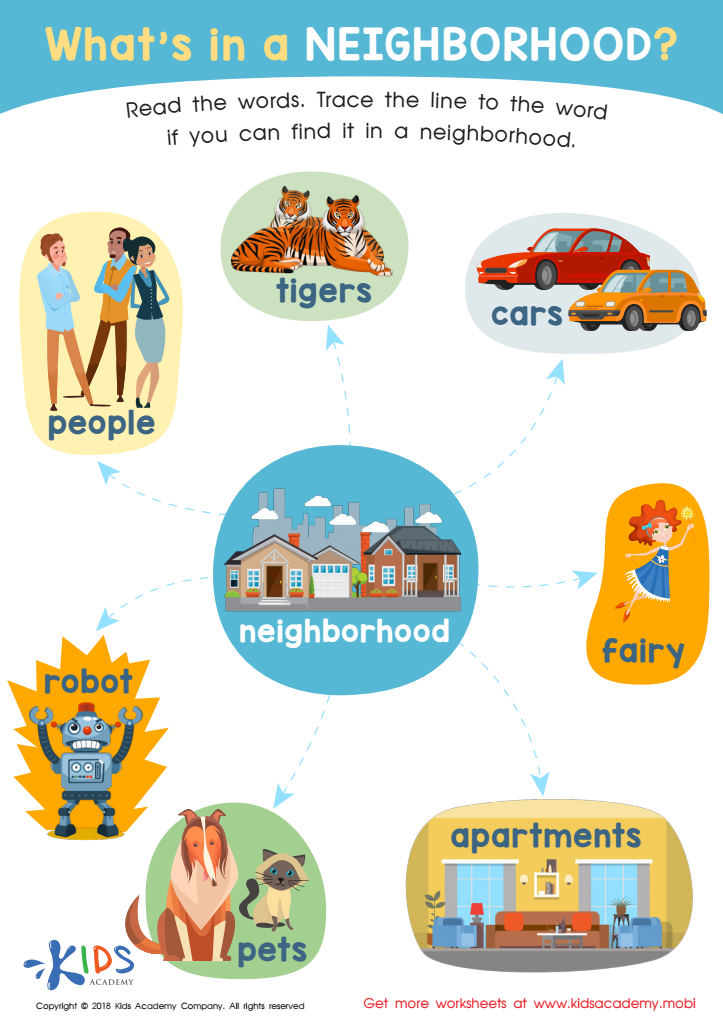
What's in a Neighborhood? Worksheet







Understanding communities is crucial for children aged 5-6 as it forms the foundation for their social development and awareness. Parents and teachers should care because early exposure to the concept of a community helps children build a sense of belonging. At this age, children are naturally curious and eager to learn about the world around them. Introducing them to the idea of diverse communities fosters acceptance, empathy, and respect for different cultures and lifestyles.
Furthermore, learning about community roles—such as firefighters, teachers, and doctors—cultivates an early appreciation for teamwork and collaboration. When children understand how various members contribute to their surroundings, they develop a sense of responsibility and participatory spirit. This understanding also sharpens their communication and critical thinking skills, as they discuss and reflect on their communities’ needs and values.
By engaging in conversations about their communities, parents and teachers can prompt children to ask questions, think critically, and imagine ways to make their environment better. Ultimately, nurturing an understanding of communities supports children's emotional, social, and cognitive growth—skills that will serve them throughout their lives and help them become responsible, informed citizens in the future.








