Matching skills Social Studies Worksheets for Ages 5-6
3 filtered results
Difficulty Level
Grade
Age
-
From - To
Subject
Activity
Standards
Enhance your child’s social studies skills with our engaging Matching Skills Worksheets designed for ages 5-6! These fun and interactive activities focus on building key abilities such as critical thinking, pattern recognition, and memory through age-appropriate matching exercises. Perfect for young learners, these worksheets cover a range of social studies topics like community helpers, geography, and important symbols. Encourage your child to develop a strong foundation in social studies while enjoying the learning process. Explore our collection to make education a delightful adventure for your little one, fostering both curiosity and growth in an enriching, enjoyable manner.
Favorites
With answer key
Interactive
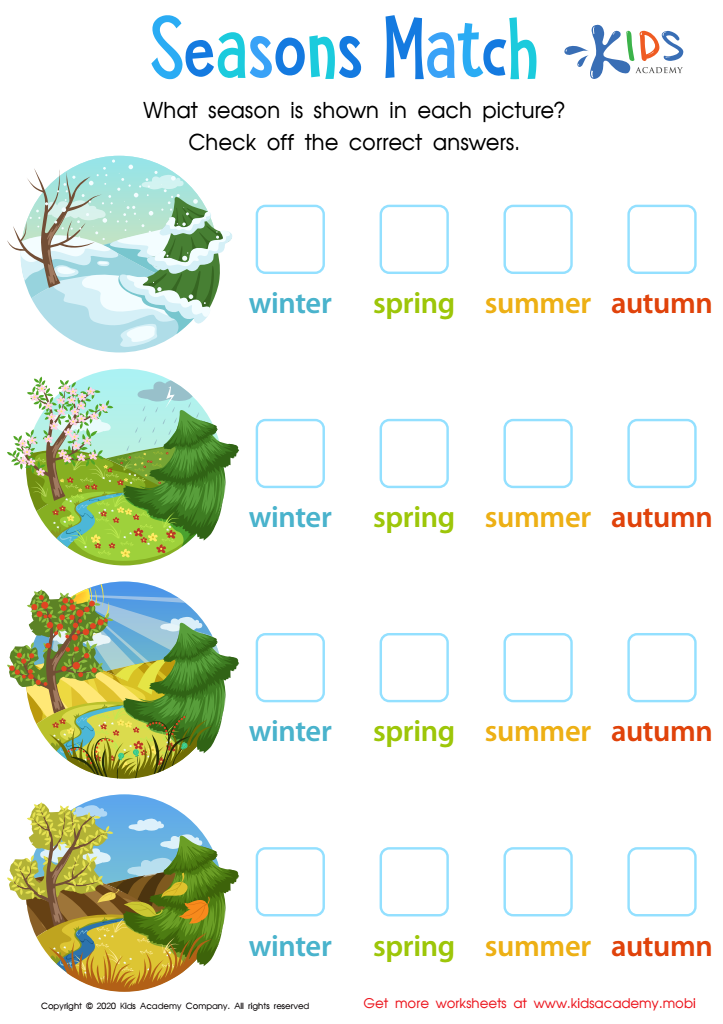
Seasons Match Worksheet
Preschoolers should begin learning about seasons and weather early. Most can tell what season it is by upcoming holidays or school activities. Test their knowledge with a printable PDF worksheet. It asks them to match each image with its corresponding season!
Seasons Match Worksheet
Worksheet
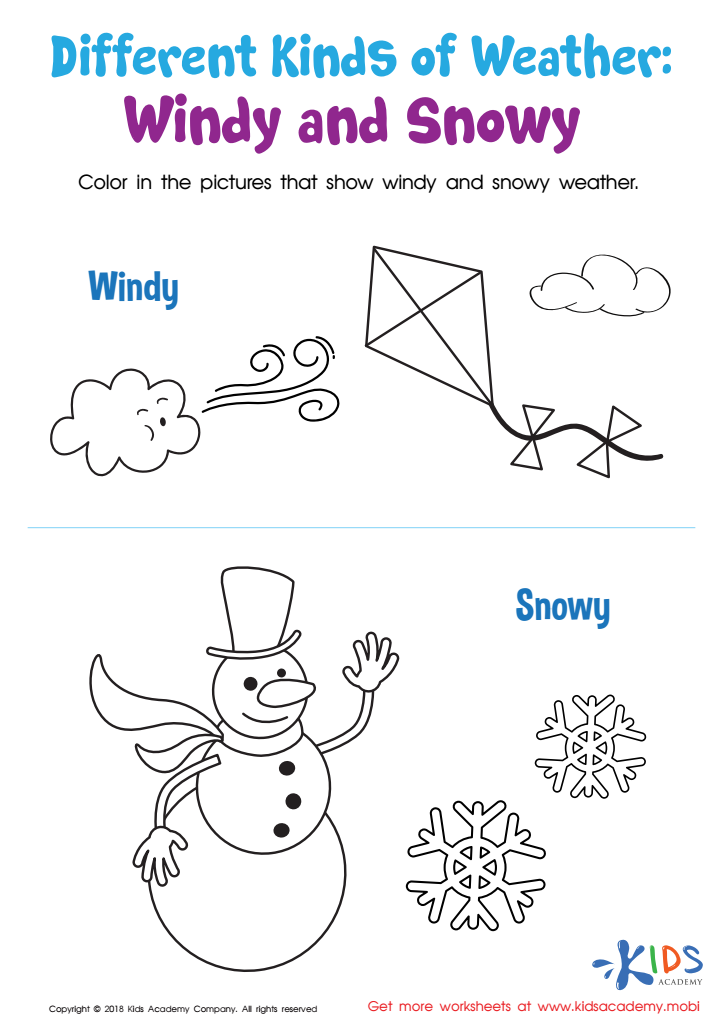
Different Kinds of Weather: Windy and Snowy Worksheet
Invite your little learner to practice their fine motor skills and learn about nature with this fun and charming PDF worksheet! Reinforce weather patterns and examine their environment as they color, giving them a foundation for understanding how weather affects them. No matter the weather, your learner will have a blast!
Download (PDF)
 Assign to My Students
Assign to My Students
Different Kinds of Weather: Windy and Snowy Worksheet
Worksheet
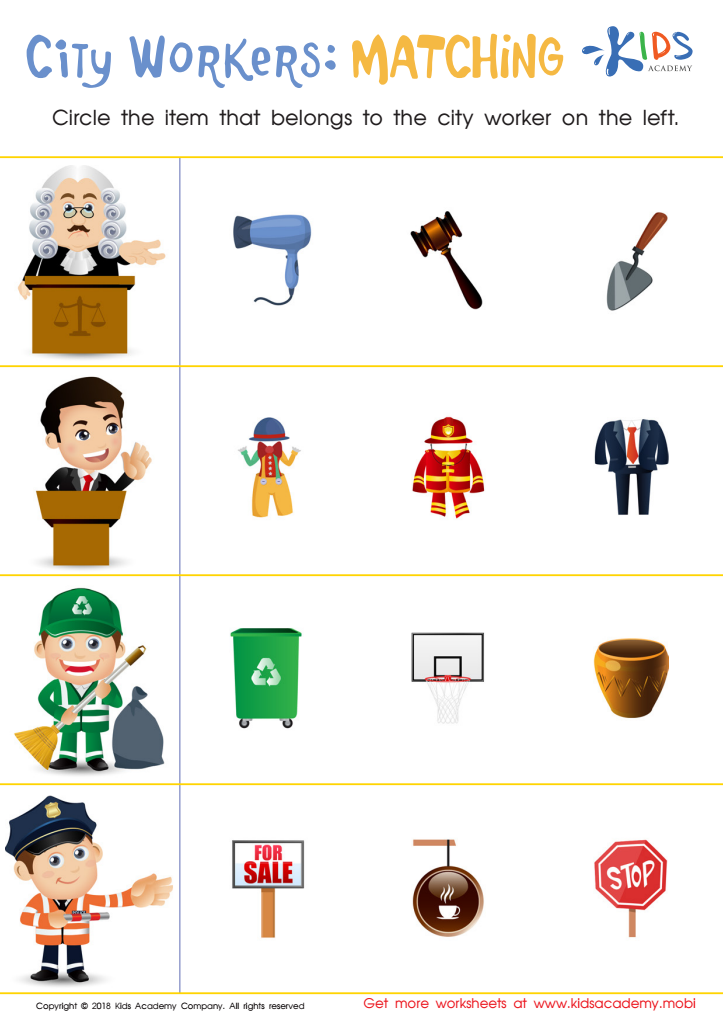
City Workers: Matching Worksheet
Examine the worksheet with your kid. Identify the individuals on the left and their jobs. Have your child circle the correct items on the right that pertain to the city workers. Help your child learn about city workers with this activity.
City Workers: Matching Worksheet
Worksheet
Join Kids Academy for Free
Who is primarily going to use this learning content?







When teaching Social Studies to children ages 5-6, developing matching skills is crucial. Matching activities, like pairing pictures of various community helpers with their respective roles or matching landmarks to their corresponding locations, serve as foundational tools in the early stages of cognitive development and the understanding of the world. These activities enhance visual discrimination, where children learn to notice differences and similarities, a skill that’s transferable to reading and recognizing patterns.
Matching skills also encourage cognitive linkage, enabling children to form associations and understand relationships between different concepts, a key aspect of Social Studies. For example, matching activities can help young learners grasp the function of symbols and maps, recognizing that a picture of a school corresponds to a place of learning in their community.
Furthermore, these activities bolster memory retention by encouraging repeated exposure to foundational concepts in an engaging way, solidifying their knowledge about their environment, roles within their community, and cultural symbols.
In social settings, matching activities provide collaborative opportunities where children can work together, promoting communication skills and teamwork. Particularly during kindergarten years, emphasizing matching helps scaffold learning, setting the stage for more complex understanding of history, geography, and cultural studies in the future. Thus, matching skills not only support core learning objectives in Social Studies but also foster essential cognitive and social development.