Shape Recognition Social Studies Worksheets for Ages 5-6
4 filtered results
-
From - To
Explore our engaging "Shape Recognition Social Studies Worksheets for Ages 5-6" designed to introduce young learners to the fascinating world of social studies through the fun lens of shape recognition. Perfect for kindergarten and first-grade students, these worksheets blend key social studies concepts with essential geometry skills. Children will enjoy identifying and coloring shapes in maps, community settings, and historical contexts, fostering both analytical and spatial abilities. Through interactive activities, kids will connect with their environment while developing foundational skills. Make learning exciting and educational with our creatively themed worksheets that captivate imaginations and enhance cognitive development.
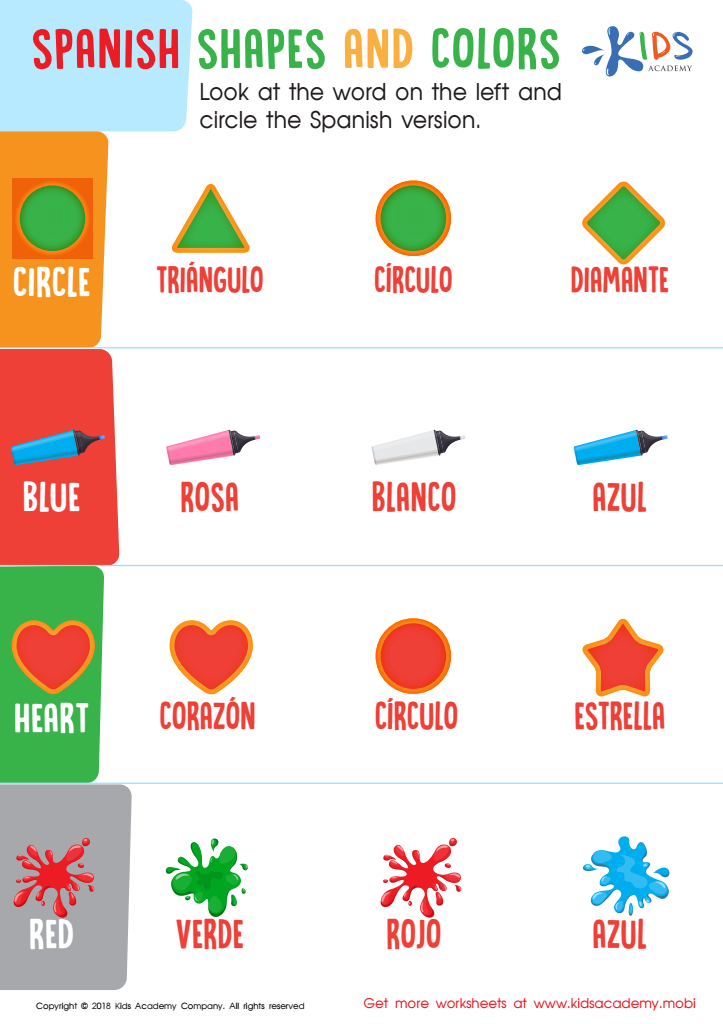
Spanish Shapes and Colors Worksheet
 Assign to My Students
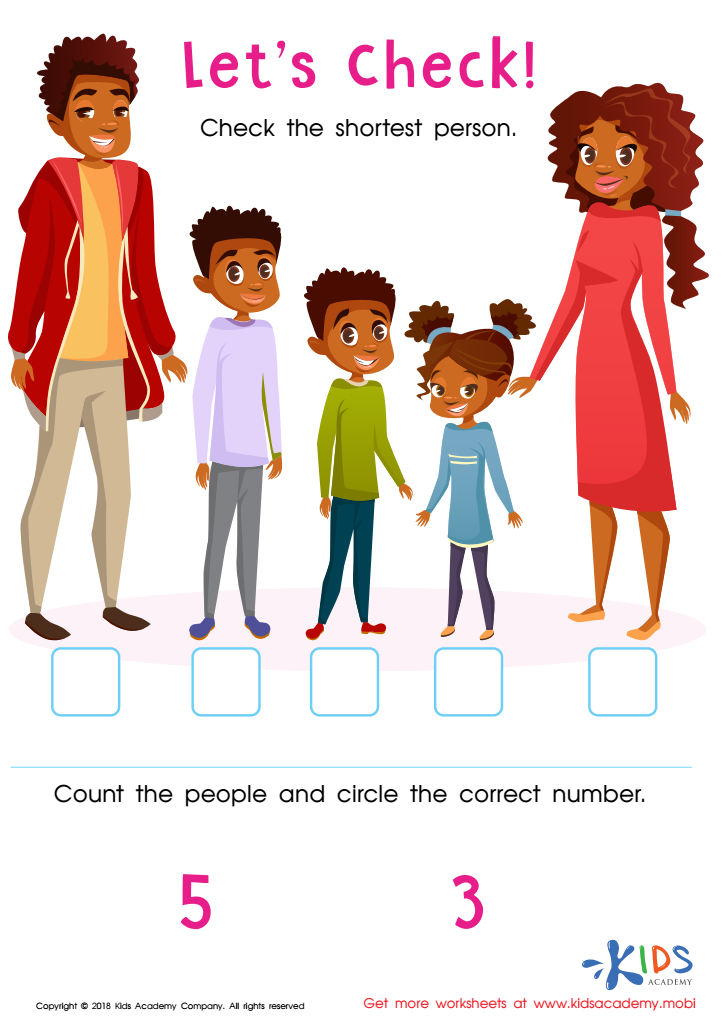
Let's Check! Assessment Worksheet

Playground Worksheet

Take a Look - Part 1 Worksheet








Shape recognition is fundamental in the early developmental stages of young children aged 5-6, and it plays a vital role in their academic and social skill growth. Parents and teachers should care about integrating shape recognition into social studies for several reasons:
-
Foundational Skills: Shape recognition is a critical precursor to geometry and spatial awareness. It helps children identify and comprehend shapes in the world around them, building the groundwork for future math skills and logical thinking.
-
Cognitive Development: Identifying and differentiating between shapes enhances cognitive processes such as categorization, visual memory, and problem-solving. These skills are essential for broader learning and academic success.
-
Learning Integration: Integrating shape recognition with social studies can enrich the subject matter, making it more tangible and engaging. For instance, identifying shapes in maps, historical artifacts, and architectural structures makes social studies more immersive and relatable.
-
Communication Skills: Discussing and describing shapes fosters language development and verbal expression, precise speaking, and attentive listening. These communication skills are critical for success in all areas of learning.
-
Social Interaction: Group activities centered around shape recognition, such as collaborative map-reading or creating shape-based art projects, promote teamwork, sharing, and cooperative learning. These social interactions nurture emotional intelligence and interpersonal skills.
By emphasizing shape recognition within social studies, parents and teachers create a comprehensive and enjoyable learning environment that supports children's educational and social development.