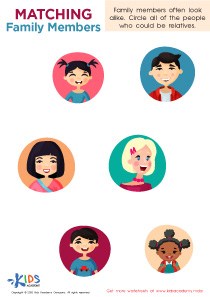
Visual perception improvement Social Studies Worksheets for Ages 5-6
3 filtered results
Difficulty Level
Grade
Age
-
From - To
Subject
Activity
Standards
Enhance your child's learning experience with our Visual Perception Improvement Social Studies Worksheets for ages 5-6. Specially designed to boost cognitive development, these engaging activities help young learners improve their visual perception skills while gaining knowledge in social studies. Each worksheet includes age-appropriate exercises that promote attention to detail, pattern recognition, and visual differentiation. By integrating these essential skills with social studies concepts, our worksheets make learning enjoyable and effective. Perfect for both classroom and at-home use, help your child build a strong foundation for academic success. Explore our expertly crafted worksheets today!
Favorites
With answer key
Interactive
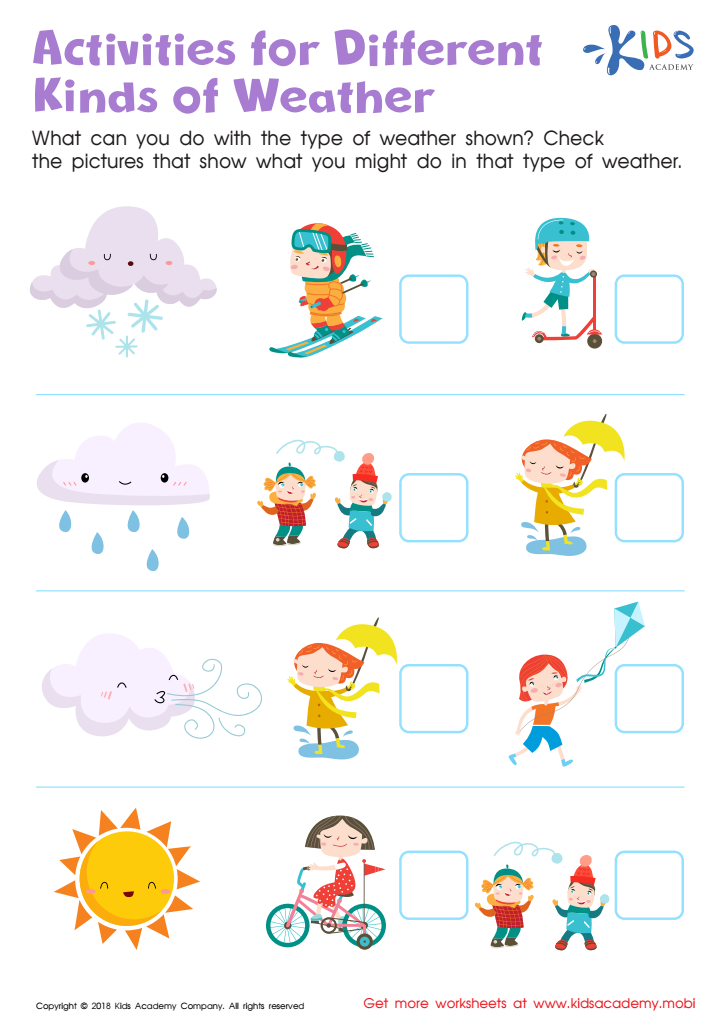
Activities for Different Kinds of Weather Worksheet
Help your child explore the changing seasons with this interactive worksheet. Ask them to name the different seasons and activities associated with each type of weather. Show the pictures and explain what they can do in that kind of weather. Have them check off the activities to help them learn and enjoy the changing seasons.
 Assign to My Students
Activities for Different Kinds of Weather Worksheet
Worksheet
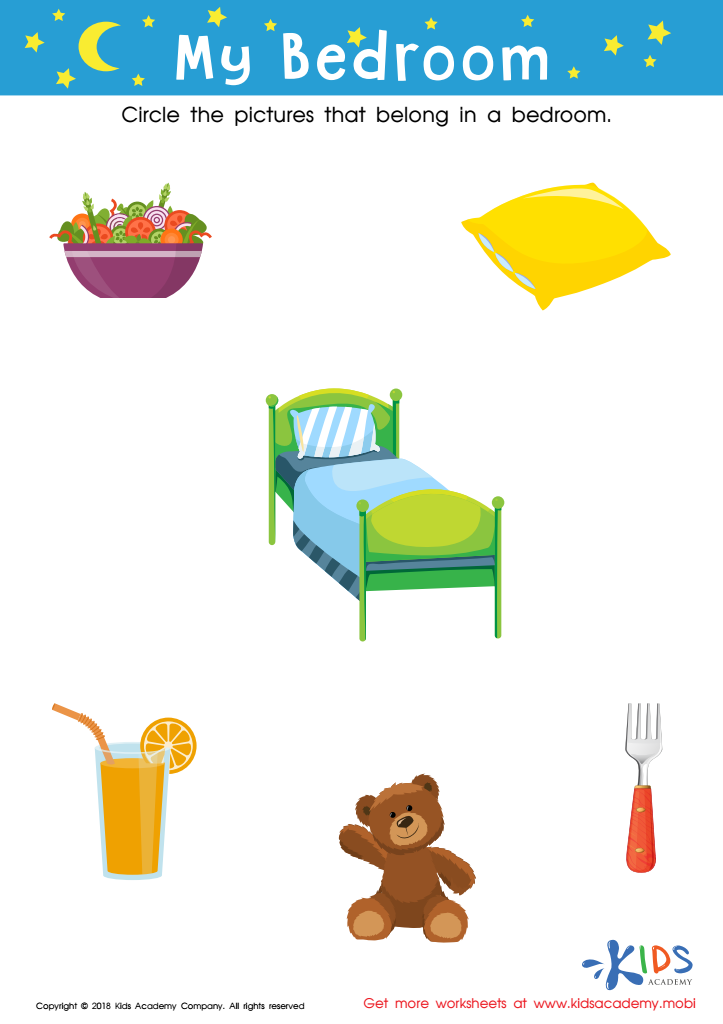
My Bedroom Worksheet
Your child's room is their special space, where only a few are allowed in. You may have let them choose some special decorations, like wall stickers and toys. This exercise will be easy for your child, as they know their bedroom well. Ask them to circle the pictures that belong in a bedroom.
My Bedroom Worksheet
Worksheet
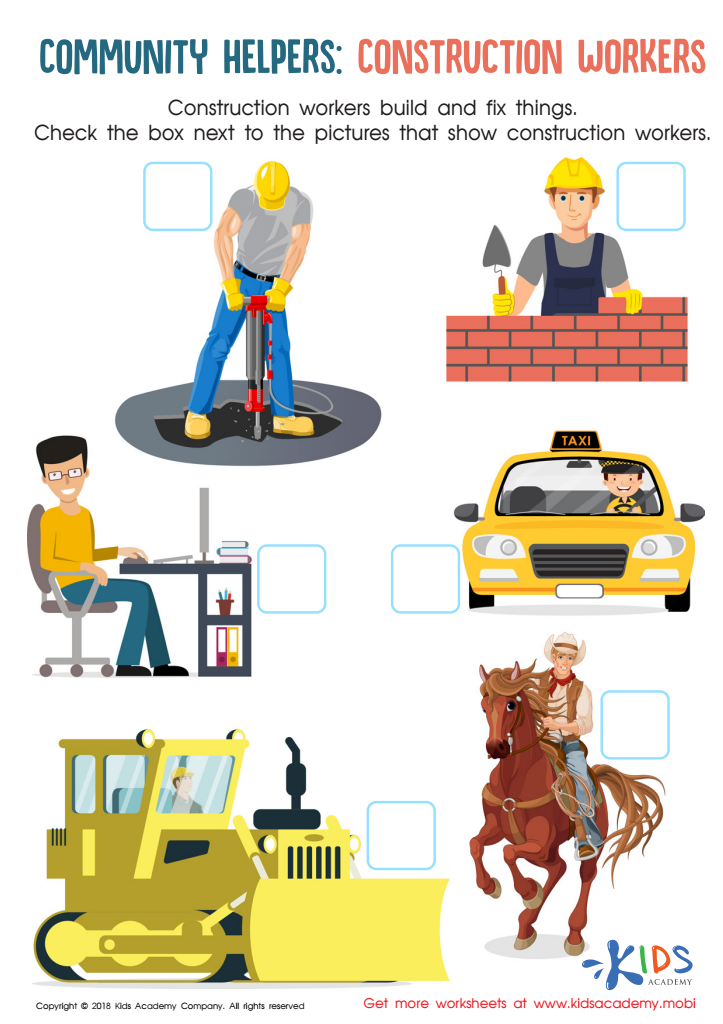
Construction Workers Community Helpers Worksheet
Construction workers build and repair roads, keeping them accessible for the community. Ask your child if they've ever seen one at work, and talk about what they do. Go through the worksheet together and check the pictures that show construction workers in action.
Construction Workers Community Helpers Worksheet
Worksheet
Join Kids Academy for Free
Who is primarily going to use this learning content?


.jpg)



Visual perception skills are vital in early childhood education, particularly in the context of Social Studies for children aged 5-6. These skills involve the ability to accurately interpret and make sense of the visual information in the world around them, which is foundational for learning and interaction.
Firstly, improving visual perception aids children in understanding maps, symbols, and globes – key tools in Social Studies. It helps them recognize and differentiate between various shapes, landmarks, and geographical locations, fostering a better spatial awareness. This foundational knowledge is crucial for comprehending more complex concepts as they advance in their education.
Secondly, enhanced visual perception supports the development of reading and writing skills. Children become better at recognizing letters, words, and numbers, which is essential for engaging with textual information in Social Studies. This, in turn, boosts their overall academic performance.
Furthermore, strong visual perception skills contribute to social development. Kids learn to interpret non-verbal cues such as facial expressions and body language, promoting better communication and relationship-building with peers.
Lastly, early proficiency in visual perception nurtures critical thinking and problem-solving abilities. They can analyze visual data objects and interpret patterns, leading to a more enriched understanding of societal roles, and histories. Teachers and parents should, thus, invest effort in activities that foster visual growth to provide children with a solid academic and social foundation.