English grammar practice Writing Worksheets for Ages 5-6
3 filtered results
-
From - To
Nurture your child's writing skills with our English Grammar Practice Writing Worksheets designed specifically for ages 5-6. These fun and engaging worksheets help young learners master essential grammar concepts while enhancing their writing abilities. Each worksheet is crafted to introduce foundational skills such as sentence structure, punctuation, and proper grammar usage in an enjoyable and interactive way. Perfect for both classroom and home use, our worksheets provide the practice children need to build confidence and improve their language skills. Empower your child to become a proficient writer with our thoughtfully designed grammar practice worksheets.
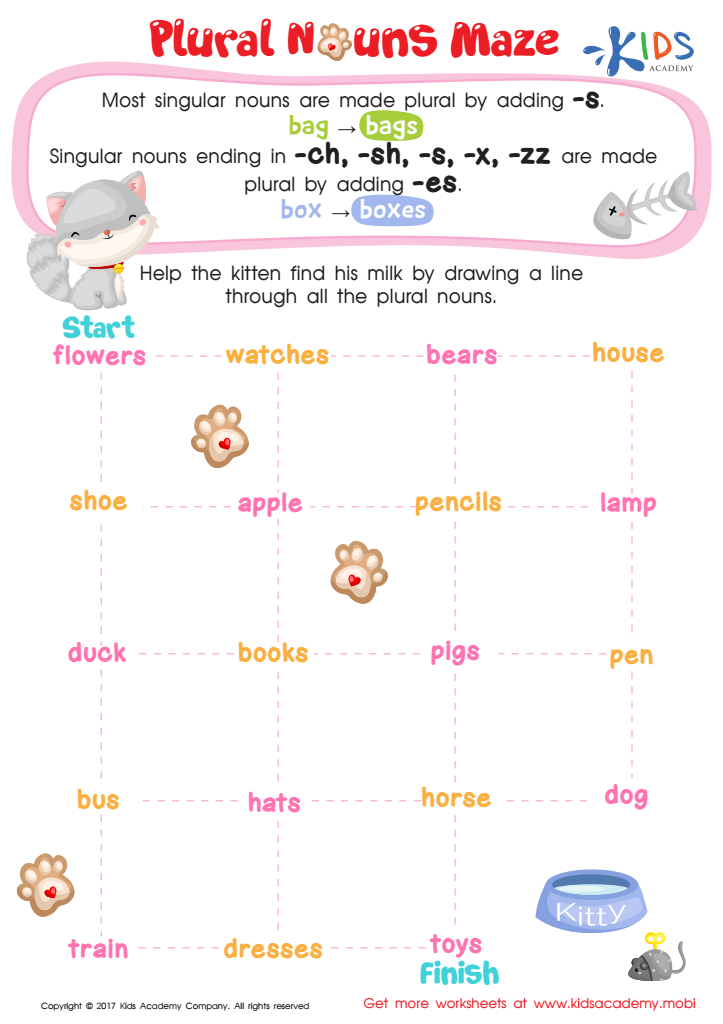
Plural Nouns Maze Worksheet
 Assign to My Students
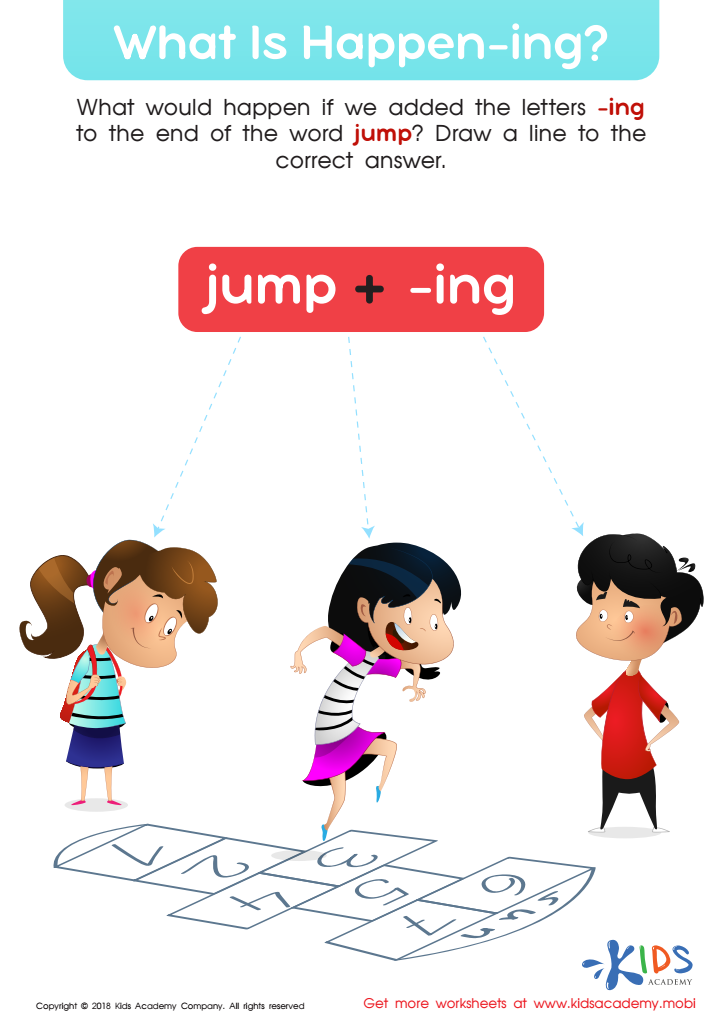
What Is Happen-Ing? Worksheet
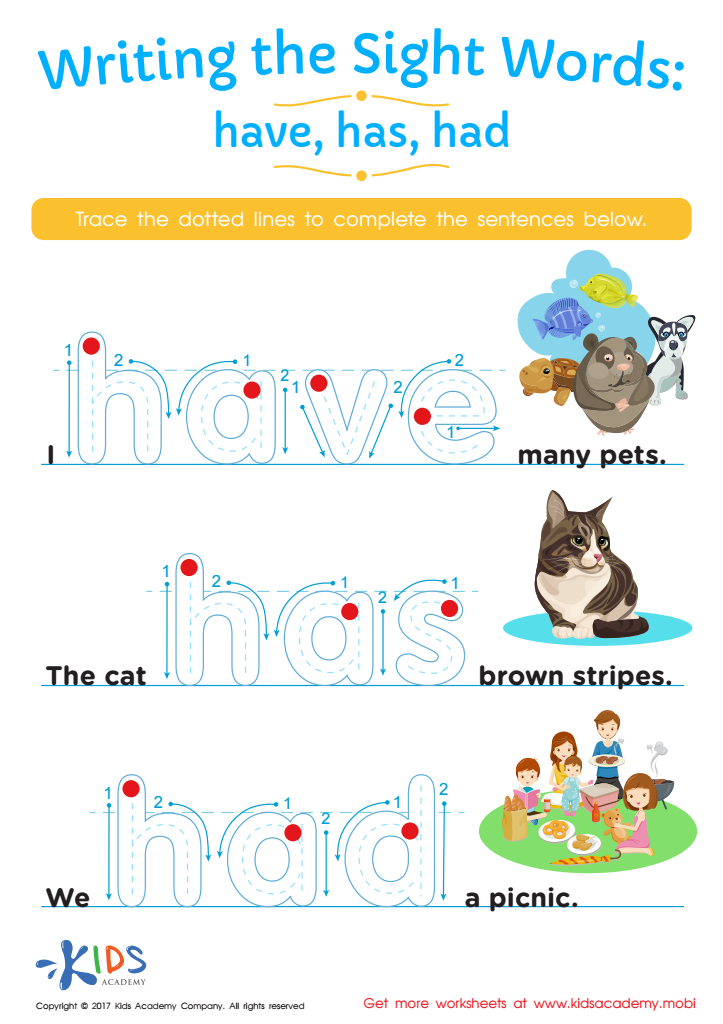
Have, Has, Had Worksheet Sight Words Worksheet







English grammar practice for children aged 5-6 is crucial for several reasons. At this formative stage, young minds are exceptionally receptive and have a high capacity for learning and retaining new information. Strong grammar skills provide the foundation for effective communication, both spoken and written.
Firstly, grasping basic grammar rules early aids in developing reading skills. As children recognize sentence structures and grammatical patterns, it becomes easier for them to decode and understand the meaning of written texts. This boosts reading comprehension and fosters a love for reading.
Secondly, early grammar practice enhances cognitive development. Understanding how different parts of speech come together to form sentences builds critical thinking and problem-solving abilities. It also strengthens memory as kids are exposed to new vocabulary and sentence constructs.
Moreover, good grammar is essential for academic success. Mastery in writing and speaking lays the groundwork for future learning. Subjects across the curriculum necessitate clear and correct communication skills which are underpinned by grammar knowledge.
Lastly, proficiency in grammar cultivates self-confidence. When children are able to express themselves clearly and correctly, they are more likely to participate in classroom discussions, engage in effective peer interactions, and enjoy learning overall.
Thus, investing time in grammar practice for young children pays lifelong dividends, aiding their academic, cognitive, and social development.








