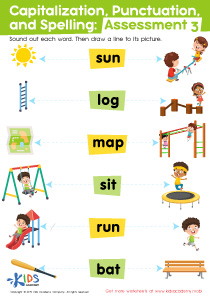
Verb identification Writing Worksheets for Ages 5-6
3 filtered results
-
From - To
Unlock the joy of learning with our Verb Identification Writing Worksheets, specifically designed for children ages 5-6! These engaging sheets help young learners recognize and understand verbs, the action words that bring sentences to life. Filled with fun activities and vibrant illustrations, kids will explore various verbs through tracing, coloring, and writing exercises. Our worksheets aim to enhance vocabulary and improve writing skills, setting a solid foundation for future literacy. With files that are easy to download and print, parents and educators can seamlessly integrate these resources into learning routines. Inspire and empower your young learners to become confident writers today!
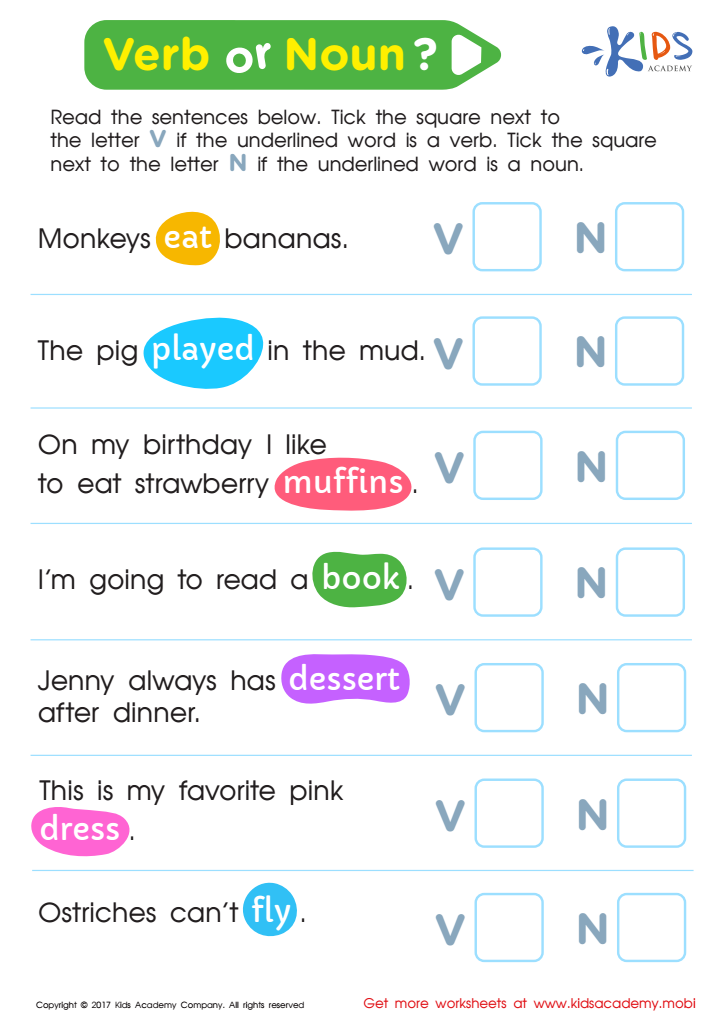
Verb or Noun Worksheet
 Assign to My Students
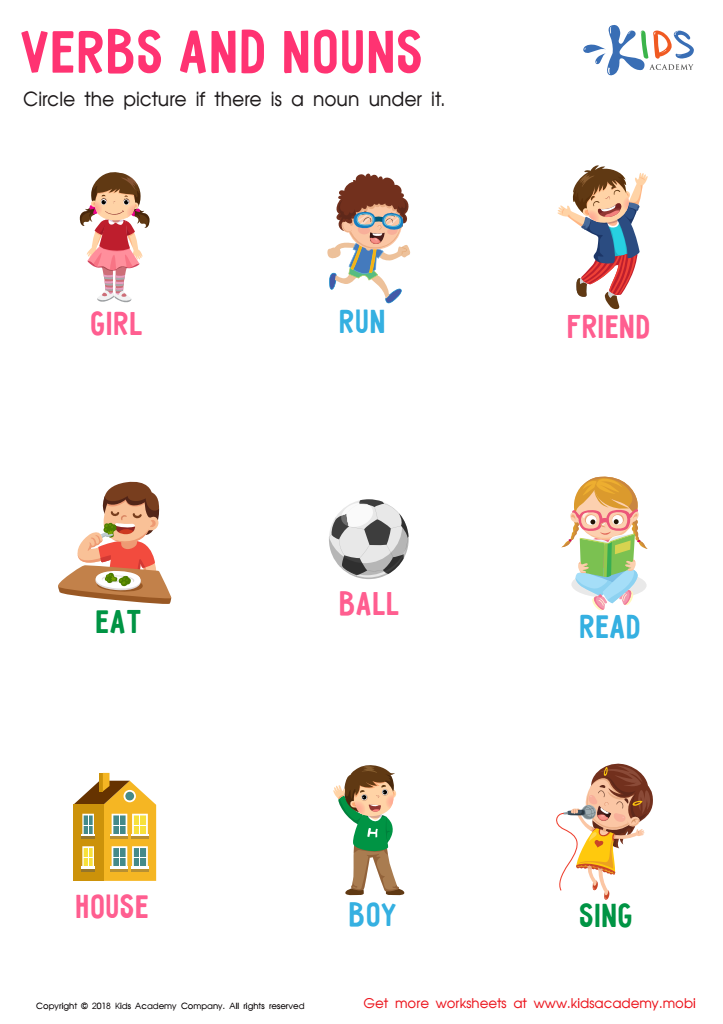
Verbs and Nouns Worksheet
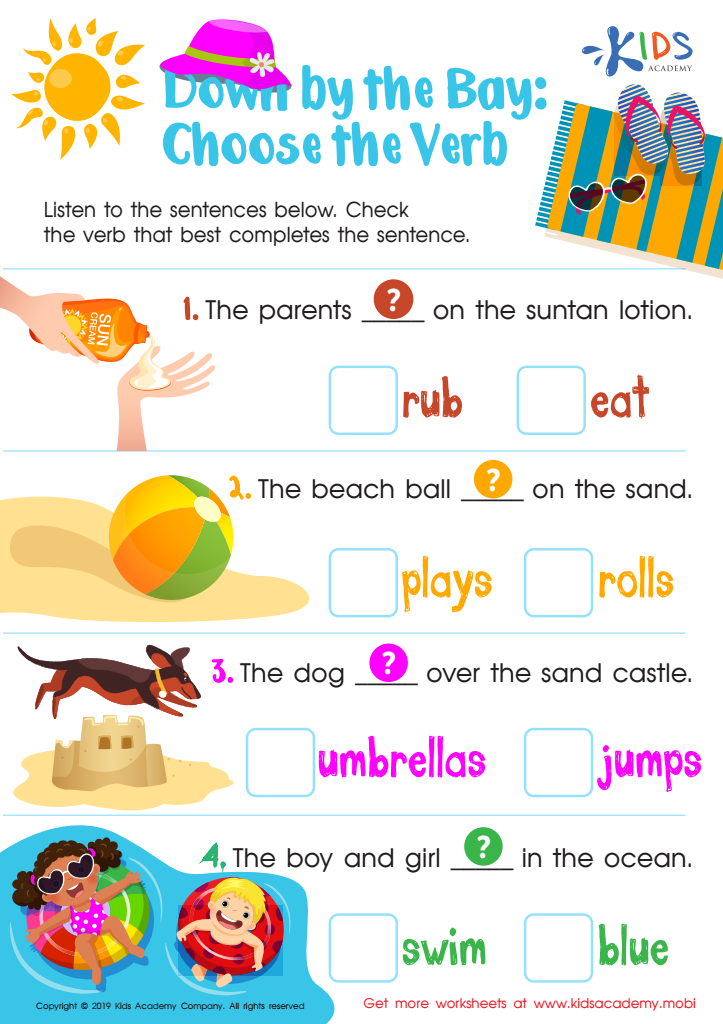
Down by the Bay: Choose the Verb Worksheet








Verb identification is essential for children aged 5-6 as it forms the backbone of their early language development and literacy skills. At this age, children are beginning to construct sentences and understand basic grammar. Verbs are action words that bring sentences to life; they help children express what they do or what others do. By focusing on verb identification, parents and teachers can enhance children's vocabulary, reading comprehension, and writing abilities.
Understanding verbs allows young learners to create more dynamic and varied sentences, enabling them to communicate their thoughts and emotions more effectively. Engaging children in activities that promote verb recognition—such as storytelling, role-playing, or verb games—can make learning enjoyable and interactive. This hands-on approach cultivates a positive attitude toward language learning.
Moreover, building a strong foundation in grammar at this early stage supports future academic success. As children progress in school, their ability to identify verbs will enhance their reading fluency and comprehension, as well as their ability to write informative or creative texts. Therefore, prioritizing verb identification in early education can significantly impact children's overall communication skills and confidence in using language effectively.