
Fine motor skills development ABC Letters Worksheets for Ages 5-7
3 filtered results
Difficulty Level
Grade
Age
-
From - To
Subject
Activity
Standards
Enhance your child's fine motor skills with our engaging ABC Letters Worksheets, designed specifically for ages 5-7. These printable activities not only promote writing readiness but also strengthen hand-eye coordination and dexterity. Each worksheet features fun and interactive tasks, enabling children to practice tracing letters, coloring, and completing letter-specific exercises. As your child navigates through the alphabet, they’ll develop essential skills for handwriting and overall motor proficiency. Perfect for home or classroom use, our worksheets ensure an enjoyable learning experience that fosters creativity and confidence. Download today to give your child a head start in their educational journey!
Favorites
With answer key
Interactive
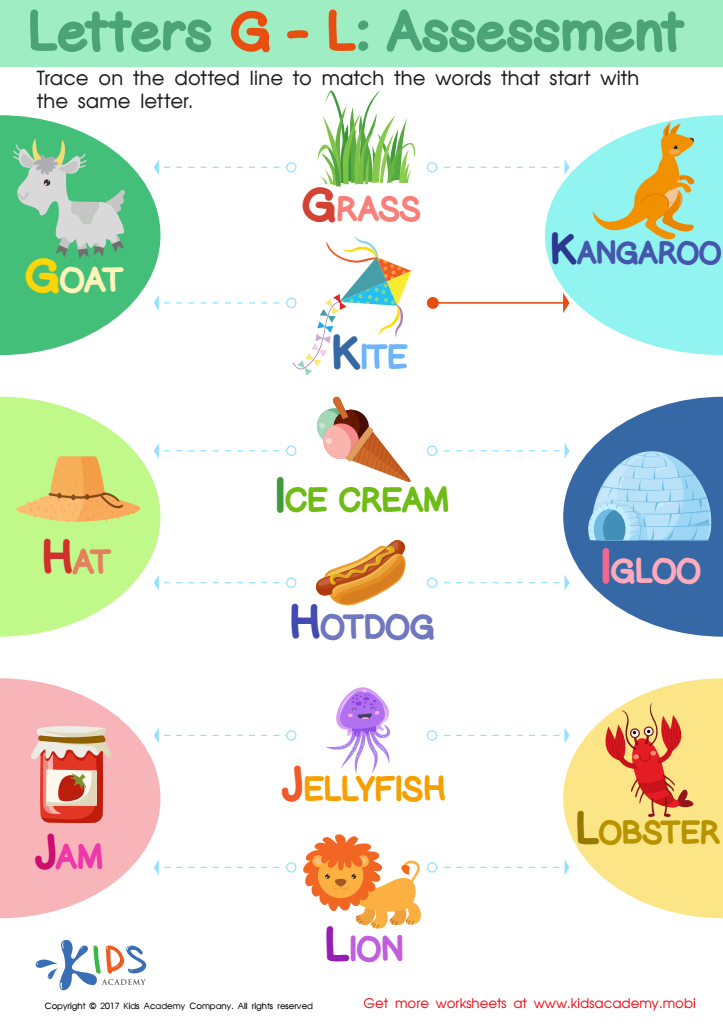
Letters G-L Worksheet
This fun worksheet helps preschoolers develop reading and phonics skills. It gets kids to match G-L words that start with the same letter, making it engaging and educational.
Letters G-L Worksheet
Worksheet










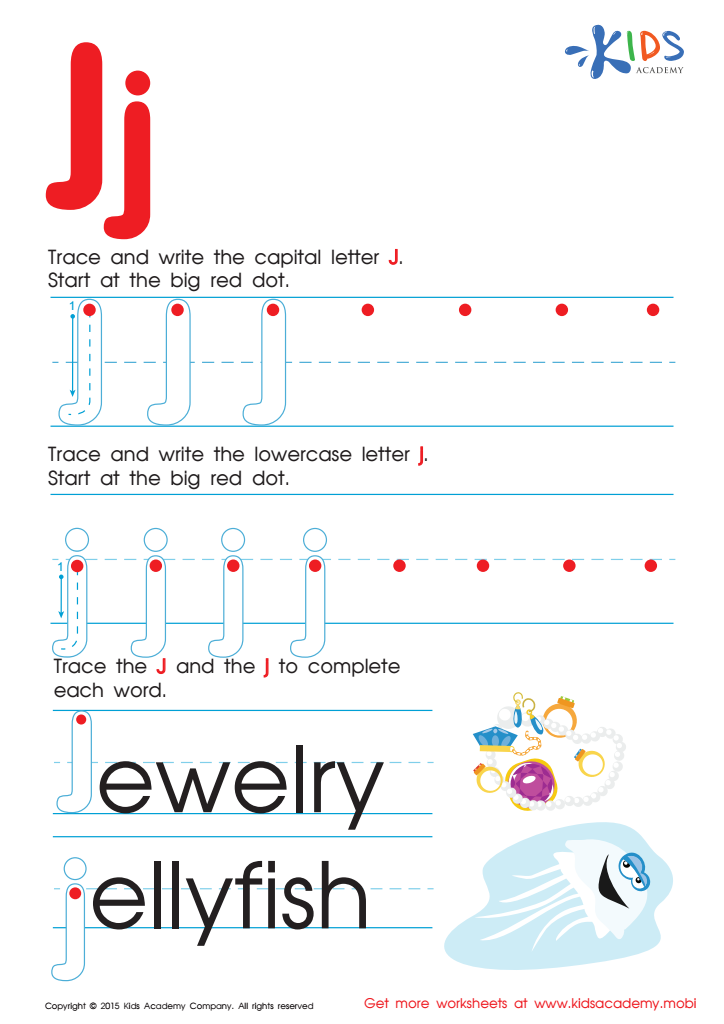
Letter J Tracing Page
Trace and write the letter "J" with our ABC worksheet - start at the big red dot! Have fun completing words like jewelry, jellyfish and more. Check out our kindergarten activities for more alphabet practice.
Letter J Tracing Page
Worksheet
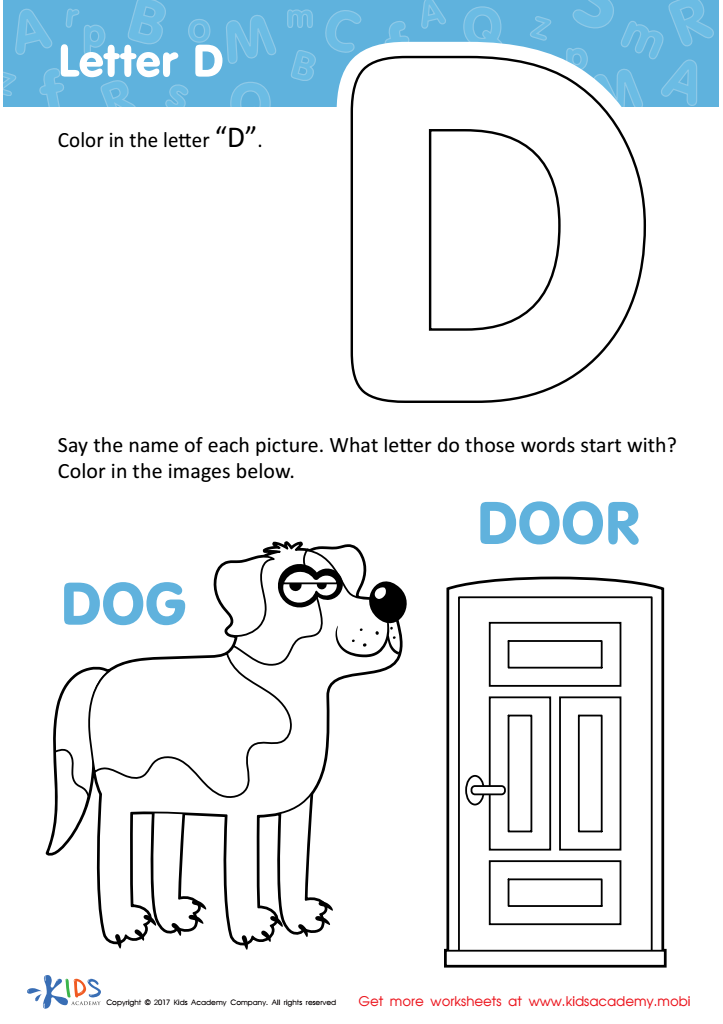
Letter D Coloring Sheet
Coloring with this letter "D" page is a great way to encourage your child's creativity while they learn the letter "D" and its sound. It's a fun activity to stimulate their imagination!
Download (PDF)
 Assign to My Students
Assign to My Students
Letter D Coloring Sheet
Worksheet
Join Kids Academy for Free
Who is primarily going to use this learning content?








Fine motor skills development is crucial for children aged 5-7, especially when it comes to learning ABC letters. At this stage, children are transitioning from preschool to more formal education, where they will be expected to write letters and participate in various hands-on activities. Fine motor skills involve the precise movements of small muscles, particularly in the hands and fingers, allowing children to engage effectively in tasks like writing, drawing, and manipulating objects.
Parents and teachers should prioritize fine motor skills development as it directly influences literacy and overall cognitive development. Mastering these skills helps children to form letters correctly, promotes neat handwriting, and enhances their ability to express themselves creatively. Additionally, fine motor skills are linked to a child’s confidence and independence, impacting their ability to perform everyday tasks.
Fostering these skills through engaging activities—such as tracing letters, crafting, or using playdough—can enhance a child’s learning experience. When parents and teachers collaborate in nurturing fine motor skills, they lay a strong foundation for future learning successes and grasp the basic building blocks of language. Strong motor skills can lead to improved focus and increased enthusiasm for learning, setting children up for academic achievement and personal growth.







