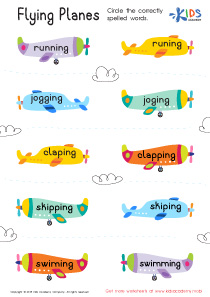
Phonics practice Beginning Sounds Worksheets for Ages 5-7
5 filtered results
-
From - To
Enhance your child’s reading skills with our engaging Phonics Practice: Beginning Sounds Worksheets designed for ages 5-7! These worksheets provide fun and interactive activities that help young learners identify and connect letters with their corresponding beginning sounds. Each sheet features vibrant imagery and diverse exercises that captivate children’s attention while reinforcing essential phonics concepts. Perfect for at-home practice or classroom use, our worksheets promote critical early literacy skills in a playful manner. Foster a love of reading and boost your child’s confidence with our comprehensive resources tailored to enhance their phonetic awareness. Start their learning journey today!
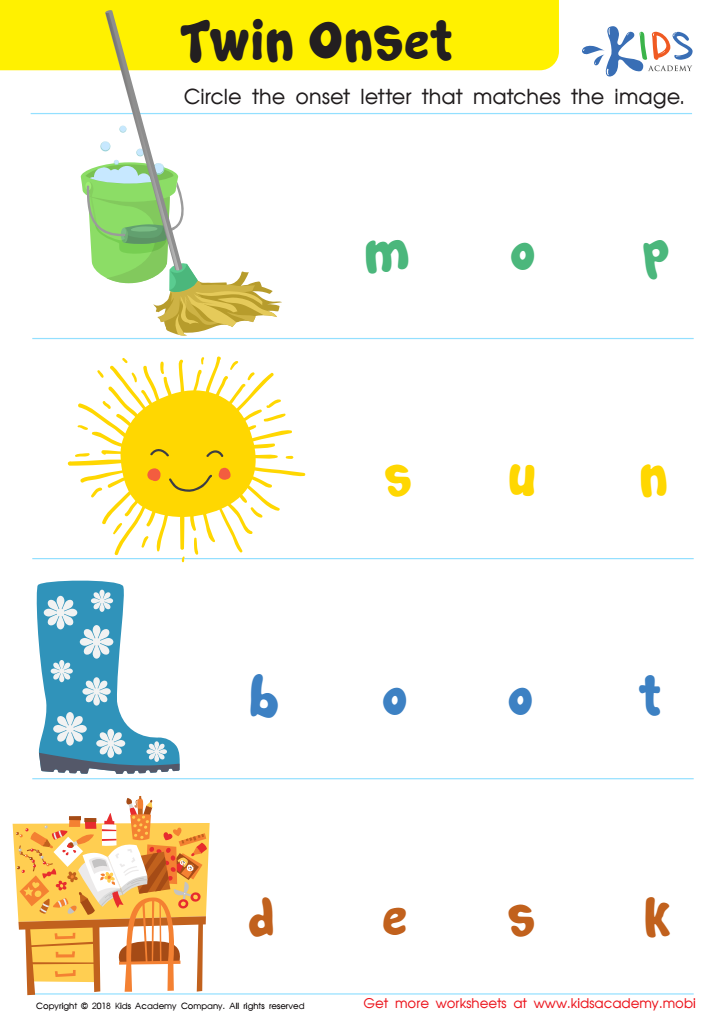
Twin Onset Worksheet
 Assign to My Students
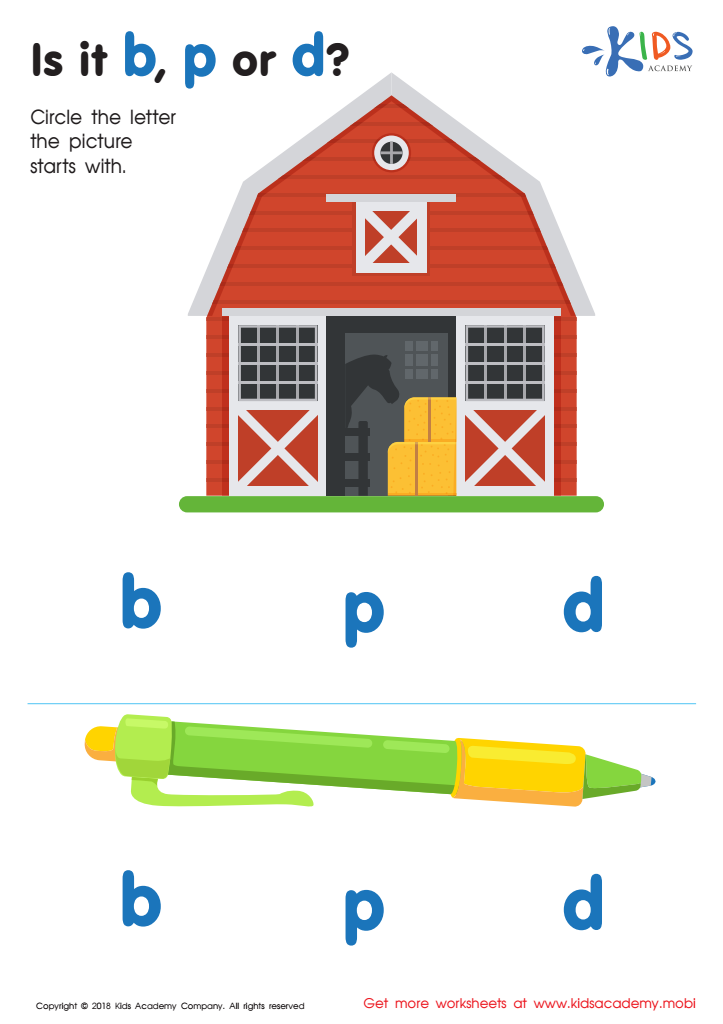
Is it b, p or d? Worksheet
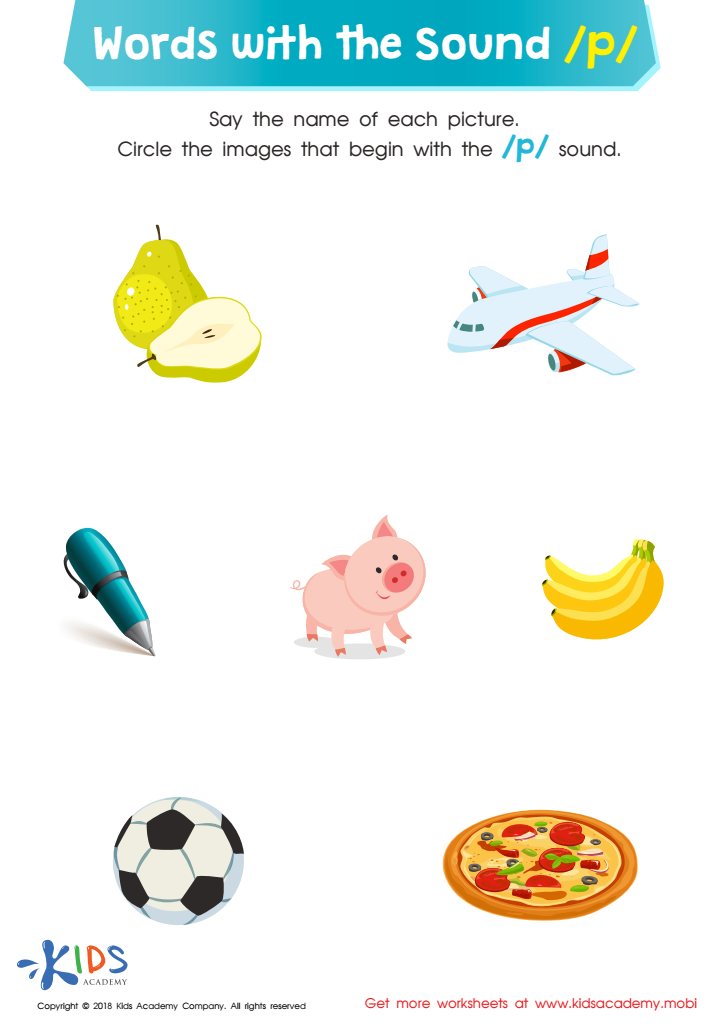
Words with sound p Reading Worksheet
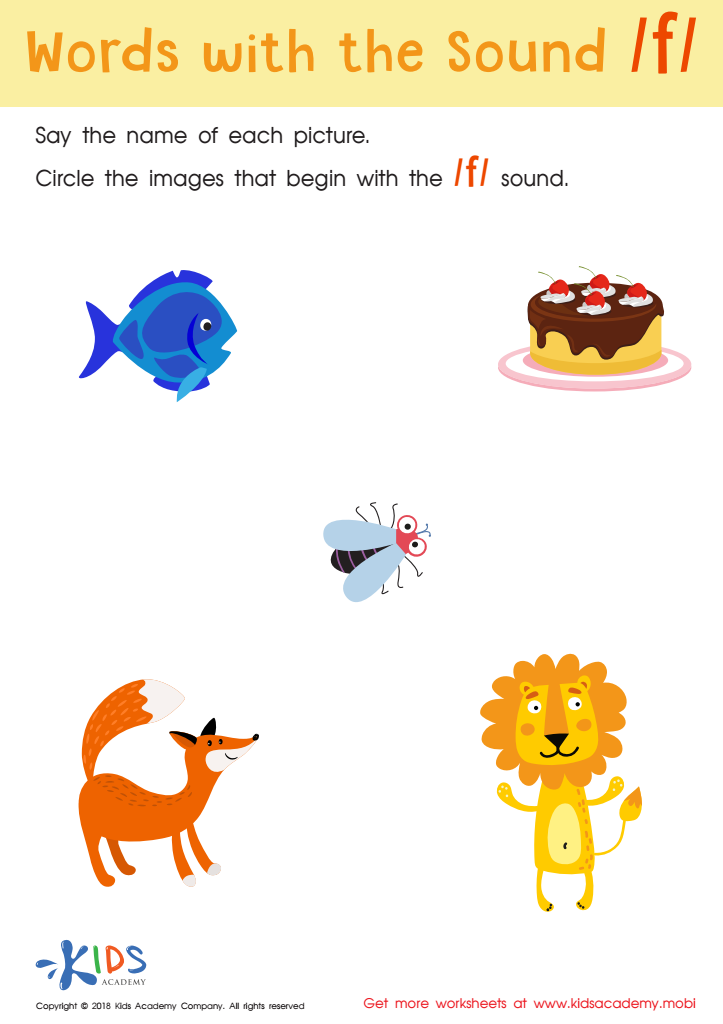
Words with sound f Reading Worksheet
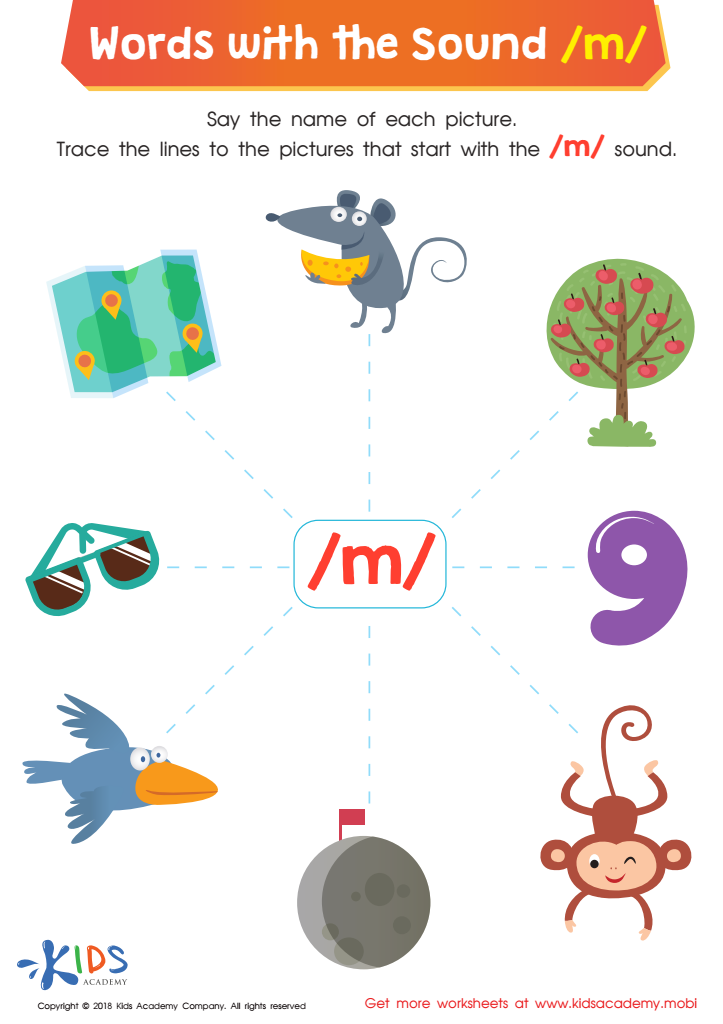
Words with Sound M Reading Worksheet








Phonics practice focusing on beginning sounds is crucial for children aged 5-7 as it lays the foundation for literacy skills. At this developmental stage, children are becoming aware of the differences in sounds and letters, which is essential for decoding words. By mastering beginning sounds, children enhance their phonemic awareness, making it easier for them to blend sounds and recognize correct spellings.
This practice boosts reading and writing skills, enabling students to confidently tackle new vocabulary. It also fosters comprehension by allowing children to predict words based on their phonetic components. Furthermore, practicing beginning sounds encourages listening skills, which are vital for effective communication and learning.
For both parents and teachers, nurturing this skill supports children’s overall educational journey. Engaging young learners in fun phonics activities, such as rhymes, games, and targeted exercises, creates a motivating environment that promotes a love for reading. Additionally, phonics practice can help identify and address specific learning challenges early on, ensuring that children develop the necessary skills at an appropriate pace.
In short, prioritizing beginning sounds in phonics reinforces children’s reading and writing abilities, providing them the tools they need for future academic success.