Filters

6 filtered results

Clear all filters
Favorites
With answer key
Interactive

6 filtered results

Difficulty Level

Grade


Our Vocabulary Expansion Consonants Worksheets for Ages 5-7 are designed to boost your child’s reading and writing skills through engaging activities focusing on consonant recognition and usage. Each worksheet provides an array of fun exercises aimed at enhancing phonemic awareness and vocabulary. By practicing with these worksheets, kids will build a solid foundation in identifying and pronouncing consonants, ultimately enriching their language abilities. Perfect for young learners, these printables help to develop essential literacy skills in an age-appropriate way. Nurture your child’s love for reading and writing with our expertly crafted consonant worksheets.

Check out this FREE Trial Lesson on Consonants for age 5-7!

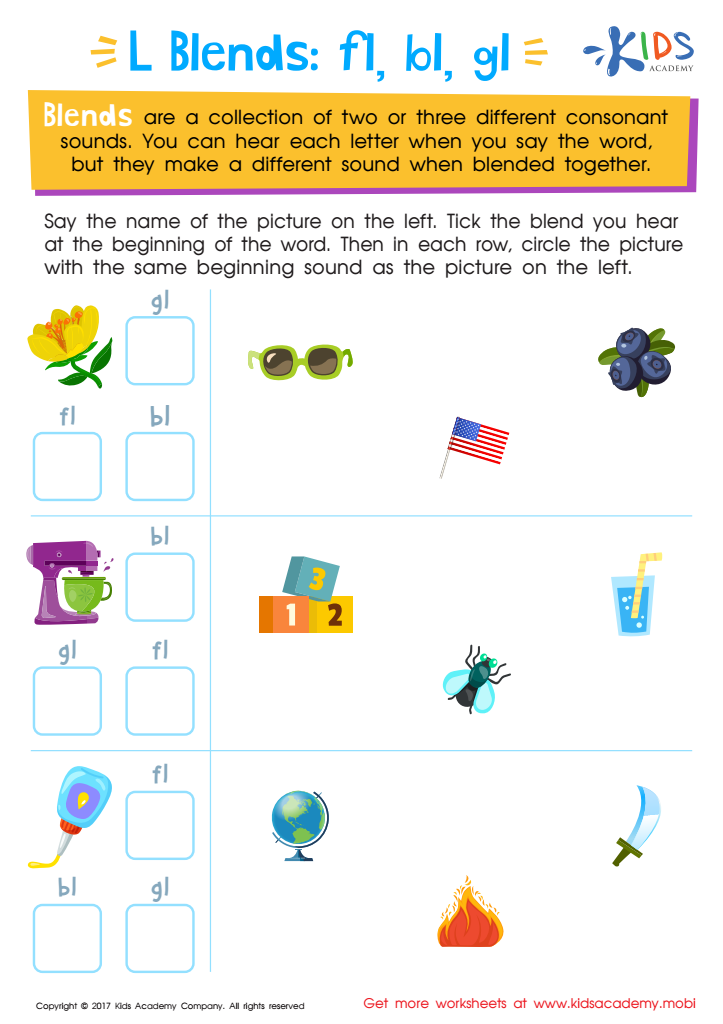
Consonant Blends with l

Favorites
With answer key
Interactive
  • 5-7
  • Vocabulary expansion
  • Consonants
Consonant Blend Fl, Bl, and Gl Printable Worksheet

Blending Consonants: "Fl", "Bl" and "Gl" Printable

Help your child master consonant blends Fl, Bl, and Gl with this printable worksheet. Find words associated with the pictures and learn to better understand the difference between consonant blends. Vibrant images motivate and aid in learning. Download now for improved phonics success!
Blending Consonants: "Fl", "Bl" and "Gl" Printable
Worksheet
Words with sound h Reading Worksheet

Words with sound h Reading Worksheet

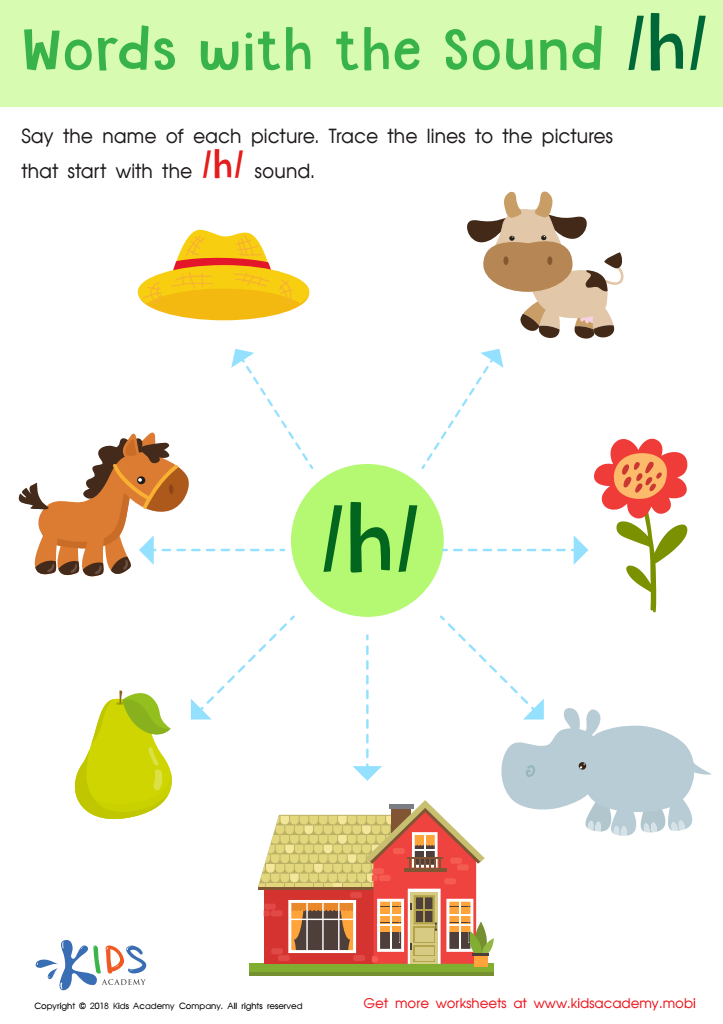
The letter H can often be heard in words! Check your child's knowledge with an engaging worksheet from Kids Academy. Ask them to go around a circle and name each image aloud. Listen for the starting sound and trace the line from the middle letter to the images with the sound. This is a great way to practice phonics!
Words with sound h Reading Worksheet
Worksheet
Words with sound j Reading Worksheet

Words with sound j Reading Worksheet

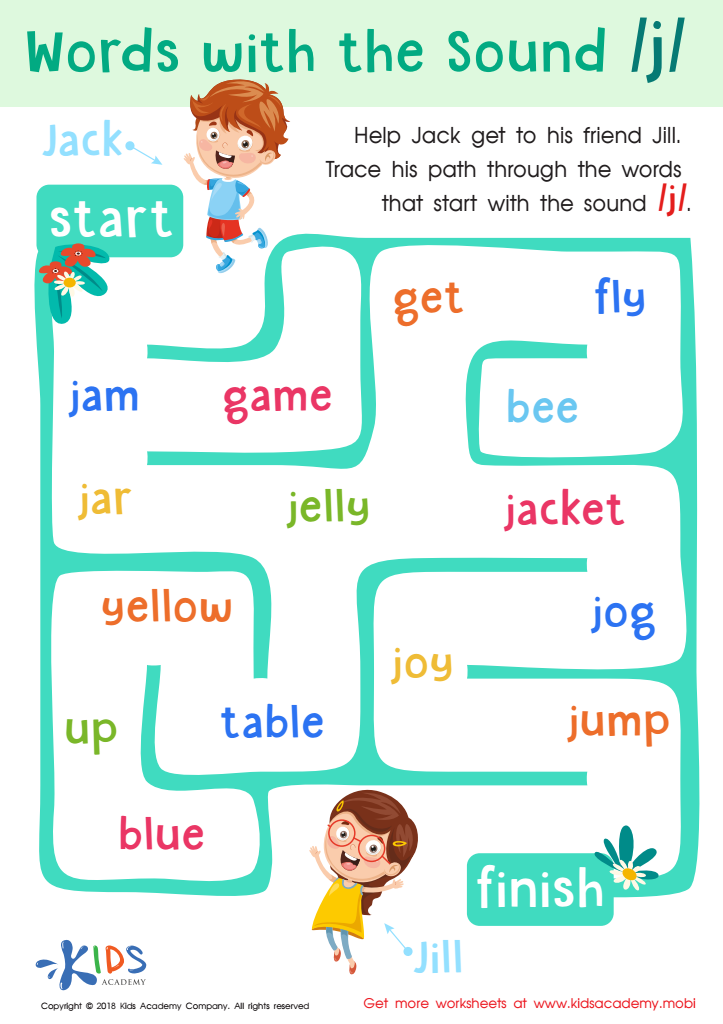
Don't be fooled: The letter J sounds like G in this letter sounds maze! Kids will enjoy helping Jack find Jill by listening to beginning sounds and tracing a path to the exit. Choose words that start with the letter J sound to complete the challenging maze!
Words with sound j Reading Worksheet
Worksheet
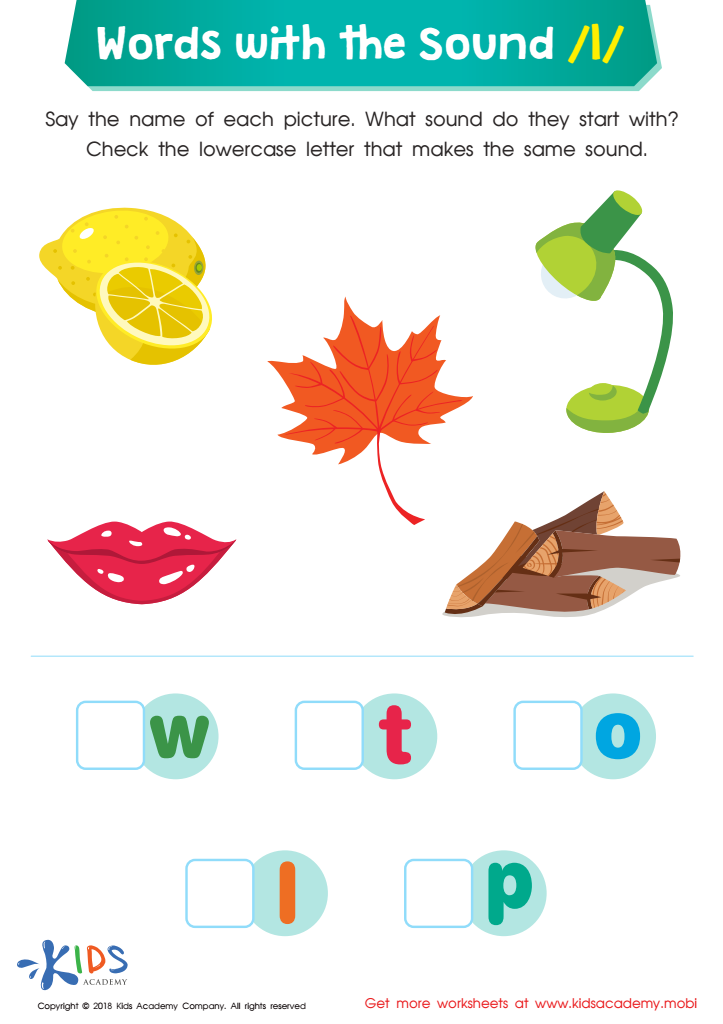
Words with Sound L Reading Worksheet

Words with Sound L Reading Worksheet

This PDF worksheet is great for helping emerging readers isolate initial sounds. Kids name familiar pictures, then identify the correct letter for the "l" sound. This worksheet strengthens fine motor skills, plus builds visual discernment. It's fun and colorful too!
Words with Sound L Reading Worksheet
Worksheet
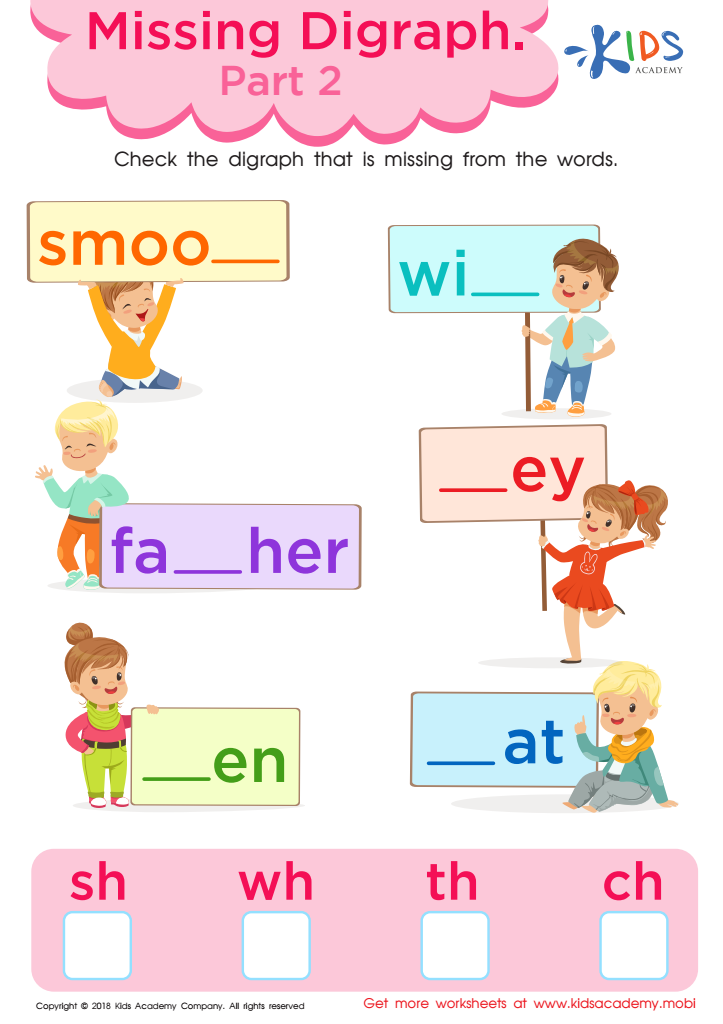
Missing Digraph: Part 2 Worksheet

Missing Digraph: Part 2 Worksheet

Practice the "th" digraph with this fun worksheet from Kids Academy! See how it appears at the beginning, middle, or end of words and help learners fill in the blanks. Check if they got it right by finding the th digraph at the bottom!
Missing Digraph: Part 2 Worksheet
Worksheet
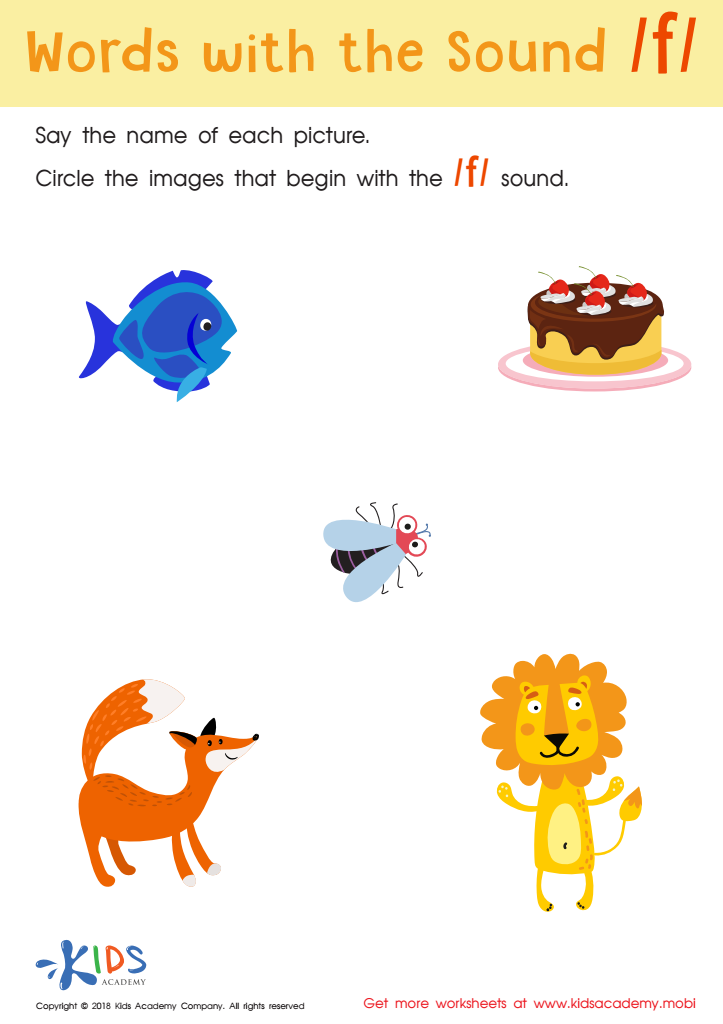
Words with sound f Reading Worksheet


Words with sound f Reading Worksheet

This illustrated phonics worksheet is ideal for preschool or kindergarten. It helps boost learners' literacy skills with a focus on the letter "f". Ask your child to name all the pictures, listening for that sound. Examples are fish, fox, lion, bug. When they can identify which words start with "f", have them circle the images. Congratulate them on a job well done!
Words with sound f Reading Worksheet
Worksheet


Vocabulary expansion and understanding consonants are crucial for children aged 5-7 because they form the foundation for effective communication and literacy skills. During these formative years, children's brains are highly receptive to language development. A rich vocabulary allows children to express their thoughts, needs, and emotions more clearly, which enhances their social interactions and builds confidence.

Understanding consonants is fundamental to reading and writing. At this age, children typically start formal education where phonics instruction begins. Consonants form a large part of this learning process. Mastering consonant sounds helps children decode words more efficiently, leading to improved reading fluency. When children recognize and use a variety of words, they can comprehend texts more deeply, improving their overall academic performance.

Early exposure to a broad vocabulary and consonant sounds can also spark a lifelong love for reading and learning. Additionally, children with advanced vocabularies are better equipped to tackle complex concepts and follow multi-step instructions. For parents and teachers, focusing on vocabulary and consonants means setting children up for success not only in language arts but across all areas of learning, as strong literacy skills are intertwined with all educational subjects.