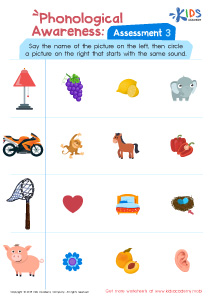
Vocabulary enhancement Ending Sounds Worksheets for Ages 5-7
3 filtered results
-
From - To
Enhance your child's vocabulary and phonics skills with our engaging Ending Sounds Worksheets designed specifically for ages 5-7. These printable worksheets help young learners identify, pronounce, and practice ending sounds in various words. With fun illustrations and interactive activities, kids will enjoy mastering final sounds while expanding their vocabulary. Perfect for preschool through early elementary, these worksheets provide a hands-on learning experience, blending education and entertainment seamlessly. Suitable for both classroom and at-home learning, our resources support essential reading readiness and language development. Foster confident, enthusiastic readers with our expertly designed ending sounds worksheets!
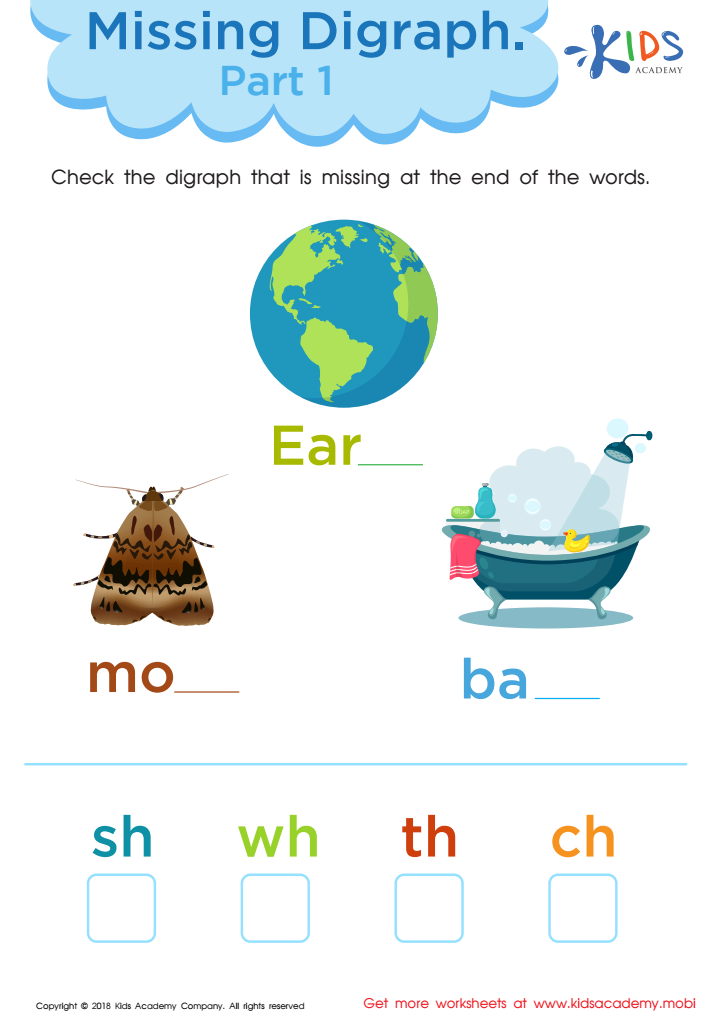
Missing Digraph: Part 1 Worksheet
 Assign to My Students
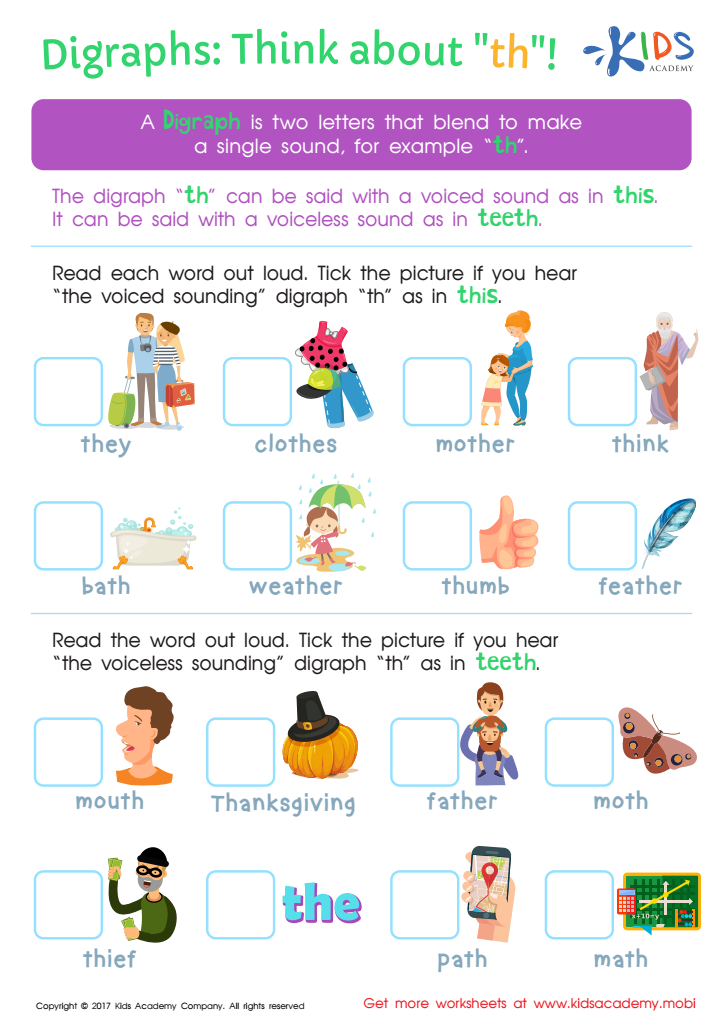
Digraphs: Think About "th" Worksheet
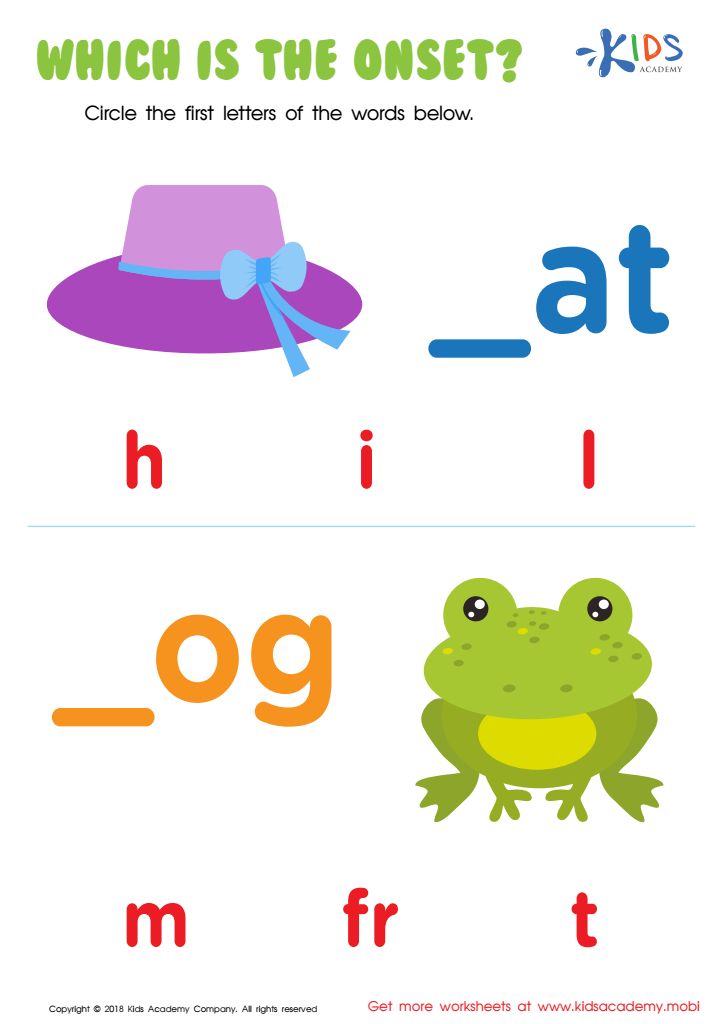
Which Is the Onset? Worksheet






Vocabulary enhancement and understanding ending sounds are crucial for children aged 5-7 because these foundational skills directly influence their reading and writing abilities. At this developmental stage, children are beginning to develop phonemic awareness, which is the ability to hear, identify, and manipulate individual sounds in words. Mastery of ending sounds helps children decode words more accurately, which boosts their reading fluency.
A strong vocabulary gives children the tools they need to express themselves clearly and understand others. When children recognize and use a broader range of words, they can grasp more complex concepts and follow stories better, both of which are key to successful learning. Improving ending sound skills strengthens their phonological awareness, making it easier to learn to spell and recognize word patterns.
Both parents and teachers play vital roles in this process. By engaging in activities that focus on rhyming, segmenting sounds, and blending them to form words, they provide children with the support needed to build these skills. Games, reading together, and interactive storytelling are effective methods. Investing time in these practices lays a solid foundation for literacy, which is essential for academic success and lifelong learning.