Alphabet Learning Alphabet Worksheets for Ages 5-7
5 filtered results
-
From - To
Discover engaging Alphabet Learning Worksheets designed for ages 5-7 to enhance early literacy skills. Our collection features activities that make learning the alphabet fun and interactive. From tracing letters to identifying uppercase and lowercase pairs, these worksheets cater to various learning styles. Kids will enjoy colorful illustrations and creative exercises that foster a love for reading and writing. Each worksheet is crafted to support your child's development, ensuring they gain confidence in their abilities. Perfect for at-home practice or classroom use, our resources are easy to print and incorporate into any learning routine. Start your child's literacy journey today!
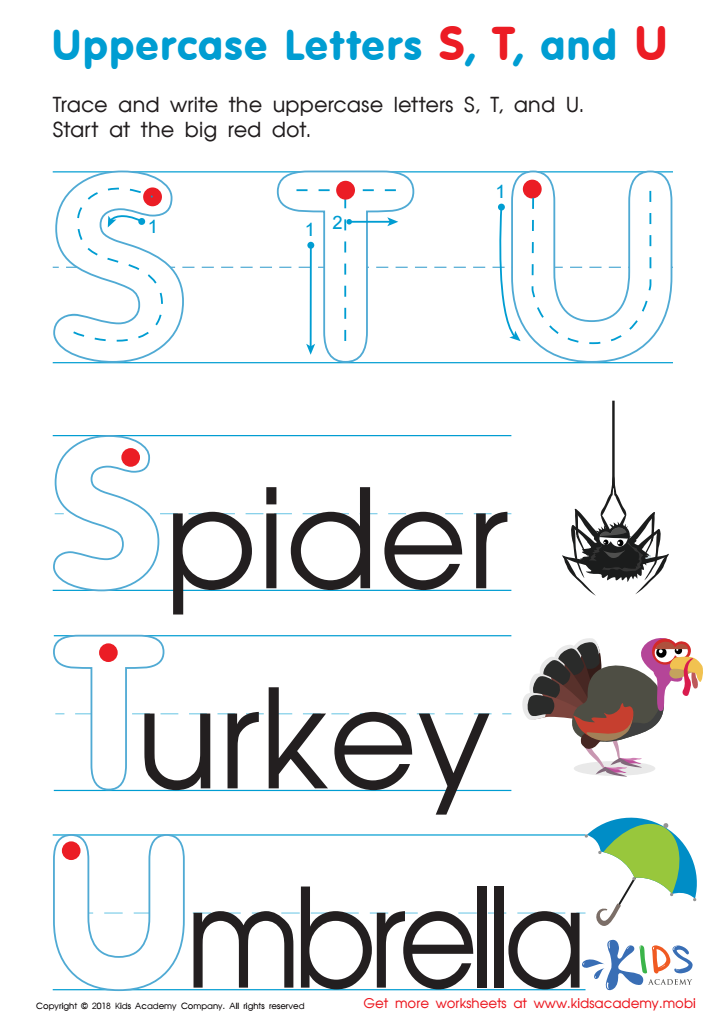
Uppercase Letters S, T, and U Worksheet
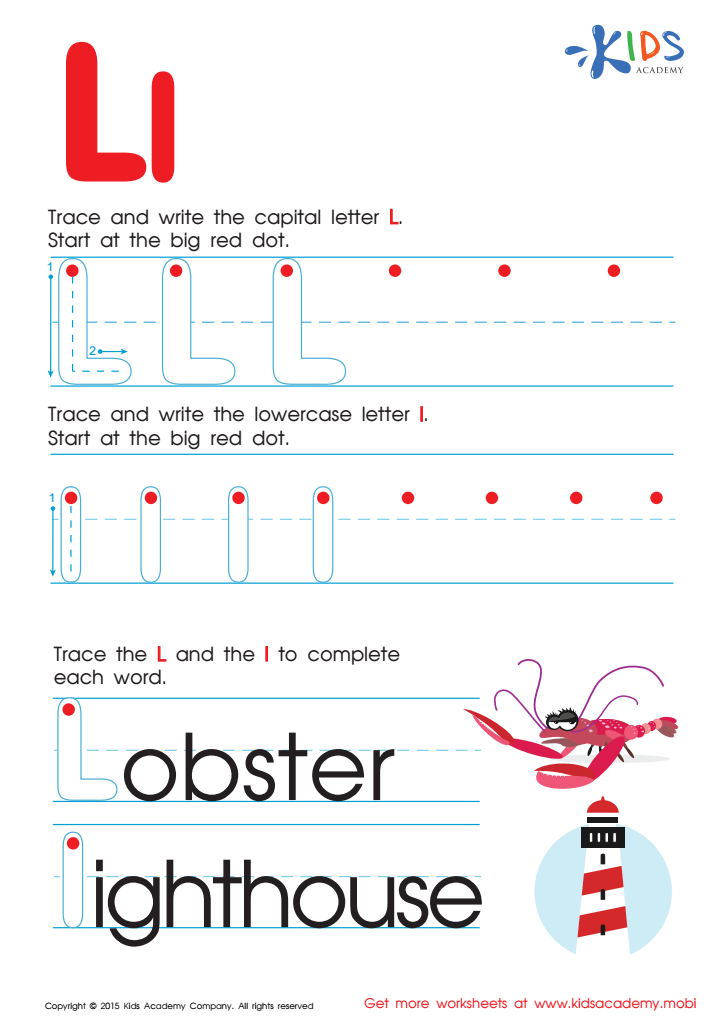
Letter L Tracing Page
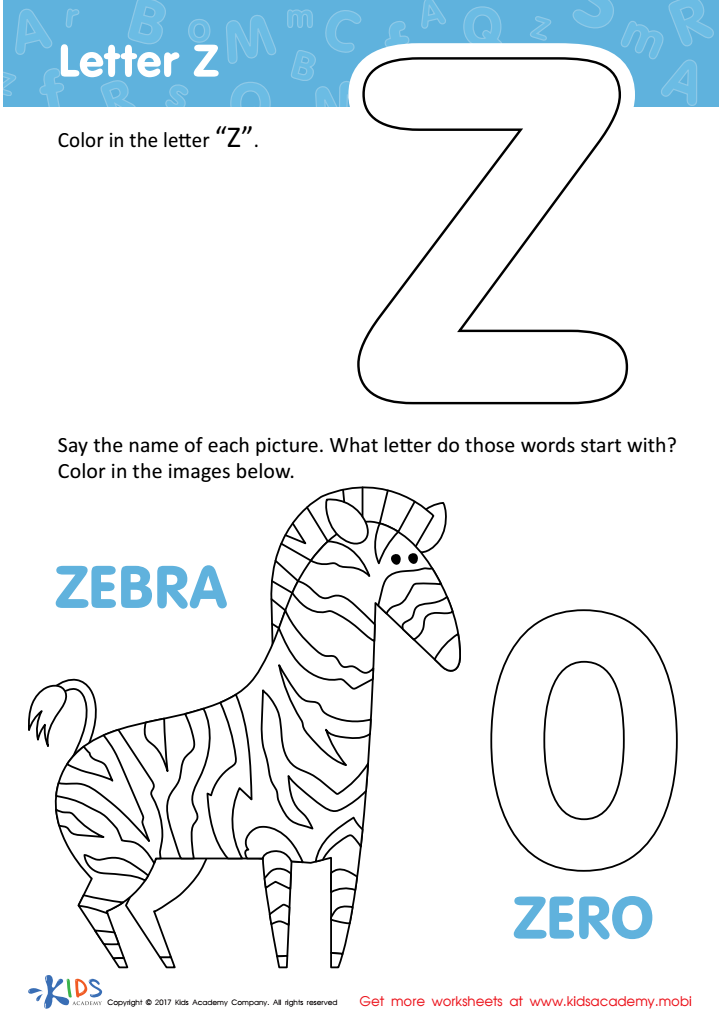
Letter Z Coloring Sheet
 Assign to My Students
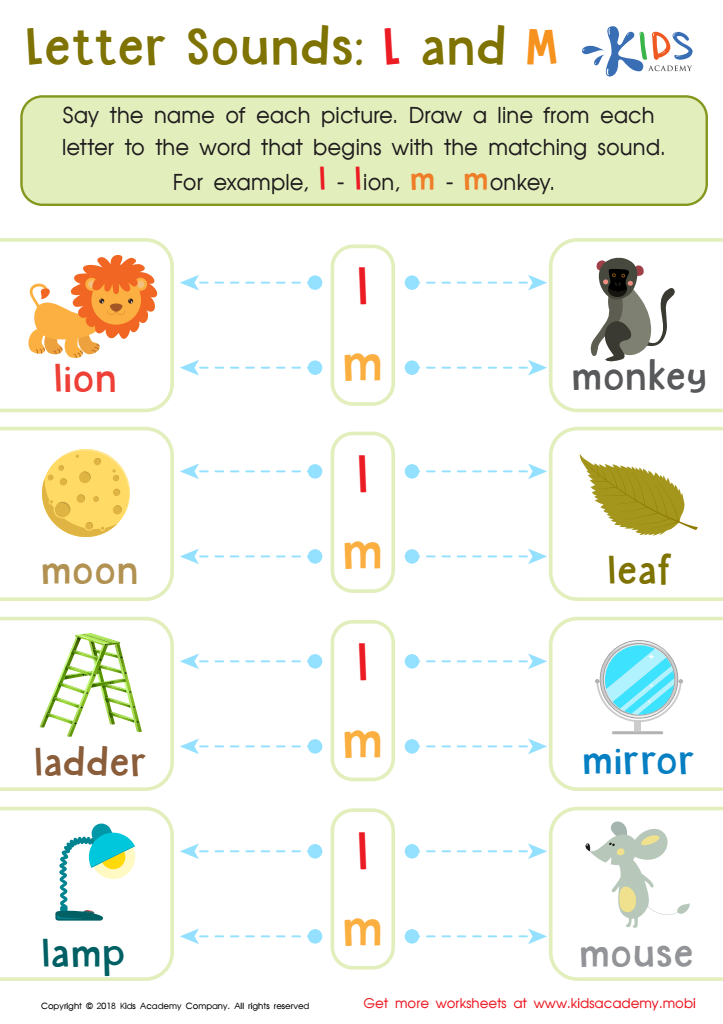
Letter l and M Sounds Worksheet
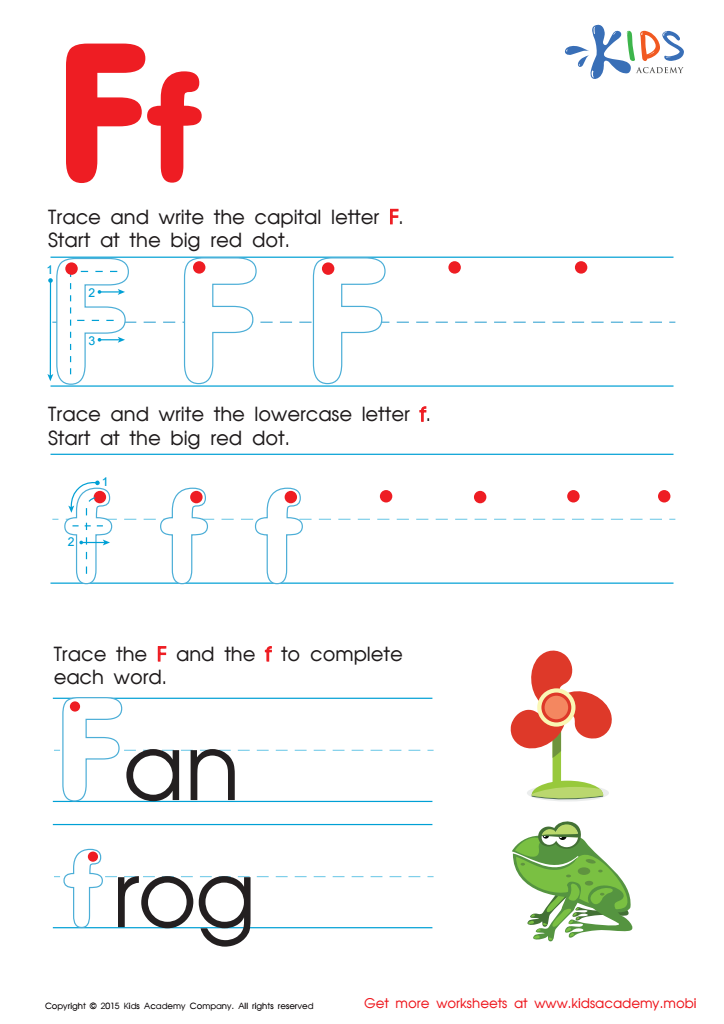
Letter F Tracing Page






Alphabet learning is a crucial stepping stone in early education, particularly for children aged 5 to 7. During this stage, children develop baseline literacy skills that shape their future academic success. Parents and teachers should care about it for several reasons.
Firstly, mastering the alphabet lays the groundwork for reading and writing. Understanding letter recognition, sounds, and formations enables children to decode words, fostering confidence and fluency in their reading journey.
Secondly, early alphabet knowledge is linked to language development. Children who engage with letters and sounds enrich their vocabulary and comprehension skills, which are essential for effective communication.
Additionally, structured alphabet learning cultivates cognitive skills. It promotes critical thinking and memory, as children must remember letter shapes and sounds while making connections between letters and their uses.
Finally, emphasizing alphabet learning nurtures a love for literacy. By making the process fun and interactive, parents and teachers can instill a lifelong passion for reading that extends beyond the classroom.
In conclusion, prioritizing alphabet learning for children aged 5 to 7 is fundamental for their academic readiness, cognitive growth, and emotional development, making it an essential focus for both parents and educators.







