
Letter Tracing Practice Alphabet Worksheets for Ages 5-7
8 filtered results
Difficulty Level
Grade
Age
-
From - To
Subject
Activity
Standards
Enhance your child's letter recognition and fine motor skills with our Letter Tracing Practice Alphabet Worksheets, designed specifically for ages 5-7. These engaging worksheets provide a fun and interactive way for young learners to practice tracing both uppercase and lowercase letters. Children will enjoy colorful designs and simple instructions as they develop essential writing skills that form the foundation for reading and writing. Perfect for at-home practice or classroom activities, our worksheets help foster confidence and encourage a love for learning. Prepare your child for academic success with this invaluable educational resource!
Favorites
With answer key
Interactive
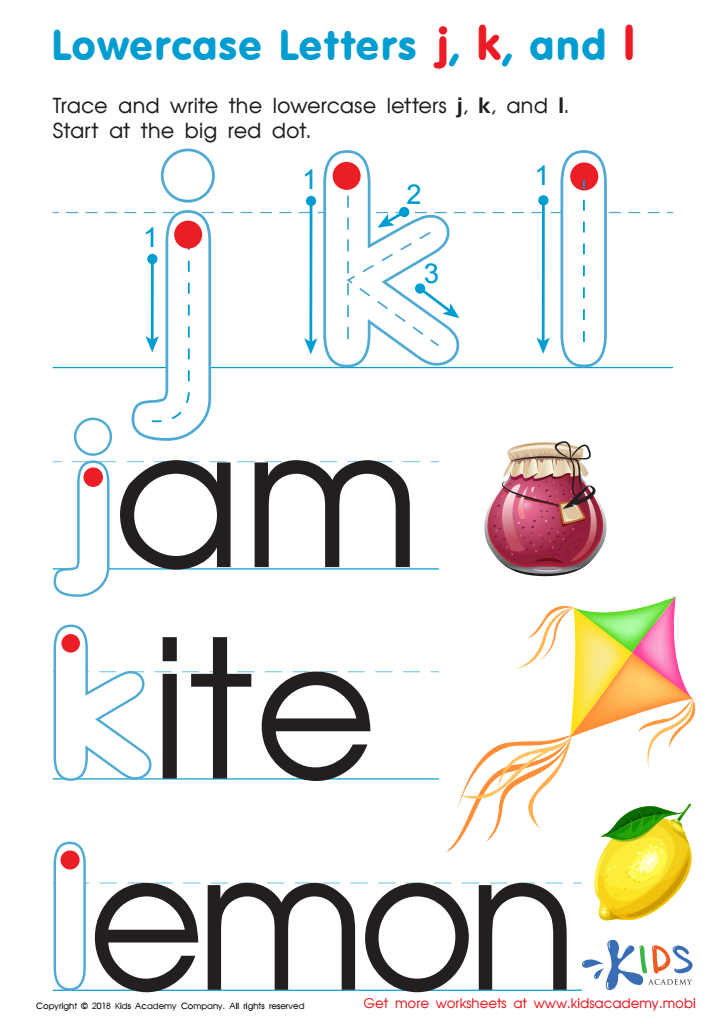
Lowercase Letters j k l Worksheet
Teach your child the difference between uppercase and lowercase letters. Have them trace and write the lowercase letters j, k, and l, starting at the red dot. Guide your child's hand to form the letters correctly.
Lowercase Letters j k l Worksheet
Worksheet
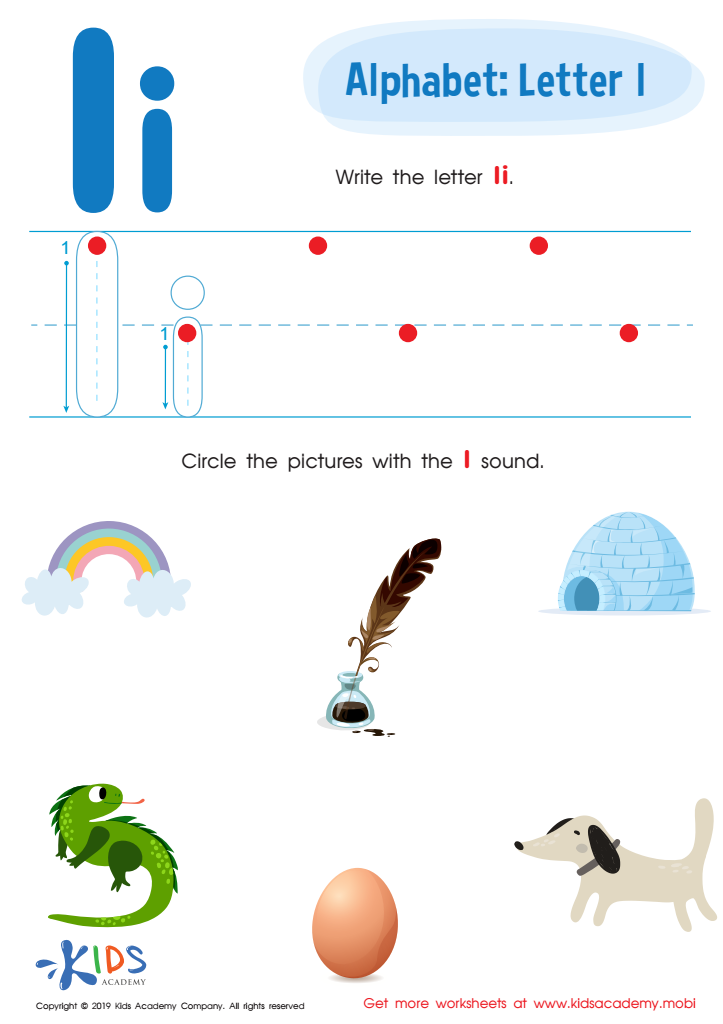
Letter I Tracing Worksheet
Kids can hone tracing, writing and identifying skills for the letter 'I' with this worksheet. Whether visual or reading/writing learners, every child can benefit from the tasks - tracing, writing and circling objects beginning with 'I'. This free sheet will soon get preschoolers confident with the 'I' letter!
Letter I Tracing Worksheet
Worksheet
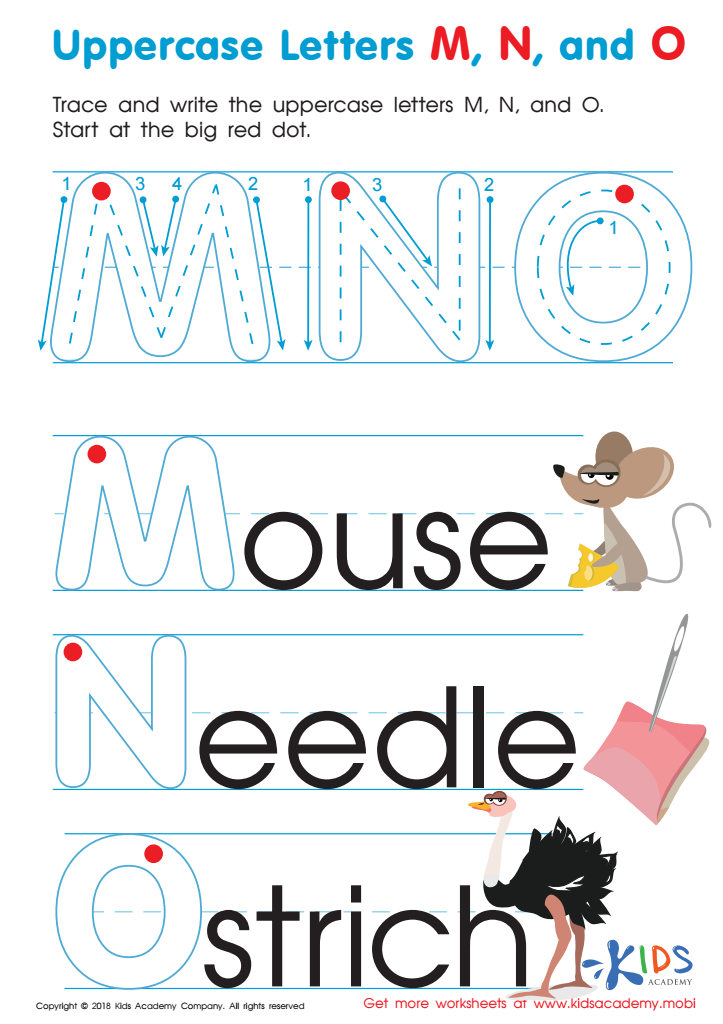
Uppercase Letters M, N, and O Worksheet
Download our easy-to-understand worksheet to help kids write M and N with ease! They'll trace dotted lines and follow arrows as they fill in the letters using a big red dot as a guide. The cute graphics will help them remember sounds too! Get your child writing quickly and confidently with this fun activity.
Uppercase Letters M, N, and O Worksheet
Worksheet
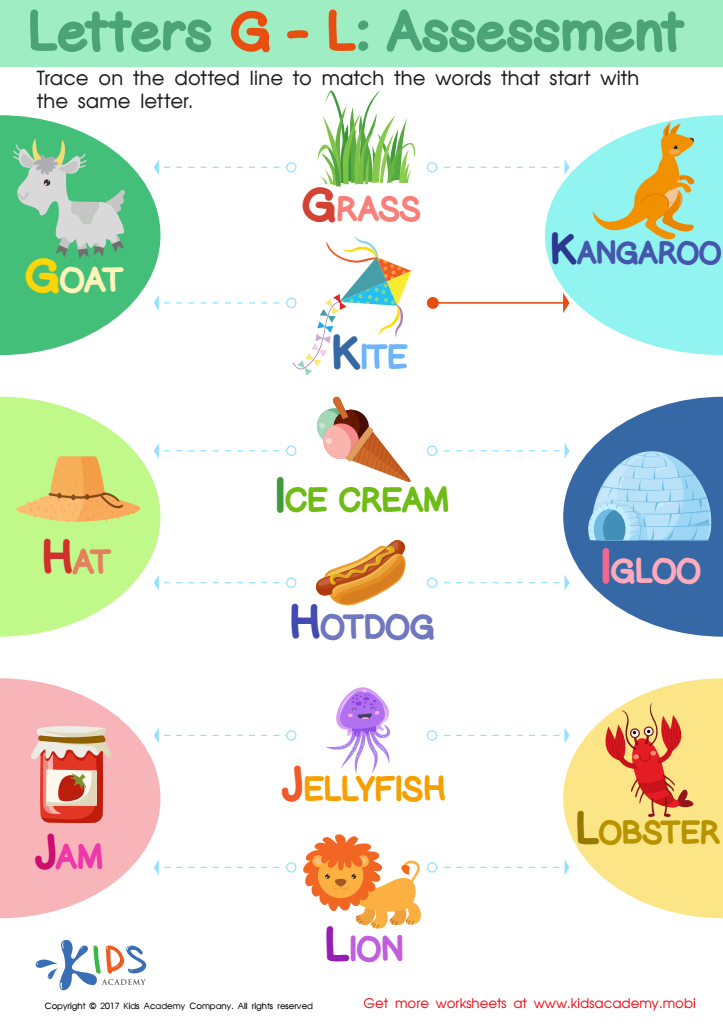
Letters G-L Worksheet
This fun worksheet helps preschoolers develop reading and phonics skills. It gets kids to match G-L words that start with the same letter, making it engaging and educational.
Letters G-L Worksheet
Worksheet
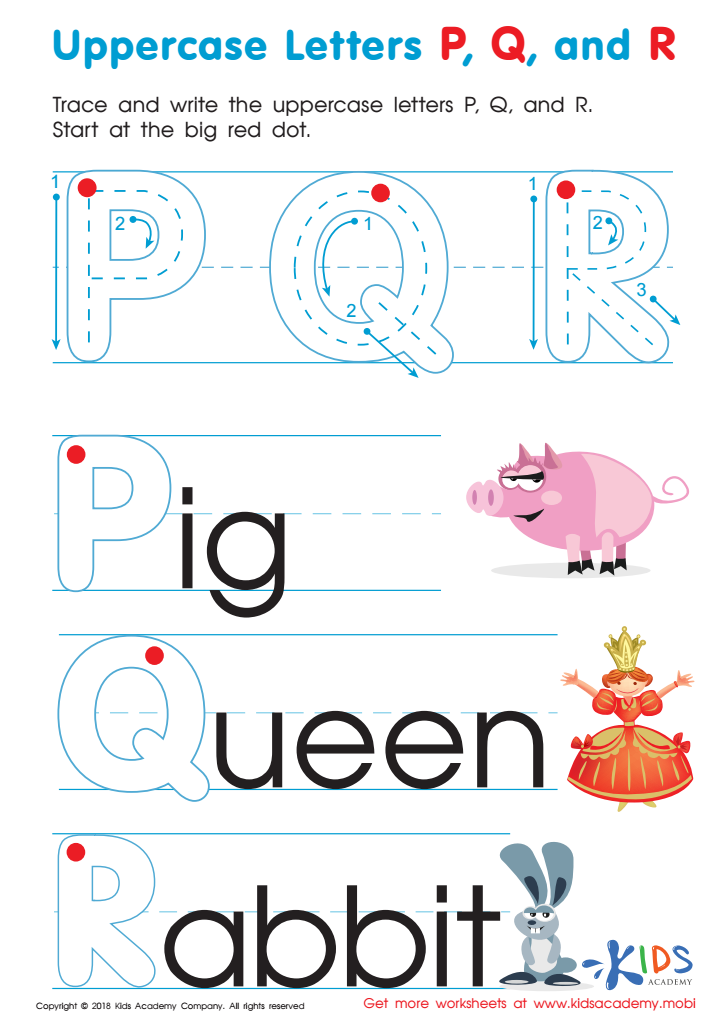
Uppercase Letters P, Q, and R Worksheet
Cute images of a pig, queen and rabbit make it fun to learn letter sounds. Follow the arrows to learn the strokes, then trace each letter from the big red dot. Perfect for kids to learn how to read and write P, Q, and R!
Uppercase Letters P, Q, and R Worksheet
Worksheet
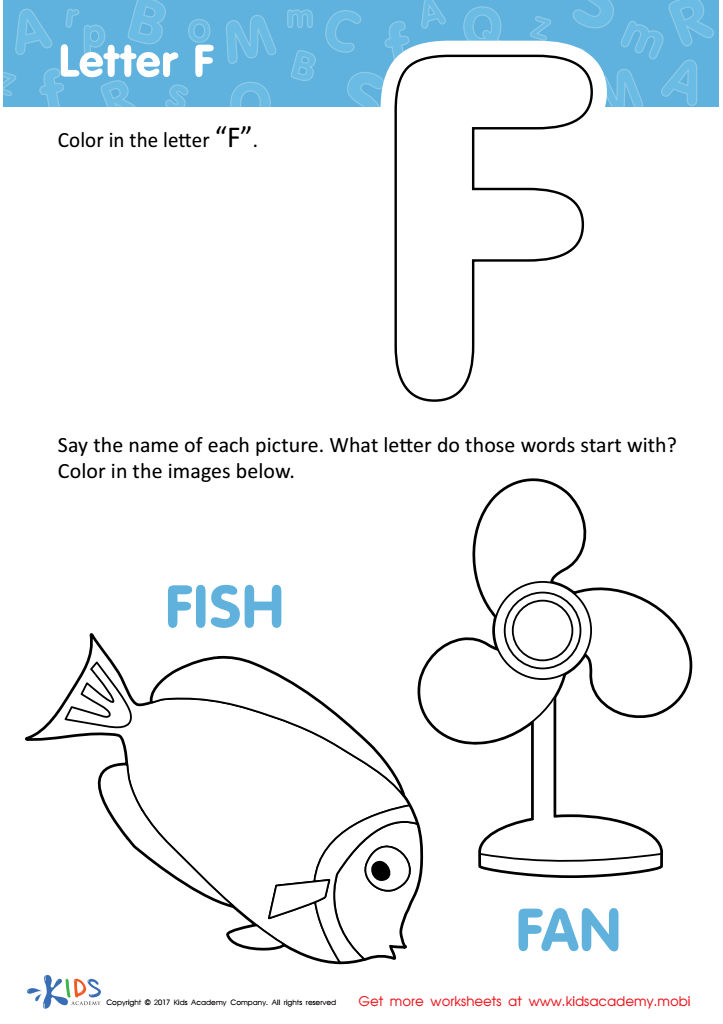
Letter F Coloring Sheet
Coloring pages help kids learn to recognize letters and sounds. Our "F" page has kids color a fish and a fan. It's a great way to introduce them to the letter "F" using words they already know.
Download (PDF)
 Assign to My Students
Assign to My Students
Letter F Coloring Sheet
Worksheet
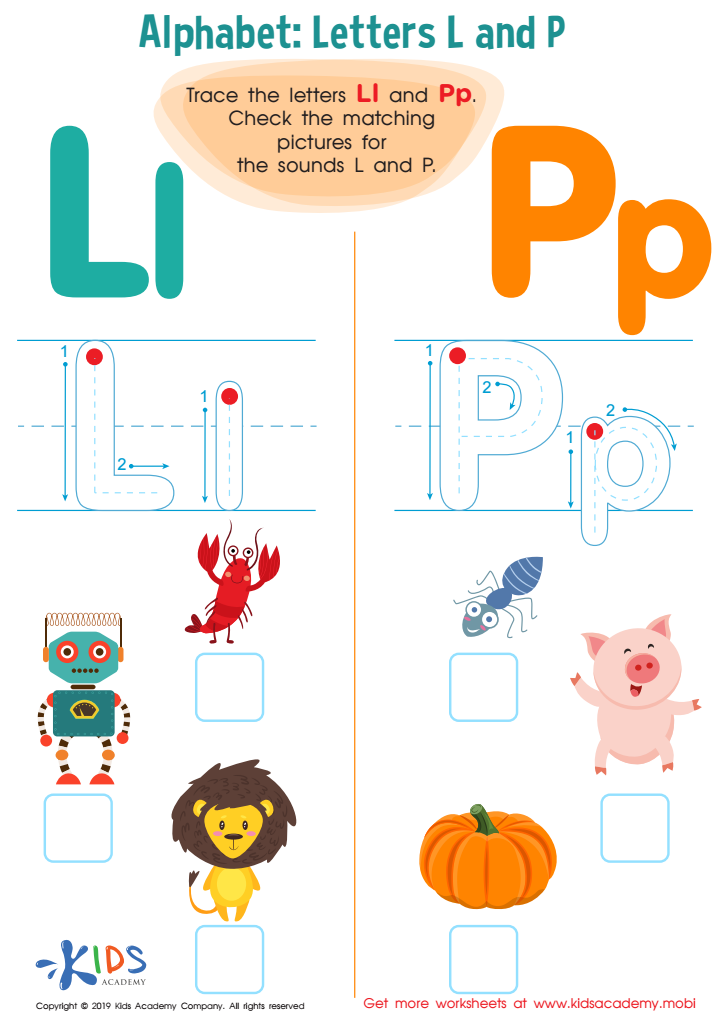
Letter L and P Tracing Worksheet
This traceable worksheet can motivate your students to learn and practice core skills. They'll trace the letters 'L' and 'P' and identify the pictures next to them. With this exercise, they'll unlock their learning abilities and excel in the subject!
Letter L and P Tracing Worksheet
Worksheet
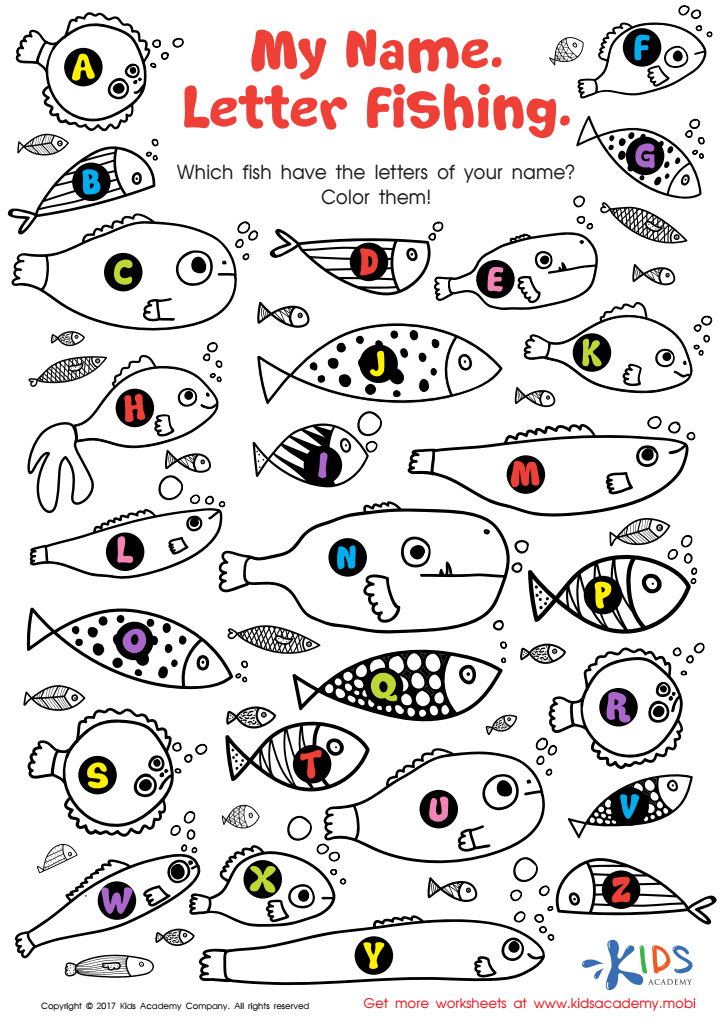
My Name: Letter Fishing Worksheet
Dive into the deep sea and search for fish with a letter on them. Can you find all the letters from your name? Color your favorite fish with crayons and be creative! On the other side, use the letters you found to write your name. Have fun coloring and finding the letters of your name! (80 words)
Download (PDF)
Assign to My Students
Assign to My Students
My Name: Letter Fishing Worksheet
Worksheet
Join Kids Academy for Free
Who is primarily going to use this learning content?







Letter tracing practice is crucial for children aged 5-7 as it lays the foundation for essential literacy skills. During these formative years, children's brains are highly receptive to learning, and establishing strong writing skills early can greatly impact their academic success. Practicing letter tracing helps young learners familiarize themselves with the alphabet's shape, form, and directionality, which are fundamental for reading and writing.
Additionally, tracing letters enhances fine motor skills. By carefully guiding a pencil or crayon along designated paths, children develop hand-eye coordination and control, which are vital for all future writing tasks. It also aids in muscle memory formation, allowing them to eventually write letters independently and with greater ease.
Moreover, letter tracing can boost children's confidence. As they master each letter, their sense of accomplishment grows, encouraging them to tackle more complex writing challenges. This progressive learning process keeps them engaged and motivated, which is especially important in maintaining a positive attitude towards learning.
Parents and teachers play a pivotal role by providing resources, guidance, and encouragement. Engaging in letter tracing practices at home or in the classroom ensures children receive the support they need during these critical early years, setting the stage for lifelong learning and literacy development.







