Rhyming skills Alphabet Worksheets for Ages 5-7
5 filtered results
-
From - To
Enhance your child's literacy with our engaging Rhyming Skills Alphabet Worksheets for ages 5-7! Designed to promote phonemic awareness, these worksheets combine fun activities with essential rhyming exercises to help young learners distinguish similar sounds and improve their reading skills. Each worksheet features colorful illustrations and interactive tasks that encourage creativity while reinforcing vocabulary. Perfect for home or classroom use, our worksheets cater to varying learning paces, ensuring that each child can thrive. Download our printable resources today to make learning enjoyable and support your child's journey to become a confident reader! Start rhyming and mastering the alphabet with us!
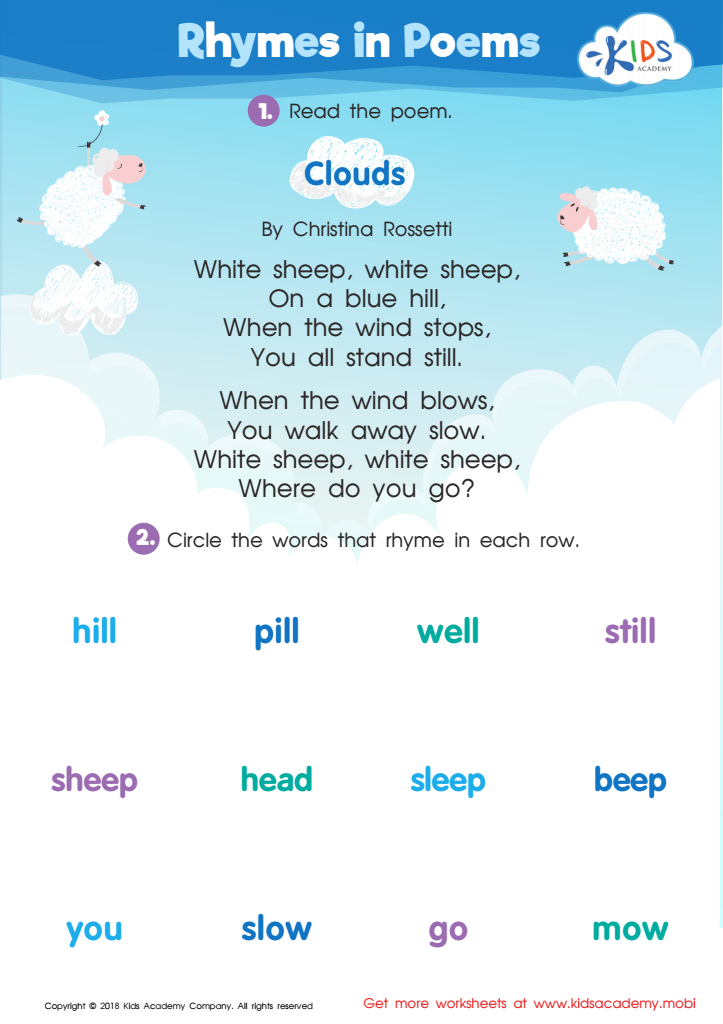
Rhymes in Poems Worksheet
 Assign to My Students
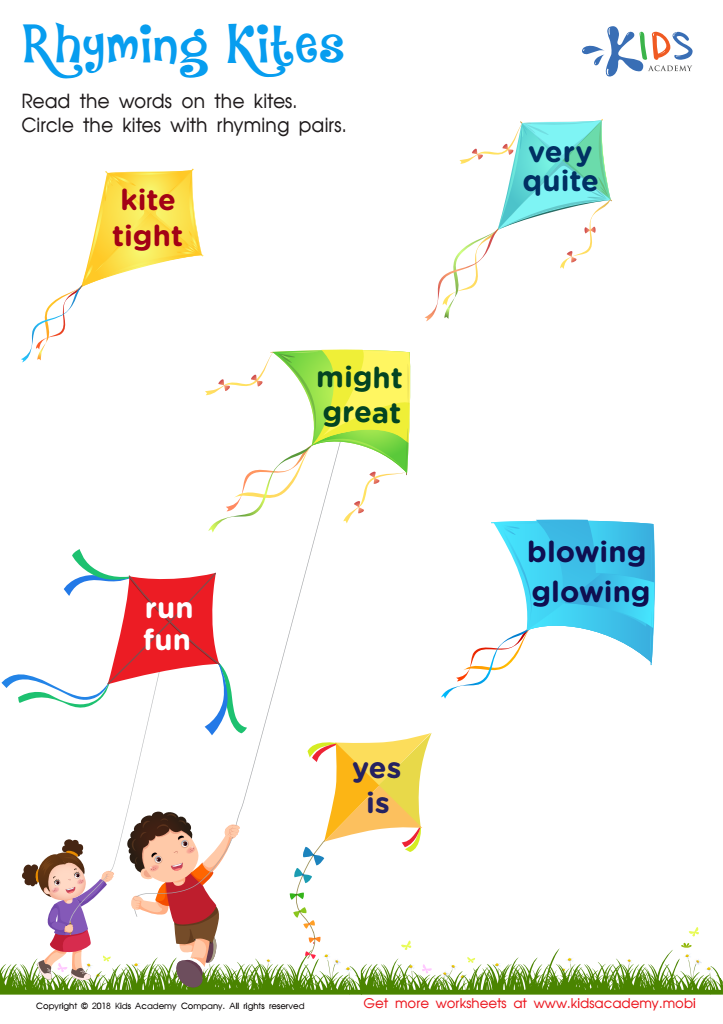
Rhyming Kites Worksheet
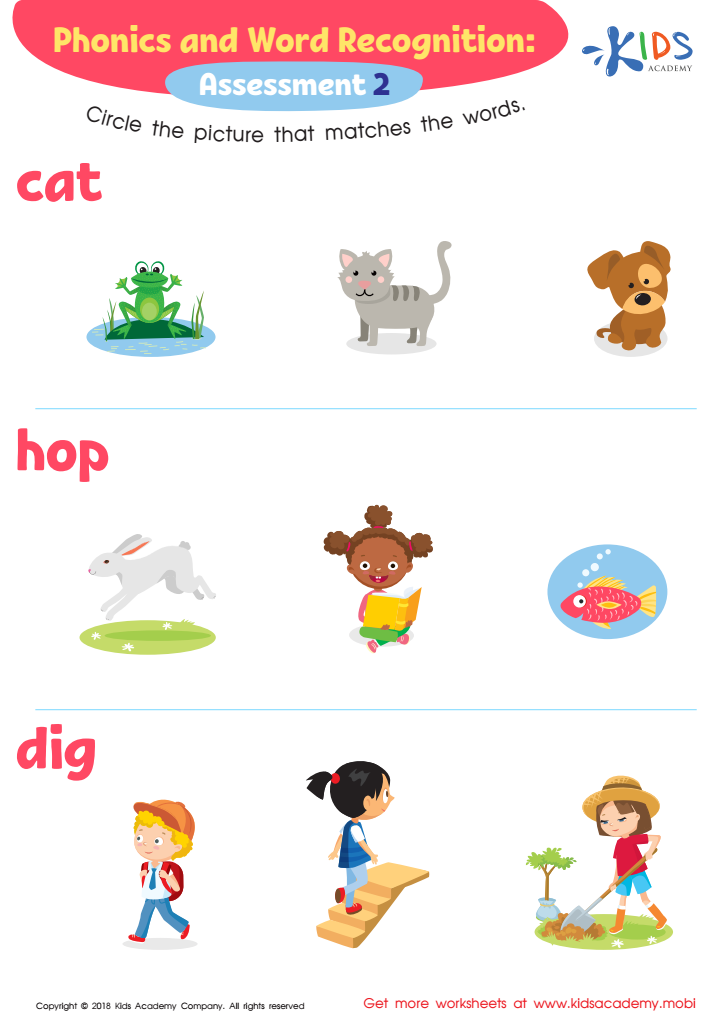
Phonological Awareness: Assessment 2 ELA Worksheet
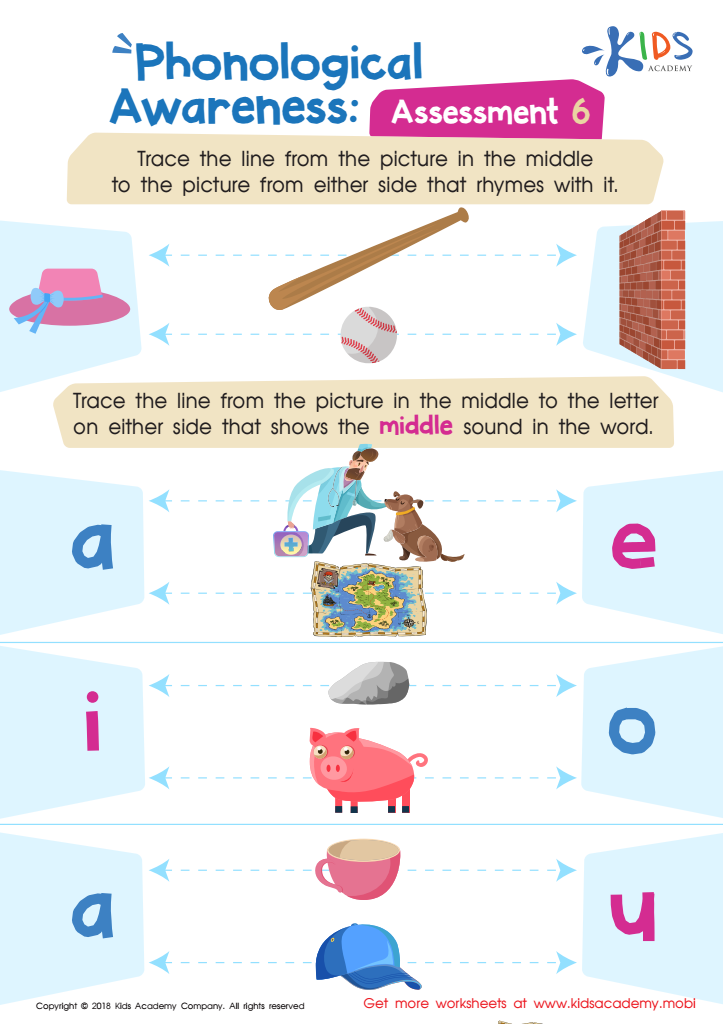
Phonological Awareness: Assessment 6 Worksheet
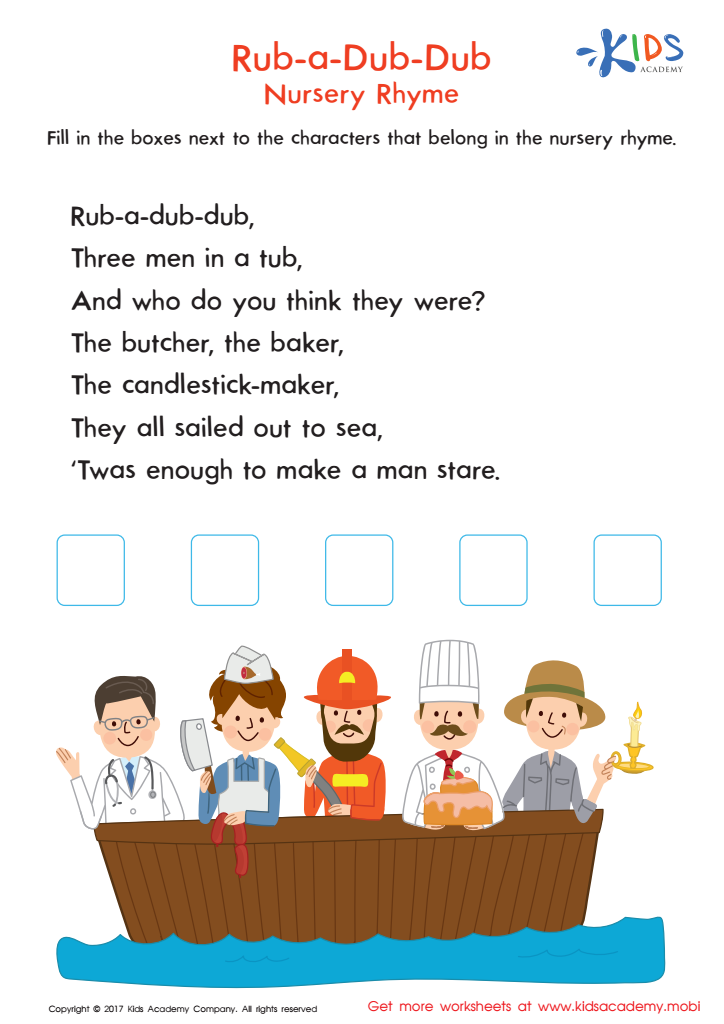
Rub a Dub Dub Printable








Rhyming is a fundamental literacy skill that plays a crucial role in early childhood development, particularly for children aged 5-7. Understanding and utilizing rhymes can enhance a child’s phonological awareness, which is the ability to hear and manipulate the sounds in words, a key component in learning to read. When children engage with rhymes, they develop a better sense of sound patterns, helping them identify similarities and differences between words.
For parents and teachers, fostering rhyming skills is essential because it builds a strong foundation for future reading and writing abilities. Rhyming activities—such as singing nursery rhymes, reading poetry, or playing rhyming games—can make learning enjoyable and engaging. Such playful interactions can boost vocabulary and promote a love for language, which helps in developing overall communication skills.
Additionally, rhyming supports cognitive skills, as children learn to recognize patterns and develop critical thinking in word play. By emphasizing rhyming during these formative years, parents and teachers can ensure that children are not only ready to read but also equipped with the necessary skills to express themselves creatively. Making rhyming a fun part of daily routines helps embed these essential literacy foundations for lifelong learning.







