
Alphabetical understanding Letter Recognition Worksheets for Ages 5-7
3 filtered results
Difficulty Level
Grade
Age
-
From - To
Subject
Activity
Standards
Enhance your child's understanding of letters with our Alphabetical Understanding Letter Recognition Worksheets, designed for ages 5-7. These engaging worksheets are tailored to promote letter identification, sound association, and foundational reading skills. By employing fun activities such as tracing, matching, and coloring, young learners can develop their letter recognition abilities in a practical and enjoyable way. Each worksheet is created to foster confidence in reading and writing, making learning an effortlessly exciting adventure. Perfect for homeschoolers or classroom settings, our resources aim to cultivate a robust literacy foundation for early learners. Start your child’s journey to reading success today!
Favorites
With answer key
Interactive
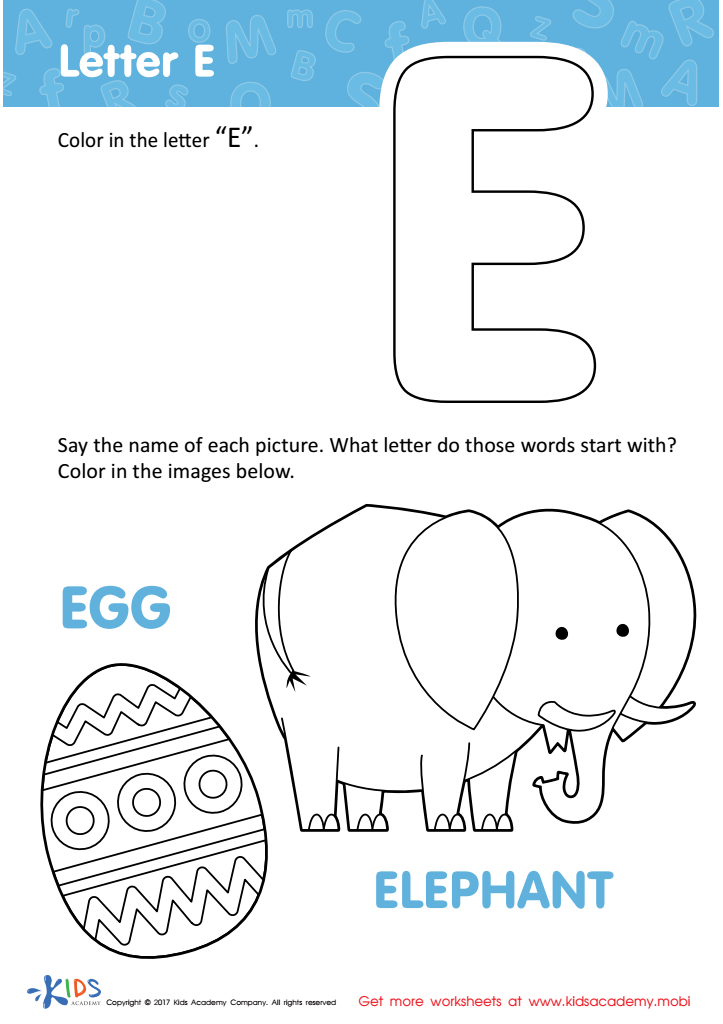
Letter E Coloring Sheet
Coloring pages are great for teaching kids the alphabet and words! This "E" page features a cute elephant and Easter egg. Kids will love it and learn the letter "E" at the same time. 80 words
Download (PDF)
 Assign to My Students
Assign to My Students
Letter E Coloring Sheet
Worksheet
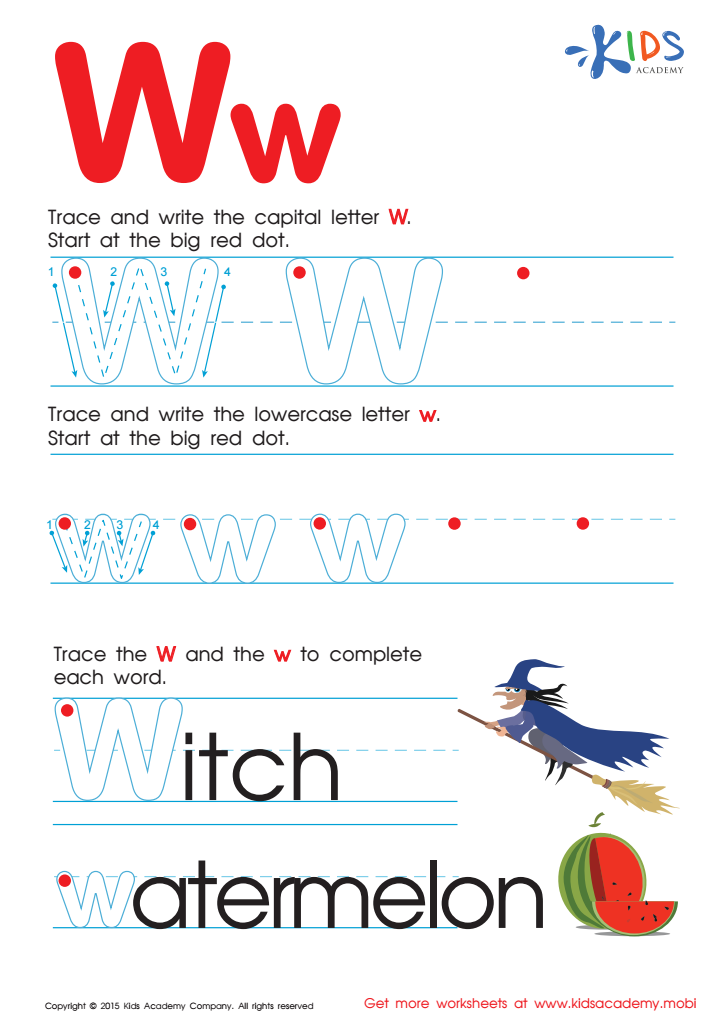
Letter W Tracing Page
Trace and write the capital and lowercase letter W with this free letter tracing worksheet by Kids Academy. Complete the words "Witch" (capital) and "watermelon" (lowercase). Check out our other kindergarten alphabet worksheets!
Letter W Tracing Page
Worksheet
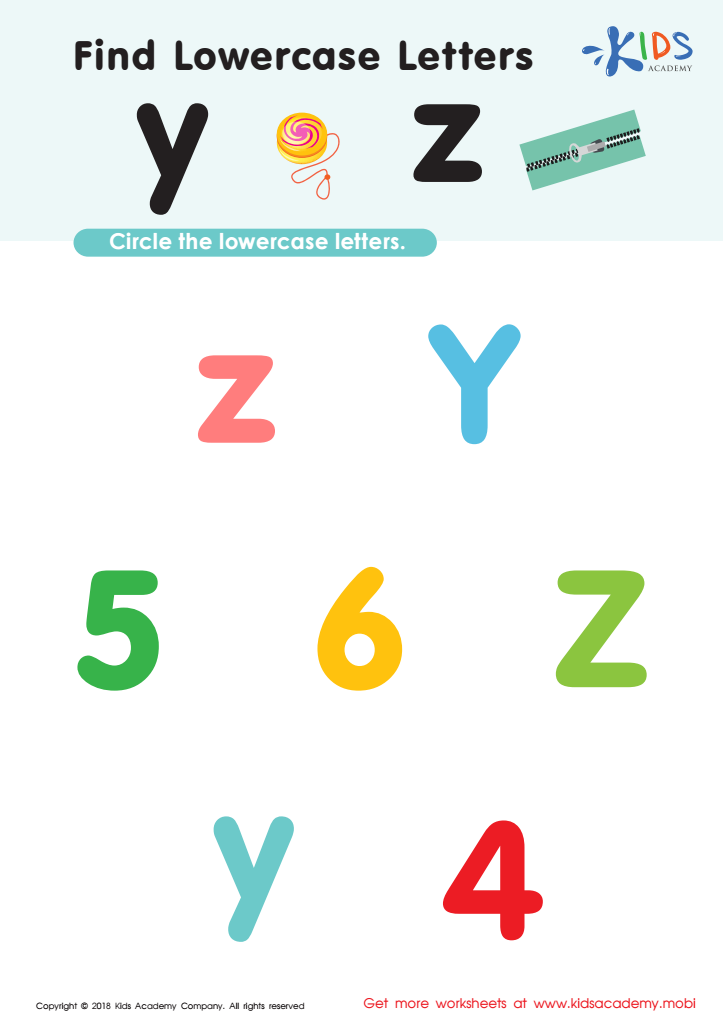
Find Lowercase Letters y z Worksheet
Help your kid learn the alphabet. Before they can move on to words and reading, they must first know the lower and uppercase letters. Show them how to find the letters y and z in this worksheet, which is filled with uppercase letters and numbers. Together, find and circle them.
Find Lowercase Letters y z Worksheet
Worksheet
Join Kids Academy for Free
Who is primarily going to use this learning content?








Alphabetical understanding and letter recognition are fundamental skills for children aged 5-7, playing a crucial role in their literacy development. Parents and teachers should prioritize these skills because they lay the foundation for reading and writing. When children recognize letters, they begin to associate sounds with those letters, facilitating phonemic awareness—the cornerstone of effective reading.
Moreover, strong alphabetical knowledge contributes to vocabulary development and comprehension skills, allowing children to engage with texts more meaningfully. Recognizing letters reinforces spelling and grammar understanding, which are essential for effective communication.
Parents and teachers can foster a love for learning by incorporating fun activities that promote letter recognition, such as games, songs, and interactive reading time. This engagement makes learning enjoyable and instills confidence in young learners as they embark on their literacy journeys. As children become comfortable with letters, they are more likely to explore and experiment with language, sparking their creativity and critical thinking.
In essence, promoting alphabetical understanding and letter recognition not only facilitates academic achievement but also equips children with vital tools for lifelong learning and communication. Investing in these foundational skills today sets the stage for future success in reading and overall literacy development.







