
Fine motor skills development Letter Recognition Worksheets for Ages 5-7
5 filtered results
Difficulty Level
Grade
Age
-
From - To
Subject
Activity
Standards
Enhance your child's fine motor skills and letter recognition with our engaging worksheets designed for ages 5-7. These interactive activities seamlessly blend learning and fun, allowing young learners to confidently identify and practice the alphabet. With exercises that focus on tracing, coloring, and cutting, children will develop essential hand-eye coordination and dexterity while mastering letter recognition. Perfect for preschoolers and early elementary students, our worksheets encourage independent learning and promote creativity. Support your child's early education journey with resources that boost both fine motor skills and literacy. Explore our collection today to spark curiosity and foster a love for learning!
Favorites
With answer key
Interactive
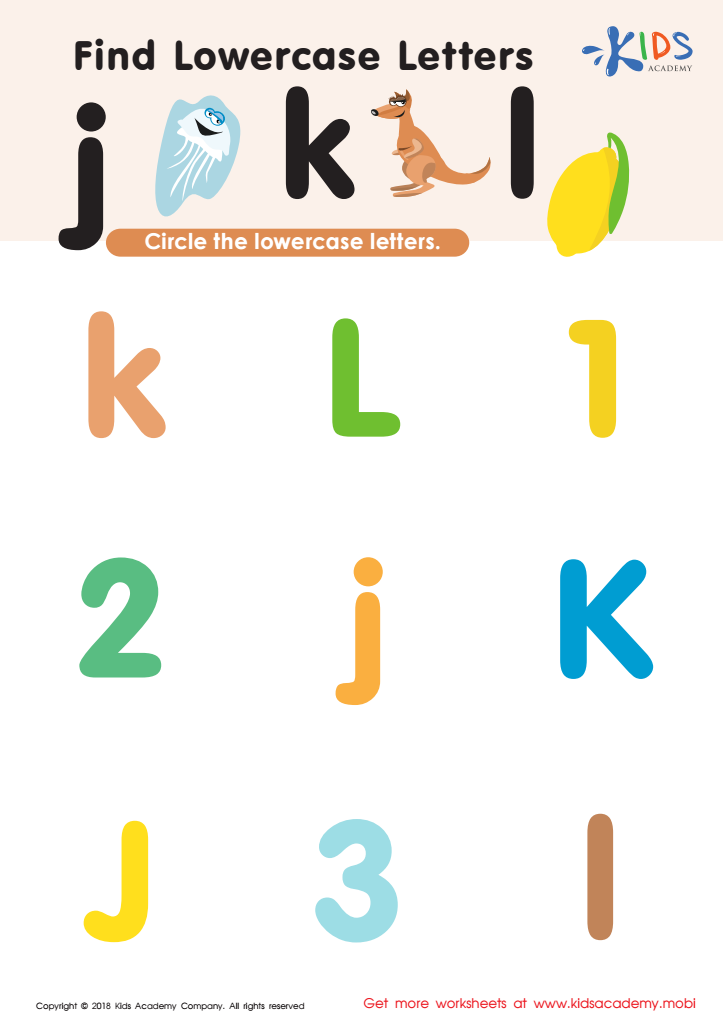
Find Lowercase Letters j k l Worksheet
Help your child's brain develop and have fun at the same time! Find and circle the lowercase letters jkl in the worksheet full of uppercase letters and numbers. Colorful drawings and bright colors make this an engaging learning activity.
Find Lowercase Letters j k l Worksheet
Worksheet
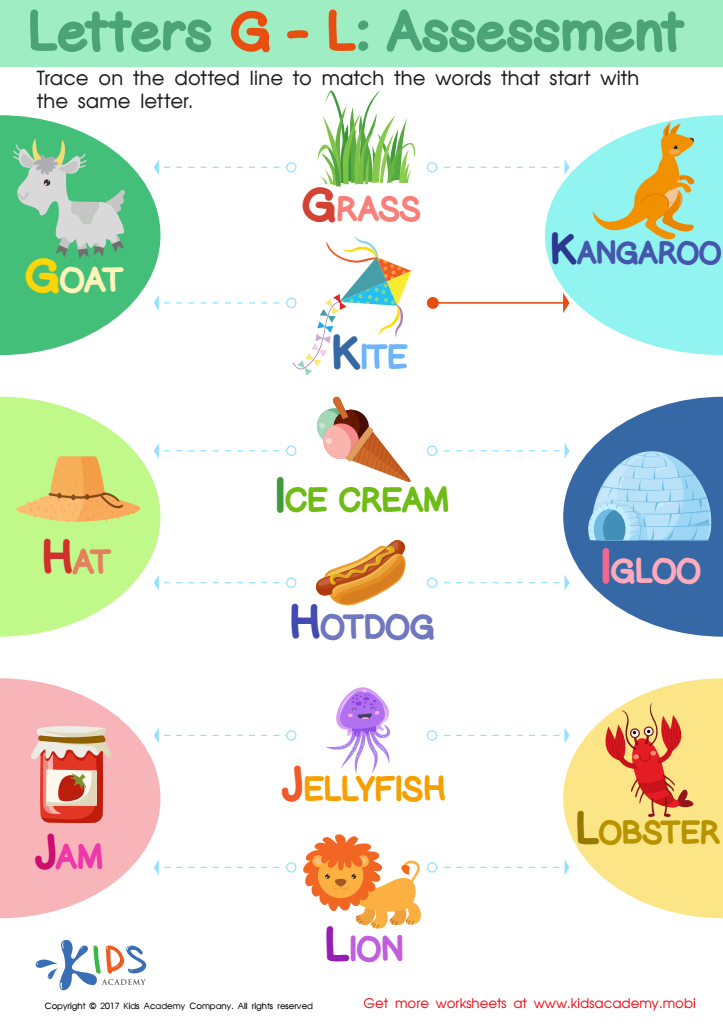
Letters G-L Worksheet
This fun worksheet helps preschoolers develop reading and phonics skills. It gets kids to match G-L words that start with the same letter, making it engaging and educational.
Letters G-L Worksheet
Worksheet
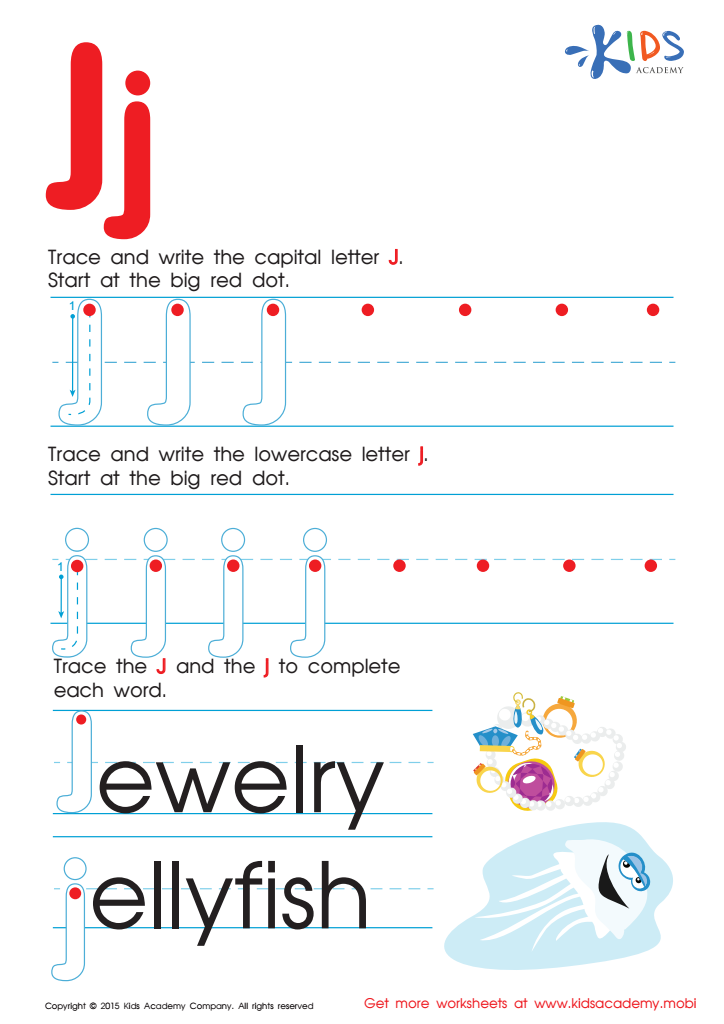
Letter J Tracing Page
Trace and write the letter "J" with our ABC worksheet - start at the big red dot! Have fun completing words like jewelry, jellyfish and more. Check out our kindergarten activities for more alphabet practice.
Letter J Tracing Page
Worksheet
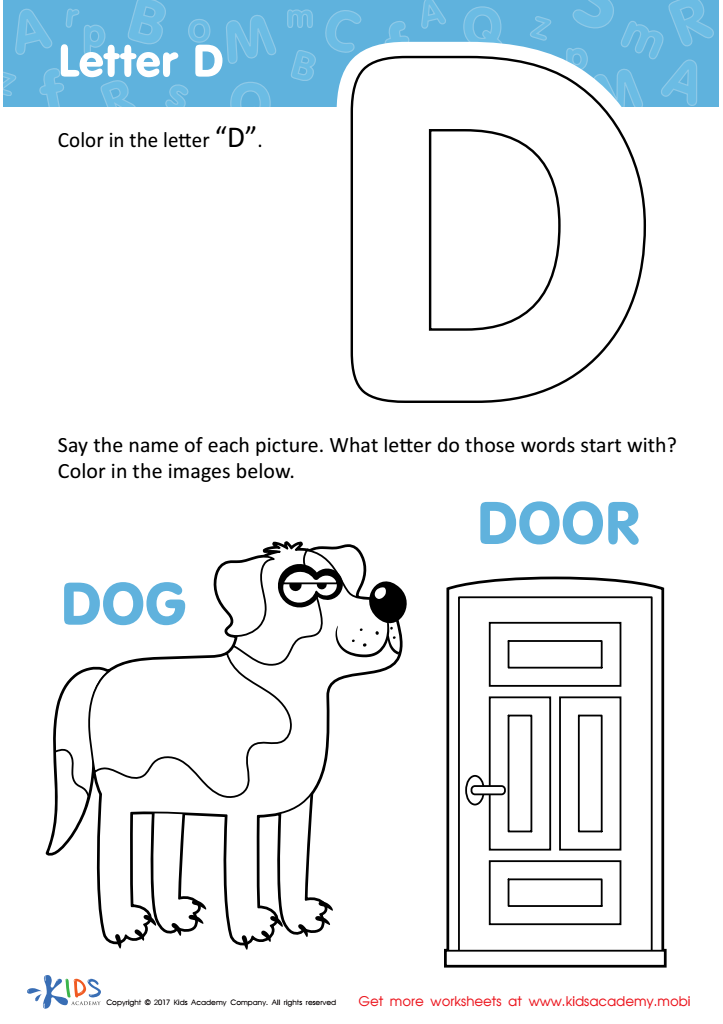
Letter D Coloring Sheet
Coloring with this letter "D" page is a great way to encourage your child's creativity while they learn the letter "D" and its sound. It's a fun activity to stimulate their imagination!
Download (PDF)
 Assign to My Students
Assign to My Students
Letter D Coloring Sheet
Worksheet
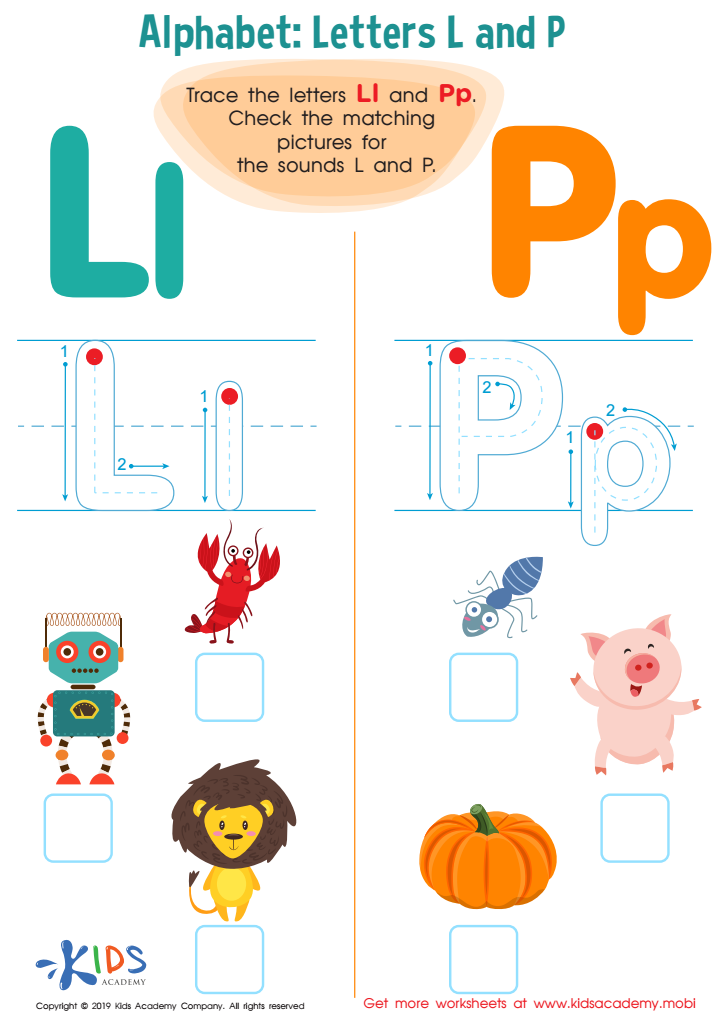
Letter L and P Tracing Worksheet
This traceable worksheet can motivate your students to learn and practice core skills. They'll trace the letters 'L' and 'P' and identify the pictures next to them. With this exercise, they'll unlock their learning abilities and excel in the subject!
Letter L and P Tracing Worksheet
Worksheet
Join Kids Academy for Free
Who is primarily going to use this learning content?








Fine motor skills and letter recognition are crucial components of early childhood development, particularly for children aged 5 to 7. Parents and teachers should prioritize these areas for several reasons. First, fine motor skills enable children to perform everyday tasks, such as writing, buttoning shirts, and tying shoelaces, which are important for their independence and confidence. These skills develop through activities like cutting, drawing, and manipulating small objects, contributing to overall physical coordination.
Letter recognition, on the other hand, is foundational for literacy. Young children who can recognize letters are better prepared to read and write, allowing them to engage fully with school curriculum. The ability to identify letters also enhances phonics skills, aiding in the development of decoding and comprehension.
Furthermore, honing fine motor skills and letter recognition in tandem promotes cognitive connections, as children learn how letters correlate with physical writing movements. This integration decreases frustration and boosts motivation for learning. Ultimately, fostering these skills empowers children to become more competent learners, paving the way for future academic success. By providing support and resources to enhance fine motor skills and letter recognition, parents and teachers can play a pivotal role in shaping a child’s educational journey.







