
Letter tracing skills Letter Recognition Worksheets for Ages 5-7
4 filtered results
Difficulty Level
Grade
Age
-
From - To
Subject
Activity
Standards
Enhance your child's literacy skills with our engaging Letter Tracing Skills and Letter Recognition Worksheets, designed for ages 5-7. Our fun and interactive worksheets provide a perfect way for young learners to master the alphabet through tracing letters. Each activity helps children improve their fine motor skills while reinforcing their ability to recognize and write each letter. Exciting graphics and relatable themes make learning enjoyable, ensuring that children stay engaged as they develop essential foundational skills. Download these printable worksheets today to support your child's journey toward reading and writing proficiency! Help them build confidence and competence in their early educational pursuits.
Favorites
With answer key
Interactive
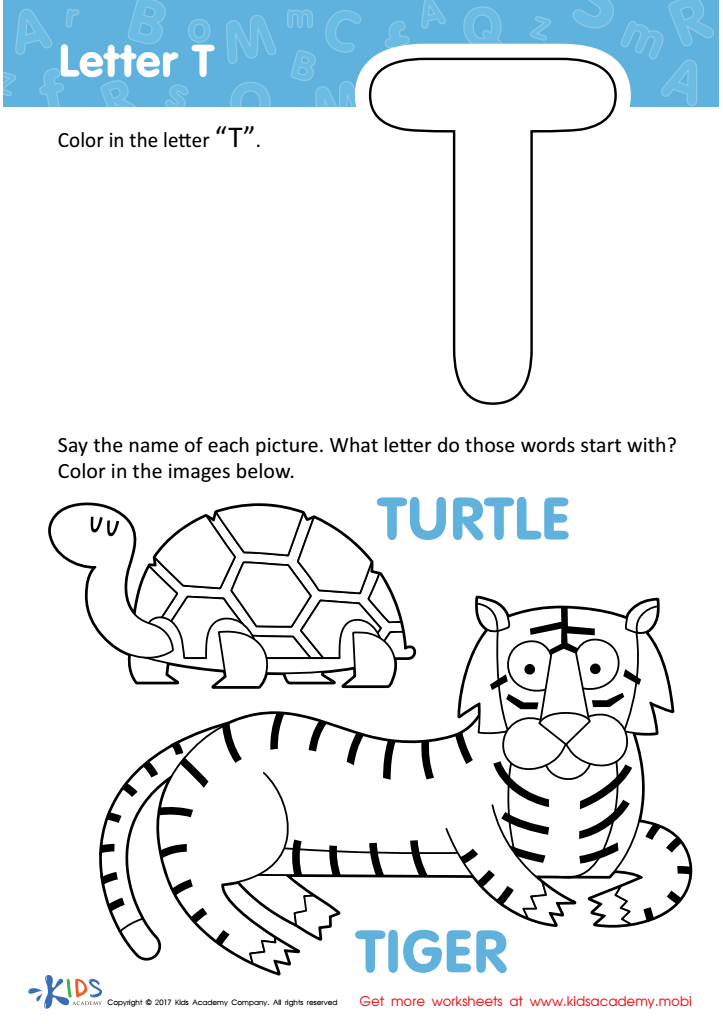
Letter T Coloring Sheet
Introduce your child to the letter "T" and its animals – turtles and tigers! With this coloring page, you can stimulate your child's imagination and creativity, while helping them recognize the letter "T". Have fun with your child and get coloring!
Download (PDF)
 Assign to My Students
Assign to My Students
Letter T Coloring Sheet
Worksheet
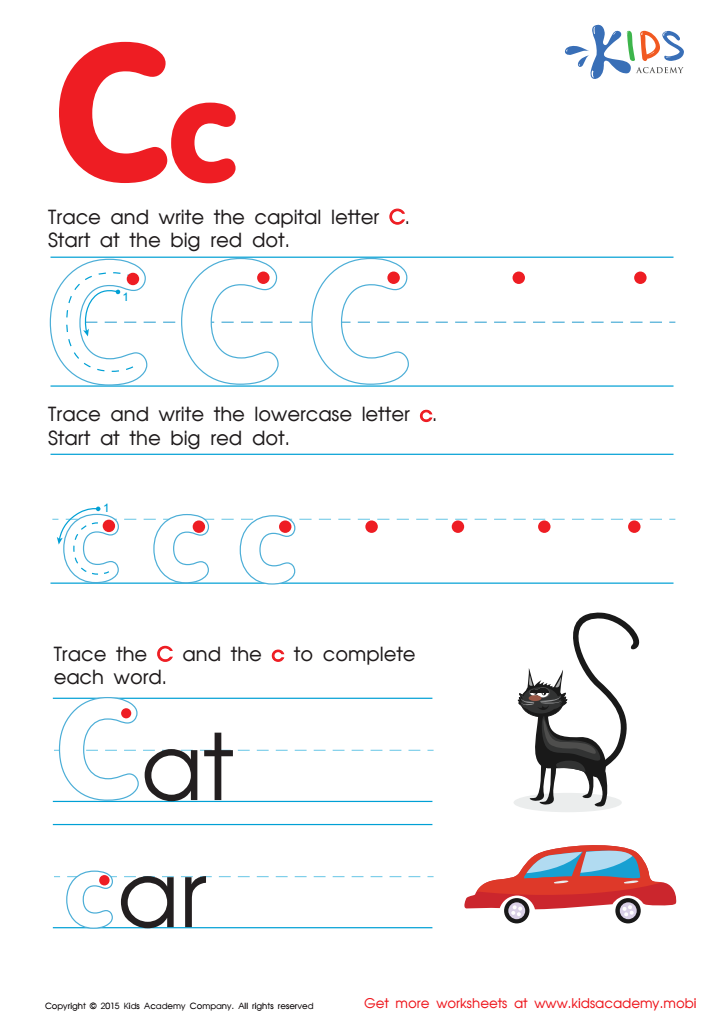
Letter C Tracing Page
Trace and write the letter 'C'! Put the pencil at the red dot then follow the lines – the capital letter first then the lowercase one. Cats love it and so will you! Get more free printables to practice tracing and writing.
Letter C Tracing Page
Worksheet
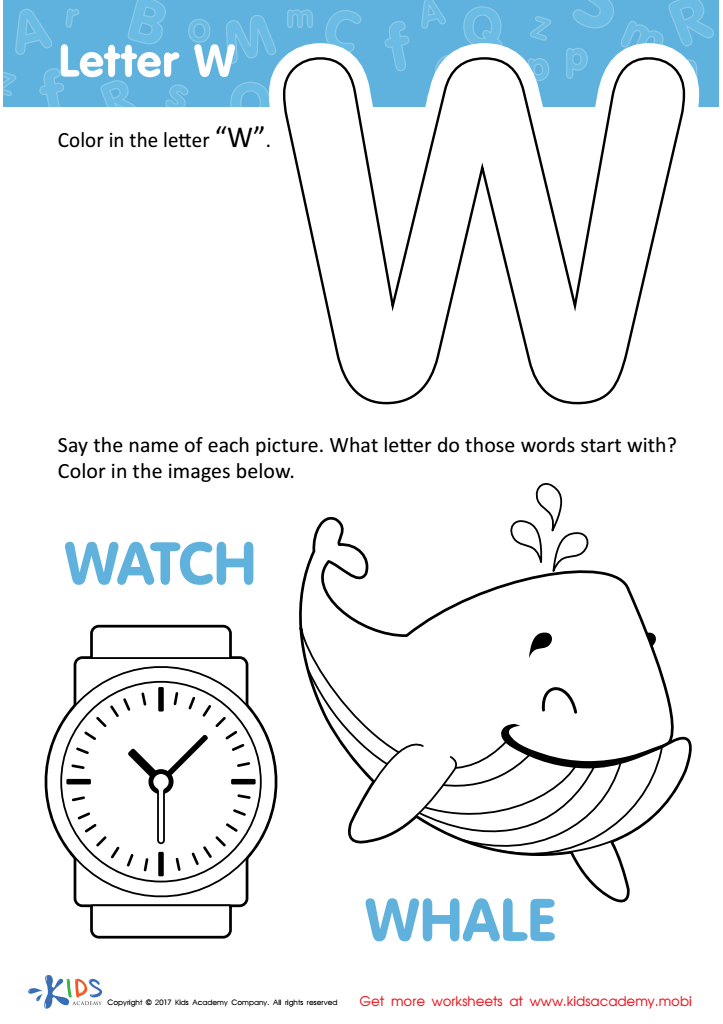
Letter W Coloring Sheet
Let your child have fun with this letter "W" coloring page! They can use their imagination to color the whale and discover the letter and its sound. Give them a helping hand to make it a whale of a time!
Download (PDF)
Assign to My Students
Assign to My Students
Letter W Coloring Sheet
Worksheet
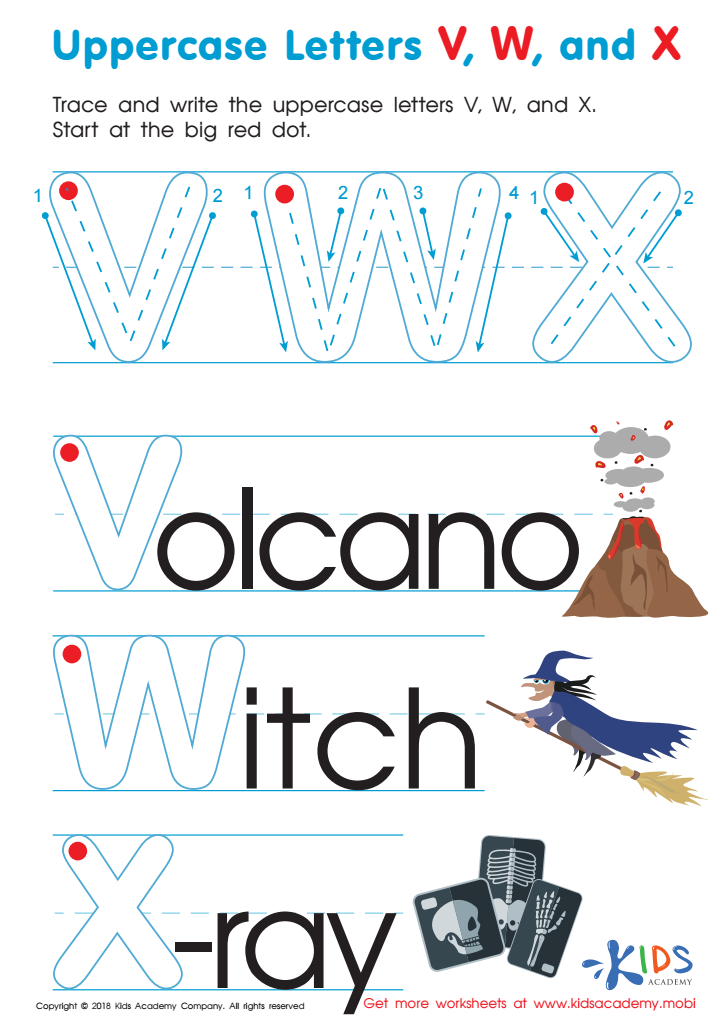
Uppercase Letters V, W, and X Worksheet
This worksheet is perfect for kids struggling to write uppercase letters V, W, and X. Warm up their brains first by having them name words starting with these letters. Then, help them trace and write each letter from the big red dot. With your assistance, they will quickly sharpen their writing skills.
Uppercase Letters V, W, and X Worksheet
Worksheet
Join Kids Academy for Free
Who is primarily going to use this learning content?








Letter tracing skills and letter recognition are foundational components of early literacy that hold significant importance for children aged 5 to 7. For parents and teachers, fostering these skills is crucial for several reasons.
Firstly, letter recognition is vital for reading development. By helping children identify both uppercase and lowercase letters, we lay the groundwork for phonemic awareness and decoding skills essential for reading fluency. Recognizing letters is also linked to successful spelling, as it enables children to understand the relationship between sounds and symbols.
Secondly, letter tracing improves fine motor skills, critical for writing. When children practice tracing letters, they develop hand-eye coordination and grip strength, creating a smoother transition to independent writing. Engaging in this activity also enhances concentration, encouraging perseverance in tasks.
Moreover, mastery of letter recognition and tracing builds confidence. Children who are skilled in these areas are more likely to participate in class discussions, demonstrate a love for reading, and engage more actively with learning materials.
In summary, investing time in letter tracing and recognition not only promotes literacy but also boosts key cognitive, motor, and social skills. Thus, parents and teachers play a pivotal role in nurturing these essential abilities.







