Lowercase letter writing Letter Recognition Worksheets for Ages 5-7
3 filtered results
-
From - To
Discover the joy of learning with our Lowercase Letter Writing and Letter Recognition Worksheets, designed specifically for children ages 5-7. These engaging worksheets enable young learners to practice writing lowercase letters while improving their letter recognition skills. Featuring a variety of fun activities—including tracing, filling in missing letters, and matching—these resources cater to different learning styles and keep students motivated. Perfect for both home and classroom use, our worksheets provide a solid foundation for early literacy. Foster your child's confidence in their writing abilities and set them on the path to reading success with our carefully crafted educational materials!
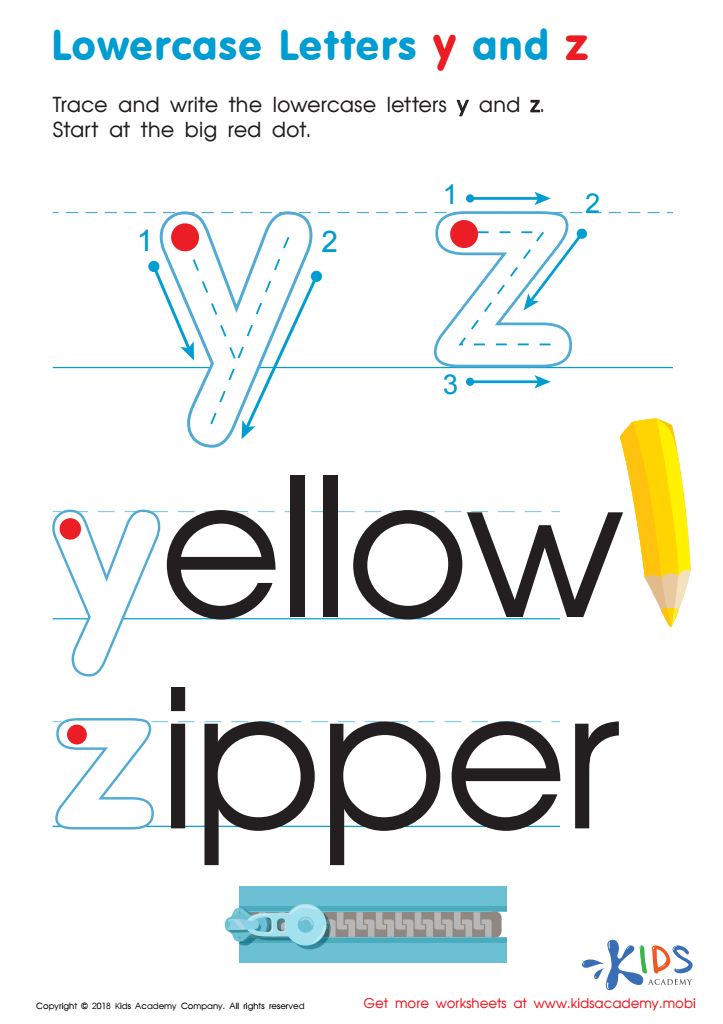
Lowercase Letters y z Worksheet
 Assign to My Students
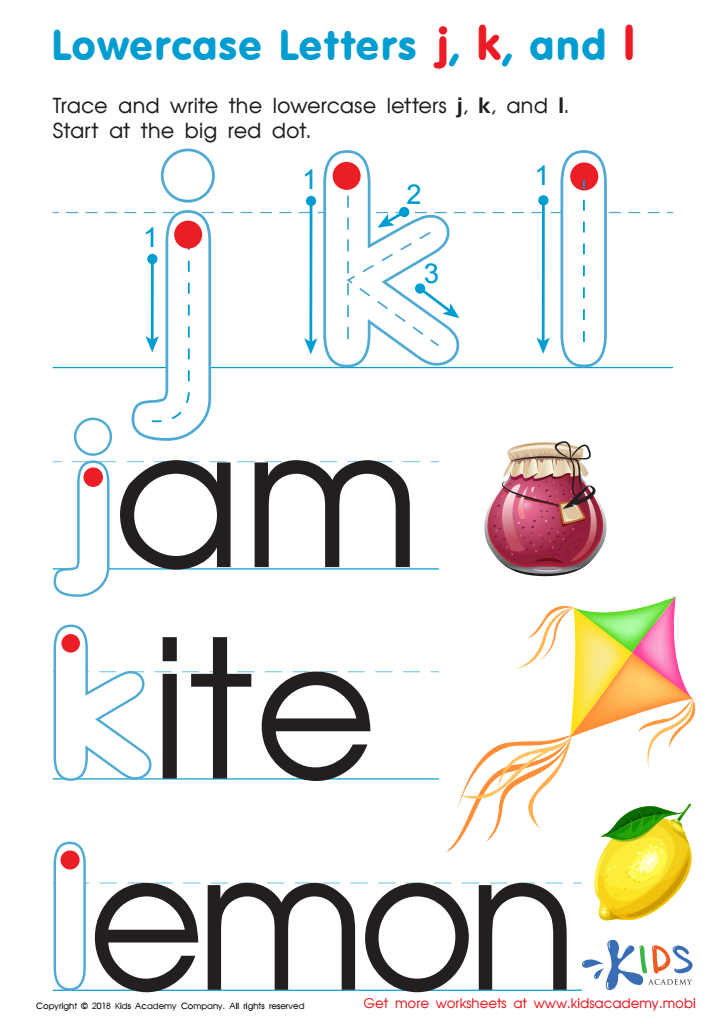
Lowercase Letters j k l Worksheet
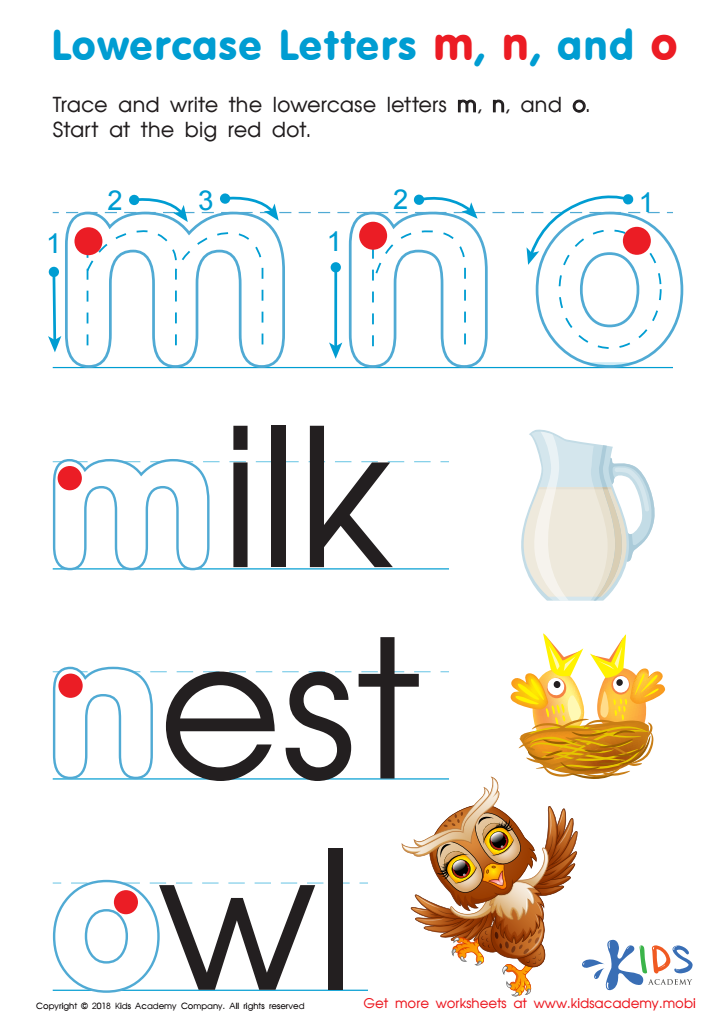
Lowercase Letters m n o Worksheet








Parents and teachers should prioritize lowercase letter writing and letter recognition for children aged 5-7, as these skills form the backbone of literacy development. Mastery of lowercase letters enables children to read and write effectively, laying the foundation for communication and academic achievement.
By age 5-7, children's cognitive abilities are primed for learning new skills, and understanding lowercase letters is essential, as they are commonly used in everyday texts. This knowledge helps children decipher print in books, labels, and signs, fostering independence in their exploration of the world.
Furthermore, practicing lowercase writing enhances fine motor skills, as children learn to form letters with precision. This process boosts confidence, facilitating a positive attitude toward learning and creative expression.
Early recognition of letters is also crucial for vocabulary development, enabling children to connect sounds with symbols, a vital aspect of phonemic awareness. This understanding encourages better reading fluency and comprehension later on.
Ultimately, focusing on lowercase letter writing and recognition equips children with not just the tools for literacy but the skills necessary to succeed in school and beyond. Thus, involvement from both parents and teachers is critical in nurturing these foundational competencies.







