
Phonics enhancement Letter Recognition Worksheets for Ages 5-7
3 filtered results
Difficulty Level
Grade
Age
-
From - To
Subject
Activity
Standards
Unlock the door to reading success with our Phonics Enhancement Letter Recognition Worksheets designed for ages 5-7! These expertly crafted worksheets focus on strengthening letter recognition, phonemic awareness, and early phonics skills, essential for budding readers. Each engaging activity blends fun illustrations with effective learning strategies, helping young learners effortlessly recognize and pronounce letters. Ideal for both classroom environments and at-home practice, our worksheets make phonics learning enjoyable and impactful. Equip your child with the foundational skills needed to excel in reading and beyond. Discover a joyful path to literacy with our top-tier phonics resources today!
Favorites
With answer key
Interactive
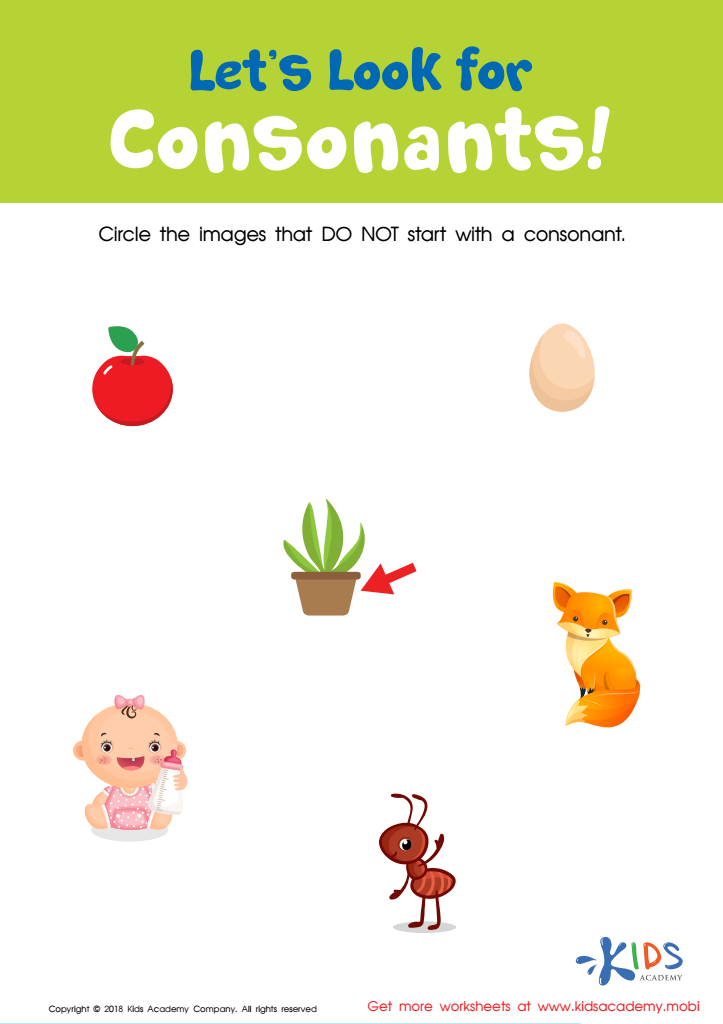
Let's Look for Consonants Worksheet
Help kids learn consonants and words that start with them. Ask them to recite the alphabet, then explain consonants are all letters but the 5 vowels. Use the worksheet to ask them to circle items without a consonant. Emphasize that's 21 consonants.
Let's Look for Consonants Worksheet
Worksheet
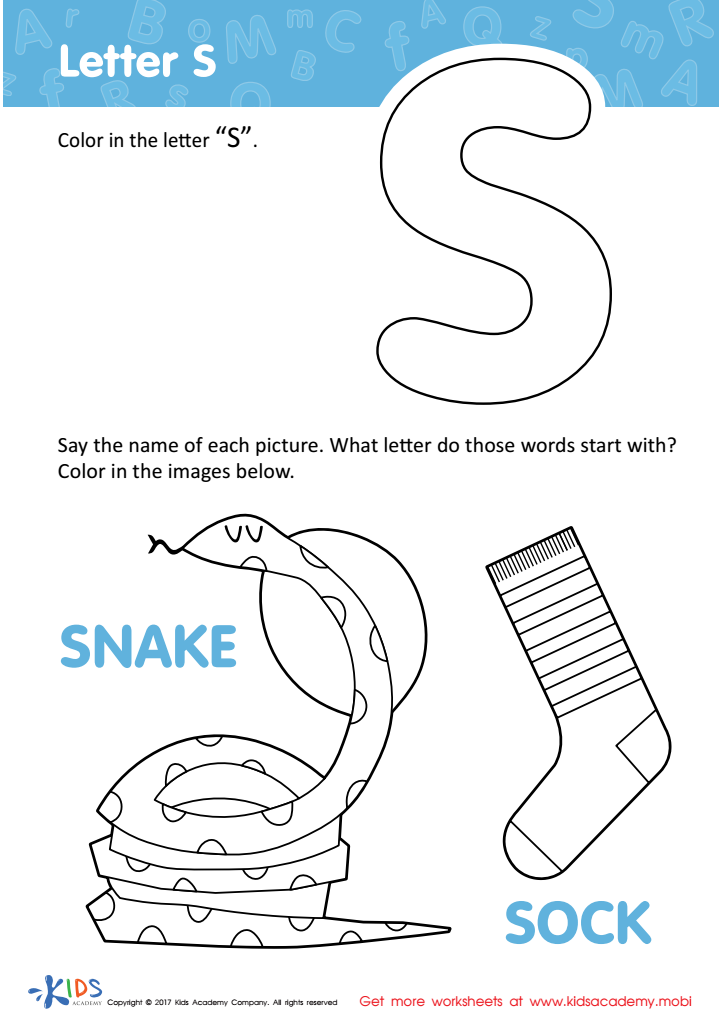
Letter S Coloring Sheet
Help your child practice recognizing the letter "S" and the sound it makes with this fun coloring page. It features a slippery snake, smelly sock and more! Give them extra practice by coming up with more "S" sounds and words.
Download (PDF)
 Assign to My Students
Assign to My Students
Letter S Coloring Sheet
Worksheet
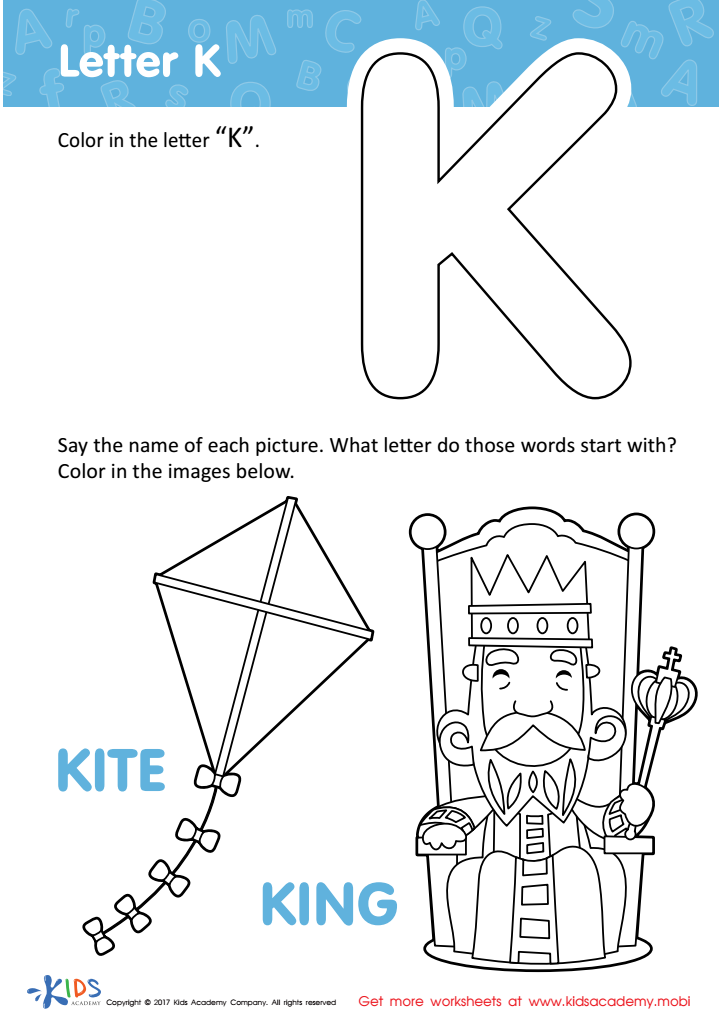
Letter K Coloring Sheet
This letter K coloring page captivates your child's creativity while learning the letter! Showcasing a king and kite, common words for their age group, it's sure to spark their imagination.
Download (PDF)
Assign to My Students
Assign to My Students
Letter K Coloring Sheet
Worksheet
Join Kids Academy for Free
Who is primarily going to use this learning content?








Phonics enhancement and letter recognition are fundamental components for literacy development in children aged 5-7. At this crucial stage, children’s brains are exceptionally receptive to learning the sounds associated with letters—knowledge that forms the foundation for reading and writing skills. When parents and teachers focus on phonics and letter recognition, they help kids decode written language, which in turn boosts their ability to understand and enjoy reading. This builds a strong academic basis, positively impacting other areas of learning.
Effective phonics instruction enables children to pronounce words correctly, enhances their vocabulary, and improves spelling skills. It also reinforces their ability to recognize common word patterns, making it easier to decode unfamiliar words. As a result, children are more likely to read fluently and comprehend texts better.
Parents can support this by reading regularly with their children, pointing out letters and sounds, and using engaging literacy games. Teachers also play a critical role by systematically teaching phonics in a fun and interactive way. This collaboration between home and school not only accelerates literacy skills but also fosters a lifelong love of reading. For these reasons, an emphasis on phonics enhancement and letter recognition is vital for young learners’ academic success and overall cognitive development.







