
Visual discrimination Letter Recognition Worksheets for Ages 5-7
5 filtered results
Difficulty Level
Grade
Age
-
From - To
Subject
Activity
Standards
Enhance your child's literacy skills with our Visual Discrimination Letter Recognition Worksheets, specifically designed for ages 5-7. These engaging worksheets help young learners identify, differentiate, and recognize letters through fun activities. By focusing on visual discrimination, children will improve their ability to spot similarities and differences between letters, laying the essential foundation for early reading and writing. Each worksheet is crafted to make learning enjoyable while developing critical cognitive skills. Perfect for use at home or in the classroom, our worksheets are a versatile resource for parents and teachers alike. Unlock your child's potential and foster a love for learning today!
Favorites
With answer key
Interactive
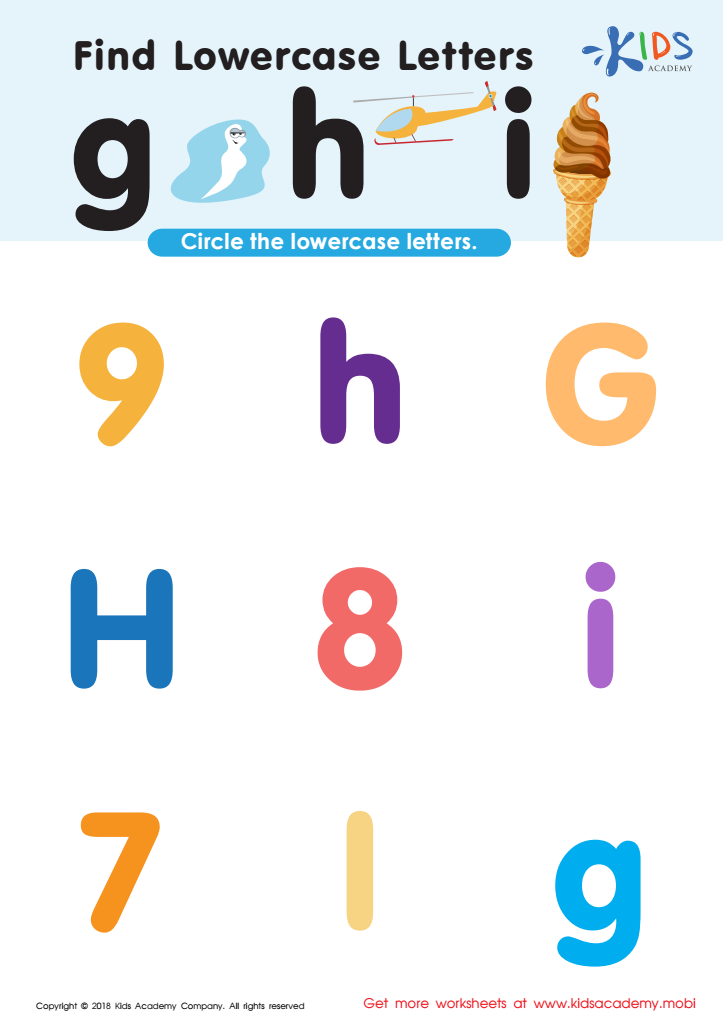
Find Lowercase Letters g h i Worksheet
Turn learning into a fun journey with your child! Use this free worksheet to find and circle the lowercase letters hidden amongst uppercase letters and numbers. Your child will understand what you're teaching them as they enjoy the search.
 Assign to My Students
Find Lowercase Letters g h i Worksheet
Worksheet
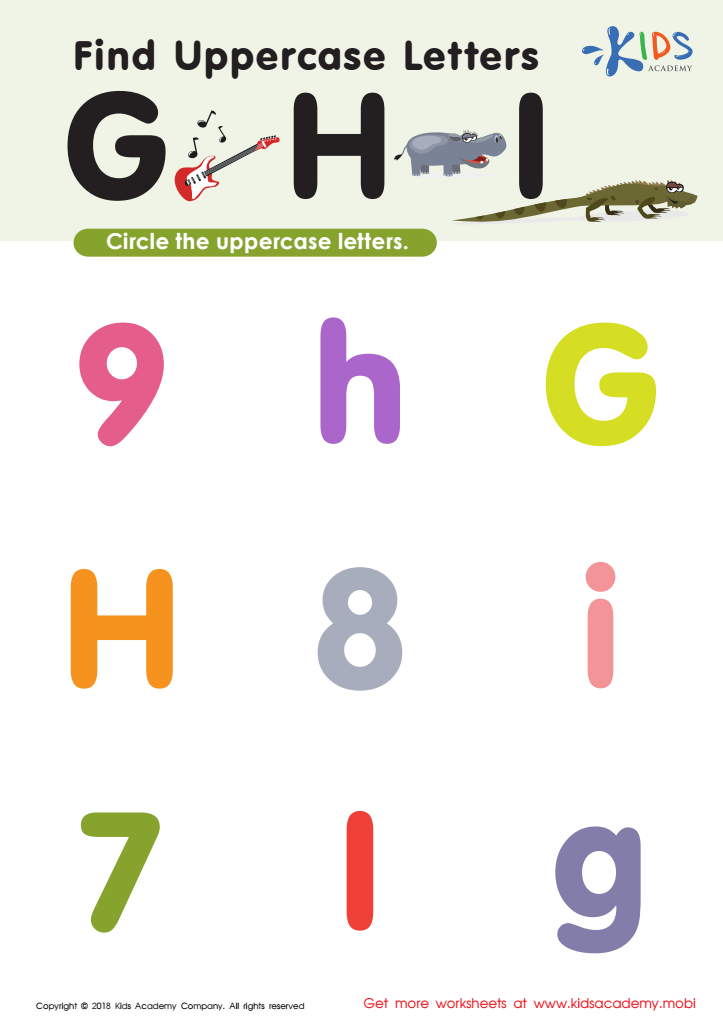
Find Uppercase Letters G, H, and I Worksheet
Find G, H, and I in uppercase with this downloadable worksheet! Numbers are included to challenge your kindergartener's letter recognition skills. Plus, practice G, H, and I sounds using the cute graphics. Perfect for learning letter case recognition!
Find Uppercase Letters G, H, and I Worksheet
Worksheet
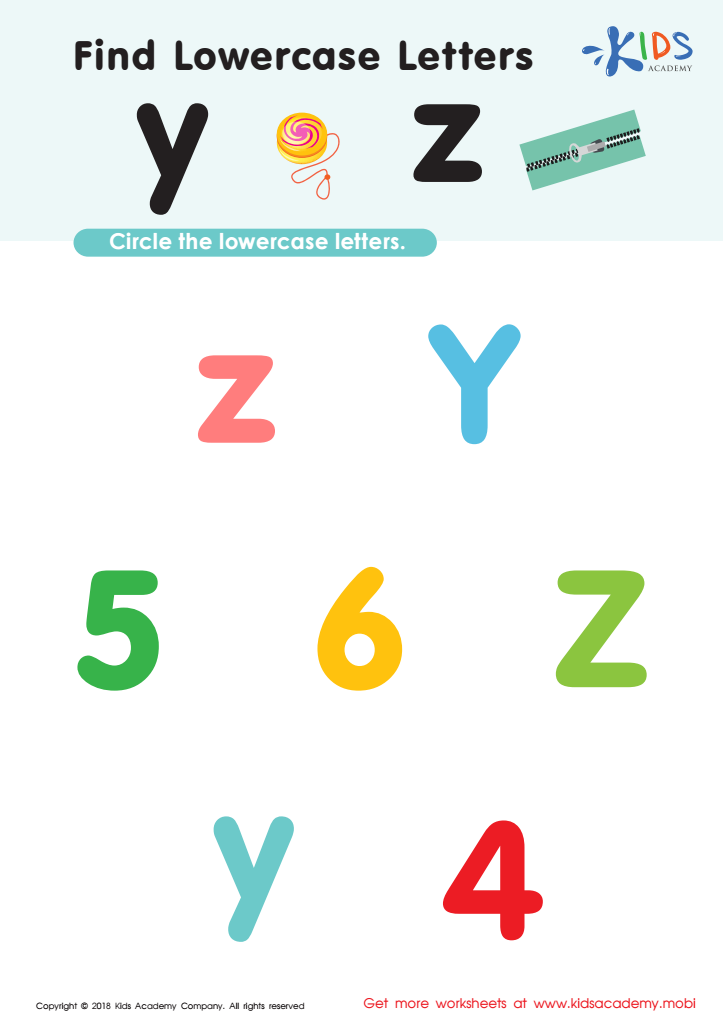
Find Lowercase Letters y z Worksheet
Help your kid learn the alphabet. Before they can move on to words and reading, they must first know the lower and uppercase letters. Show them how to find the letters y and z in this worksheet, which is filled with uppercase letters and numbers. Together, find and circle them.
Find Lowercase Letters y z Worksheet
Worksheet
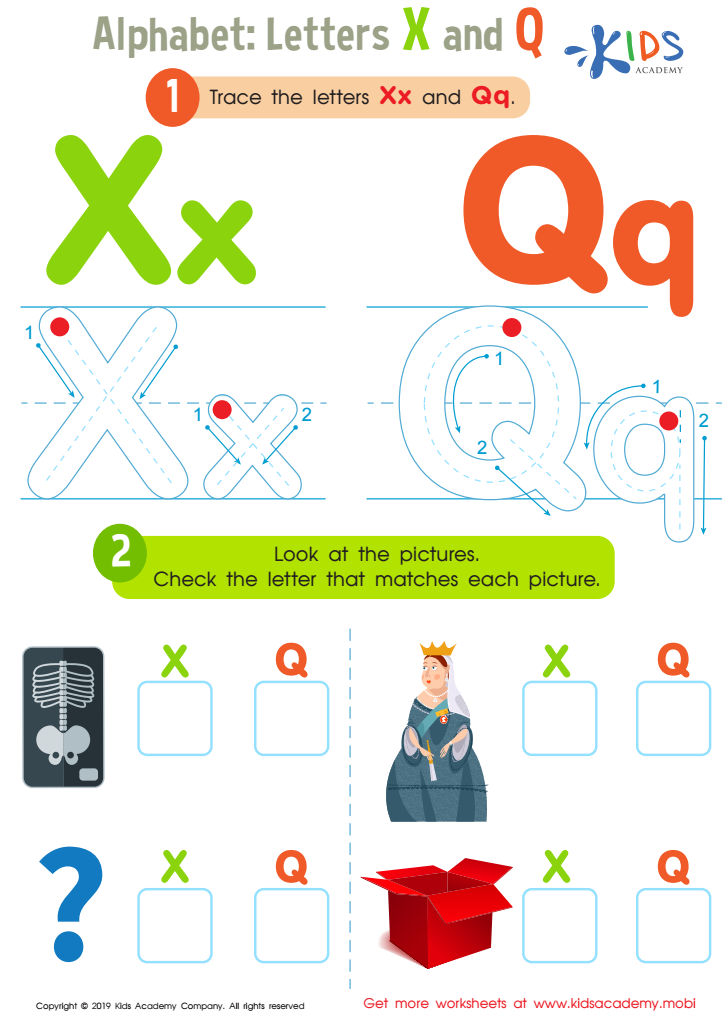
Letters X and Q Tracing Worksheet
Do you want your students to improve writing and letter recognition? This worksheet is a great place to start! Kids can trace the letters «X» and «Q» and identify pictures that match each letter. With a little encouragement, they'll do a great job!
Letters X and Q Tracing Worksheet
Worksheet
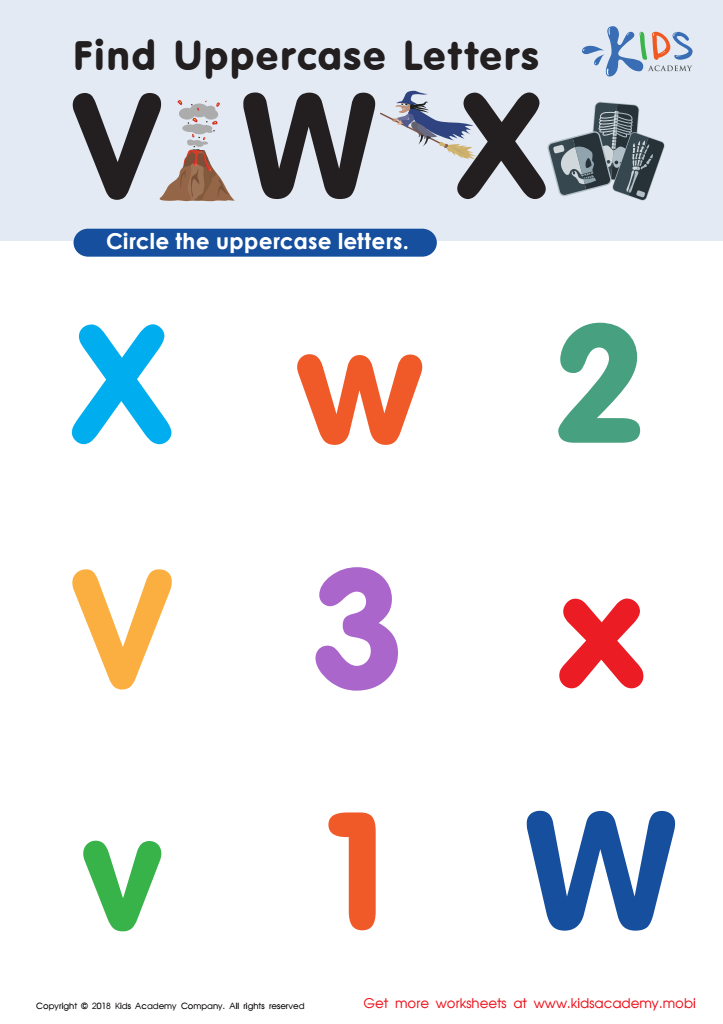
Find Uppercase Letters V, W, X Worksheet
Ask your kids if they can spot the uppercase letters V, W and X hidden in the lowercase letters and numbers, then have them circle them. After that, ask them to give you examples of words beginning with those letters. This worksheet will help them get started.
Find Uppercase Letters V, W, X Worksheet
Worksheet
Join Kids Academy for Free
Who is primarily going to use this learning content?








Visual discrimination letter recognition is a crucial skill for children ages 5-7, forming the foundation for literacy development. At this age, children are not only learning to recognize letters but also to understand the relationship between letters and sounds. This skill is essential for reading proficiency, which is a cornerstone of academic success.
Parents and teachers should care about visual discrimination letter recognition because it directly impacts a child’s ability to decode words. Children who struggle with recognizing letters may have difficulty blending sounds and reading fluency, which can lead to frustration and disengagement from learning. Additionally, visual discrimination helps children distinguish between similar letters, such as ‘b’ and ‘d’, which is vital for spelling and writing.
Promoting letter recognition in engaging and fun ways can enhance a child's confidence and motivation. Activities such as letter games, puzzles, and creative arts can make learning enjoyable and effective. Supporting this skill also fosters critical thinking and cognitive development, essential for overall educational growth. By emphasizing visual discrimination letter recognition, parents and teachers can help children build a solid foundation for reading, critical thinking, and lifelong learning.







