Vocabulary enhancement Rhyming Worksheets for Ages 5-7
6 filtered results
-
From - To
Boost your child's vocabulary with our engaging Rhyming Worksheets designed for ages 5-7! These fun and educational activities help young learners explore the world of rhymes while enhancing their vocabulary skills. Students will engage in interactive exercises that challenge them to find, recognize, and complete rhyming words, fostering both lexical understanding and phonemic awareness. Perfect for in-class or at-home learning, our worksheets use colorful images and kid-friendly themes to capture attention and stimulate language development. Watch your child's confidence soar as they experiment with words and develop stronger communication skills. Start enhancing vocabulary today with our captivating rhyming worksheets!
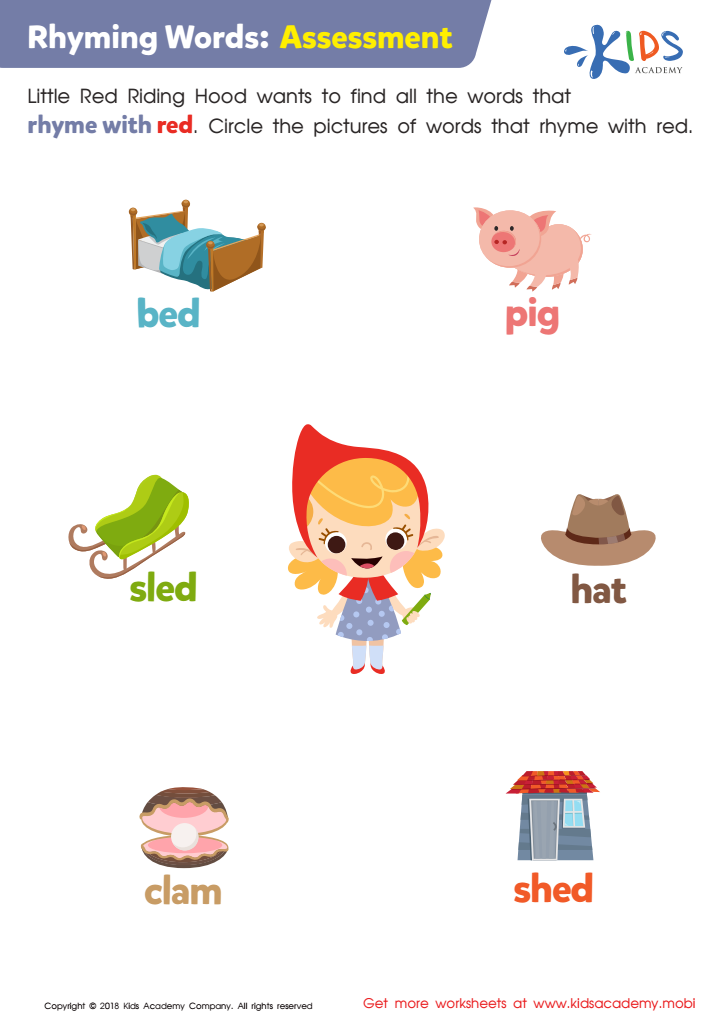
Rhyming Words: Assessment Worksheet
 Assign to My Students
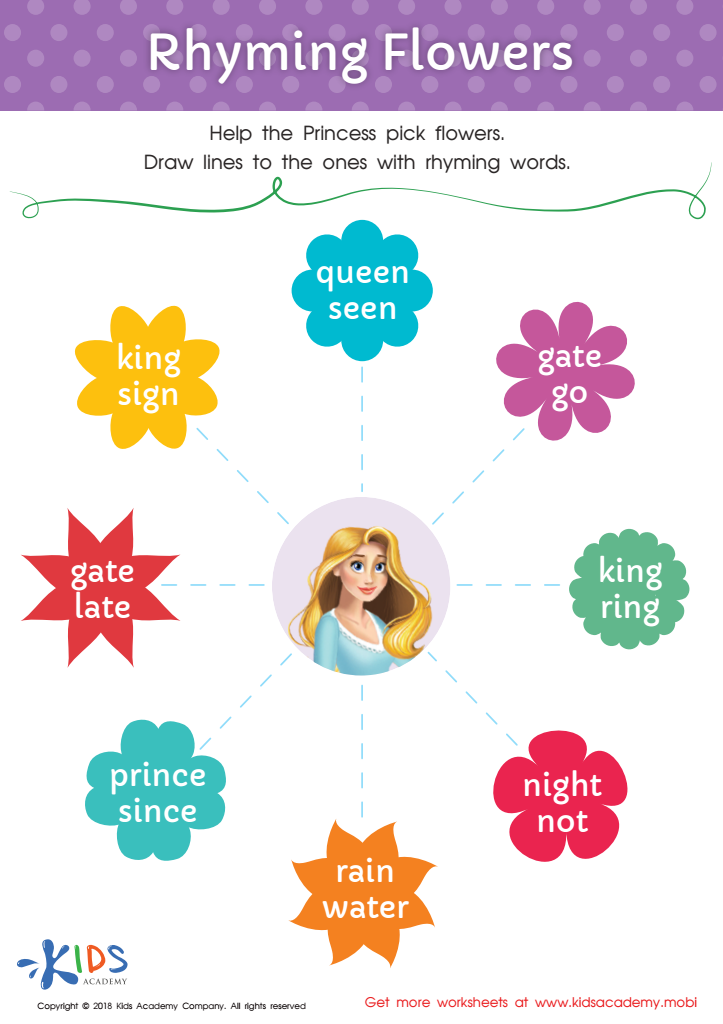
Rhyming Flowers Worksheet
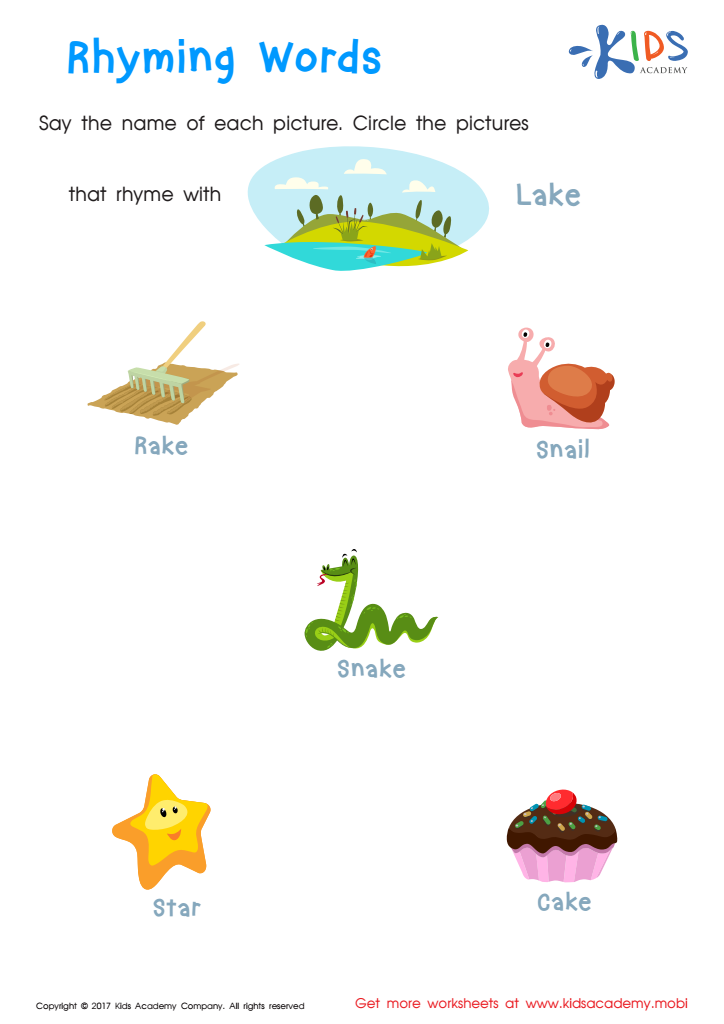
Rhyming Words Rhyming Worksheet
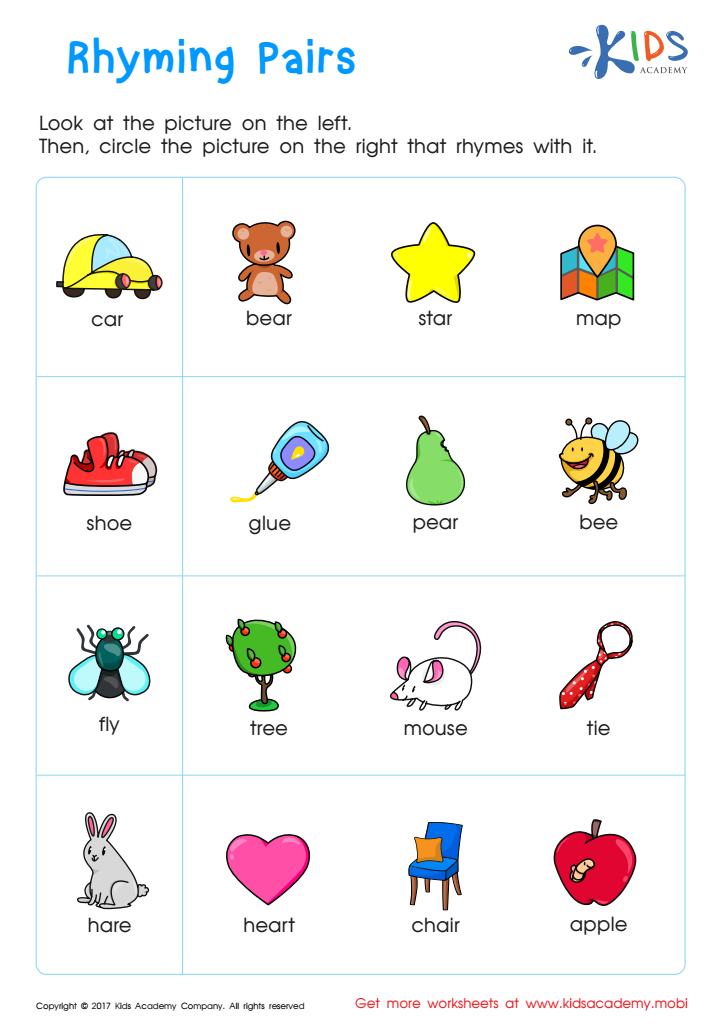
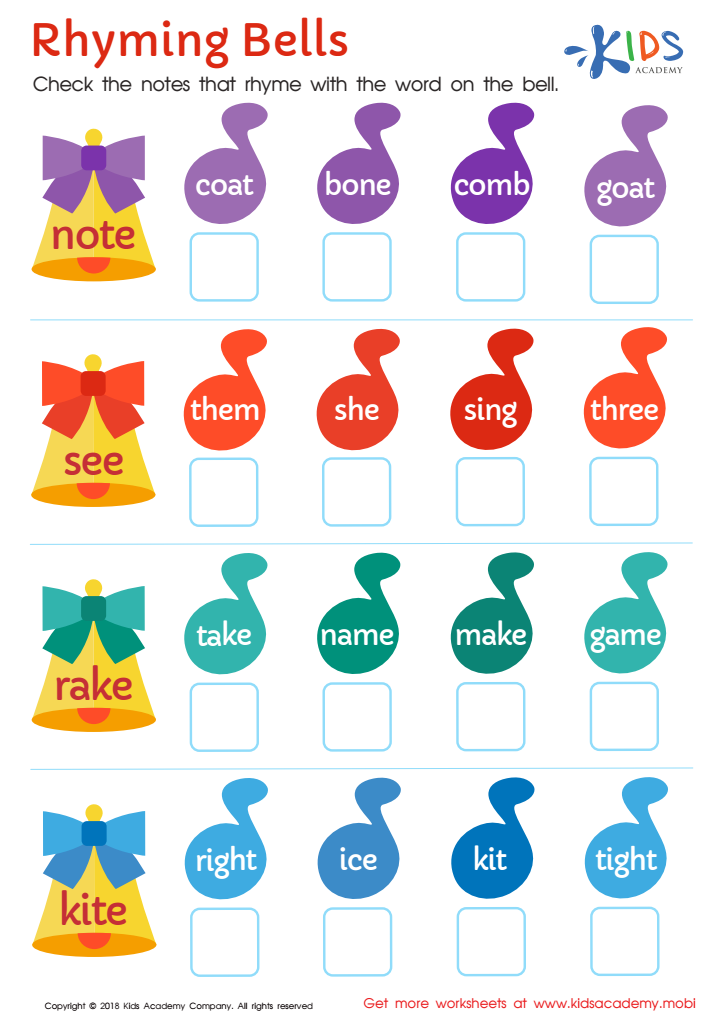
Rhyming Bells Worksheet
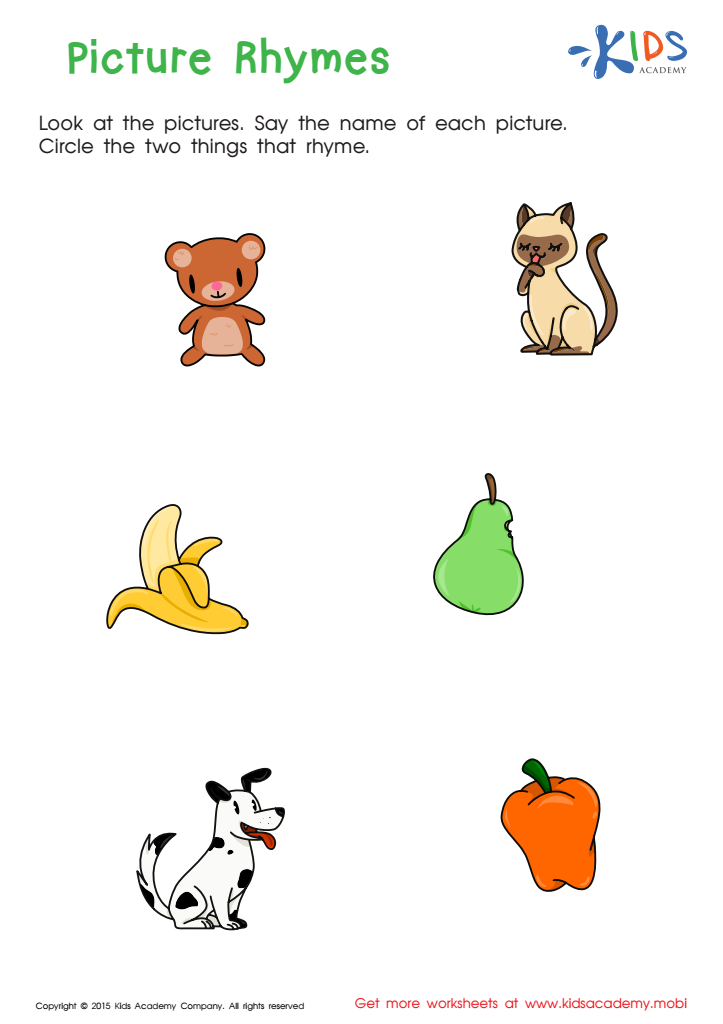
First Words: Picture Rhymes Worksheet







Vocabulary enhancement through rhyming is crucial for children aged 5-7 as it plays a significant role in their language development and literacy skills. At this age, children are rapidly expanding their vocabularies and developing critical phonemic awareness—the ability to recognize and manipulate sounds in words. Rhyming activities help reinforce these skills by encouraging children to listen closely to sounds, understand word structures, and predict word patterns, which aids in both reading and spelling.
Furthermore, rhymes are enjoyable and engaging, making learning fun. They can be experienced through songs, poems, and stories, fostering a love for language and literature. This enjoyment can motivate children to explore new words and concepts, enhancing their overall language proficiency.
Additionally, strong vocabulary skills lay the foundation for reading comprehension and writing abilities. As children learn to recognize and produce rhymes, they develop greater confidence in their linguistic capabilities. By integrating rhyming into early education, parents and teachers not only promote academic success but also nurture creativity and self-expression. Ultimately, supporting vocabulary enhancement through rhyming leads to lifelong literacy skills that benefit children's overall communication and cognitive development.







