Letter recognition Tracing Letters Worksheets for Ages 5-7 - Page 2
26 filtered results
-
From - To
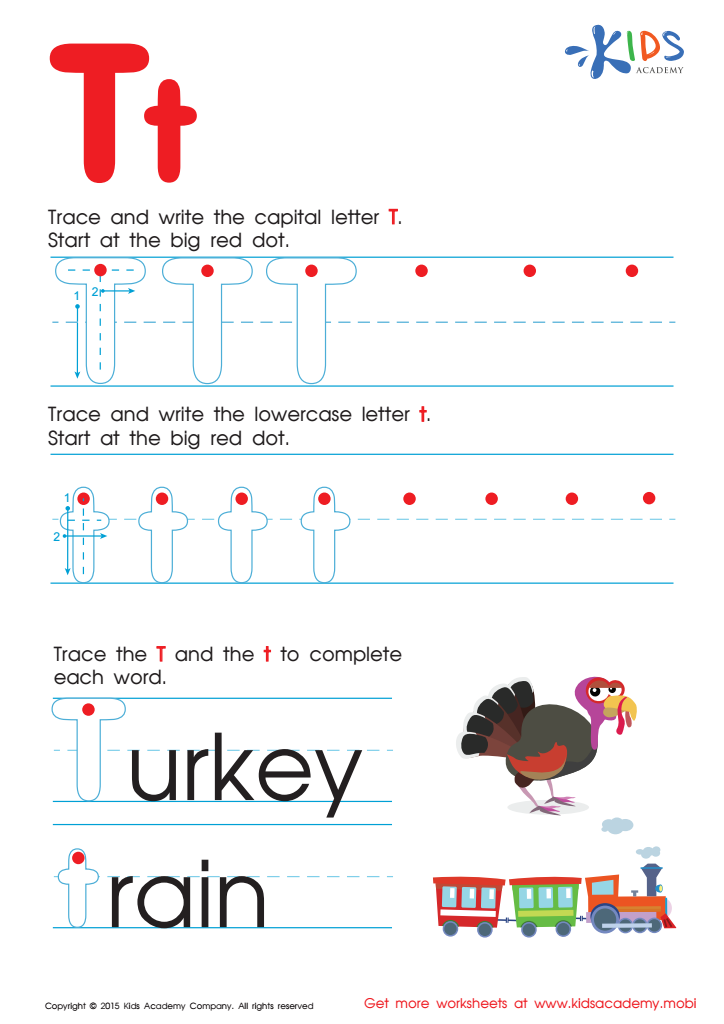
Letter T Tracing Page
 Assign to My Students

Letter D Tracing Page








Letter recognition and tracing letters are fundamental skills for children aged 5-7 that significantly impact literacy development. At this age, students are transitioning from pre-reading to reading, making it essential for parents and teachers to prioritize these skills. Letter recognition is the child's ability to identify and differentiate between letters, which is crucial for developing phonemic awareness, the ability to hear and manipulate sounds in words.
Tracing letters reinforces fine motor skills necessary for writing, helping children gain control of their hand movements. This physical engagement not only aids in muscle development but also enhances memory retention of letter shapes. When children trace letters, they connect the visual representation of the letter with its sound, facilitating phonics learning.
Moreover, early literacy foundations affect a child's confidence and motivation in reading. Proficiency in letter recognition can lead to a smoother transition into reading, fostering a love for books and words. By encouraging letter tracing and recognition, parents and teachers help create a robust groundwork for future academic success, enabling children to thrive as engaged learners. Ensuring children have these essential skills can significantly influence their overall educational journey and lifelong enthusiasm for learning.








