Capitalization rules Upper & Lowercase Letters Worksheets for Ages 5-7
3 filtered results
-
From - To
Enhance your child's writing skills with our exciting "Capitalization Rules Upper & Lowercase Letters Worksheets" for ages 5-7. These worksheets provide young learners with engaging exercises to understand the proper use of uppercase and lowercase letters. They'll master capitalization rules through fun activities, such as identifying and correcting capitalization errors in sentences, and practicing capitalizing the first letter of names, places, and the beginning of sentences. Perfect for early grade students, these worksheets align with educational standards, ensuring that your child develops strong foundational writing skills while enjoying the learning process. Explore and download now for free!
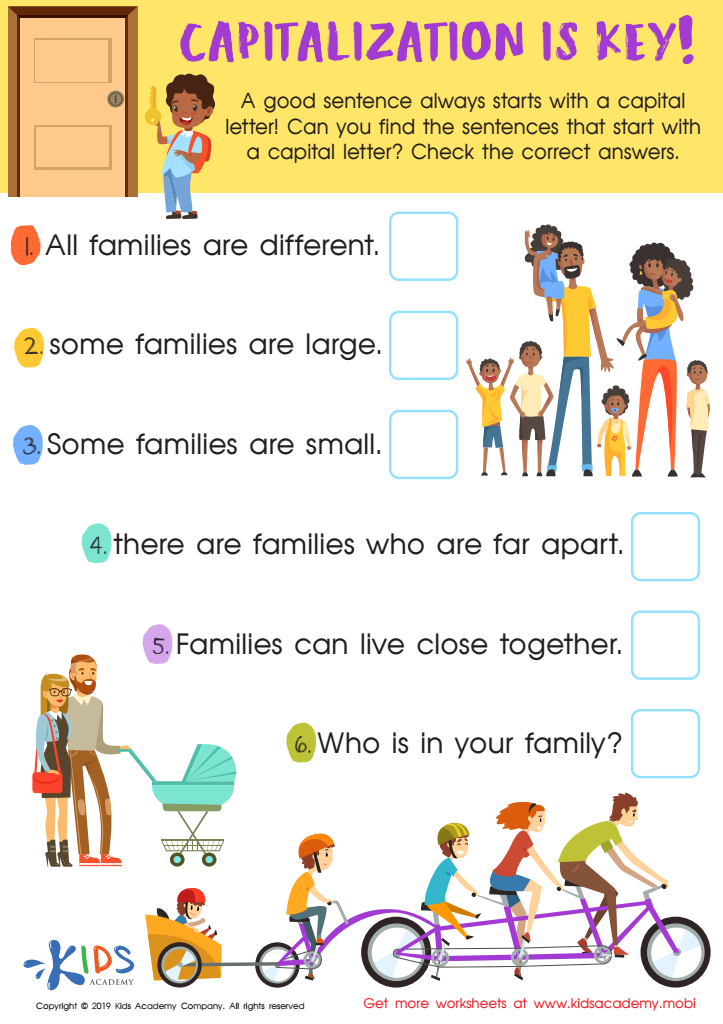
Capitalization Key Worksheet
 Assign to My Students


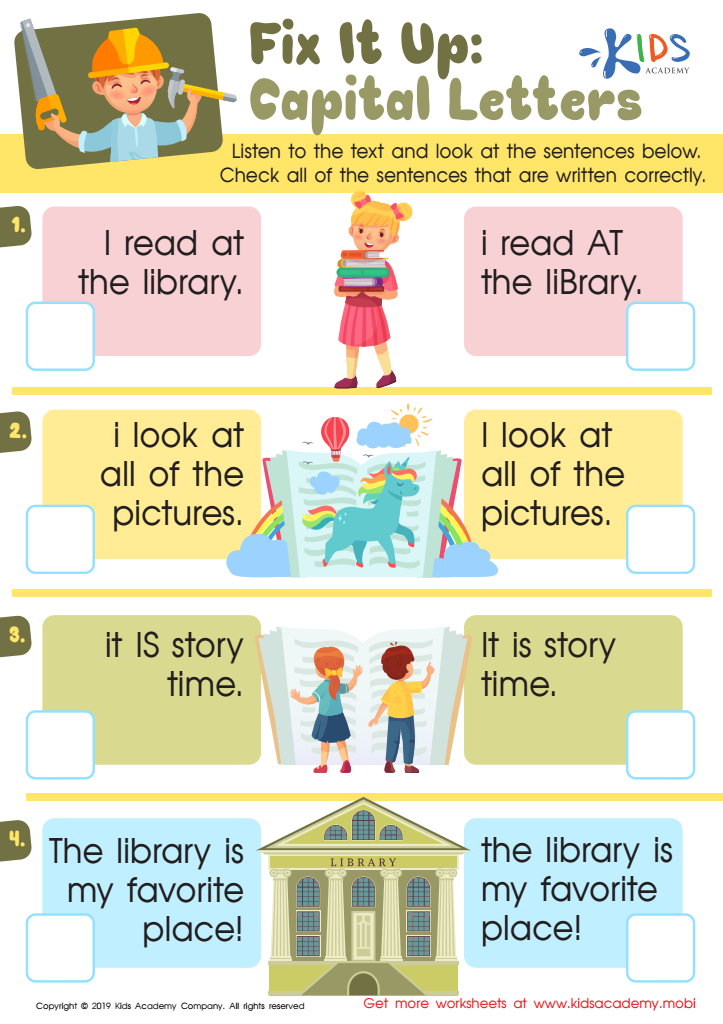
Fix Capital Letters Worksheet

How to Capitalize Worksheet






Understanding and adhering to capitalization rules for upper and lower case letters is vital for young learners, typically aged 5-7. Initially, correct capitalization improves the overall clarity and readability of their writing, enabling them to convey their thoughts more effectively. For instance, capital letters at the beginning of sentences signal the start of a new idea, providing structure and preventing confusion.
Furthermore, mastering these conventions enhances a child’s writing skills, making their work more polished and professional. By capitalizing names, places, and important words correctly, young students indirectly learn to respect proper nouns and discern their significance.
Educationally, early adherence to capitalization rules lays a solid foundation for more advanced grammar and writing skills. It’s akin to learning the building blocks of language which children will expand upon as they grow. Ignoring these fundamentals can create bad habits that are hard to break later on.
Moreover, understanding these rules aligns with children’s cognitive development, aiding reading comprehension. They can better recognize and understand texts when they are consistent with standardized conventions.
Finally, capitalization is integral to literacy tests and school assessments. By teaching these rules early, parents and teachers prepare children for academic success, cultivating confidence and competence in written communication.







