Fine motor skills development Upper & Lowercase Letters Worksheets for Ages 5-7
3 filtered results
-
From - To
Enhance your child’s fine motor skills and letter recognition with our Upper & Lowercase Letters Worksheets, designed specifically for ages 5-7. These engaging printables help young learners strengthen essential skills through fun tracing and writing activities. By practicing the alphabet, children improve hand-eye coordination and precision, laying a strong foundation for successful handwriting. Each worksheet is thoughtfully crafted to make learning an enjoyable experience while promoting cognitive development and muscle memory. Perfect for both classroom and home use, our worksheets support early education and boost confidence in young writers as they master the alphabet.
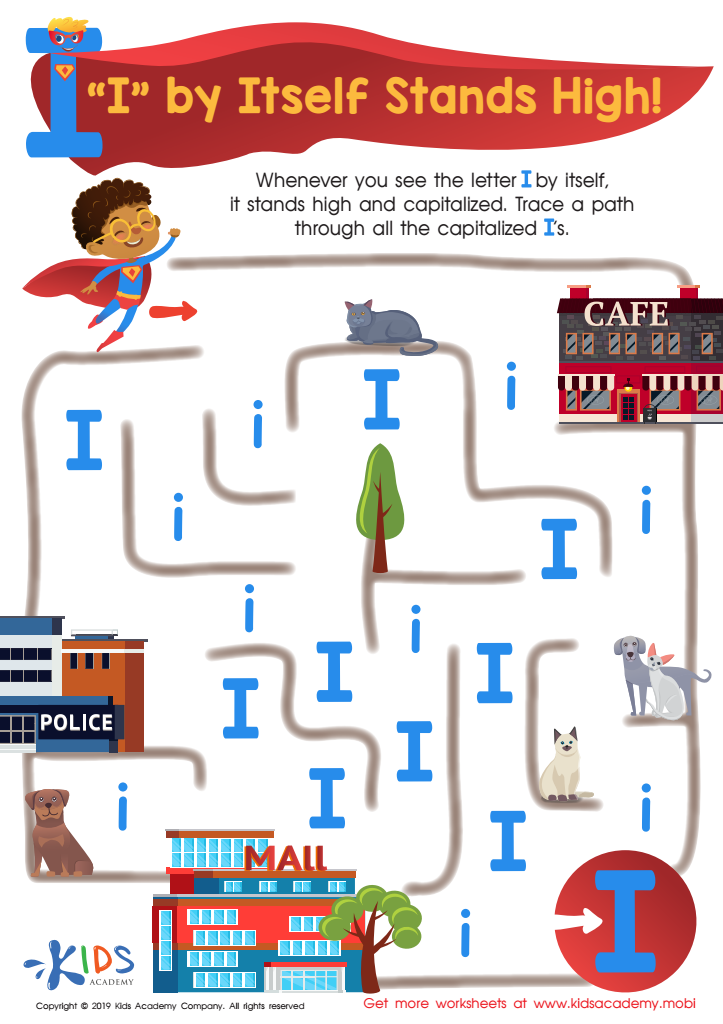
I Stands High Worksheet
 Assign to My Students











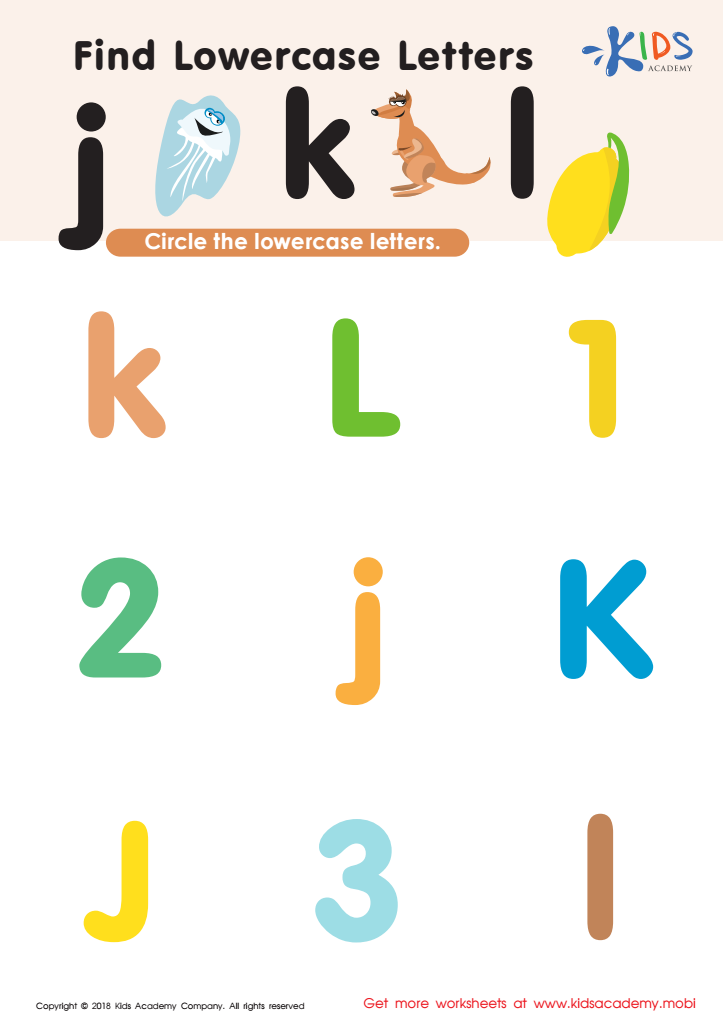
Find Lowercase Letters j k l Worksheet
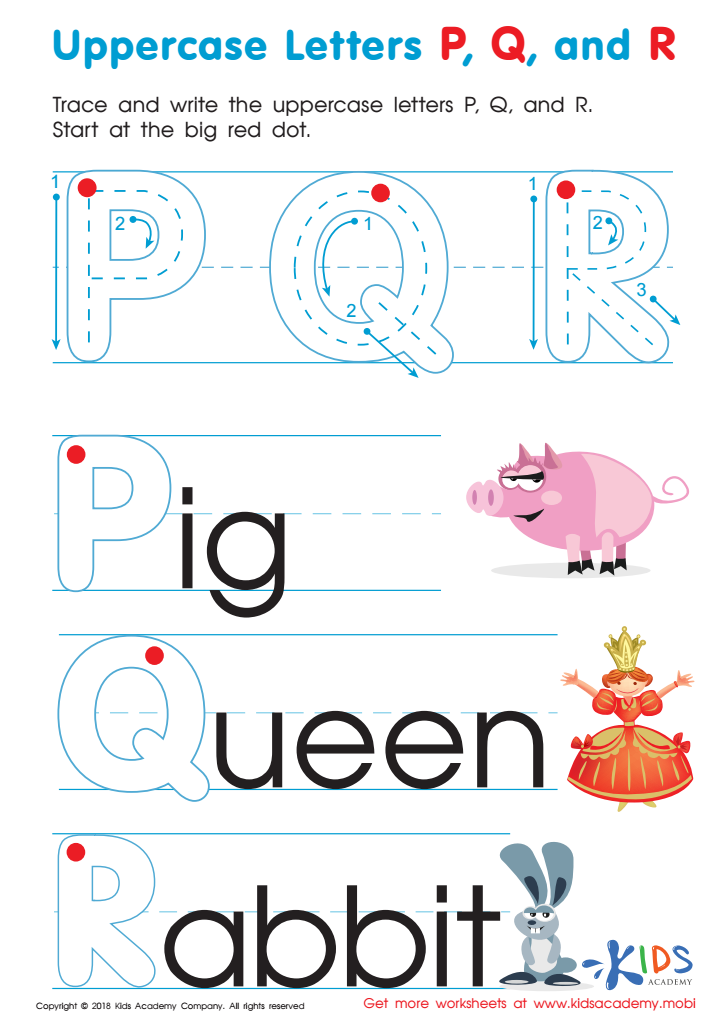
Uppercase Letters P, Q, and R Worksheet






Fine motor skills development is essential for young children, ages 5-7, as it significantly impacts their ability to write upper and lowercase letters, crucial for academic success and communication. Parents and teachers should prioritize developing these skills because they form the foundation for handwriting, which is an essential element of learning in early childhood education.
At this age, muscles in the hands and fingers are still developing. Activities that enhance fine motor skills, such as cutting with scissors, coloring within lines, or manipulating small objects, strengthen these muscles and improve coordination. Proper formation of upper and lowercase letters requires precise motion control, which children achieve through finely-tuned motor skills.
Proficiency in handwriting directly influences a child's academic performance, as properly formed letters enable them to write clearly and quickly, thus aiding in note-taking and interpersonal communication. Moreover, mastering such skills fosters independence, confidence, and self-esteem.
Additionally, well-developed fine motor skills are linked to cognitive development and enhanced brain function. Children who comfortably write are more likely to enjoy learning and participate in classroom activities.
Overall, fostering fine motor skills and ensuring proper letter formation lays a critical foundation for a child's academic journey and their self-development. Thus, by investing time in fine motor activities, parents and teachers can significantly shape a child's future success and holistic growth.







