
Hand-eye Coordination Upper & Lowercase Letters Worksheets for Ages 5-7
3 filtered results
Difficulty Level
Grade
Age
-
From - To
Subject
Activity
Standards
Enhance your child's early literacy and motor skills with our Hand-eye Coordination Upper & Lowercase Letters Worksheets for ages 5-7! Designed by educational experts, these engaging activities help young learners distinguish between uppercase and lowercase letters while fostering essential hand-eye coordination. Perfect for early grade students, the worksheets feature a variety of tracing, matching, and writing exercises tailored to make learning fun and effective. Build a strong foundation in reading and writing for your little one today with these interactive and educational printables!
Favorites
With answer key
Interactive
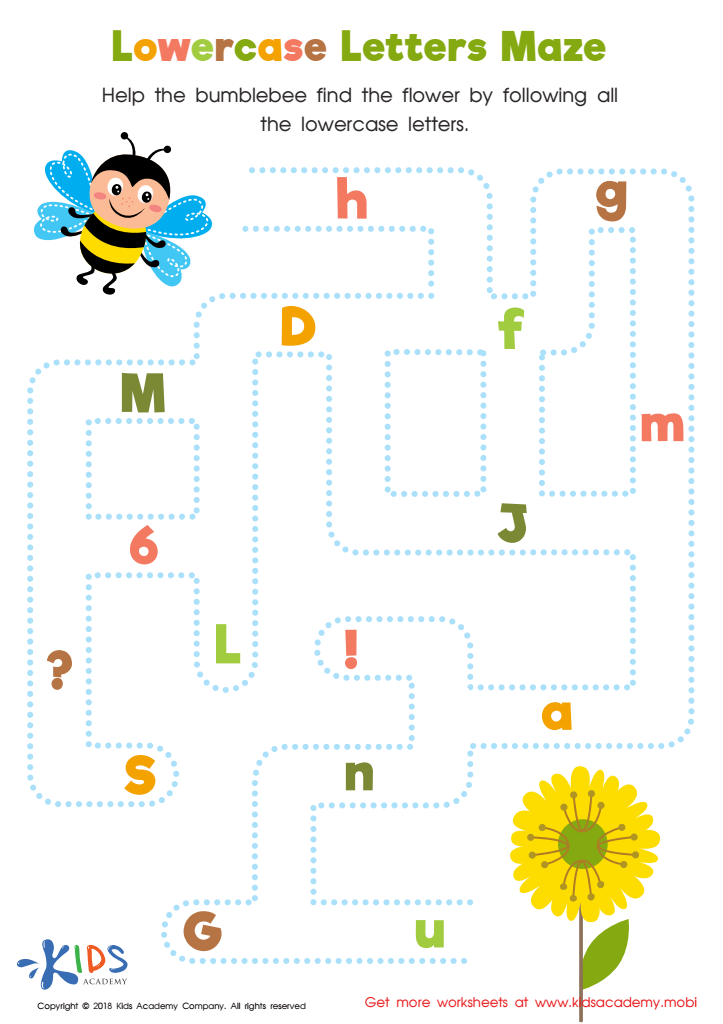
Lowercase Letters Maze Worksheet
Traceable pages can be great learning tools for children. For example, have them trace the path of lowercase letters to help a bumblebee pollinate flowers. Students will quickly learn the difference between uppercase and lowercase letters and numbers, and have fun doing it!
 Assign to My Students
Lowercase Letters Maze Worksheet
Worksheet

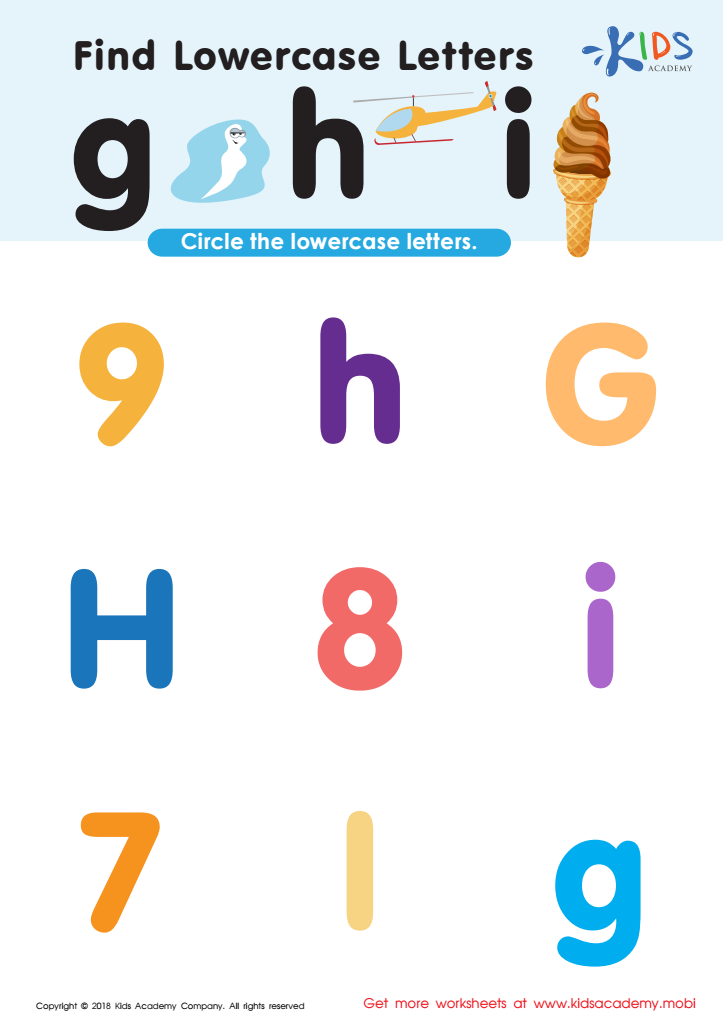
Find Lowercase Letters g h i Worksheet
Turn learning into a fun journey with your child! Use this free worksheet to find and circle the lowercase letters hidden amongst uppercase letters and numbers. Your child will understand what you're teaching them as they enjoy the search.
Find Lowercase Letters g h i Worksheet
Worksheet
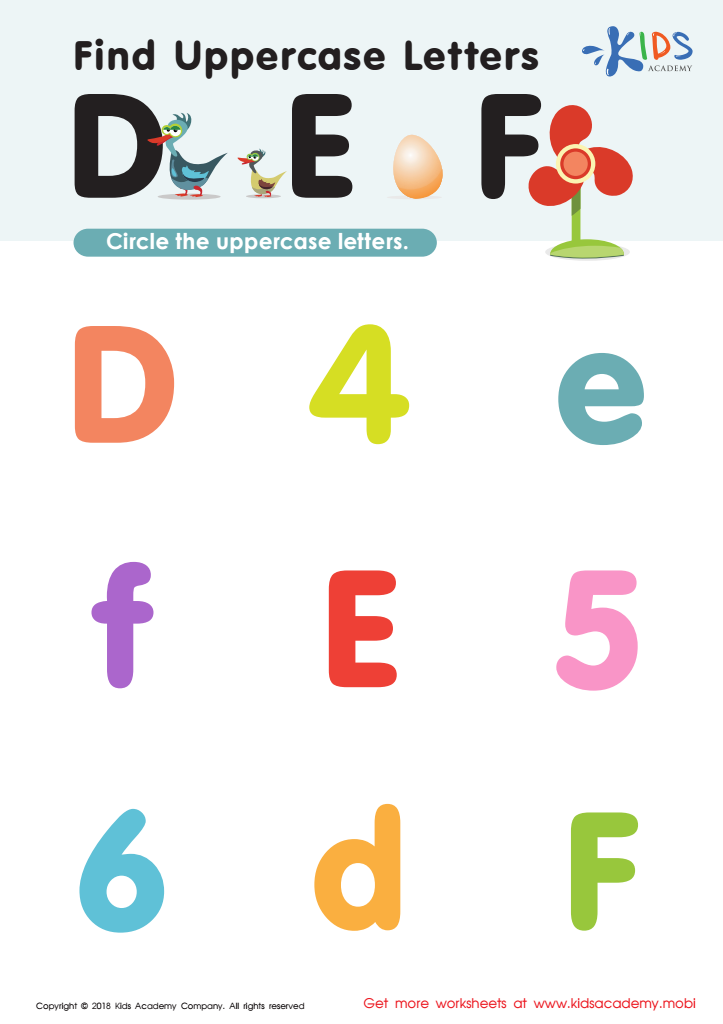
Find Uppercase Letters D, E, and F Worksheet
Follow the duckling and mom to find the capital letters D, E and F on this fun alphabet worksheet! Kids learn to read and recognize letters, while differentiating them from numbers. For extra challenge, don't let the numbers fool them. The pictures above remind them of each letter's sound. Have fun and get letter-savvy!
Find Uppercase Letters D, E, and F Worksheet
Worksheet
Join Kids Academy for Free
Who is primarily going to use this learning content?






Hand-eye coordination is a crucial developmental skill for young children, particularly those between the ages of 5-7. This ability involves the synchronization of visual input with hand movements, essential for tasks such as writing, playing, and daily activities. When children learn to recognize and write upper and lowercase letters, they practice and develop this coordination. Here’s why parents and teachers should pay attention to this aspect:
-
Academic Foundation: Hand-eye coordination is fundamental for writing, a central component of early education. Proficiency in writing helps children express their thoughts and solidifies their understanding of letter shapes and sounds, improving their reading skills.
-
Motor Skills Development: Tracing, copying, and writing letters aid in fine motor skill development. Activities that enhance dexterity, precision, and muscle memory like handling a pencil, translate into better penmanship and efficient communication.
-
Confidence and Independence: Successful mastery of writing letters fosters a child’s confidence and sense of independence. This growth in self-assurance encourages them to take on other learning tasks with enthusiasm.
-
Cognitive Benefits: Engaging in writing activities activates different regions of the brain, promoting cognitive growth. This engagement is essential for problem-solving, memory, and understanding spatial concepts.
By focusing on nurturing hand-eye coordination through fun and educational exercises, parents and teachers lay a strong foundation for a child's academic journey and overall development.







