Letter-sound association Upper & Lowercase Letters Worksheets for Ages 5-7
3 filtered results
-
From - To
Discover our engaging Letter-Sound Association worksheets designed for children ages 5-7! These interactive resources help young learners master the connection between uppercase and lowercase letters and their corresponding sounds. Each worksheet features fun activities, including tracing, matching, and identifying letters, making learning enjoyable and effective. Our colorful designs capture children's attention while promoting essential pre-reading skills. Perfect for homeschooling, classroom use, or supplementary practice, these worksheets provide a solid foundation for future literacy development. Boost your child's confidence in reading and writing with these valuable educational tools today! Explore our extensive collection and make learning the alphabet a delightful experience.
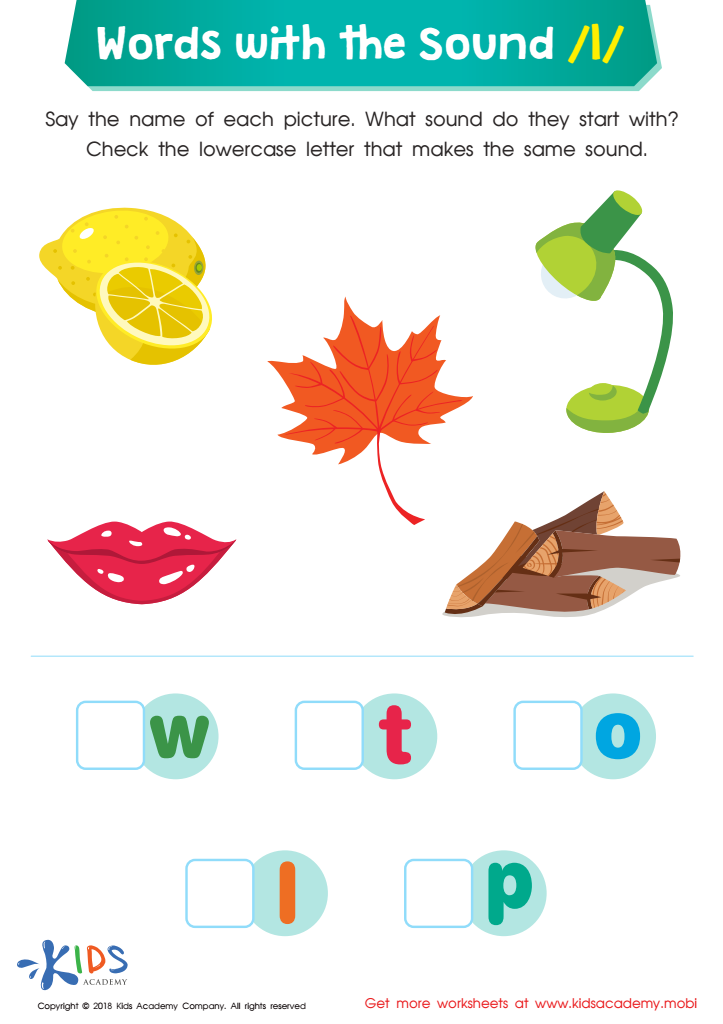
Words with Sound L Reading Worksheet
 Assign to My Students

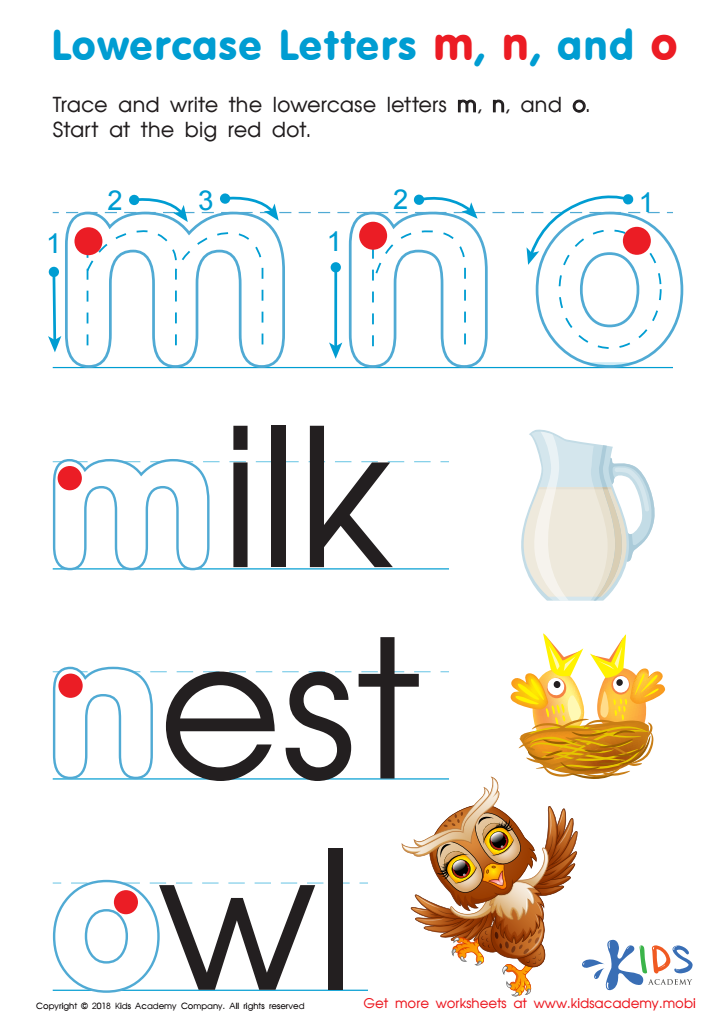
Lowercase Letters m n o Worksheet
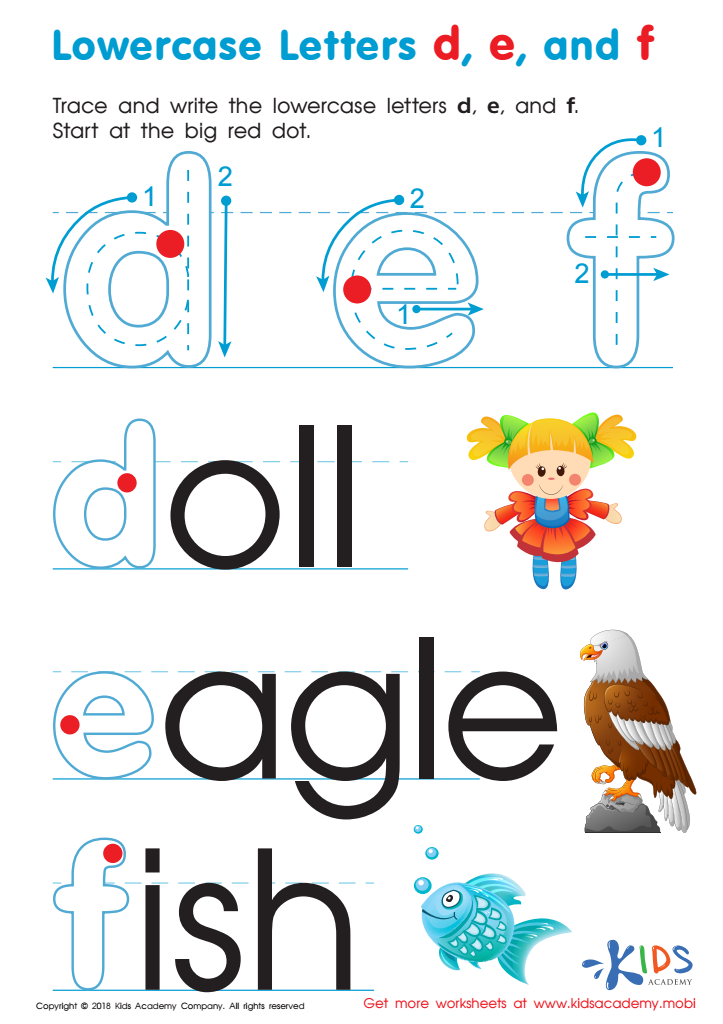
Lowercase Letters d e f Worksheet






Understanding letter-sound associations for uppercase and lowercase letters is crucial for children aged 5-7, as it lays the foundation for effective reading and writing skills. At this stage, children are developing their phonemic awareness, which is the ability to recognize and manipulate sounds in words. Familiarity with letter sounds aids in decoding, allowing children to read new words independently and with confidence.
Parents and teachers should recognize that this skill directly impacts literacy development. When children learn to associate letters with their corresponding sounds, they become capable of blending sounds together to form words. This reinforces their spelling abilities, making writing more intuitive and enjoyable. Moreover, recognizing both uppercase and lowercase letters helps children understand the nuances of language, as these forms are used differently throughout texts.
Additionally, mastering letter-sound associations enhances vocabulary acquisition. As children engage with various texts, they encounter new words, and those who can decode are more likely to explore and understand them. Early support in this area fosters a lifelong love for reading and writing, which is crucial for academic success. By prioritizing these skills, parents and teachers equip children with essential tools that will benefit them throughout their schooling and beyond.







