Letter Tracing Practice Upper & Lowercase Letters Worksheets for Ages 5-7
3 filtered results
-
From - To
Discover engaging Letter Tracing Practice worksheets designed for children ages 5-7, perfect for mastering both uppercase and lowercase letters. These printable resources support essential early literacy skills while promoting fine motor development through interactive writing exercises. Each worksheet combines fun visuals with clear, traceable letters to encourage kids' independent practice and confidence in their handwriting abilities. Tailored to make learning enjoyable, these worksheets are excellent for classrooms or at-home learning. Help your child build a strong foundation in reading and writing with our comprehensive letter tracing sheets. Start their journey to proficient letter recognition and formation today!
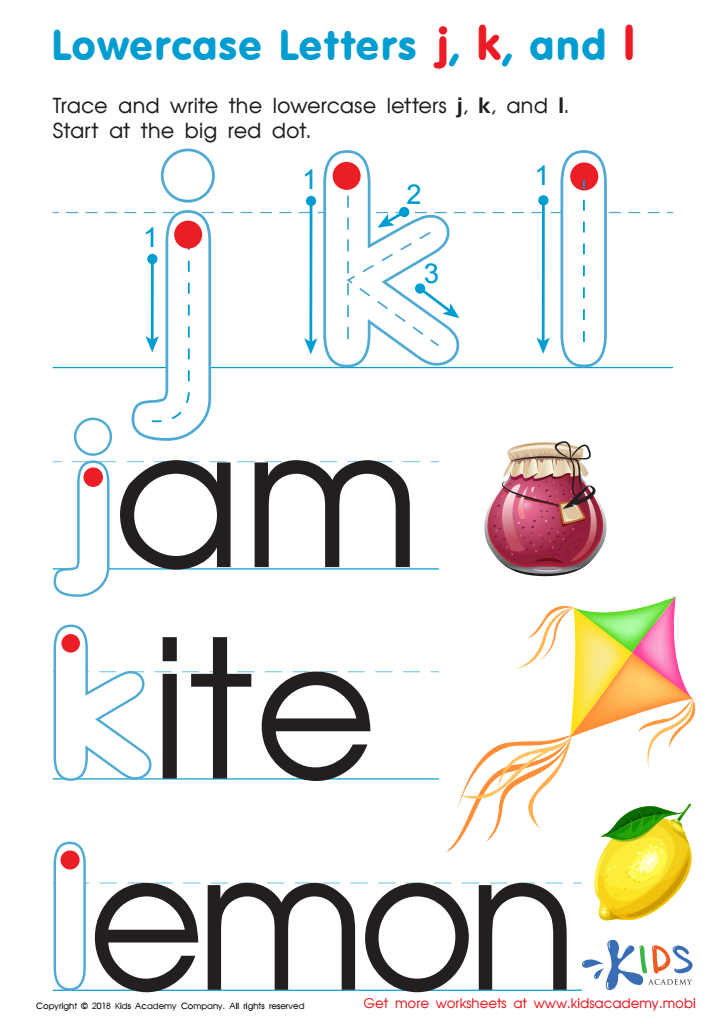
Lowercase Letters j k l Worksheet
 Assign to My Students










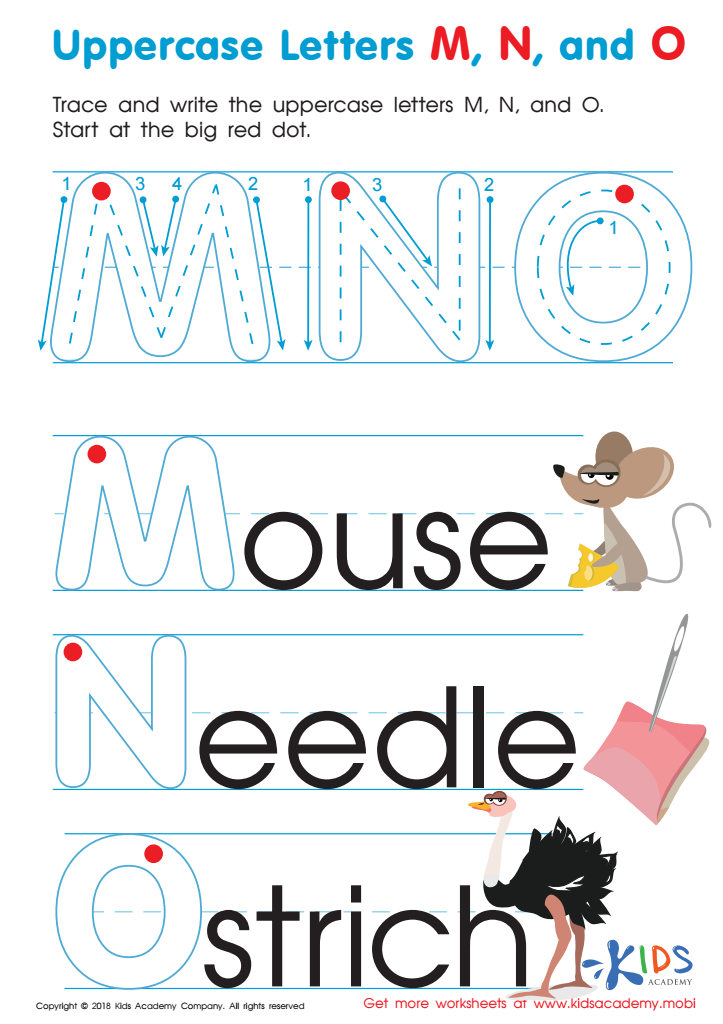
Uppercase Letters M, N, and O Worksheet
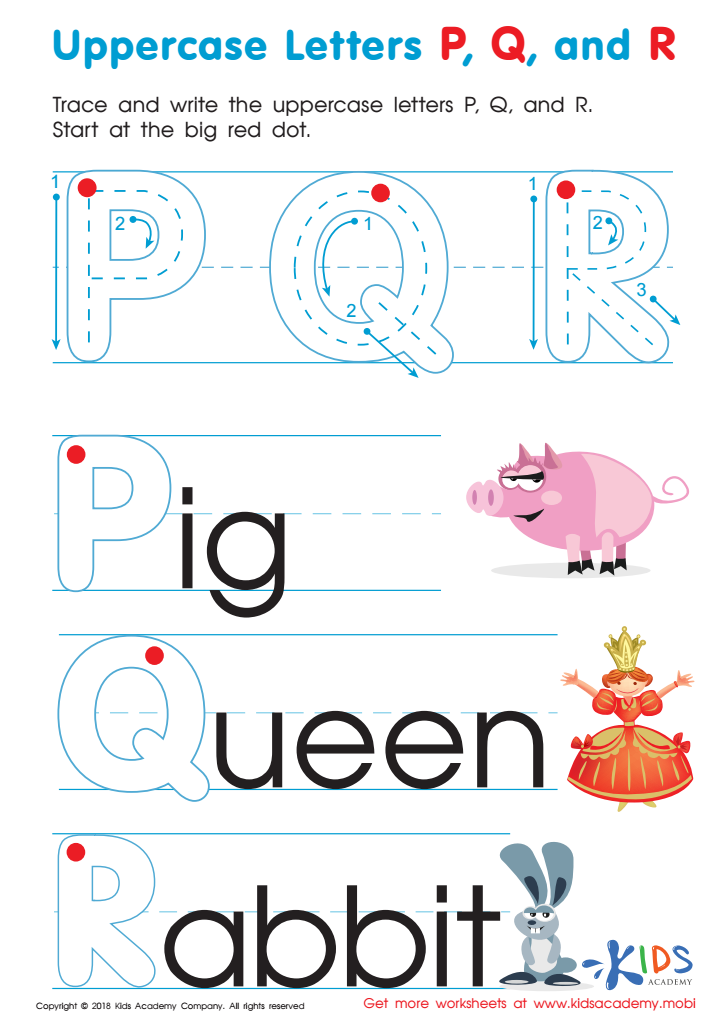
Uppercase Letters P, Q, and R Worksheet






Letter tracing practice is vital for children aged 5-7 as it lays the foundation for their literacy skills and overall cognitive development. During this crucial developmental phase, children are honing their motor skills, hand-eye coordination, and pencil grip, all of which are essential for writing. Tracing letters helps children understand the shapes and structures of both uppercase and lowercase letters, fostering familiarity with the alphabet.
This practice also enhances phonemic awareness, allowing children to connect sounds with their corresponding letters, which is essential for reading development. By reinforcing these skills through repetitive tracing, children gain confidence in their writing abilities, encouraging them to express their thoughts in writing as they progress.
Moreover, tracing activities can be fun and engaging, allowing parents and teachers to incorporate creativity. Using colorful worksheets or interactive apps can turn a mundane task into an enjoyable experience, promoting a positive attitude toward learning.
Ultimately, prioritizing letter tracing style reinforces essential skills that contribute to a child's success in reading and writing, paving the way for academic achievement. Engaged parents and teachers can foster a love for literacy, ensuring that children develop not only basic skills but also a lifelong appreciation for learning.







