Lowercase letter writing Upper & Lowercase Letters Worksheets for Ages 5-7
3 filtered results
-
From - To
Boost your child's writing skills with our engaging Upper & Lowercase Letters Worksheets designed for ages 5-7! These comprehensive worksheets focus on lowercase letter writing, helping young learners master essential penmanship techniques. Each activity includes fun exercises that encourage sound recognition, letter formation, and creativity. With colorful illustrations and interactive tasks, children will enjoy practicing their handwriting while developing their fine motor skills. Perfect for both home and classroom use, our worksheets provide an effective way to reinforce classroom learning and boost confidence in writing. Download now and make learning letters an enjoyable experience for your little ones!
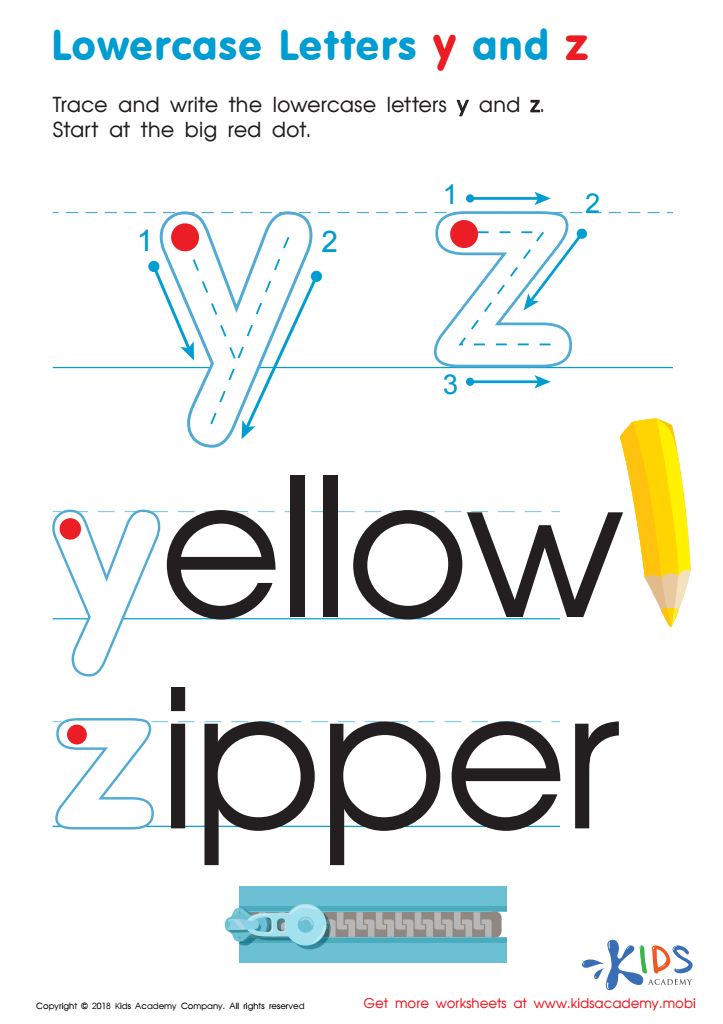
Lowercase Letters y z Worksheet
 Assign to My Students


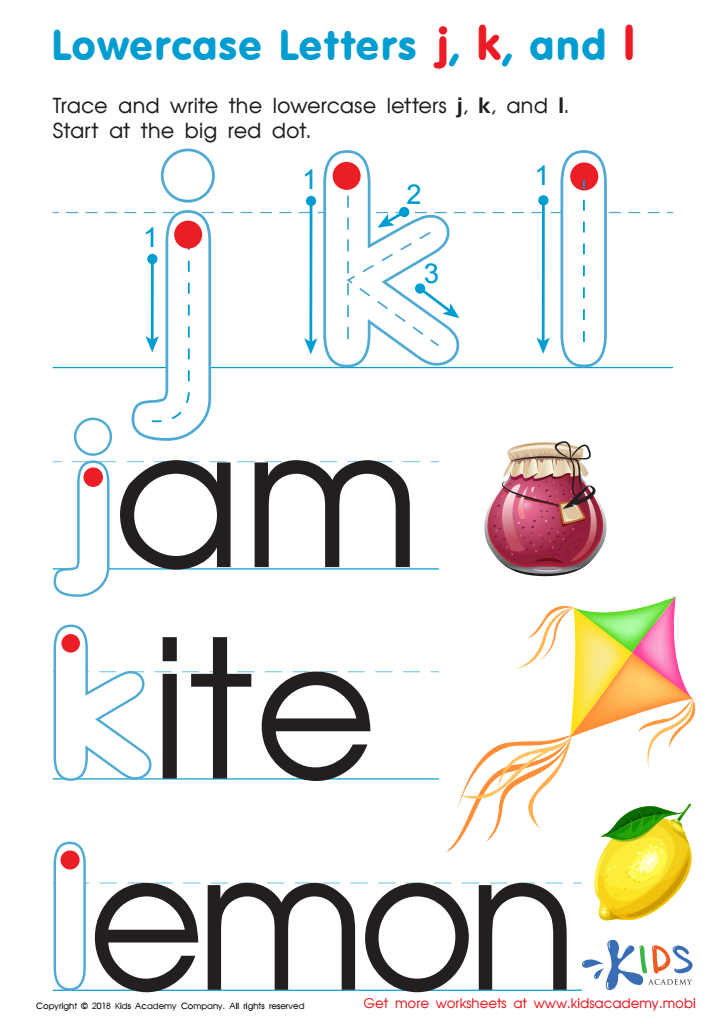
Lowercase Letters j k l Worksheet
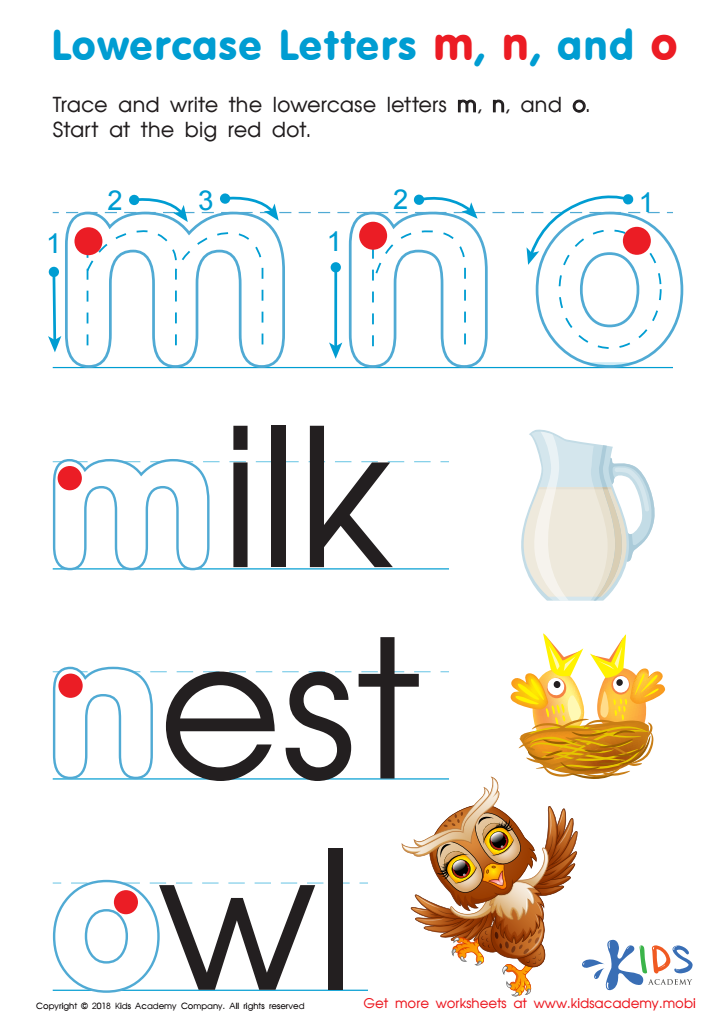
Lowercase Letters m n o Worksheet






Teaching children the difference between lowercase and uppercase letters is essential for their literacy development and overall communication skills. For children ages 5-7, mastering these concepts is crucial as they lay the foundation for reading and writing.
Uppercase letters signify the beginning of sentences and proper nouns, guiding young readers as they decode texts. Without understanding this distinction, children may struggle with comprehension and may not follow narrative structures effectively. Lowercase letters, on the other hand, comprise the bulk of text in books and everyday writing. Recognizing and writing these letters enables children to read fluently and express their thoughts more freely.
Additionally, developing handwriting skills for both uppercase and lowercase letters helps improve fine motor skills, coordination, and cognitive development. Practicing these forms cultivates confidence and enhances a child’s ability to communicate clearly in writing.
When teachers and parents prioritize lowercase and uppercase letter writing, they encourage literacy and communication proficiency, setting children on a path to success in their academic journey. Nurturing these skills at an early age fosters a love for reading and writing, setting lifelong habits that are vital in our increasingly text-heavy world.







