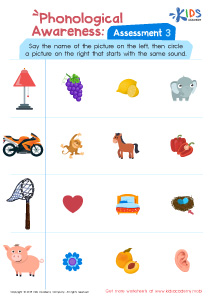
Hand-eye Coordination Vowels Worksheets for Ages 5-7
4 filtered results
-
From - To
Enhance your child's learning experience with our "Hand-eye Coordination Vowels Worksheets" designed for ages 5-7. These engaging worksheets seamlessly combine vowel recognition and hand-eye coordination practice, making learning both fun and effective. Each activity focuses on essential skills, encouraging children to trace, color, and match vowels while developing fine motor abilities. Ideal for early learners, these worksheets promote critical thinking and reinforce vowel sounds in an interactive manner. Perfect for classrooms and homes, our resources ensure children build confidence and proficiency in their foundational literacy skills. Explore our vibrant and educational worksheets today to support your child's journey to literacy!
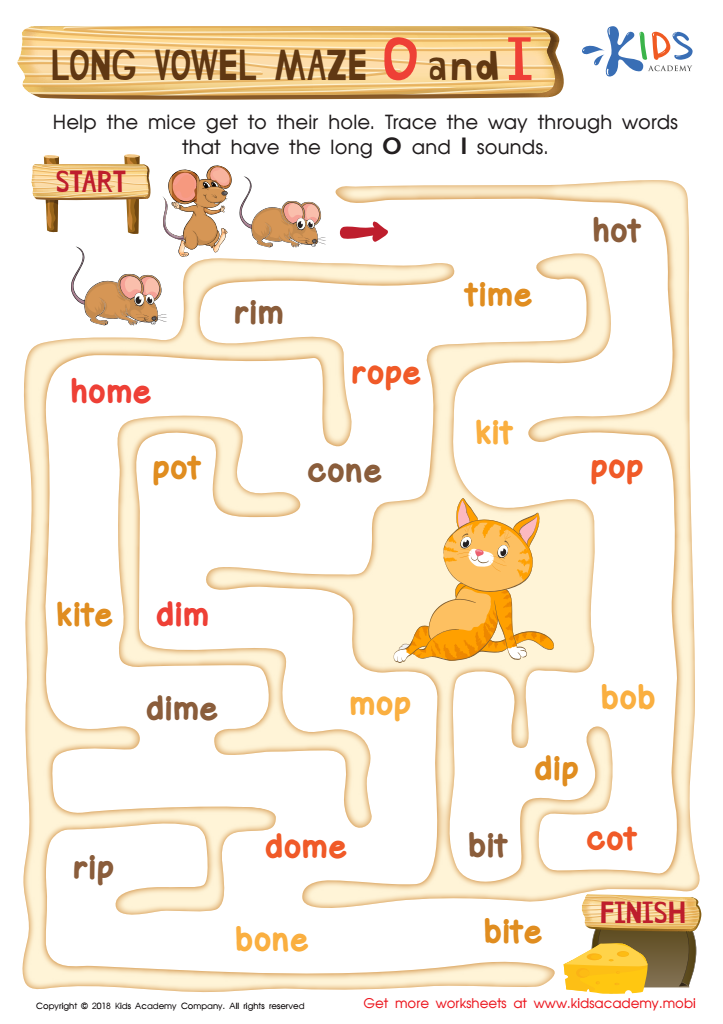
Long Vowel Maze /o/ and /i/ Worksheet
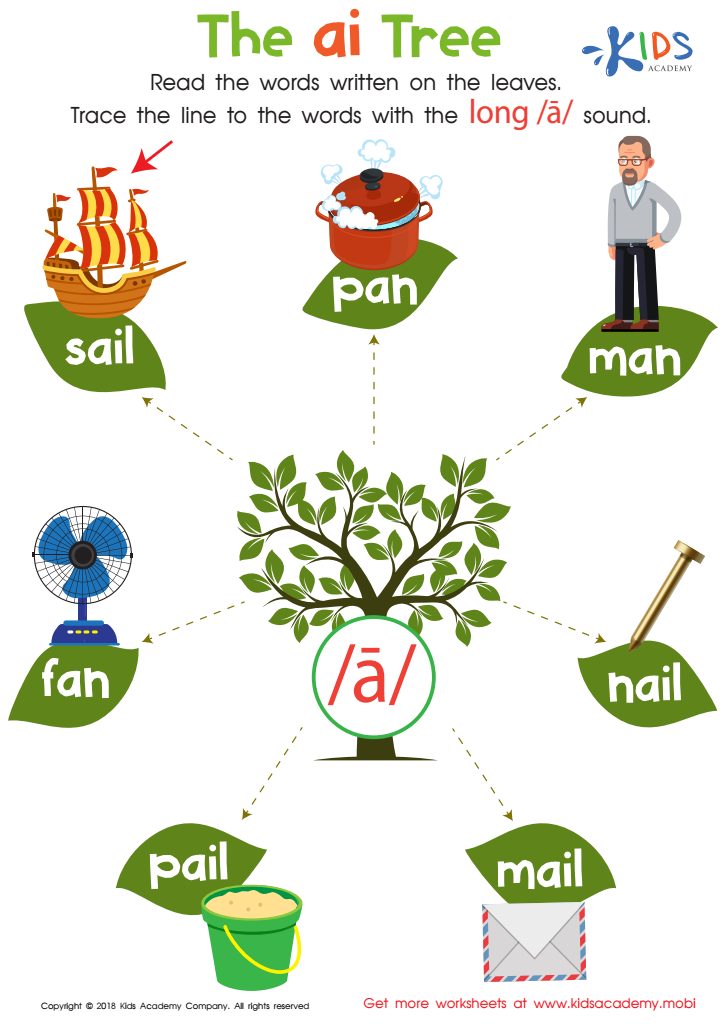
The AI Tree Worksheet

Long and Short U Worksheet
 Assign to My Students

Long and Short E Worksheet
Assign to My Students





Hand-eye coordination is crucial for young children as it directly impacts their ability to perform everyday tasks and engage with educational activities. For children ages 5-7, optimal hand-eye coordination aids in developing fine motor skills, which are essential for tasks such as writing, drawing, and using scissors. As they transition into more structured learning environments, these skills become vital for their academic success.
In addition, focusing on hand-eye coordination can enhance children's overall cognitive development. Activities that require coordination, such as catching a ball or playing memory games, stimulate brain function, promoting better focus and concentration. This is particularly important during early education, as children begin to learn foundational skills in literacy and numeracy.
Furthermore, incorporating hand-eye coordination exercises into learning can make education more engaging and dynamic. Creative approaches, like using manipulated objects to learn vowel sounds, can foster a captivating learning environment. Thus, by supporting the development of hand-eye coordination, parents and teachers help children improve their physical skills while simultaneously boosting their confidence and readiness for academic challenges. Ultimately, prioritizing this area of development is essential in fostering well-rounded, capable learners.