Sound Association Vowels Worksheets for Ages 5-7
3 filtered results
-
From - To
Discover our engaging Sound Association Vowels Worksheets, designed specifically for children aged 5-7! These interactive worksheets will help young learners connect sounds to the corresponding vowels, reinforcing their phonetic skills in a fun and effective way. Each worksheet is carefully crafted to promote auditory discrimination, essential for early reading and writing development. Activities include tracing, matching, and identifying vowel sounds in various words, making learning both enjoyable and educational. Perfect for teachers and parents wanting to enhance literacy skills at home or in the classroom. Unlock your child's potential today with our vibrant, easy-to-use vowel sound association activities!
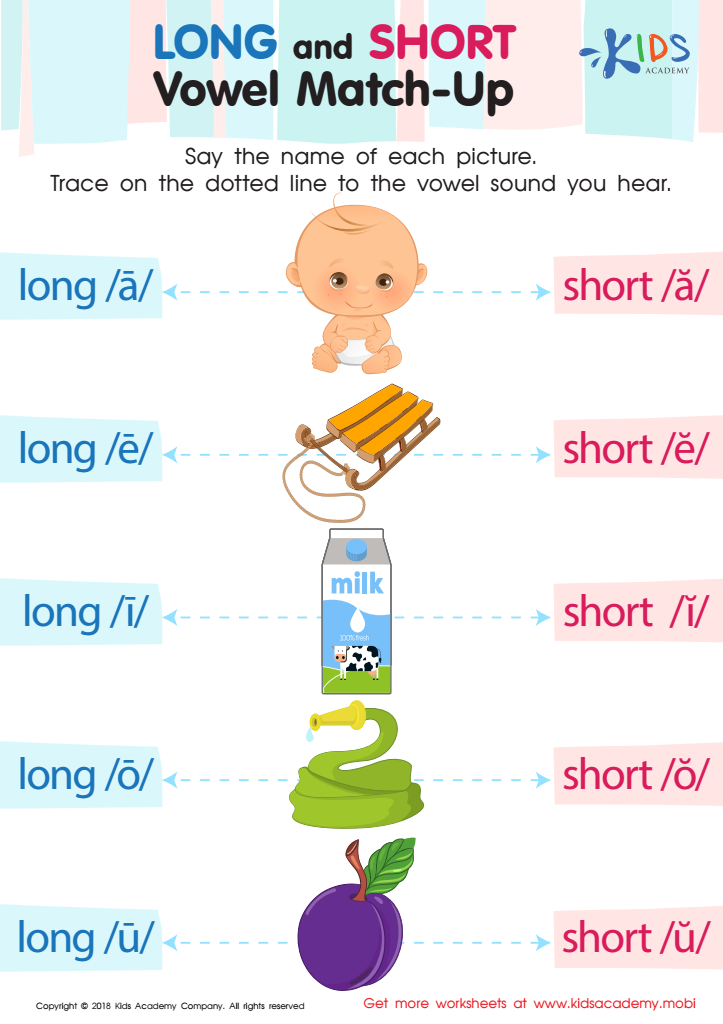
Long and Short Vowel Match up Reading Worksheet
 Assign to My Students
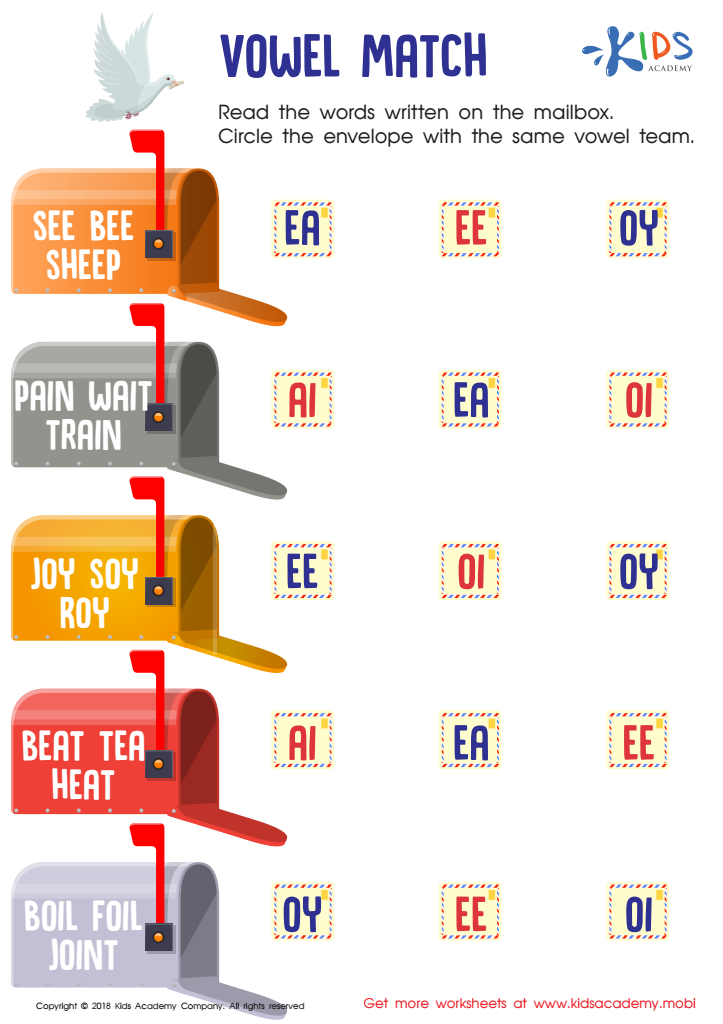
Vowel match Worksheet
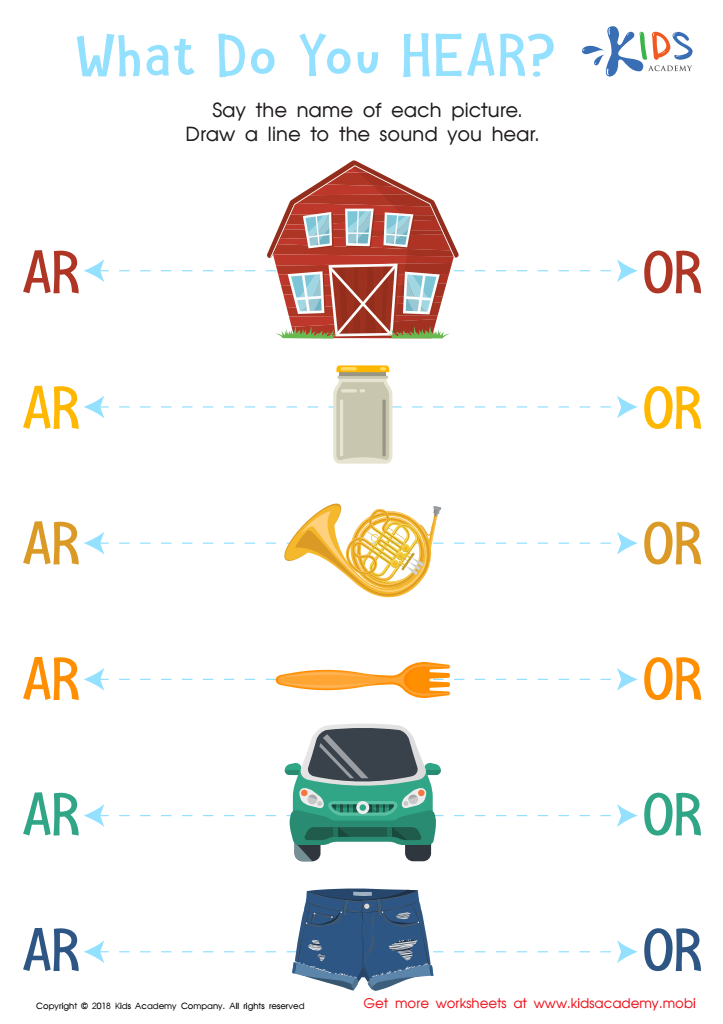
What do you hear Worksheet





Parents and teachers should prioritize Sound Association Vowels for children ages 5-7 as it plays a crucial foundational role in literacy development. At this age, children are in critical stages of phonemic awareness, where they learn to identify and manipulate sounds in spoken words. Engaging with sound association supports their ability to connect letters to the sounds they represent, facilitating more effective reading and spelling skills.
Fostering an understanding of vowel sounds enhances children’s reading fluency and comprehension. When children can skillfully recognize vowel sounds, they are better equipped to decode unfamiliar words. This skill aids in building vocabulary, which contributes to their overall language development.
Additionally, thorough familiarity with vowel sounds encourages more vibrant participation in classroom activities and discussions, enhancing speaking and listening skills. It empowers young learners to explore language creatively through rhyme and song, making learning enjoyable and impactful.
Moreover, early mastery of sound association is linked to long-term academic success. By reinforcing these skills through engaging activities, stories, and games, parents and teachers together can create a comprehensive and supportive learning environment, laying the groundwork for a lifelong love of reading and learning. Ultimately, nurturing sound association is essential for your child’s confidence and engagement in their educational journey.







