Problem-solving abilities Chess Worksheets for Ages 5-7
3 filtered results
-
From - To
Enhance your child's strategic thinking with our Problem-Solving Abilities Chess Worksheets, designed for ages 5-7. These engaging and educational worksheets introduce young learners to the fundamentals of chess, helping develop their problem-solving skills. Through fun, age-appropriate activities, kids will learn how to anticipate moves, make strategic decisions, and overcome challenges. Our carefully crafted worksheets aim to nurture critical thinking, creativity, and patience—key skills essential for personal and academic success. Ideal for beginners, these worksheets support both individual learning and guided instruction. Spark your child’s love for chess and boost their cognitive development today!
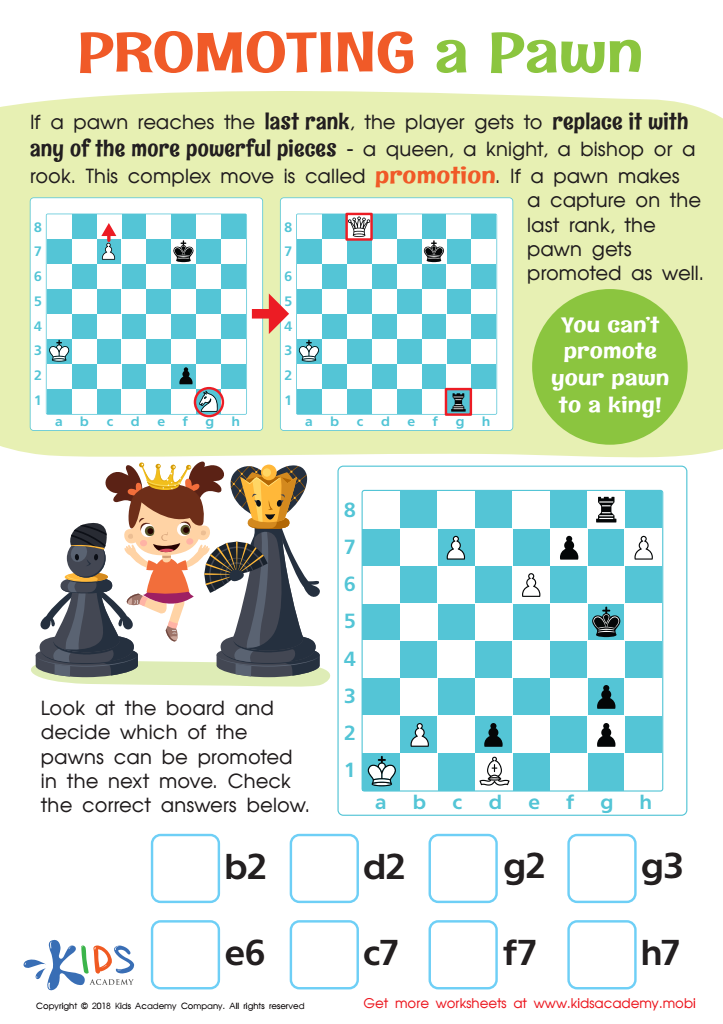
Promoting a Pawn Worksheet
 Assign to My Students
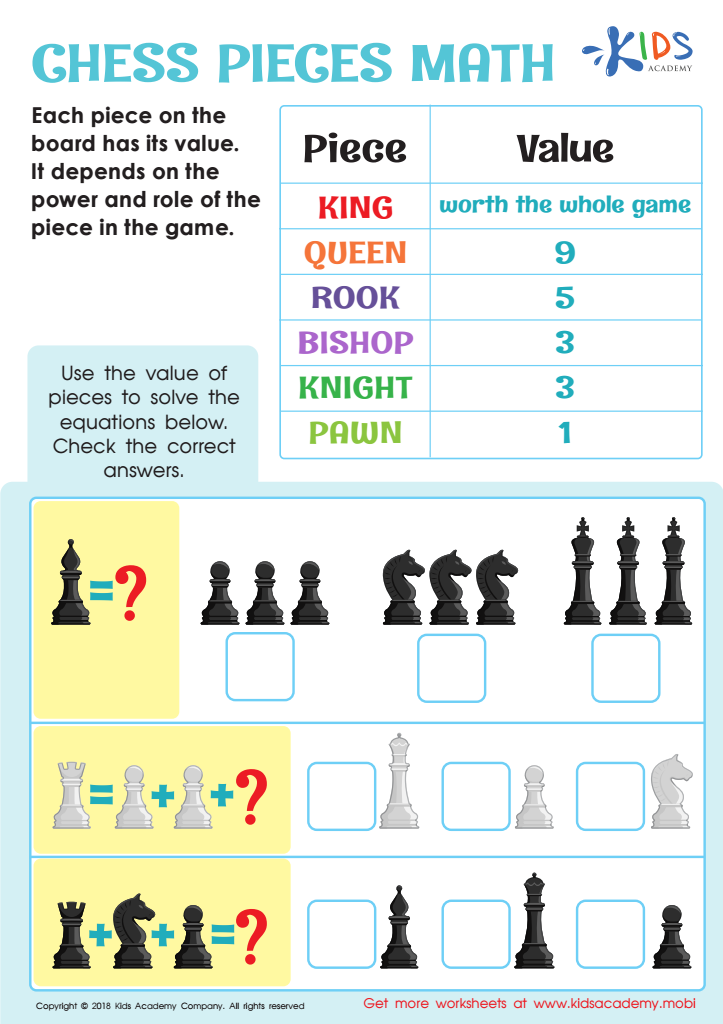
Chess Pieces Math Worksheet
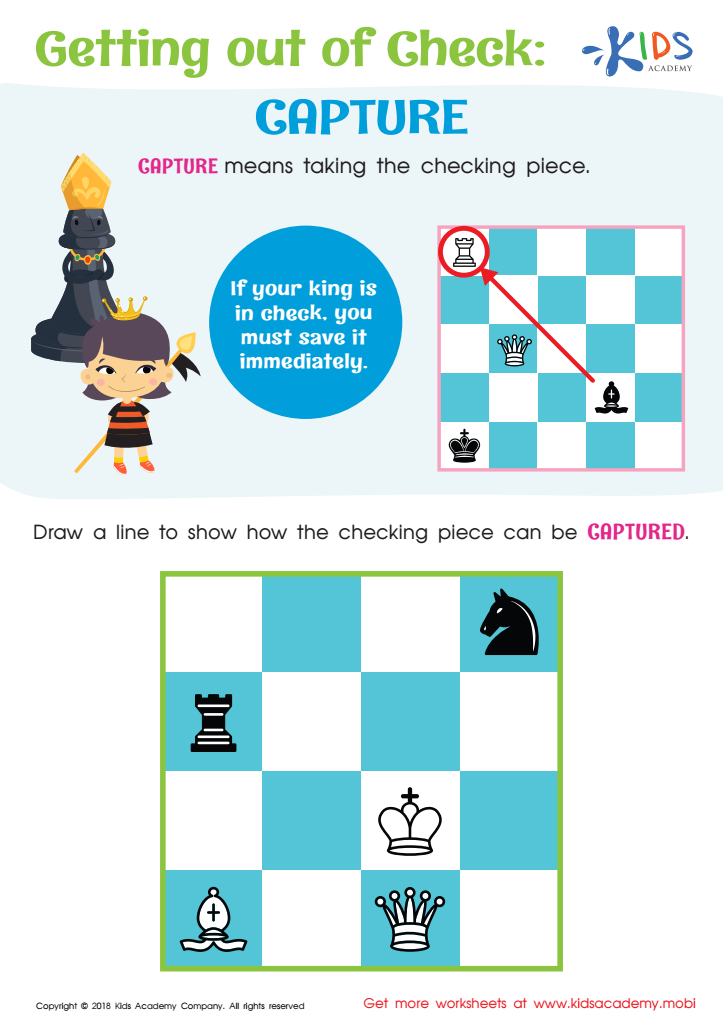
Getting out of Check: Capture








Parents and teachers should care about problem-solving abilities in chess for ages 5-7 because it significantly contributes to early cognitive development and enhances critical thinking skills. At this developmental stage, children are highly receptive to new methods of learning, and chess acts not just as a game but as a stimulating educational tool. Chess teaches young learners to think ahead, consider the consequences of their actions, and develop strategic planning.
Moreover, chess encourages patience and focus, fostering concentration that helps kids succeed academically. The game requires observing patterns, calculating multiple possibilities, and thinking strategically – all of which build essential problem-solving skills. Additionally, chess boosts memory and improves spatial-reasoning abilities which are beneficial across various subjects such as math and science.
Chess provides emotional benefits as well, teaching resilience and emotional control. Children learn to win graciously and accept losses as learning opportunities. This emotional maturity is pivotal in coping with different life challenges.
Importantly, engaging in chess during early years can instill a love for learning and a curiosity to explore complex thinking, setting a foundation for lifelong critical thinking skills. By nurturing these abilities at an early age, parents and teachers can help children develop a well-rounded cognitive toolkit that will benefit them in all areas of life.