Problem-solving practice Chess Worksheets for Ages 5-7
3 filtered results
-
From - To
Unlock your child's potential with our Problem-Solving Practice Chess Worksheets designed specifically for ages 5-7! These engaging, printable activities help young learners cultivate critical thinking and reasoning skills while enjoying the fascinating game of chess. Our worksheets foster analytical abilities and boost cognitive development through fun, interactive exercises that teach essential chess strategies. Parents and educators can easily incorporate these resources into their teaching routines to enhance learning outcomes. Watch as your child becomes a little chess master while sharpening their problem-solving skills in an enjoyable way. Start their chess journey today with our specially curated worksheets!
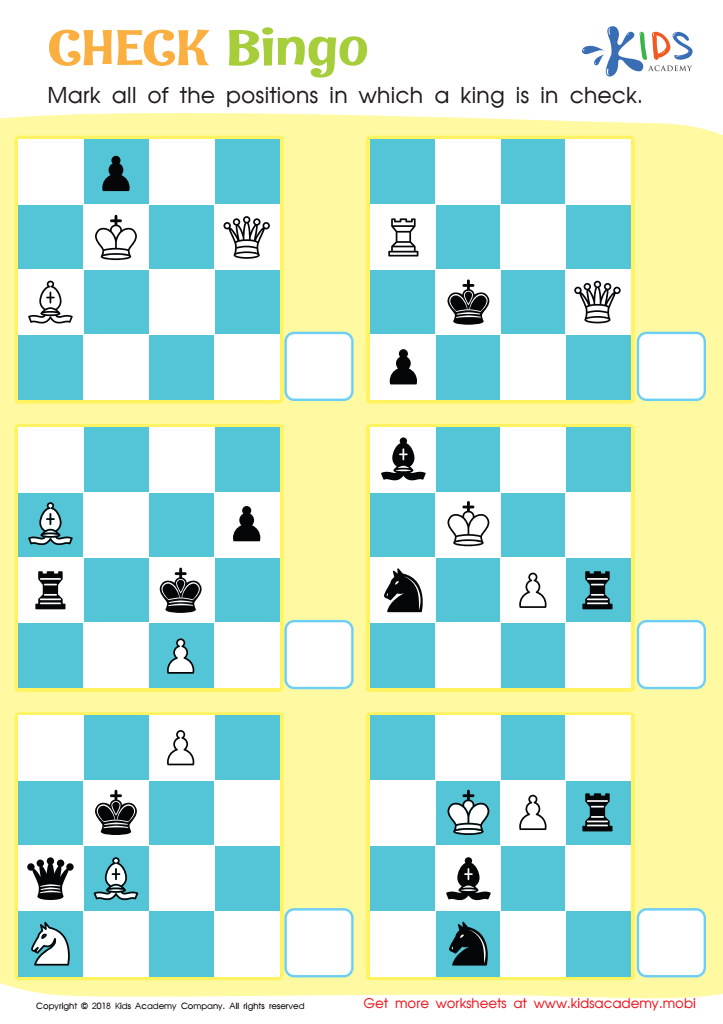
Check Bingo Worksheet
 Assign to My Students
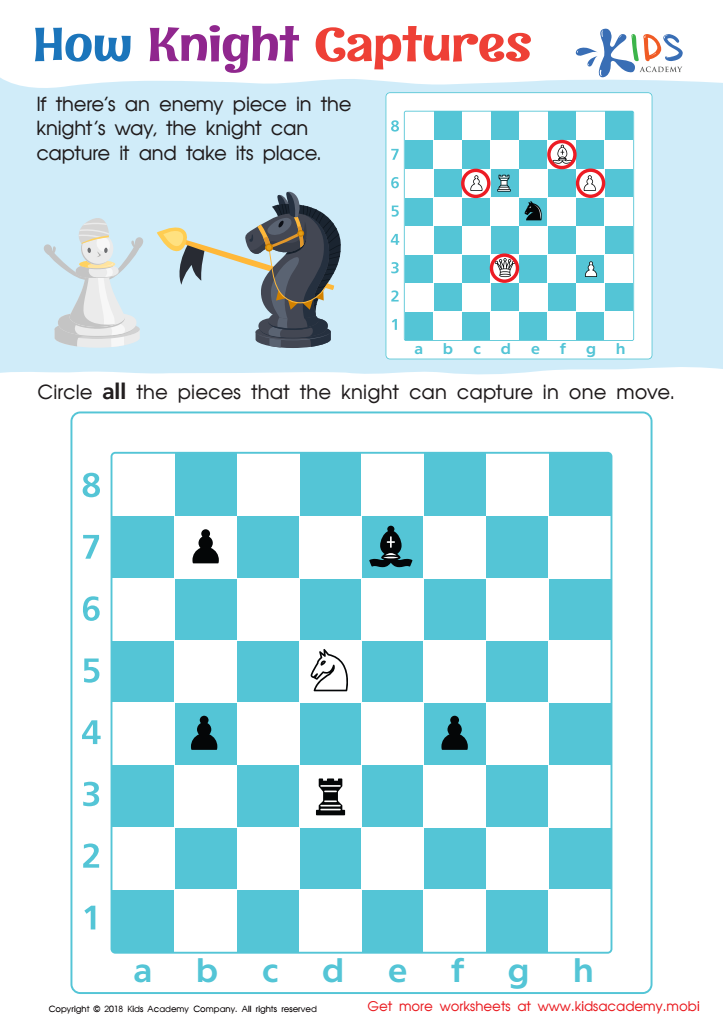
How Knight Captures Worksheet
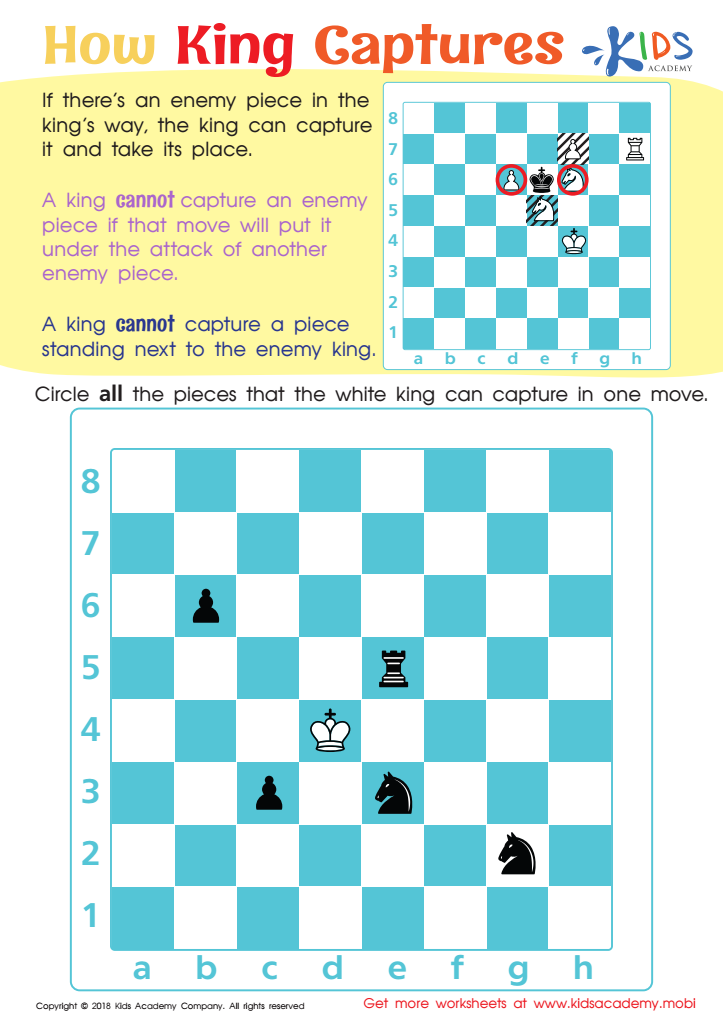
How King Captures Worksheet








Problem-solving practice through chess for children aged 5-7 offers numerous developmental benefits that parents and teachers should prioritize. At this stage, young minds are rapidly growing and learning to recognize patterns, strategize, and think critically. Chess, a game that involves complex decision-making, helps cultivate these skills in a fun and engaging way.
By learning to make moves and anticipate their opponent's strategies, children enhance their cognitive abilities, such as logical reasoning and analytical thinking. These skills not only apply to chess but also to problem-solving in other academic areas, such as math and reading.
Moreover, chess teaches valuable life skills, like patience and perseverance. It helps children understand the importance of planning ahead and reflecting on outcomes, which builds resilience. More than just a game, chess can foster social skills such as teamwork and sportsmanship as children naturally engage with peers during play.
Additionally, introducing chess at a young age aligns with promoting critical thinking and creativity, essential components of modern education. Thus, by incorporating chess into learning, parents and teachers can provide a well-rounded approach to education that empowers young learners and enhances their love for learning.