Spatial awareness Chess Worksheets for Ages 5-7
3 filtered results
-
From - To
Introduce your child to the strategic world of chess with our Spatial Awareness Chess Worksheets for Ages 5-7. Designed by educational experts, these engaging and fun worksheets enhance young learners' spatial recognition and critical thinking skills. Perfect for young beginners, each worksheet combines chess fundamentals with interactive exercises that simplify complex concepts. Foster a love for problem-solving and cognitive development while they enjoy a captivating introductory journey into chess. Our dynamically designed printables are ideal for classroom use or at-home practice, ensuring students build a solid foundation in spatial awareness while having fun. Unlock their potential today!
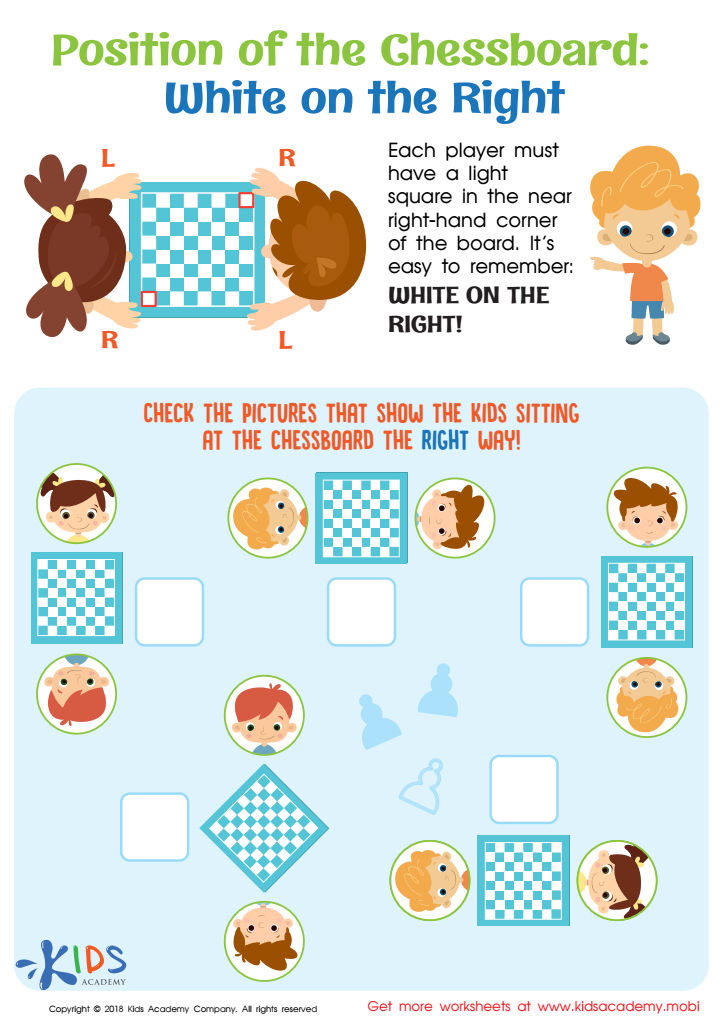
Position of the Chessboard: White on the Right Worksheet
 Assign to My Students
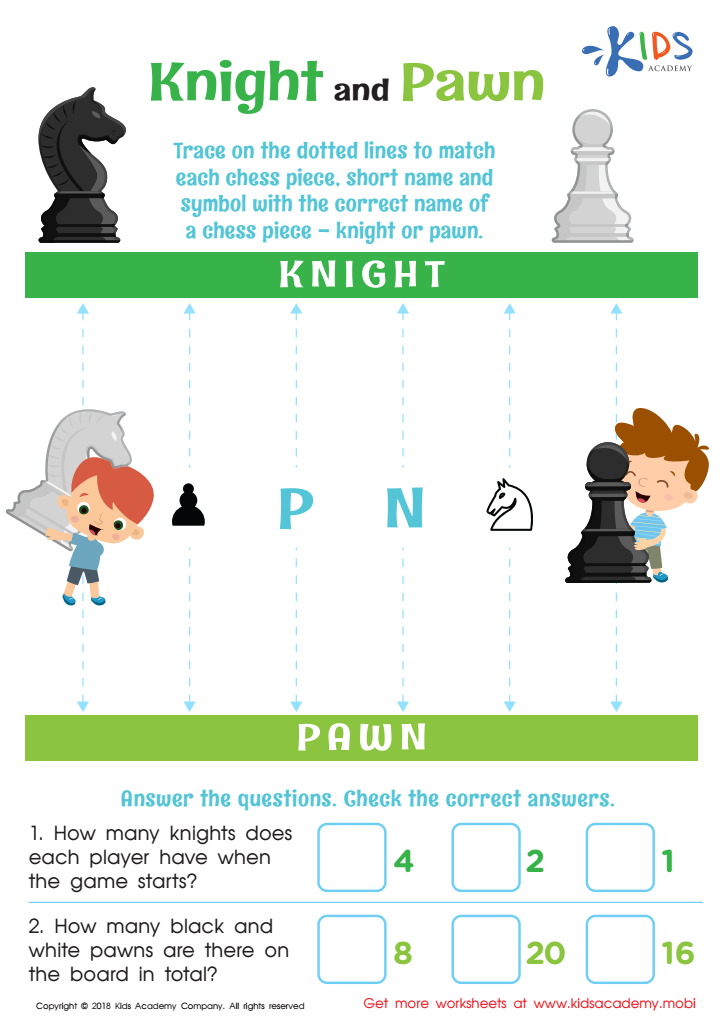
Knight and Pawn Worksheet
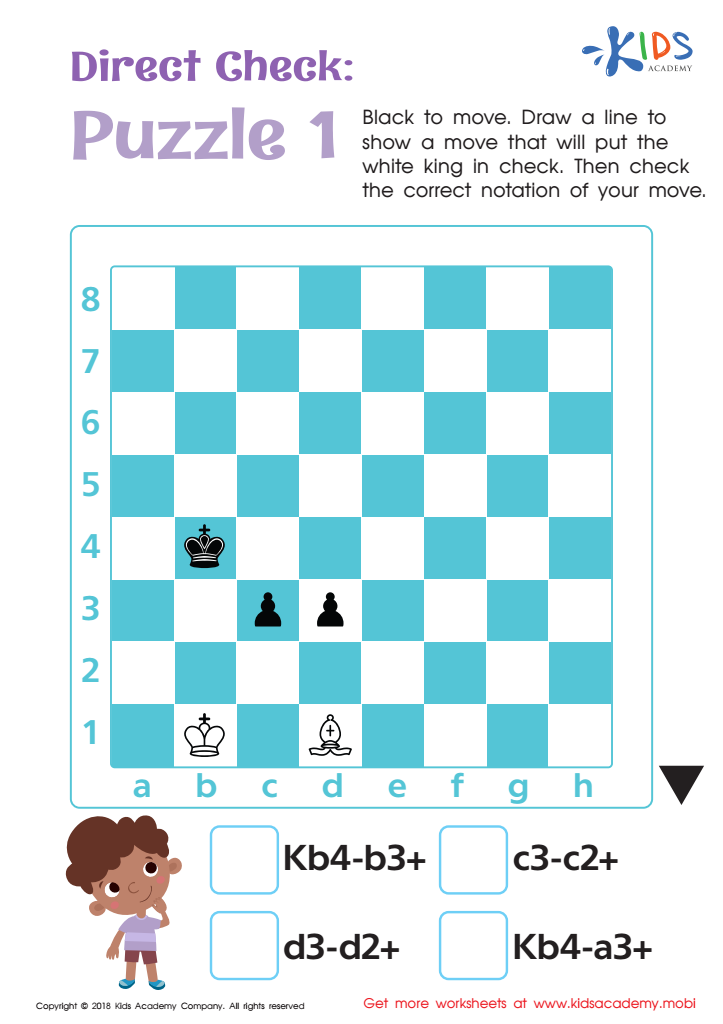
Direct Check: Puzzle 1 Worksheet




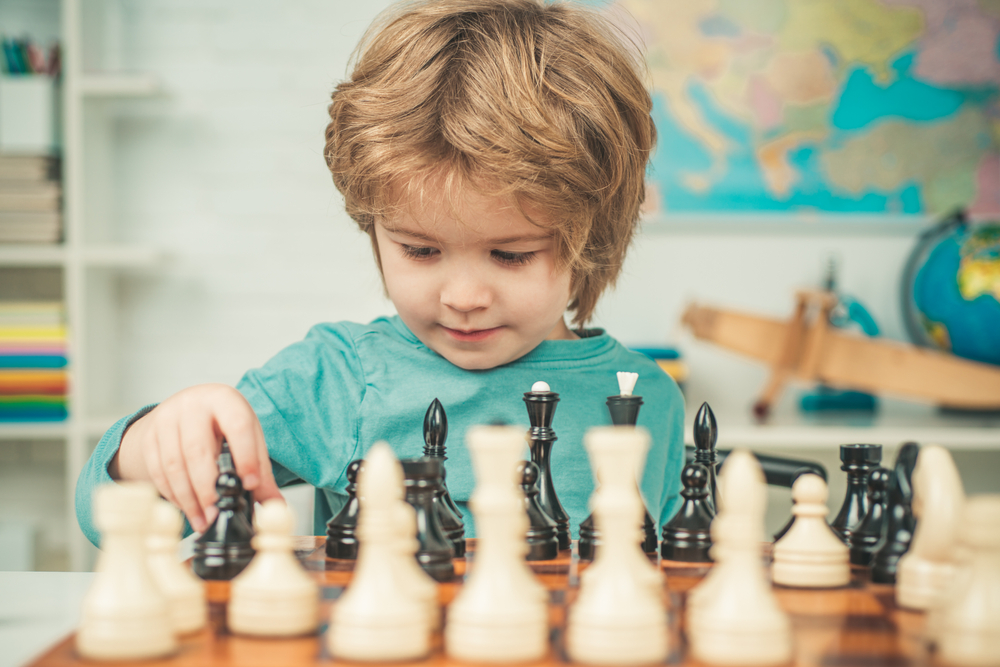

Spatial awareness—in understanding how objects and oneself are situated in space—is a critical skill that significantly affects a child's cognitive and psychomotor development. Chess, even at ages 5-7, serves as an excellent tool for nurturing this skill.
When children engage in chess, they consistently evaluate positions and movements of the pieces relative to each other on the board. This actively enhances their ability to visualize spatial relationships, a fundamental aspect of spatial awareness. Such skills are transferable to everyday tasks, from navigating physical spaces safely to organizing objects logically.
For parents and teachers, promoting early spatial awareness through chess translates to comprehensive developmental benefits. Children improve their problem-solving abilities by thinking several steps ahead, thus fostering critical thinking. Furthermore, chess compels young learners to adhere to rules, bolstering their self-discipline and focus.
Additionally, studies show that robust spatial skills are predictors of success in STEM (Science, Technology, Engineering, Mathematics) fields. Early exposure through chess can pave the way for stronger skills in mathematics and science, fostering sustained academic achievement.
In sum, integrating chess into the activities of young children helps solidify the cognitive foundation necessary for both school subjects and real-life skills, setting the stage for lifelong learning and curious, disciplined minds.