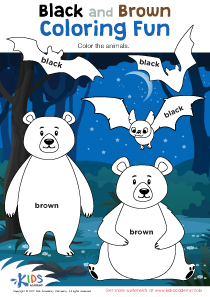
Letter tracing skills English for Beginners Worksheets for Ages 5-7
3 filtered results
-
From - To
Ignite your child's love for writing with our "Letter Tracing Skills: English for Beginners" worksheets, designed for ages 5-7. Perfectly tailored for young learners and English beginners, these engaging activities provide step-by-step tracing guides to help children master the alphabets. Each worksheet features fun and interactive exercises that enhance fine motor skills and letter recognition. Whether your child is starting their writing journey or needs extra practice, these vibrant printables make learning enjoyable and effective. Support your child's development in a structured and creative way with Kids Academy's high-quality resources. Start tracing toward success today!
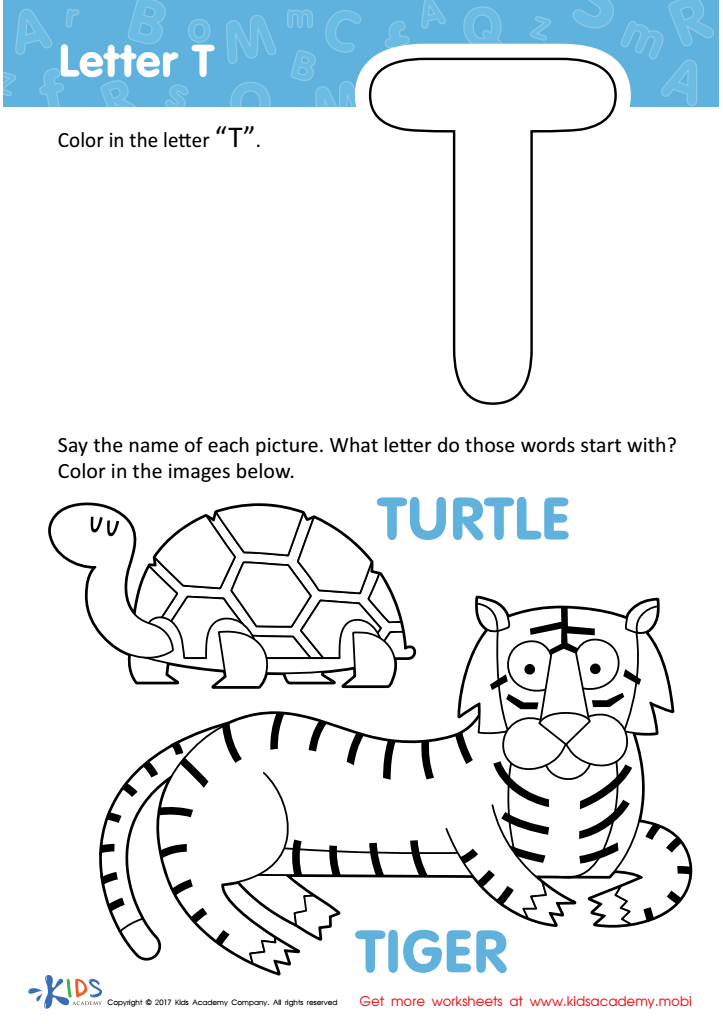
Letter T Coloring Sheet
 Assign to My Students
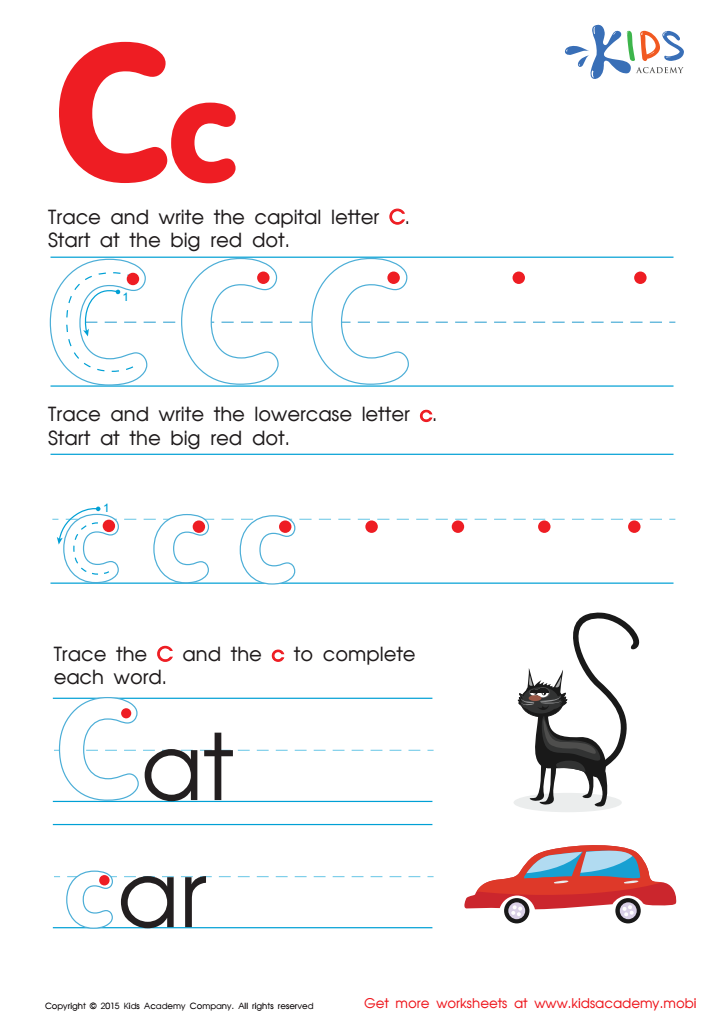
Letter C Tracing Page
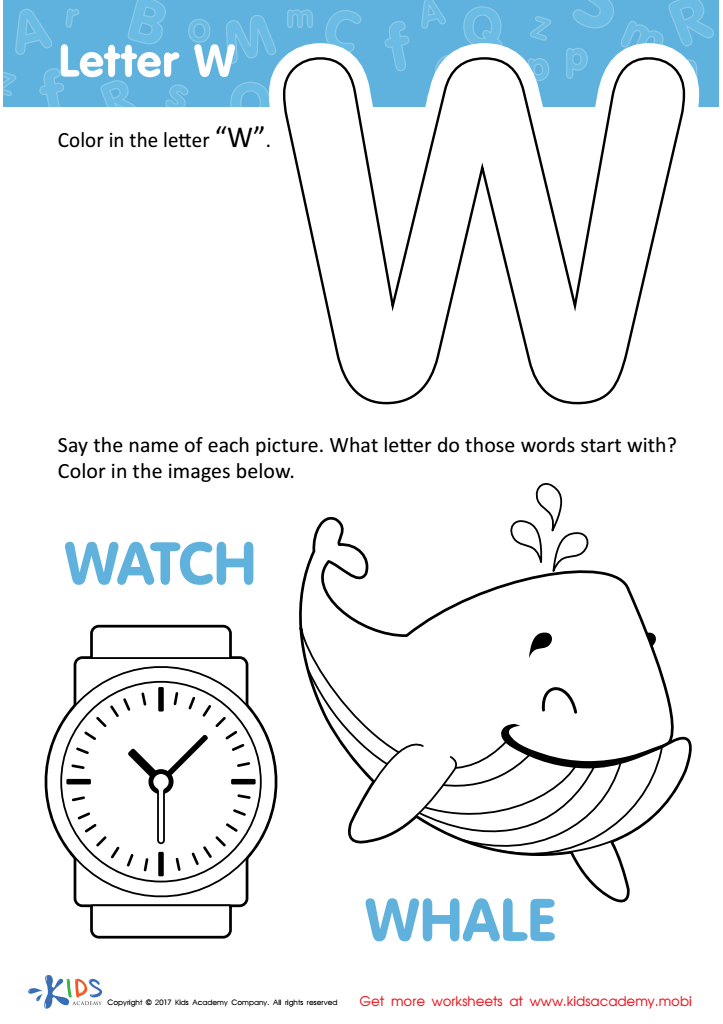
Letter W Coloring Sheet
Assign to My Students





Letter tracing skills are fundamental to the cognitive and academic development of children aged 5-7, shaping their early literacy journey in several vital ways. At this stage, young learners are propelling themselves into the world of reading and writing, and letter tracing stands as a cornerstone in this process, fostering both recognition and formation abilities.
Firstly, letter tracing enhances fine motor skills, crucial for future writing fluency. The repetitive motion strengthens hand muscles, cultivates proper pencil grip, and refines hand-eye coordination, leading to more legible handwriting.
Secondly, it reinforces alphabet familiarity by enabling children to connect each letter's visual shape with its phonetic sound. This dual understanding lays a sturdy foundation for reading skills, aiding in sound-symbol correspondence, which is essential for decoding words.
Furthermore, letter tracing fosters self-confidence and encourages patience and persistence in young learners as they gradually progress from building individual letters to scripting words and sentences. This sense of achievement nurtures a positive attitude towards learning, promoting a lifelong engagement with literacy.
Finally, incorporating playful and interactive elements, like colorful worksheets or digital tracing apps, enhances the learning experience, making it both fun and educational. Therefore, by focusing on letter tracing skills, parents and teachers help pave the path to more advanced literacy proficiency, setting children up for broader academic success.