
Addition up to 5 Worksheets for Ages 5-7
4 filtered results
Difficulty Level
Grade
Age
-
From - To
Subject
Activity
Standards
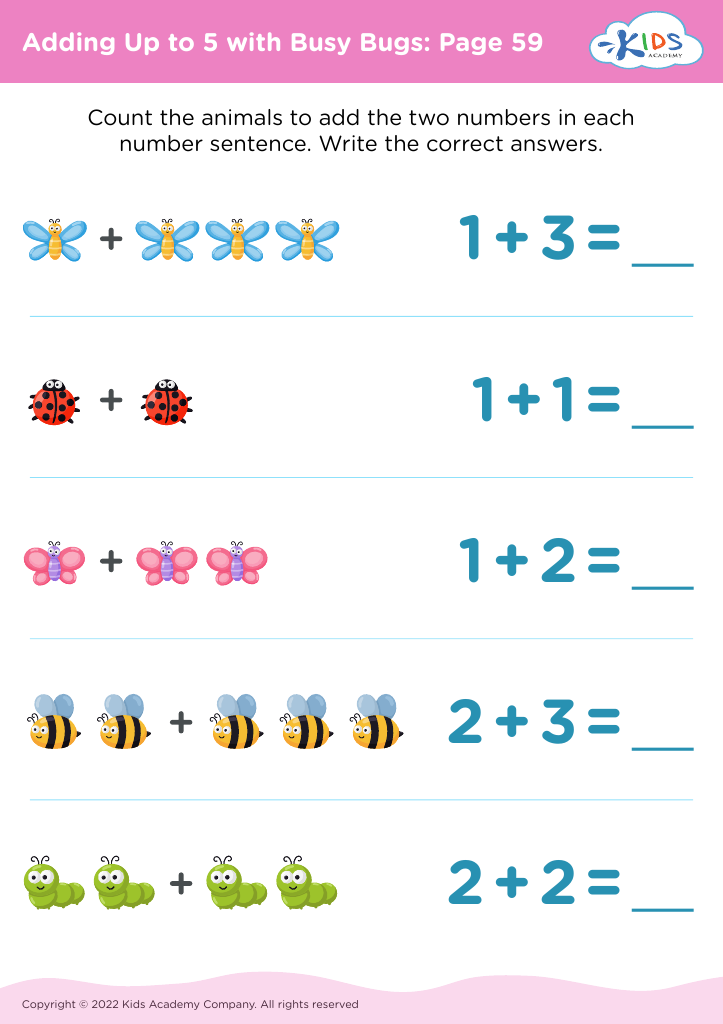
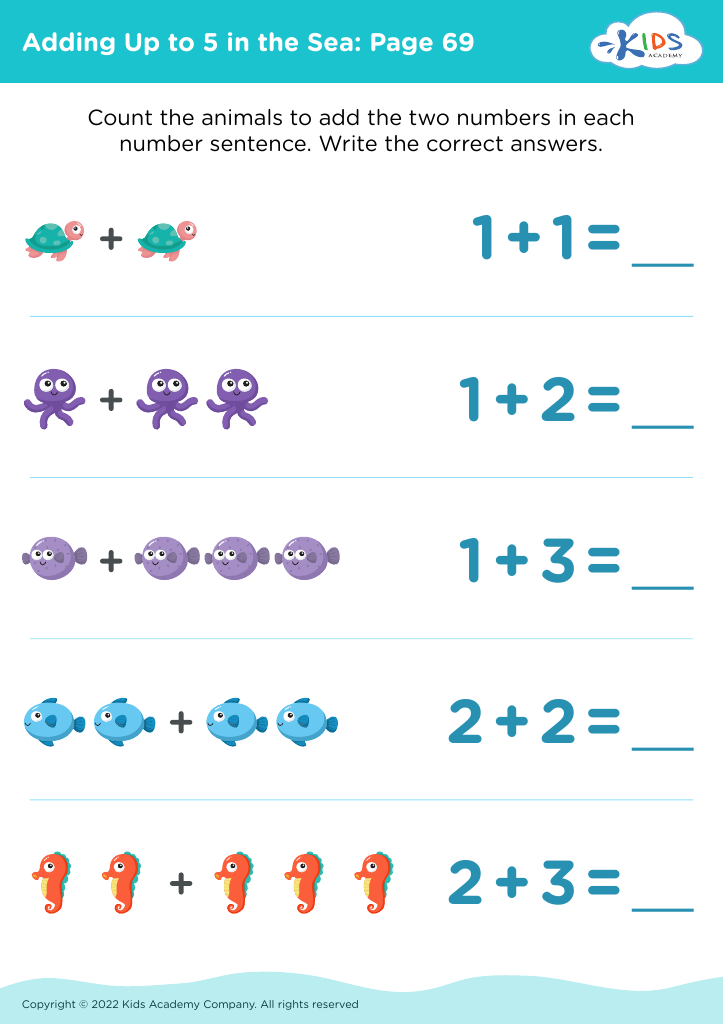
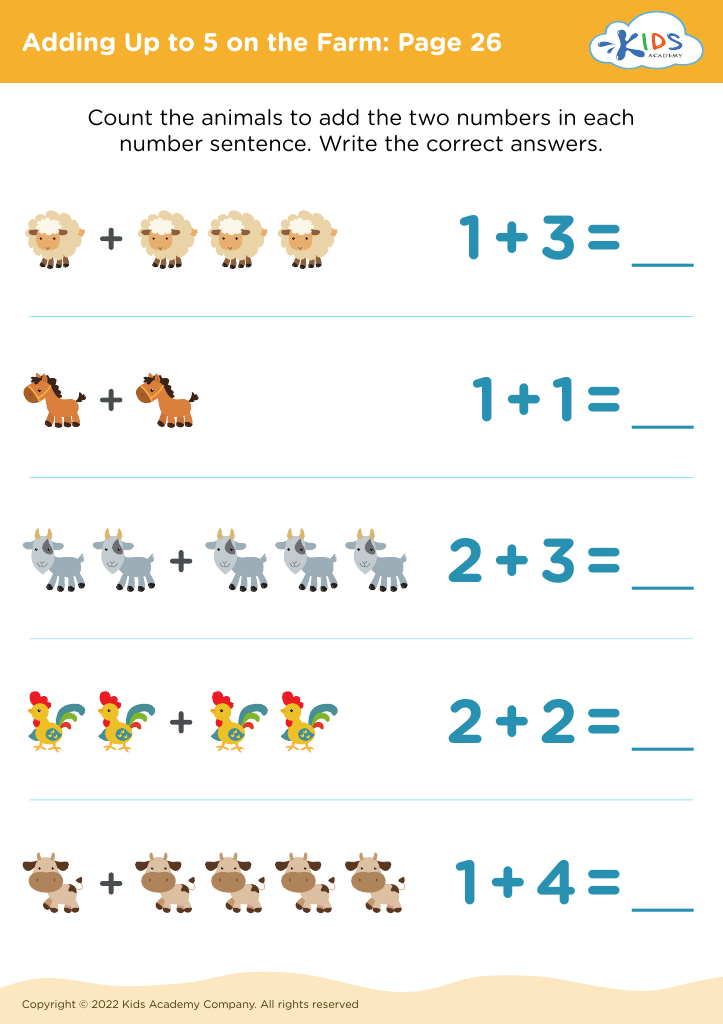
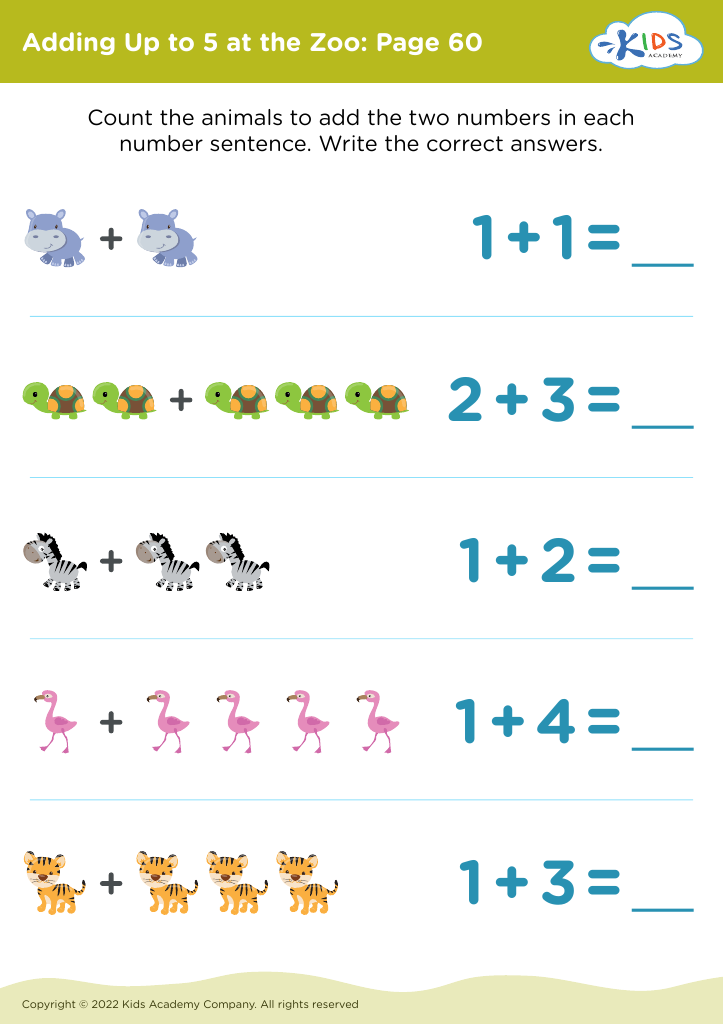
Explore our engaging Addition up to 5 Worksheets designed for children aged 5-7, perfect for early learners! These worksheets provide a fun and interactive way to enhance basic addition skills through colorful illustrations and interesting activities. Each worksheet focuses on adding numbers up to 5, helping young minds develop confidence and fluency in math. Ideal for home or classroom use, they encourage practice and reinforce understanding through varied exercises, including counting objects and solving simple equations. Support your child’s mathematical journey with our thoughtfully crafted resources that make learning enjoyable and effective! Download your free worksheets today!
Favorites
With answer key
Interactive
Join Kids Academy for Free
Who is primarily going to use this learning content?








Parents and teachers should prioritize teaching addition up to 5 for children ages 5-7 for several compelling reasons. First, mastering basic addition lays a foundation for more complex mathematical concepts later in life. At this developmental stage, children are naturally curious and able to grasp fundamental ideas, making it an optimal time to introduce number sense. Understanding addition enhances their confidence in mathematics, allowing kids to approach problem-solving with a positive mindset.
Additionally, learning addition fosters critical cognitive skills such as logical reasoning and pattern recognition. Engaging children in hands-on activities—like counting objects or using visual aids—can make math enjoyable and relatable. Proficiency in addition helps children navigate everyday situations—like sharing toys or managing allowances—thereby promoting practical life skills.
In the greater context of education, strong basic math skills correlate with overall academic success, providing children with the tools they need for future learning across subjects. Furthermore, mastering addition can improve social interactions among peers during collaborative games and activities. For these reasons, both parents and teachers play a crucial role in nurturing early mathematical skills, ensuring children are encouraged and prepared to grow their knowledge confidently and enthusiastically.








