Animal knowledge Worksheets for Ages 5-7
5 filtered results
-
From - To
Discover our engaging "Animal Knowledge Worksheets" tailored for children aged 5-7! These interactive resources are designed to spark curiosity and enhance learning through fun activities. Featuring vibrant illustrations and appealing formats, our worksheets cover essential concepts about various animals, including their habitats, diets, and behaviors. Perfect for fostering critical thinking and improving reading comprehension, these activities encourage kids to explore the animal kingdom while developing essential skills. Whether at home or in the classroom, our worksheets provide an enjoyable way for young learners to gain knowledge, boost creativity, and enhance their love for animals! Join us on this exciting educational journey today!
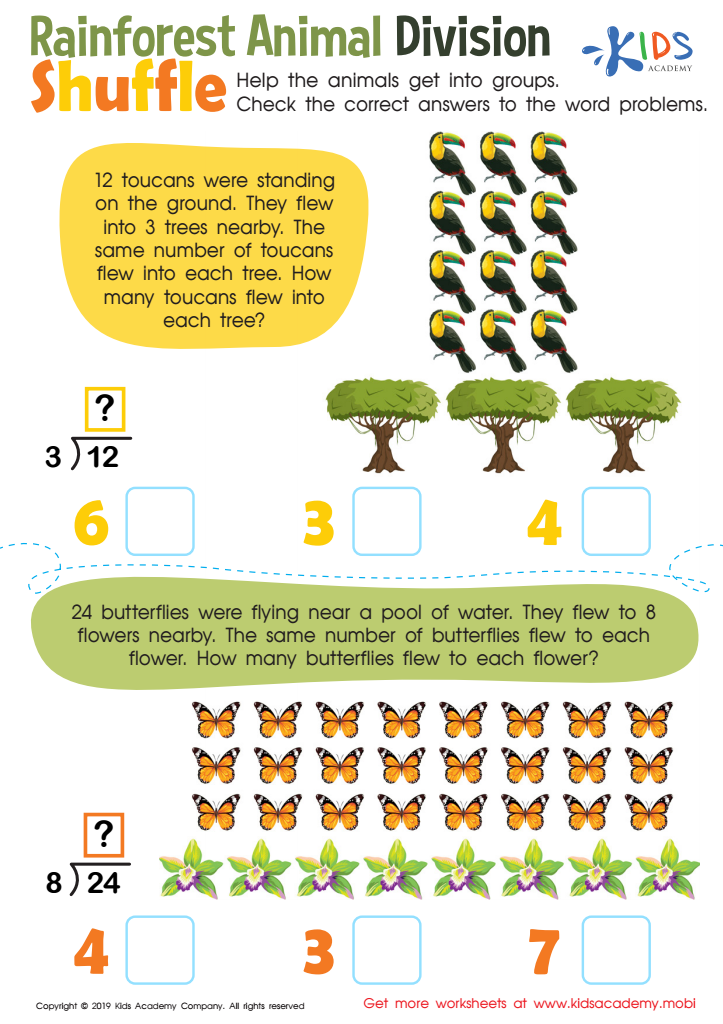
Rainforest Animal Division Worksheet
 Assign to My Students
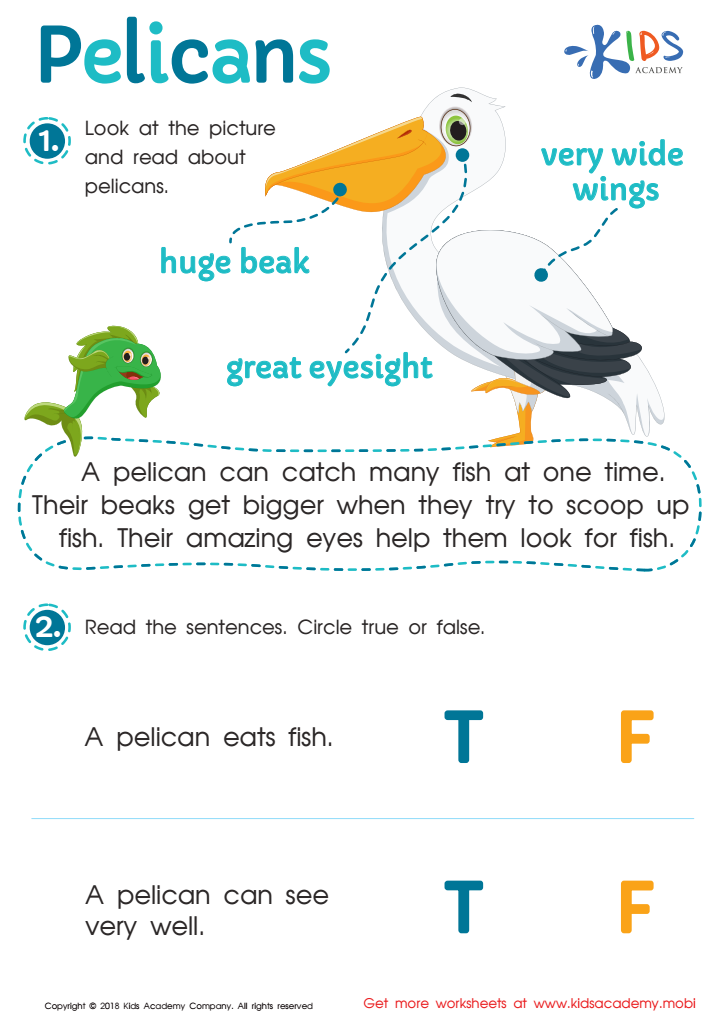
Pelicans Worksheet
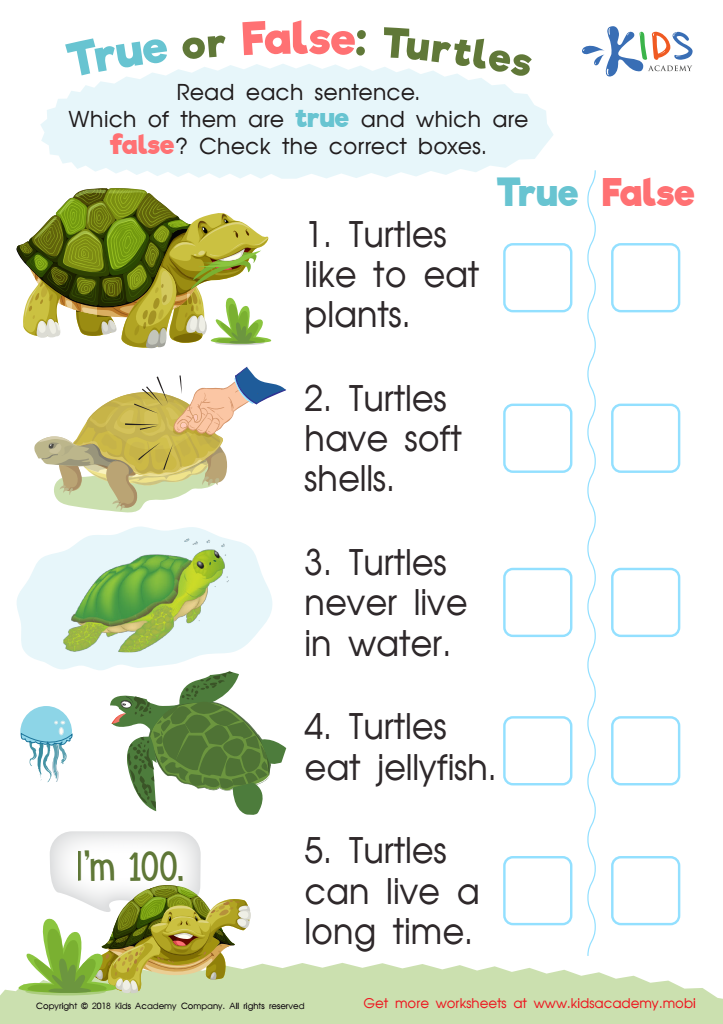
True or False: Turtles Worksheet
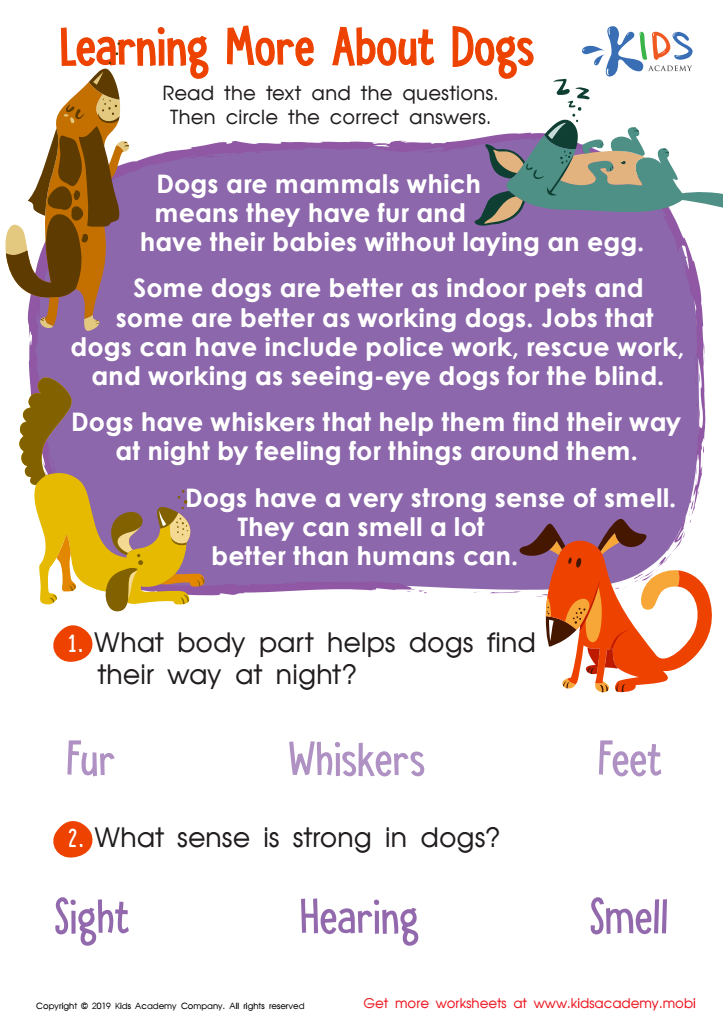
Learning More About Dogs Worksheet
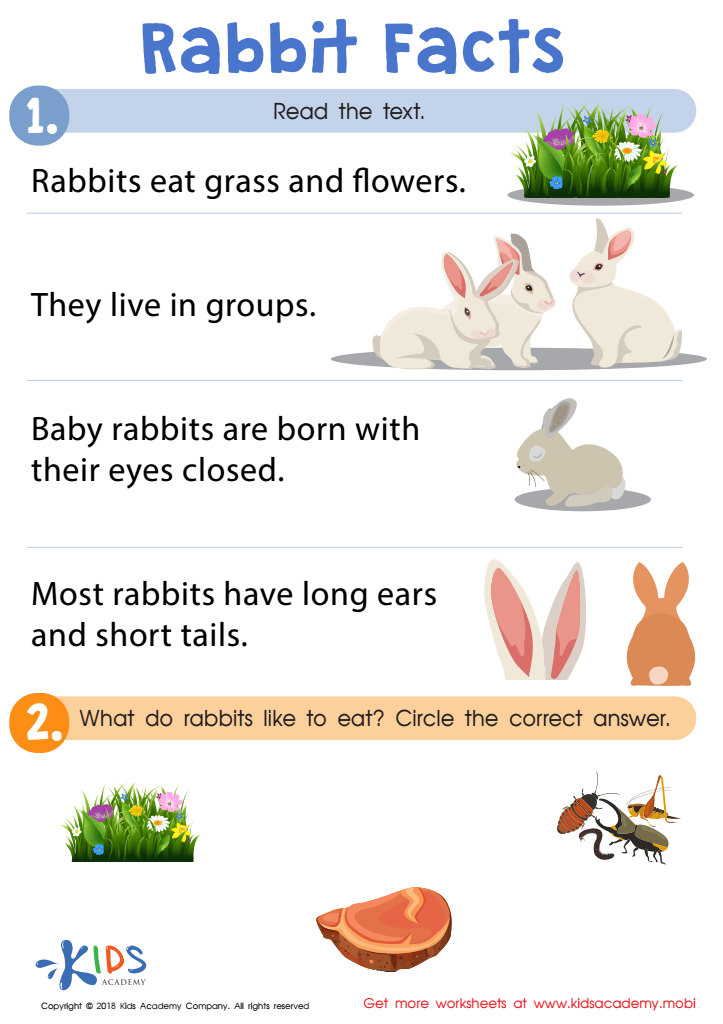
Rabbit Facts Worksheet








Understanding animal knowledge is essential for children aged 5-7, and parents or teachers should care about this for several reasons. First, learning about animals helps foster curiosity and a love of nature. At this age, children are highly inquisitive, and introducing them to the animal kingdom can invigorate their natural desire to learn. This curiosity is foundational for fostering critical thinking skills as they engage with questions about habitats, behaviors, and ecosystems.
Moreover, animal knowledge enhances literacy and vocabulary. Children learn specific terms related to different species, which enriches their language skills while providing context for education across subjects, such as science and geography.
Additionally, animal knowledge promotes empathy and emotional intelligence. Understanding animals' needs and behaviors helps children develop compassion and respect for living beings, which is crucial for social development.
Furthermore, integrating animal knowledge into education supports STEM learning by exploring scientific concepts in a relatable way. Activities may include observing animals, reading books, or engaging in storytelling, making learning enjoyable and interactive.
In summary, educating young children about animals not only nurtures their curiosity and vocabulary but also cultivates empathy, respect, and a foundational understanding of the world around them, benefiting their overall development.








